10 Doctor Who Moments You Didn't Get As A Kid (But Do As An Adult)
Vertical sonic screwdrivers, sweary government advisors, and the Master's beard?!

In the 1970s, Doctor Who was described in the Daily Sketch as "the children's own programme that adults adore." It was a fairly prescient description of the show, given that those kids in the '70s grew up to be Doctor Who novelists, cartoonists, screenwriters, and showrunners.
That description also reflects the fact that Doctor Who has always been a family show, containing enough thrills and chills for the kids, and some smart storytelling to keep the mums and dads entertained. Or, as Douglas Adams apparently once reflected, Doctor Who has to be "simple enough for adults but complicated enough for children."
So it's understandable that Doctor Who writers throw in a few bawdy jokes and adult references to keep us simple-minded grown-ups entertained. These gags fly over our heads when we're watching Doctor Who as kids, because we're far more interested in the monsters and the end-of-world stakes, and simply don't have the prerequisite knowledge to understand them.
And then, once we grow up a little, we start to realise that River Song isn't talking about screaming in response to a scary monster.
10. Malcolm Tucker In Dark Water

When Peter Capaldi was cast as the Twelfth Doctor, there was a lot of discussion about whether he'd play the character like Malcolm Tucker, his foul-mouthed and iconic character from the political satire show The Thick of It.
Would he be telling the Daleks to 'eff off? Could we have the first Doctor to call Davros the c-word? Well, of course not – despite a slightly later broadcast time, Doctor Who still had to toe the line of family entertainment!
However, there were still some nods to Capaldi's infamous political spin doctor in his first series. There's the bit in Time Heist when he tells everyone to "shutetty up up up," but more overt is when the Twelfth Doctor and Clara investigate 3W's headquarters in Dark Water.
Handing over his psychic paper to 3W employee Doctor Chang, the Doctor pretends to be a government inspector, there to oversee the institute's controversial work. However, as Doctor Chang looks at the Doctor's 'ID,' he notes that there's swearing written all over it.
The Doctor explains that he's got a lot of internalised anger, and quickly takes back the psychic paper.
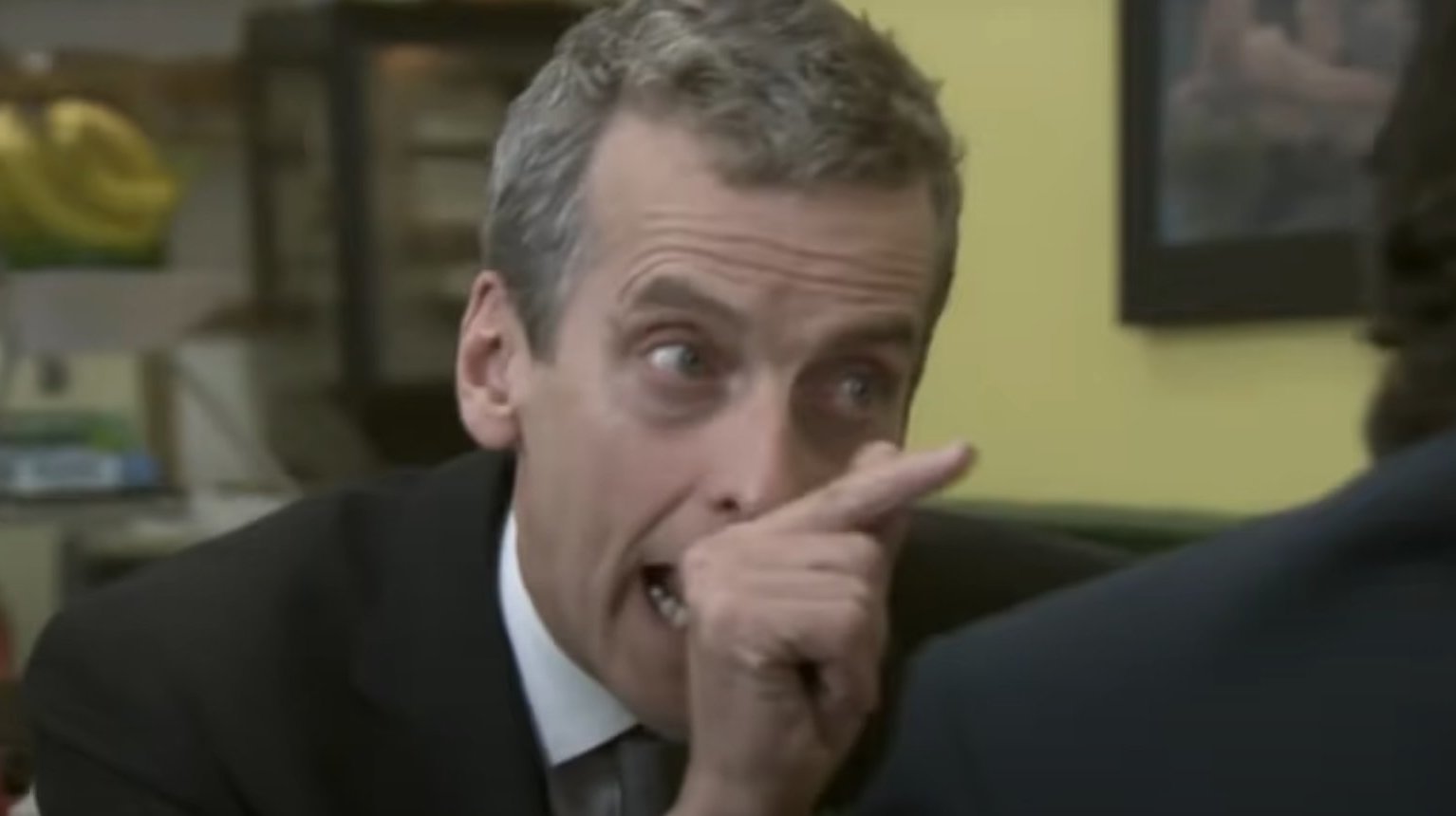
Government advisor? Internalised anger? Swearing? Yep, that sounds like Malcolm Tucker, a character who, to a nation of kids in 2014, would be far more alien than a Time Lord!
9. The Doctor Dancing

Nobody is more interested in the Doctor's love life than Steven Moffat, who dedicated his entire debut two-parter to answering the question of whether or not the Ninth Doctor "danced."
Watching this as a child in 2005, you'd be forgiven for thinking that all the talk of dancing related to whether or not the Doctor had any rhythm – and the footage of Eccleston dancing at the end suggests that, no, he doesn't – but that's not the whole truth.
The Empty Child and The Doctor Dances are largely about the rivalry between omnisexual matinee idol Captain Jack Harkness, and the romantically awkward Ninth Doctor. Rose sees Jack as a fun-loving being in a way that she doesn't yet see the Doctor.
All of which leads to petty squabbling and a ton of innuendo about sonic screwdrivers and sonic blasters, along with repeated use of the words "dance" and "dancing" to mean... well, y'know.
Of course, the Doctor and Captain Jack's differing attitudes to "dancing" flew higher than a barrage balloon over the heads of the kids at home, who were far more concerned with the threat posed by the gas mask zombies, and the subsequent nightmares they'd have because of them.
8. Agatha Christie Puns In The Unicorn And The Wasp

Only the most precocious of children would've had the working knowledge of Agatha Christie that's required to recognise the myriad references to the legendary author's work in The Unicorn and the Wasp.
There are over a dozen references to Christie's novels peppered throughout the script, and even in the set design – for example, a vase of yellow iris flowers on the table during the group dinner scene serves as a reference to the Hercule Poirot short story Yellow Iris.
Russell T Davies and Gareth Roberts delighted in adding as many references to Christie's body of work into the dialogue as they could. There are obvious ones, such as Donna remarking "the body in the library", upon discovering the body of Professor Peach in the library, which is a nod to Christie's 1942 novel The Body in the Library. But there are deeper cuts too.
Sparkling Cyanide, Taken at the Flood, Appointment with Death, and Dead Man's Folly – all titles of Agatha Christie stories, and all spoken out loud throughout the course of the episode. There are so many of these references scattered across The Unicorn and the Wasp that even the adults may struggle to keep up, and the kids, meanwhile, would've had no chance.
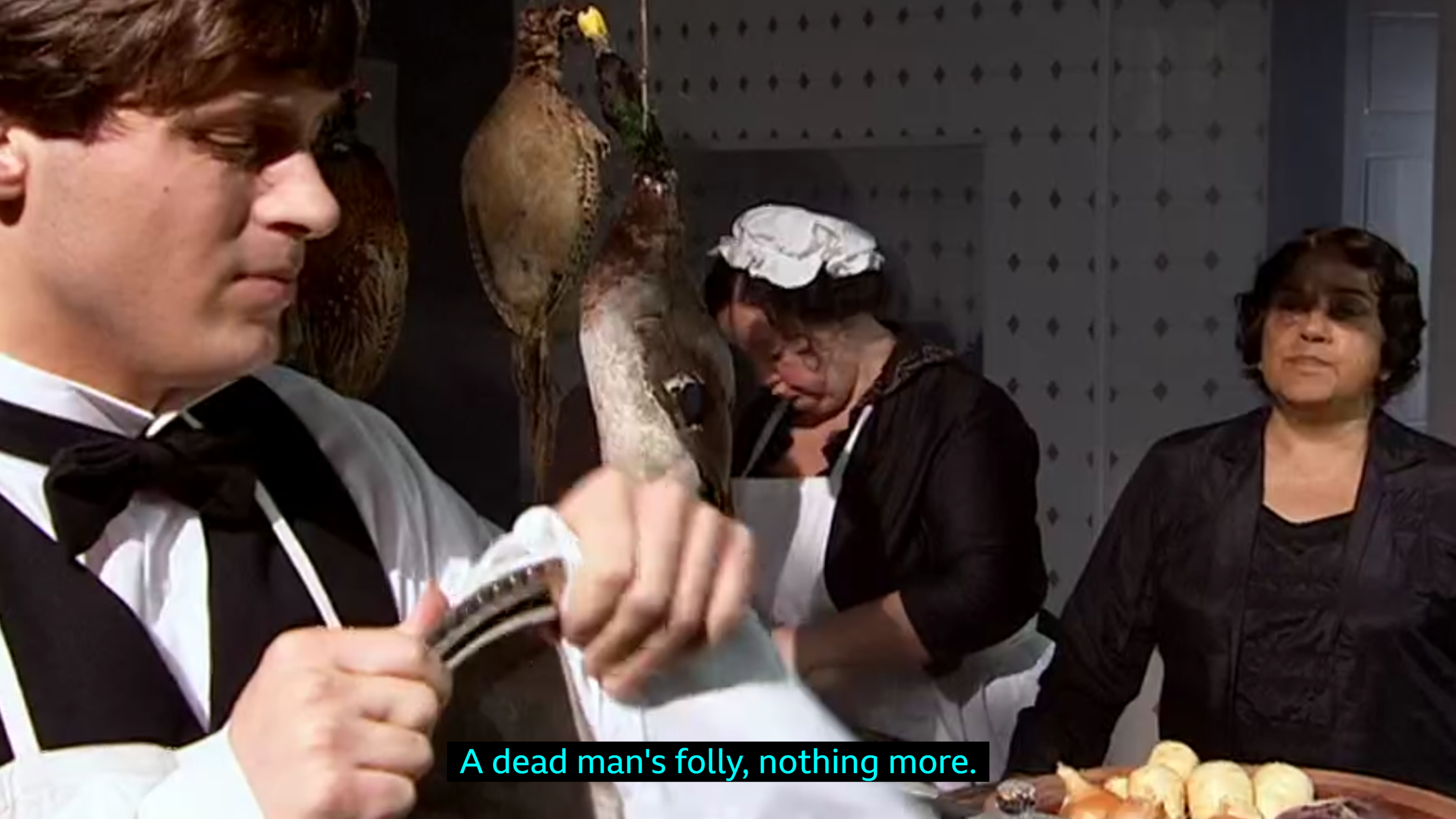
It's only upon growing up and being more inclined to familiarise yourself with Christie's work that these puns become more apparent.
7. "I'm Hardly One Of The Babes"

There are a handful of references to real-world politics in Aliens of London and World War Three that would've gone right over the heads of kids who tuned in for the farting aliens.
Most obvious is the nod to "massive weapons of destruction" that can be deployed within 45 seconds, a not-so-subtle comment on the UK government's shaky justification for going to war in Iraq two years earlier.
More subtle, however, was MP for Flydale North Harriet Jones' statement that she's "hardly one of the babes". This was a reference to Blair's Babes, the Daily Mail's regressive name for the 101 female MPs that were elected into the House of Commons under Tony Blair's leadership in 1997.
The connections to the incumbent Prime Minister didn't stop there, either. The corpse in the cupboard which is discovered by Harriet and Rose in Aliens of London was supposed to be a Tony Blair lookalike, but when it turned out that they'd booked an unconvincing body double, the Doctor Who team decided not to show the body in great detail.
And so, Tony Blair lived to fight another day and eventually stepped down in 2007 – at which point he regenerated into David Tennant. The man's everywhere!
6. The Twelfth Doctor Flips Off Robin Hood

Robot of Sherwood is a mismatched buddy comedy that pairs the Doctor with Robin Hood.
In that regard it's basically Lethal Weapon with bows and arrows, and a lot less swearing. However, there is one blink-and-you'll-miss-it gesture from the Twelfth Doctor in the swordfight (or should that be spoonfight?) scene, which would've definitely got a few chuckles from any adults watching on.
When Robin Hood points his sword at the Doctor and challenges him to a duel, the Time Lord puts on a black leather dueling glove. And as he pulls the glove over his fingers... he makes sure to have his middle finger outstretched! While this is exactly the sort of surreptitious swearing that slightly older kids love doing at school, the younger ones in the audience probably didn't pick up on what the Doctor was doing here.
And that's partly because you don't expect the Doctor to flip people off! Imagine him throwing up two fingers to Davros, or the Master?
Although then again...
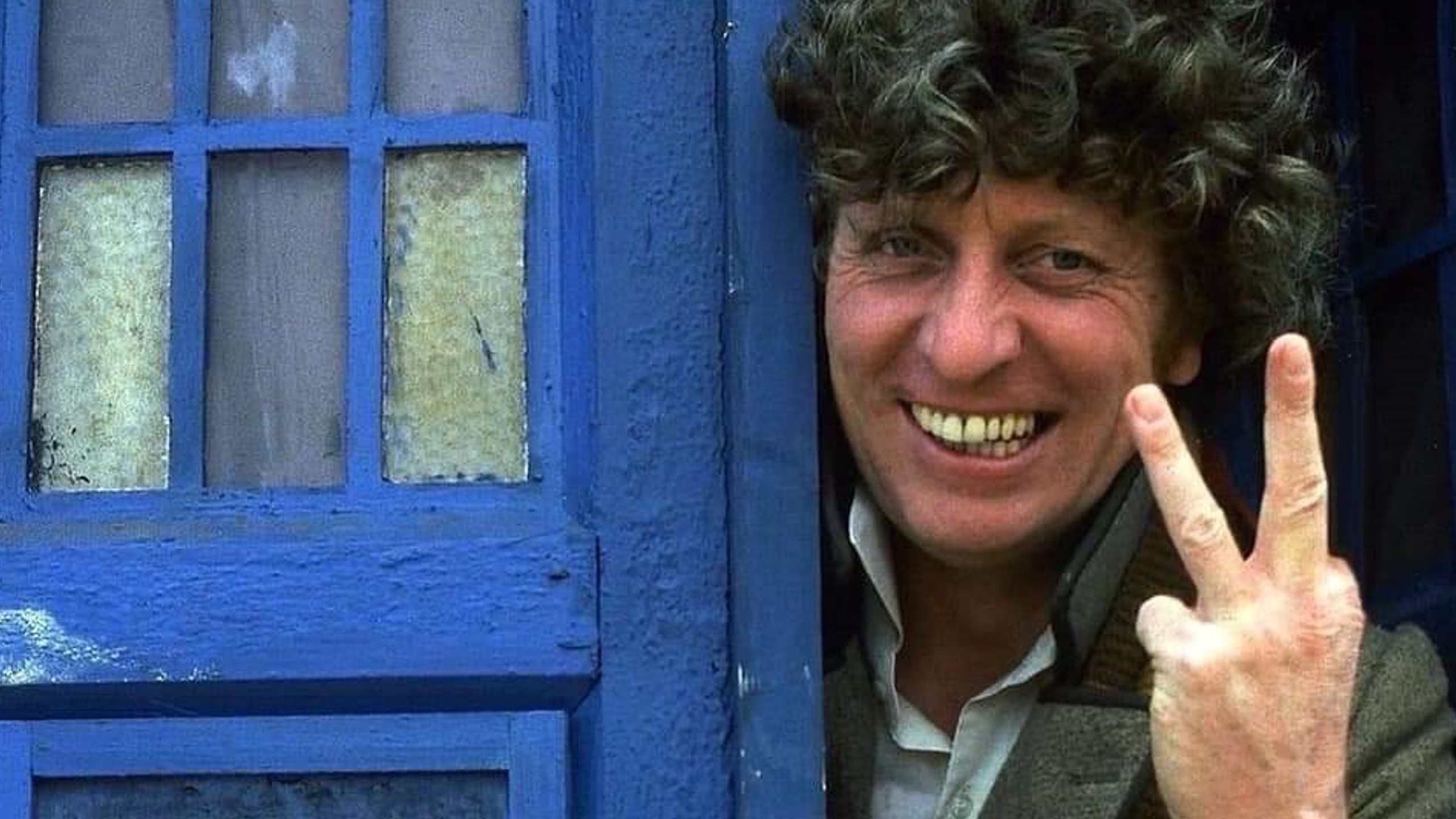
The only question really is whether or not this was an intentional gesture on Peter Capaldi's part, but given his aforementioned history with spicy adult humour in The Thick of It, you can certainly imagine him sneaking something like this into Doctor Who.
5. Inner Retinue & The Collector

It's hard to imagine what the kids at home took from the 1977 Tom Baker serial The Sun Makers. Sure, it's a fairly traditional story of the Doctor and his companion liberating colonists from an oppressive regime, but what about all that stuff about death and taxes?
As a freelance writer, Robert Holmes was famously inspired by his own issues with the Inland Revenue, the agency which handled the collection of UK taxes at the time.
And so we get the villainous "Collector" with his "Inner Retinue" personal guards, and mention of a "P45 return route". The Collector himself is an alien from the planet Usurius, named after the term "usury", which relates to unusually high interest rates!
Doctor Who Magazine's Fact of Fiction feature on The Sun Makers also suggested that PCM, the anxiety-inducing drug used by the company to suppress the population, was a play on Per Calendar Month, another bit of tax-related punnage.
All the joys of dealing with taxes and the Inland Revenue would be far in the future for the kids plonked in front of the telly on a Saturday night, and so all of these puns and in-jokes wouldn't have been registered.
Meanwhile, their parents would've been utterly delighted by the image of the Collector being literally flushed down the pan at the serial's climax, all the while whinging about being bankrupt.
4. The Facehuggers In Last Christmas

There's a long history of Doctor Who being inspired by horror cinema across its 61-year history.
There are the overt references to things like Frankenstein and The Phantom of the Opera in The Brain of Morbius and The Caves of Androzani, respectively. And jumping ahead to the modern era, the unnerving hotel rooms in The God Complex are a direct lift from Stanley Kubrick's horror classic The Shining.
All of these iconic horror movies are so ingrained in our popular culture that adults watching would get the references even if their young children didn't.
Another landmark horror flick is Ridley Scott's Alien, which has a major influence on Last Christmas. It's not just the Twelfth Doctor's gag about how offensive it is to call a horror film "Alien", it's the way that the Dream Crabs are literally Facehuggers, the disturbing creatures from the Alien franchise that seek out hosts for the Xenomorphs.
The horrifying moment where the Dream Crabs fall from the ceiling draws to mind the sudden attack on John Hurt in the original movie, while the disgustingly sticky sounds as they try to remove the crabs derives the same sickening sense of horror as found in Alien.
For kids at home, these are just scary monsters, but for the adults watching, it's a callback to a horror classic that also hints everything is not as it seems inside this arctic base.
3. The Eleventh Doctor's Sonic Extension

The sonic screwdriver as a phallic metaphor has been a Steven Moffat trope since The Empty Child and The Doctor Dances, but nowhere is it more prominent than in the bizarre scene from The Crimson Horror in which the Eleventh Doctor suddenly becomes a bit of a sleazeball.
Blame it on bad writing or the effects of the Mr Sweet's poison, but the bit where a revitalised Eleventh Doctor forces himself on Jenny is a touch uncomfortable to watch, and to make matters worse, he's still lusting after her even after she gives him a slap!
Later in the episode when Jenny whips off her ordinary Victorian garb to reveal a leather catsuit underneath, the Doctor, watching on, casually moves his sonic screwdriver from a horizontal position... to a vertical one.
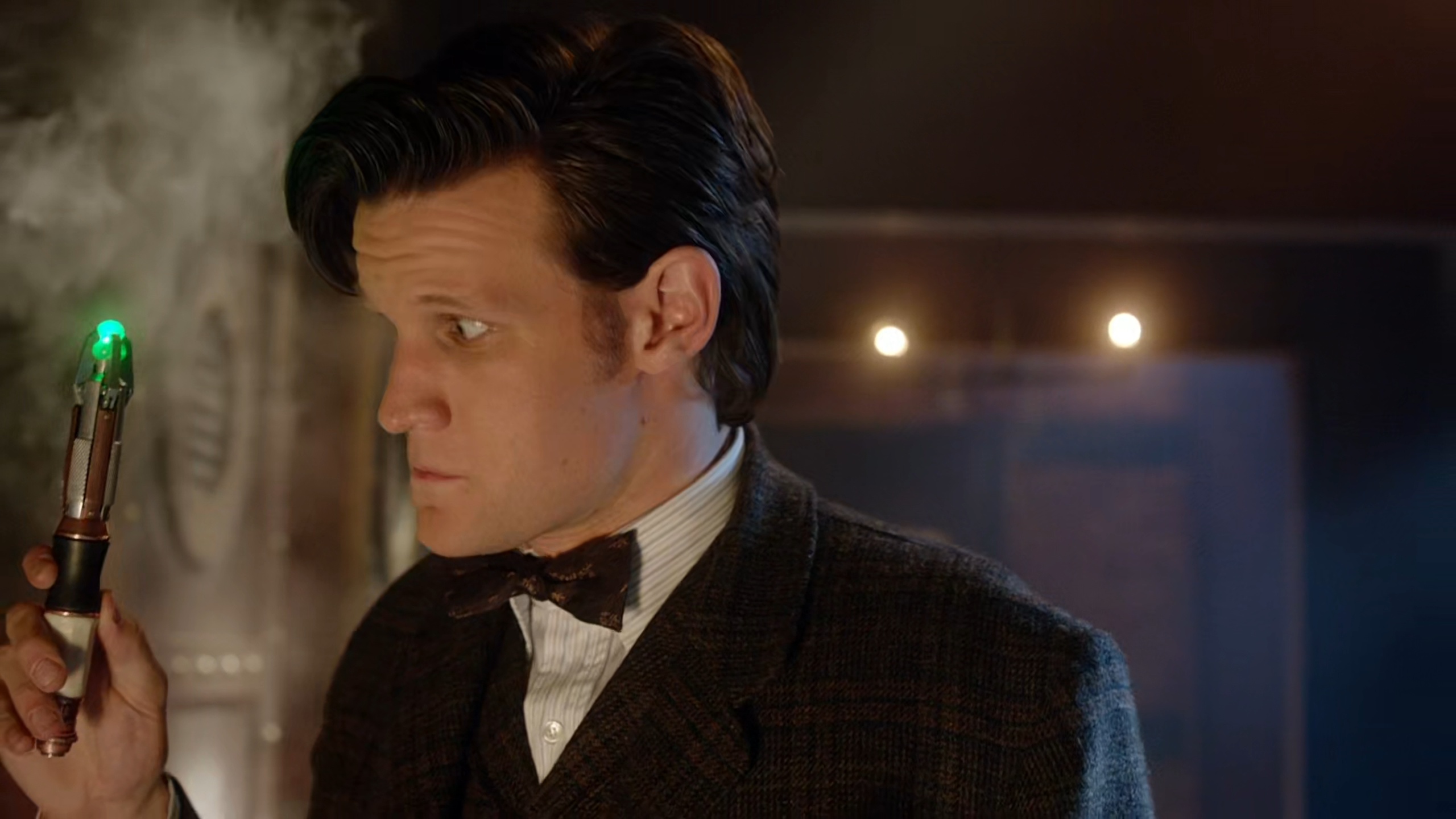
D'you get it guys? D'you get it?!
Innocent kids at home hopefully wouldn't make the connection, and would likely be confused, or just wouldn't even notice the moment at all. Or maybe they thought the Doctor was just getting his sonic screwdriver ready to help Jenny fight the bad guys!
Elsewhere, Jenny's leather costume is a clear reference to Crimson Horror guest star Diana Rigg's iconic character Emma Peel from The Avengers TV series, another reference that would completely pass by all of the kids watching this episode.
2. The Master's Beard

Some kids watching the Fifth Doctor meet the Tenth Doctor during Children in Need night 2007 might have been perplexed by mentions of Nyssa, Tegan, and the Mara, but Time Crash's best gag would've gone over the heads of even the most up-to-date Davison-era convert.
During this minisode, the Fifth and Tenth Doctors inevitably end up discussing the Master, who had returned earlier that year in the Series 3 finale, and who was also a big part of the Fifth Doctor's era.
Their brief exchange doesn't seem to make sense at first – that is, until you're old enough to understand the context:
FIFTH DOCTOR: "Does he still have that rubbish beard?"
TENTH DOCTOR: "No, no beard this time. Well, a wife."
Historically, a "beard" is a term that refers to a man or woman who enters into a relationship with someone, to hide the other person's true sexuality.
The gag here is that Lucy Saxon, the Master's wife, is actually his "beard", and the Tenth Doctor is insinuating that the Master is actually gay. Although, if you listen back to that phonecall between the two characters in The Sound of Drums, it becomes less of a joke and more of a canonical reality.
Still, kids watching Time Crash in 2007 wouldn't have picked up on why the Master's beard was important, and honestly, neither would a good chunk of the adults!
1. Mrs Robinson And The Big Bang

You could probably fill multiple lists like this purely with moments from Series 5 and Series 6. Steven Moffat's history as a comedy writer was all over his era (especially when River Song was around), though some jokes were a lot more subtle than others.
Take The Big Bang, for example. On paper, it's a perfectly innocent title for a Doctor Who series finale in which the Doctor reboots the universe with a second big bang. But in reality, it's a crude joke!
The punchline wouldn't come until a year later, during A Good Man Goes to War. As the Doctor leads his army to take control of Demon's Run and save Amy and her baby, he and Madame Vastra realise that young Melody Pond was conceived inside the TARDIS, mid-flight, on the night of Amy and Rory's wedding.
A wedding that just so happened to take place in the episode The Big Bang, a title that now takes on a whole other meaning.
Another Ponds-era joke that almost certainly went misunderstood by younger viewers was the Doctor's labelling of Amy, Rory, and River as, "the legs, the nose, and Mrs Robinson" in The Impossible Astronaut.
This is a reference to the 1967 movie The Graduate, in which the character Mrs Robinson has an affair with a younger man. The Graduate is hardly a movie that eight-year-old kids would've been familiar with when The Impossible Astronaut aired in 2011, but looking back, you can see how that joke applies to the Doctor and River's relationship.
Although, given that the Doctor is by far the older of the two, does that technically make him the "Mrs Robinson" in this situation? Food for thought.