10 Most Emotional Moments In Sherlock

Sherlock Homes is, as he so often reminds us, a "high-functioning sociopath." He doesn't feel things the way "normal" people do. And for Sherlock, that's a good thing. Emotions would mess him up, get in the way. He and Mycroft have cultivated an unemotional state, in which they don't really care about things like love or death. So it's a brave choice for Gatiss and Moffat to turn the show into what is essentially a dramatic character piece. The mysteries have increasingly been secondary to the relationship between John and Sherlock, and the wider set of relationships they have developed in a small circle of friends. This last season upset a lot of people by basically only being about those relationships, and by spending more time on them than on the thrilling mysteries. So, although Sherlock himself considers emotions and love to be "weakness," the truth is that his show isn't about the "cold hard reason" he takes as the guiding principle of his life. It's about the love the characters feel for one another. It's about emotional manipulation as much as it's about crime-solving. Basically, it's about the gooey stuff. Emotions run under the surface of every episode, and relationships are in the subtext of every single scene. Sometimes these emotions become explosive, and the entire episode stops to focus on them. What follows are the 10 gooiest, heartbreaking, most emotional, and dramatic moments in BBC's "Sherlock."

10. Sherlock Leaves John's Wedding Early
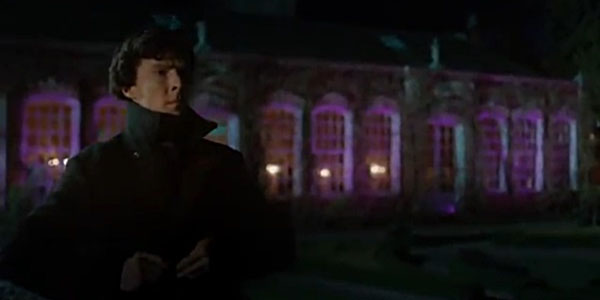
Most of the best endings are bittersweet, and this one certainly qualifies. Sherlock laid his heart out for all to see in this episode (whatever heart he has). He saved a life, he gave a speech, he even flirted successfully with a pretty girl. You could say that Sherlock made enormous strides towards being an actual person in this episode, towards being what in the pilot Lestrade called "a good man." There's a reason Mycroft was all sneery about the wedding. But when Sherlock walks out of there early, we see him draw away from any development he may have managed in the episode. After his last speech and his last vow, he found himself alone on the dance floor. Everyone else had someone, and he felt awkward and vulnerable. So he left. He walked out of his best friend's wedding, put up his collar, and never looked back. This scene is a reminder of how difficult Sherlock still finds emotions. And it's a reaffirmation of the central feature of his character: that he does not behave like other people, and he does not particularly want to. You can only change a character as iconic as Sherlock so much, and having a great time at a wedding after he's solved a good puzzle is not something Sherlock would ever be interested in. So there he goes.

9. John Forgives Sherlock

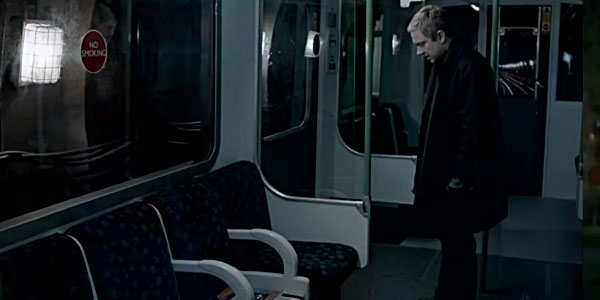
Your best friend, the most important person in your life, apparently killed himself. Just dying would be bad enough, but Sherlock's suicide made John a failure. It meant that, when his friend needed him the most, he was completely powerless. That kind of thing haunts a person, and it ripped John apart. And here he is again, and he's asking John for forgiveness, after putting him through all that pain. Sure, sometimes Sherlock manages a modicum of empathy (or at least he mimics it well), but when he needs to exercise that empathy the most he has a tendency to drop the ball. And, because he actually loves John, he tends to assume John'll see things the way he does. Which is dumb, so he sometimes says he sorry and sometimes he just keeps barreling on. Given Sherlock's sociopathy, it makes sense that he would not find a reasonable way to earn forgiveness. But his essential childishness, borne from his inability to understand grown-up things like emotions and relationships, made him desperate for John to forgive him. So his only logical course of action was to lead John into a subway car about to explode, pretend not to be able to stop their impending deaths, and ask for forgiveness. Of course, John forgave him. I mean, who wouldn't in those circumstances? It's a very emotional scene, even if Sherlock was full of it. John is legitimately preparing to die while Sherlock tries not to giggle! But the subtext of this moment, and the rest of the episode, is that John was always going to forgive his friend. John had already forgiven him, really. Because John needed Sherlock to be alive very, very badly, as we saw in his plea to Sherlock's tombstone. He needed his friend, and of course he wasn't going to lose him now.

8. Sherlock's Mind Palace In "His Last Vow"

Most of Sherlock's mind palace or deduction scenes aren't what you'd call "emotional." They're pretty, sure, but they don't tug at your heartstrings. This scene was very different, because in it we saw Sherlock really, for the first time, deal with the idea of death. And we got a window into how Sherlock would respond to something like death. Sherlock sees himself as not having a heart, as being all mind, but every episode has proved that that isn't quite true. Here, we see parts of his mind palace that show us his heart. The calm intensity of Molly and Anderson shows us how Sherlock's mind works to intervene in moments of fear or panic. The appearance of Mycroft, telling a child Sherlock how stupid he is, tells us plenty about Sherlock's psychology and reveals the emotional undertone of his constant deducting, the need to impress and prove his worth that drove him to become the machine he is today. Then there's poor old Redbeard. Something calming, something that will keep him from going into shock: his childhood pet. We become very attached to our pets, and everyone who had a loving dog as a child remembers that relationship. But an adoring relationship with a dog is not something you'd peg Mr. "High-Functioning Sociopath" for. It's a moment of genuine humanity when he pets Redbeard and talks about being put down. Finally, there's the lunatic chained underneath Sherlock's mind palace. Moriarty obviously represents Sherlock's madness, the destructive urges and feelings he's leashed. But Moriarty is also, in a strange way, his heart. Because it's Moriarty who inspires Sherlock's most emotional moment, who reminds him that Watson is in danger. And that is the emotional climax of Sherlock's journey in this episode, as he pulls himself out of death because John needs him.

7. Sherlock's Best Man Speech

Everyone, except apparently John and Mary, was really worried about Sherlock making this speech. We're talking about a man who didn't realize he shouldn't be in the bride and groom picture, who will yell at crying old ladies and tell children there's no such thing as heaven. So it's not really surprising when everything falls apart and Sherlock starts monologuing about reason, logic, and petty emotions. Also how John sucks and he likes to have him around because he makes Sherlock look good. Then he gets to the doom of the human race. Light wedding stuff. But then, there's the turn. Sherlock has an incredibly rare moment of real self-conciousness, the kind no one thought he was capable of. He points out that, given how much normal people are put off by him, John has to be a pretty swell guy to like him. Sure, it's a bit too much about Sherlock, but it stills says something lovely about John. Sherlock really, honestly, tells John how important he is to him. Now, remember, Sherlock has locked John in a room and subjected him to tests of terror, he has ditched him about a million times, he has apparently drugged him into missing entire days, ruined dates galore, taken over the apartment, put heads in the refrigerator, and last but not least, convinced his best friend he was dead. So for him to step back and tell John "you are wonderful, you are amazing, and I am unspeakably lucky to have you" is a truly wonderful moment.

6. Irene Adler Is Alive

This scene is great for examining the emotional tangle that unites the characters Irene, Sherlock, and John. John is Sherlock's best friend, the person who mediates between Sherlock and reality. And he's the person closest to him, the only person who can really gauge what Sherlock's emotional state is like. Until Irene. Irene is an interloper in John and Sherlock's relationship. She makes Sherlock react in ways John didn't think possible. She texts with Sherlock and John has no idea what it's about. She's almost the "other woman," and she's even more scary because she has a perfect understanding of their relationship. John and Sherlock aren't a couple, obviously, because John doesn't like men and Sherlock doesn't like people. But they also basically ARE a couple. They live together, share friends, share life events, and their primary relationship in the world is with one another. Irene messes with the stable dynamic we saw John and Sherlock develop early on in the episode. And she's also about the only person besides John who can get a reaction out of Sherlock. So when they meet, one on one, there's this weird web of entanglements all culminating in their decision to leave Sherlock on his own to deal with his emotions about Irene.

5. Mary Is Revealed

HERE BE SEASON 3 FINALE SPOILERS. I liked Mary, sure. She seemed cool, and clever enough not to be intimidated by Sherlock, and comfortable enough to not interfere with that important relationship between her husband and Sherlock. I was not expecting the international assassin reveal. For one thing, she didn't quite fit the "Angelina Jolie" mold we all have in our head of female assassins. For another, it's quite the revision. Mind you, Mary has almost no characterization in the original, so it's not unjustified. Of all the emotional scenes connected to this reveal (the apartment and the Christmas scenes stand out), the best is when Mary confronts "Sherlock" after she's shot him. There's this coldness, these two people who are both pretty amoral meeting one another on equal ground for the first time. But the most important part of the scene sits in the shadows, until the emotional subtext literally takes shape when John stands up. We and Mary realize that he heard everything, that he knows everything. There's no going back to the status quo now. Mary and John are both heartbroken before our eyes.

4. Irene Adler Loses (And Wins)

If you're nuts, like me, and you watch DVD extras, you'll learn a secret about this episode: it's written, directed, and acted to be a love story. The intellectual and the mental games were all secondary to the emotional dynamics nursed through the episode. It therefore makes sense that the climactic scene hinges on emotions. Irene, it appears, was not good enough to play with the big boys. She let her heart rule her head, and she went and fell in love with the mark. Quite different from the original, and quite the fall for the dominatrix. The fear and pain from Irene, next to the cold calculation of Sherlock, are very painful to watch. The obvious ending is for her to die. For that to be it. The story ended, she lost because she wasn't cold enough. But that's not the end. The end reveals that, even if she lost the intellectual game, she won the far more important emotional game. Outmaneuvering someone's head is easy--Sherlock and Mycroft do it for a living. Outmaneuvering their heart is far more valuable, and far more important. And it made Sherlock come and get her. Mr. "Don't Let Your Head Rule Your Heart" helped her fake her death and let her loose on an unsuspecting world. And his reasoning, apparently, was whatever counts for him as love.

3. The Suicide Scene

Even if it turned out to be faked, this is a truly amazing piece of acting an an absolutely heart-wrenching scene. We've just seen Moriarty shoot himself in the head, apparently closing out any shot Sherlock had of escaping. The first time you watch it, Cumberbatch's acting is so painfully good you absolutely believe what's happening is really Sherlock's ending. It's interesting, upon re-watch, that Sherlock tried to convince John he was a fake. He could have come up with another explanation for his suicide quite easily--he didn't have to use that one, to attempt to disengage John. He tried to convince John he was a fake and a traitor, right before convincing him he had committed suicide. It seems like this was a (probably terrible) attempt to make things better for John after the fake suicide, to push John away so that he may feel less guilty. Which was nice of Sherlock, even if the entire plan to trick John was horrible. What comes across most strongly in this scene is the powerful connection between these two men, communicating across a literal vast gulf, one always knowing more than the other. Even though there's that distance, and that intellectual disconnect, Sherlock and John's emotional connection comes through loud and clear.

2 The Graveside Monologue

Masculinity can be painful. It's something people write books on: the pressure to hold feelings in, to lie and joke to cover up extreme emotions. John, although he often plays a "feminine" emotional role, is very much a part of that culture of masculinity (as a doctor and former soldier). So watching him crack, painfully, slowly, is truly heartbreaking. He talks to his friend's grave in fits and spurts, getting out all the things he never got to say to Sherlock. No one could convince him Sherlock was a traitor, not even Sherlock himself. Because there was a level of trust and brotherly love there that John would never accept was fake. Watching him hold back tears, watching him beg Sherlock to "just stop it" and come back, the levels of emotion at play are astonishing. Cumberbatch is amazing, sure, but no one talks about how awesome Martin Freeman is anywhere near enough. Of course, the whole scene has a level of irony built in, for Sherlock is actually listening nearby. Which brings me to the #1 most emotional moment on this show, ever.

1. The Big Reunion Scene

Two damn years of waiting from the audience, two years of grief and recovery for Watson, and now here we are. At the big reunion. The expectations here were high, and they were met and then exceeded beyond anyone's dreams. The depth of the relationship at play, the pain embedded in it, were all on display in every single shot. First, there was Sherlock. He literally tried to walk up to John and say "Surprise!" He was super impressed with himself, and thought John would be too. As astute as Sherlock can be at understanding and observing human behavior, he can still be a complete idiot when it comes to human emotions. Then he actually, finally, manages to catch John's attention. And John practically has a heart attack (in original, he fainted like a woman. Literally: that was something shocked women "did" at the time). We can see acres of emotion bubbling up in John's face as he looks at Sherlock, as he tries to wrap his head around what is both impossible and what he's wished for more than anything. Meanwhile, Sherlock babbles on about disguises and how he may have misjudged how funny this whole plan was. Mark Gatiss said he could watch the reunion scene forever, and I appreciate that he tried to write it that way. Three restaurants, a cut lip, and a bloody nose later, the scene finally ended. John all too often had to take the sidekick role in their relationship, and bashing Sherlock's nose in probably did wonders for his self-esteem. The relationship was both re-established and changed forever.

In this post: 
Sherlock
 
Posted On: 
Contributor
Contributor

Rebecca Kulik lives in Iowa, reads an obsence amount, watches way too much television, and occasionally studies for her BA in History. Come by her personal pop culture blog at tyrannyofthepetticoat.wordpress.com and her reading blog at journalofimaginarypeople.wordpress.com.