10 Lost Doctor Who Episodes That Need To Be Found

They've got to be out there somewhere, right?

Let's be honest, watching Classic Doctor Who episode reconstructions is a bit of a pain. In no way is this meant as an insult to all the hard work that is put into making these restorations. Fans could've had way less or nothing at all if it weren€™t for this dedication, but please point out at least one sane person who can honestly declaim on how great a story Marco Polo is and doesn€™t refer to the novelisation. You can€™t honestly say that you€™ve enjoyed any of the lost episodes of the first two Doctor Who eras unless you were born in time to see them broadcast. Otherwise, you€™re just like the rest of us who, enthralled by the Doctor in his present form(s), decide to have a go at studying the rich and vast history of the longest running sci-fi show of all time. But as if the show didn€™t have enough problems (both aesthetic and narrative) during its beginnings, you then realise that you also have to sit through some episodes that are made of nothing but audio and still frames (with maybe a few awkward clips thrown into the mix, if you€™re lucky). What€™s worse is that, as the show gets substantially better, the reconstructions become more frequent. And sometimes it happens to episodes that sound pretty good, certainly much better than some that survive unharmed. It mkes you wander, "God, why wasn€™t The Web Planet lost instead of... instead of..." But you€™ll just have to click next to find out. Mind you, only episodes with the number of missing parts higher than their surviving ones make the list. Honestly, The Tenth Planet is doing just fine, even having the regeneration scene intact. That€™s luxury for a weary early Who explorer, while some episodes with 2 out of 4 surviving parts (such as The Moonbase or The Underwater Menace) can be at least mildly satisfying.


10. The Highlanders (1966-67, 4 Out Of 4 Missing)

It should be noted from the very beginning that this author is not a fan of the pure historical episodes. For a show that started out as €œeducational€, one would expect so much more than these clichéd retellings. However, two of these stories still seemed more worthy of rediscovery than other poor attempts at science fiction. One of them is The Highlanders, a great achievement in historical entertainment. It runs for only four parts and has some strong cliffhangers so there really isn€™t much padding to be found. The episode is most memorable for being the debut of Jamie McCrimmon, one of the longest running and most popular companions of the Classic Series. Played by Frazer Hines, Jamie had plenty more personality than his action men predecessors Ian or Steven and one could already see he was more interesting than the same action man stereotype Ben. The Highlanders is only Patrick Troughton€™s second episode as the Doctor and one that underlines (maybe a bit too thickly) the great change that the actor had brought to the character. The Second Doctor is cunning, often playing the fool in order to obtain information or confuse his opponents. He also has a passion for disguises, one that fortunately won€™t last his whole run. Here fans see him both as a kitchen maid and as a German physician, calling himself 'Doktor von Were'. It was Troughton€™s idea to move on from the pure historical stories, thus making The Highlanders unique for his era.

9. The Massacre (1966, 4 Out Of 4 Missing)
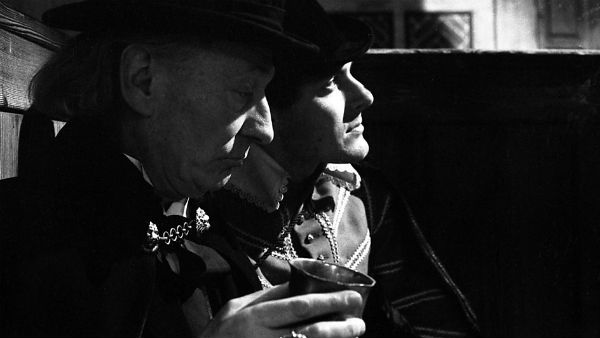
Some consider this the best pure historical episode and one can€™t find many reasons to say otherwise. The Massacre of St Bartholomew€™s Eve may not have the humour of The Romans, the fine Shakespearean acting of The Crusade or the action scenes of the aforementioned Highlanders. However, the subject matter alone makes this one very important piece of Doctor Who... well, history. While the actual massacre isn€™t shown, you constantly feel the danger that the Doctor and companion Steven are in as they try to escape one of mankind€™s darkest hours. Lots of points are being made against religious fanaticism, a problem society still faces some 48 years later. For all its worth, this truly is an educational episode. Fans witness some interesting character dynamics as Steven and the Doctor are very angry with each other by the end of the last part. However, this was quite common during Hartnell's era, so keep this in mind when you decide to rewatch Clara's rant at the end of the recent Kill the Moon. The Massacre also marks the debut of Jackie Lane as companion Dodo Chaplet. This could€™ve been higher up the list, if it weren€™t for one thing - the doppelganger. That is, the Abbot of Amboise (also played by William Hartnell) looks exactly like the Doctor and silly quid pro quos ensue from this. While any actor able to perform a double role should be admired (Troughton would also do this in the recently found The Enemy of the World), the idea of unexplained doppelgangers is just lazy and an example of implausible writing. It would€™ve only required a few sciency words from the Doctor - like "spatial genetic multiplicity" or something - to suspend our disbelief.

8. The Celestial Toymaker (1966, 3 Out Of 4 Missing)
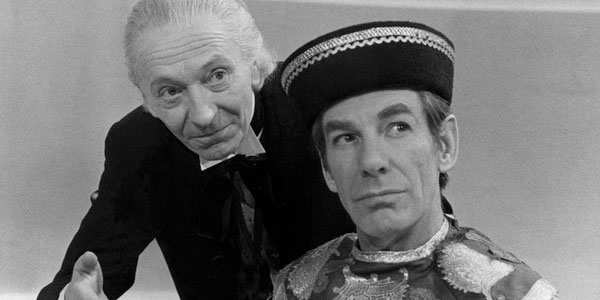
This is by no means a great narrative episode. When trapped in the world of the mysterious Toymaker. Steven and Dodo have to play all sorts of possibly deadly games in order to save their skins while William Hartnell is on holiday, thus rendering the Doctor invisible and mute. And that€™s pretty much it. The fascination with this story comes from the main villain. The Toymaker is an all-powerful godlike being, a creator of his own realm and chief-executive master of puppets. Aptly played by the great Michael Gough, the Toymaker isn€™t really evil. He€™s just bored out of his mind, because what single deity wouldn€™t be? Even though the Doctor is said to have met him before, fans don€™t find out anything about his origins or purpose. It€™s this very type of mystery that makes the First Doctor€™s era so great. Had this story been done later, the Toymaker would have instantly been revealed as some kind of alien and given a CV filled with planet of origin, special powers and weaknesses (indeed, he was later revealed to be of the Guardian race in a BBC book). However, while this is food for thought provided by the concept, the episode itself seems to be a visual romp that one can€™t really enjoy because of its missing status. The Toymaker€™s realm is designed like a funhouse and the games Steven and Dodo have to play are quite physical, thus the surviving stills and audio don't really do the episode its complete justice. The Celestial Toymaker marks the show€™s first delve into the realm of science-fantasy, a feat that was much better managed by the far superior The Mind Robber. So, while this might have been a visual milestone for Doctor Who, fans can€™t really judge it properly until they've actually see it. That is, if they ever do.

7. Galaxy 4 (1965, 3 Out Of 4 Missing)
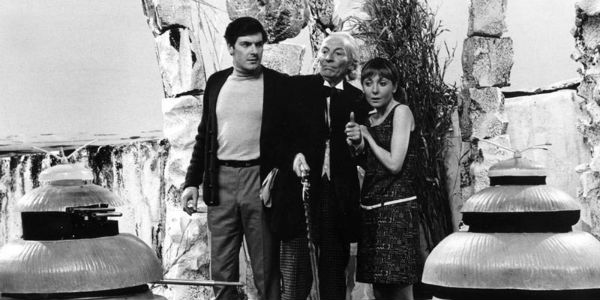
Galaxy 4 marks the debut of Hartnell€™s third season and is widely regarded to be the first episode on par with good science fiction. The Doctor, Steven and Vicki land on a mysterious planet. After encountering some silly but not cringeworthy robots which they dub 'the Chumblies', they soon discover that the planet is the scene of a faction war between two shipwrecked alien crews. First they meet the Drahvins, consisting of Maaga and her army of female clone soldiers, which give the episode a sort of exploitation sci-fi feel. As the aggressive Maaga starts showing her true nature, the Doctor and his crew seek the alliance of the other faction - the mysterious Rills. As with the origins of the Toymaker, it is the very mystery of the Rills that makes this episode so interesting to watch. Their superior intelligence makes them understand that their appearance might come as disturbing to other alien species. Thus, the narrative justifies the lack of budget and it€™s for the better that fans don€™t really see the Rills in their full repulsive glory. This is educational sci-fi at its best. First of all, while everyone loves the Daleks, this may be a greater attempt at creating a monster that€™s truly alien or, at least, as different as possible from being human. Secondly, the evil Drahvins are hot clones while the benevolent Rills are made to resemble Lovecraftian monsters. Galaxy 4 is an obvious tale about individuality and it€™s a successfully entertaining one at that. The only surviving part, Airlock, gives us a good glimpse at the superior art direction and, sadly, leaves us wanting more. Fortunately, this one remains a strong enough episode even in its current missing form.

6. The Evil Of The Daleks (1967, 6 Out Of 7 Missing)
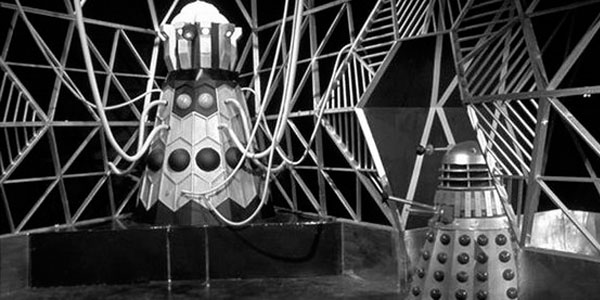
Out of all the missing Dalek episodes, this is the worst. Of course, that€™s not saying much, since Dalek stories are usually the highlights of most of the Classic Doctor Who eras. Surely, a lot of interesting things happen here. Viewers see the debut of Victorian companion Victoria and supposedly witness the end of the Daleks, because their creator (not Davros, but the far more evil Terry Nation) was trying to sell them to the Americans. While the number one Doctor Who villains do eventually make their return six years later during Pertwee€™s era, many fans still believe that this is their actual end within their timeline. However, this seems implausible. While one enjoys seeing, or rather hearing, happy go-lucky Daleks suddenly impregnated with human emotions, it€™s not as if all of them had been changed. Surely, the inventive, malicious mechanical mutants would have found a way to deal with this minor inconvenience. After all, receiving human emotions was mostly their own doing. Unfortunately, the show€™s writers never bothered to actually shed light on this topic. That being said, The Evil of the Daleks remains an important and highly entertaining episode. For all his joyfulness, fans see Troughton€™s Doctor at his darkest. He deliberately manipulates Jamie into a trap, relying only on his trust of his companion€™s abilities to get out of it. Of course, this also brings out the best in Jamie, who sadly doesn€™t really get much character evolution after this. His one on one fight with the very large stereotype of a Turk, Kemel, should be a worthy spectacle. The story also marks the first return to Skaro via Victorian time travel. If that€™s not reason enough to wish this episode found then keep clicking that next button.

5. The Faceless Ones (1967, 4 Out Of 6 Missing)
This and The Evil of the Daleks are presented as one continuous adventure. While they both sound spectacular and depart a bit from the usual "base under siege" formula of the Troughton era, The Faceless Ones seems more of a convincing affair. The episode itself starts with an exciting cliffhanger in which the TARDIS lands on the runway of Gatwick Airport and is about to be hit by an airplane. It then plays out as a thriller, as layer upon layer of mystery is slowly revealed using well written twists. The story (obviously inspired by Invasion of the Body Snatchers) revolves around a supposed tourism company, called Chameleon Tours, which organises flights that passengers never return from. Later, fans find out that the company is actually run by aliens called Chameleon, who were left faceless and now wish to harvest young humans so that they can simply gain their identities. Not only are the Chameleons terrifying but there are plenty of lost space scenes that should appeal to most fans of old sci-fi films. The most memorable is one where an airplane turns rocket and boards an alien space station. Sadly, the animated reconstruction of that particular moment isn€™t very imaginative. However, other sequences (filmed on location in Gatwick Airport) have a more realist tone in the vein of Hartnell€™s outstanding The War Machines. It is later revealed that The Faceless Ones happens exactly at the same time as The War Machines but that€™s used only as a vehicle for the exit of Ben and Polly, an overall rather unspectacular departure. It€™s also a shame that Samantha Briggs (played by the great Pauline Collins) didn€™t stay as a companion, either.

4. The Macra Terror (1967, 4 Out Of 4 Missing)

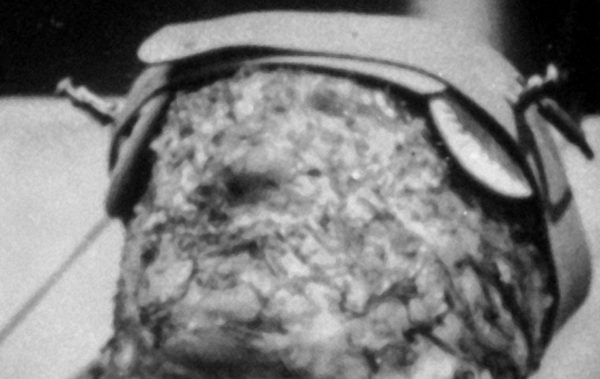
Doctor Who Macra The crablike Macra creatures are (probably) great. You€™ve already seen a dumbed-down version of them in the new series€™ Gridlock but when the Second Doctor meets them in this episode, they appear as ruthless, intelligent monsters. Black and white could do wonders for imperfect props and so could small TV screens. Just add a bit of smoke, dim lighting, sharp incidental music, a screaming Polly and you€™ve got yourself some properly scary giant crabs. But the monsters are not the true reason why this one is so high up the list. After all, who isn't a sucker for dystopian societies? This is the first time Doctor Who explores such a world. The strange behaviour of the denizens of the planet colony and the benevolent yet demanding voice of the Controller gives viewers an uneasy feeling from the very beginning. As such, the absolutely perfect cliffhanger of the second part is even more shocking. Thankfully, a few seconds of that scene survive but it would still be a great shame if fans never get to experience this episode in full. What more can be added about The Macra Terror? A well designed, alien-ruled, Orwellian planet colony, great acting from the guest cast, lots of twists and plausible dangerous situations for the Doctor€™s team as they try to convince a bunch of brainwashed people that they€™re being utterly manipulated... Oh yes, this is also the very first episode with a new title sequence, complete with Patrick Troughton€™s face morph. Marvellous.

3. The Daleks' Master Plan (1965-66, 9 Out Of 12 Missing)
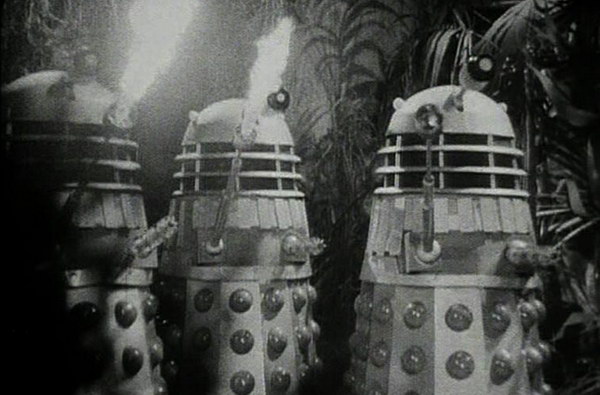
Say what you want about The Dalek€™s Master Plan and whether or not this is a better story than the rest of Hartnell€™s Dalek adventures, it still out-scopes them in every possible way. Running at 12 parts, the episode is gargantuan. No attempt at making such a mastodon has been made until Collin Baker€™s Trial of a Time Lord. Even that represented a whole season, while the Master Plan just casually runs in the middle of Season 3. It even has its own prequel (also lost) called Mission to the Unknown. But let€™s say size never mattered. What about content? Well, it can be summed up. Daleks need a piece of metal called Taranium to power their doomsday weapon, the Doctor steals Taranium, Daleks chase Doctor around the universe, Daleks finally get what they want, the Doctor tricks them one way or another and everyone moves on happily. Ok, maybe not the last bit, but The Daleks€™ Master Plan is actually a mould-breaker. You know how companions almost never die? Well, long before Adric and way longer before the Ponds, this episode marks the deaths of not one, but two companions. First to fly out the TARDIS (literally) is Katarina, a Trojan girl that they picked up on their previous adventure and who was supposed to replace Vicki. She wasn€™t very spectacular to begin with but she€™s around for only four parts. That has to be another record of sorts. The other one to snuff it at the end of the long adventure is Sara Kingdom. Played by Jean Marsh, she€™s probably the toughest female sidekick to come aboard the TARDIS before Sarah Jane Smith. Her death scene is pretty gruesome. This is as dark as Doctor Who gets in this particular era. Add the debut of the great Nicholas Courtney on Doctor Who (not as the Brigadier, but as Sara€™s evil brother). Add a memorable human villain worse than the Daleks that goes by the name of Mavic Chen. Add the only return of the first other Time Lord (though never quite named as such) the Monk. Add the first fourth wall breaking by the Doctor on the special Christmas episode. Add the first ever Christmas special. Go to the last of the three surviving parts called Escape Switch and watch William Hartnell being a total badass while negotiating with the Daleks in Ancient Egypt. This is essential Doctor Who and fans have every reason imaginable to wish it found.

2. Fury From The Deep (1968, 6 Out Of 6 Missing)
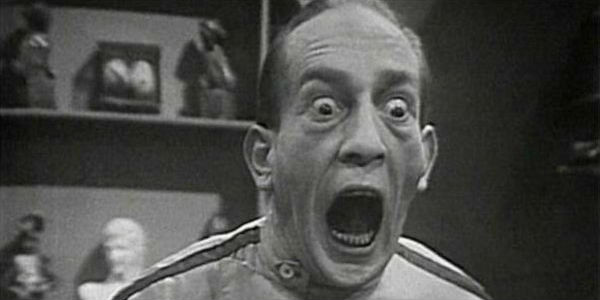
Now, before you go throwing potatoes in the comments section (hey, it€™s your monitor), this isn€™t necessarily a better story than some listed below. But that€™s only narrative wise. And to be perfectly honest, there are too few stories from the early eras which are unequivocally called €œgood€. Plot holes galore and undeveloped characters amass, one still loves early Doctor Who for what it is - an often cheesy, sometimes campy, strangely entertaining, pseudo sci-fi-ish, rarely mind blowing, but all in all good fun 60s TV show. Now if you exclude some of the show€™s more serious highlights, most of which are found and not includable here, Fury from the Deep gives you exactly your money€™s worth of mid-Troughton era Doctor Who. If the said episode was found, of course. The story isn€™t any different from the usual aforementioned "base under siege" adventures. However, the main reason why this so high up is because it's probably the creepiest of all black and white episodes of Doctor Who. None of that €˜eeewwww, Cybermen come out of plastic foil, let€™s hide behind the sofa€™ stuff to scare kiddies, either. Not that there€™s anything wrong with that but Fury from the Deep seemed to culminate this era€™s trend of pushing the limits of horror within a family show. The base threatened here takes the form of a gas rig and the "sieger" takes the form of intelligent seaweed that possesses people. Cheesy, yes, but the possessed engineers represent an efficient scare factor and you only have to watch one tiny surviving clip to get shivers down your spine. The sound department did a tremendous job by adding obsessive heart beats that announce incoming threats to the characters. Otherwise, the sea plant itself is a source of innocuous stoner humour, especially in the lines of the Doctor who keeps talking about people with gas masks being under the influence of the weed. The historical importance of this episode comes with the debut of the sonic screwdriver and it may come as a surprise to many nu-Whovians that it€™s actually used to unscrew screws. It also marks the last appearance of Deborah Watling as companion Victoria with an emotional send-off that€™s teased throughout its six parts. Basically, it€™s one underrated episode and finding at least some parts would bring about some reconsidering. Still, it wouldn€™t bring fans as much joy as finding...

1. The Power Of The Daleks (1966, 6 Out Of 6 Missing)
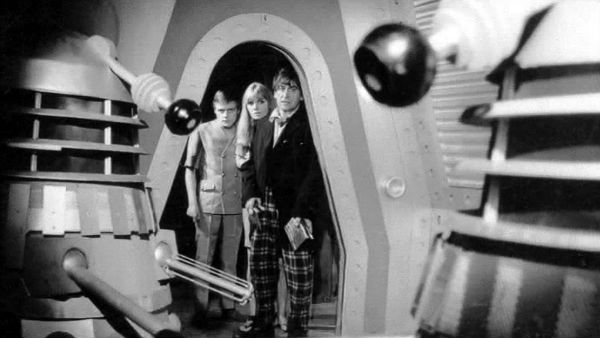
When you read that The Tenth Planet wouldn€™t be included in this list, you already knew that this would be number one, didn€™t you? Well, sorry for being predictable, but no lost episode can beat The Power of the Daleks in terms of historical importance and quality. The BBC must be pouring ashes over their heads for wiping out this one. Most importantly, it€™s the very first episode of Patrick Troughton as the Doctor. This is the beginning of the long test of which he passed with an A+. William Hartnell alone couldn€™t have made Doctor Who the longest running sci-fi show in history so it was this adventure that ultimately made the concept of regeneration work. Starting what would become a tradition for most Doctors, Troughton€™s first performance is a bit more over the top than his later interpretations. However, just reading or hearing narrations about how the Doctor walks impassively around pools of mercury without getting damaged (much like an overconfident Buster Keaton) makes fans want to call Phillip Morris (not the tobacco company) and tell him to sign them up for the missing episode hunt. The regeneration, called €œrenewal€ here, is observed by the characters with the same confusion of the audience and Troughton does nothing to lessen the transition. As confused as they were back then, though, people just couldn€™t keep their eyes off the TV screens. The Daleks were already established as the main baddies of the show so bringing them back here was a smart way to remind everyone that they were still watching the same show. And it was a show they got! For the first time, fans find the Daleks weak and overpowered so they have to resort to being cunning instead. Instead of the usual "Exterminate!" cries, viewers find themselves chuckling as they obsessively utter "I am your servant!" This actually comes off as funny and not as a failed attempt at Dalek humour, like Pertwee€™s Death to the Daleks or Smith€™s more recent Victory of the Daleks. This is also the first time fans can clearly see the little mutants while inside their mobile armour. It must have been a scary sight back then, but a sight that would go on to define one of the most notorious villains in science fiction history. So, Mr Philip Morris, you can consider this a Christmas list. For the rest of you reading, if watching episode reconstructions seems like a drag, you can always come back here and pick the really important ones. Here€™s hoping fans see the day when this list and others as such become obsolete, when the number of 97 missing episode parts is reduced to a mere figure. Fans can dream, right? What do you think of this list? Leave your comments below.

In this post: 
Doctor Who
 
Posted On: 
Contributor
Contributor

Adrian Serban lives in Bucharest, Romania where he has studied screenwriting and film criticism. But it's not all about artsy European dramas for him, as he's also a fan of horrors, kung-fu flicks and sci-fi films of all eras. Monty Python and Doctor Who are two British institutions that changed his life for the better. Or so he thinks.