10 Major Doctor Who Events That Changed Everything
Just when you thought you understood all of the wibbly-wobbly timey-wimey!

Since Doctor Who first materialised onto our screens way back in 1963, the show has thrived on how it changes across its own timeline, helping each series to be whatever it's audiences need it to be.
Whether it's the 1960s' focus on educating its audiences on the wonders of history and modern science or the energetic and emotionally-staked Chris Chibnall era, it only takes a fleeting comparison between a Classic and Modern series episode to notice just how much the show has evolved.
But what about moments within the Whoniverse itself that have changed everything we thought we knew about familiar worlds, our favourite characters and their backstories? These are the ten most significant events which ever happened in the world of Doctor Who.
10. The First Regeneration

As the declining health of lead actor William Hartnell became an unnerving concern for producers, the looming threat of Doctor Who’s cancellation after just four seasons in 1969 must have seemed very real. That is, until the geniuses of producer John Wilkes and script editor Donald Tosh helped to bring the early foundations of what would later be the concept of regeneration to life.
Within the series, The Doctor’s species had been given little to no attention and didn’t even yet have a name - all we knew was that he wasn’t human. Audiences of Season 4's 'The Tenth Planet' must therefore have been amazed as they watched the now-familiar regenerative glow sweep across the exhausted First Doctor as they collapsed to the floor and woke up with the face of Second Doctor, Patrick Troughton.
Although the ability to change their face after death didn't yet have the name Regeneration, The Doctor's 'renewal' proved not just to be a convenient way for actors to get on and off from the part with unusual freedom for a lead television role, it also gave producers a means of allowing The Doctor to be completely refreshed. Although they were still the same values of the character deep down beneath the 1960s mop top and chequered trousers, it was clear that the beloved alien antagonist had been changed forever.
9. The Introduction Of The Time Lords

Now in their second body, audiences of the 1960s had finally adjusted to the cosmic hobo of the Second Doctor and had followed them across daring new adventures with faithful Scottish Highlander Jamie McCrimmon and future astrophysicist Zoe Heriot. Things are looking peachy for our intergalactic wrong-righters, until they faced The War Lord in 1969's 'The War Games', and the secrets of The Doctor's people finally began to unravel.
The episode gives us many firsts for the series, with not only the first full appearance of The Doctor's species besides a few renegades like The Monk and The War Lord, but we are finally given a name: The Time Lords. As ethereal and omnipotent as the name suggests, The Time Lords intervention within the episode packs a heavy toll for The Doctor and companions that ensures that life for all of them may never truly be the same again. After a heart-wrenching goodbye, Jamie and Zoe are sent back to a time before they knew The Doctor and have all their memories of their adventures erased, whilst The Doctor's previous theft of the TARDIS and escape to the planet Earth are finally brought to question.
Fortunately, The Time Lords are merciful in granting them the right to live, under the strict condition that they remain exiled to Earth, with yet another new face. No TARDIS. No companions. A new start for a new Doctor in every sense of the word.
8. Reintroducing The Daleks

2005 saw the relaunch of the Russell T Davies penned New Series of Doctor Who and with it, an entirely new Doctor in Christopher Eccleston who was miles apart from anything we'd seen before from the character. From the buzzcut to the cold, colourless black of their battered jacket and boots, it was clear that The Ninth Doctor had been through a war both literally and figuratively, that had left scars that needed time to mend.
It's only in Episode 6's masterpiece that is 'Dalek' that we find out which race the Time Lords were at war with, and who is responsible for this new anguish and brutality within The Doctor, and of course it's science-fiction's genocidal pepper pots. 'Dalek' stands out for just how far we see The Doctor stray away from their signature morality when faced with the eponymous foe. The Doctor is prepared to kill it on sight on several occasions, even admitting that they believe that extermination is what it deserves. They're still polar opposites of each other's ways of life, but now they're also so painfully the same, both tormented by knowing they're alone in the universe.
The Doctor coming face-to-face with the enemy they'd sacrificed their entire species to destroy, not only devastates them in realising The Daleks might not be as utterly dead as was believed, but also gives the character relationships greater depth and consequence than we'd ever seen before.
7. 'The War Doctor'
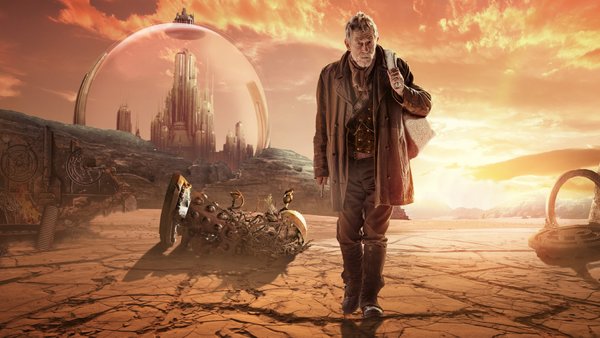
Just when you think you know everything there is to know about the many lives of The Doctor, Steven Moffat is certain to throw in a curveball that nobody could've expected. As The Eleventh Doctor rescues Clara Oswald from his timestream in Series 7's 'The Name Of The Doctor', they are confronted with their darkest and most successfully repressed secret of all.
The Doctor had a secret incarnation.
In between Eighth Doctor Paul McGann and Ninth Doctor Christopher Eccleston, a secret iteration known only as 'The War Doctor' was revealed to have been the one who fought in the Time War and betrayed everything that the name 'The Doctor' stood for. We all have moments from our lives that we're not particularly proud of, but John Hurt's incarnation is the very darkest moment of The Doctor's history and truly was forged in fire. This revelation not only tainted the action figure shelves of every Whovian who believed they had the complete line-up, but pulled the curtain on an entire era of our antagonist's life that we had never known about, and showed the side of The Doctor that they themselves despised the most.
Although they eventually get their heroes' redemption at the end of 'Day of the Doctor', The War Doctor was a worthy addition for the fiftieth anniversary, in demonstrating that even after five decades of time-travelling adventures, Doctor Who showed no signs of becoming predictable in it's surprise reveals.
6. Destroying Skaro

When it comes to incarnations whose very screen-presence ooze with darkness and manipulation, the Seventh Doctor is the real McCoy. Ba dum, tish. Gone were the days when The Doctor would hesitate when resorting to genocide in order to save countless lives from the threat of the Daleks. The Seventh Doctor, when given the chance to destroy the Dalek's home world using a Time Lord supernova device known as 'The Hand of Omega', didn't flinch whilst letting it completely obliterate Skaro's sun, resulting in the destruction of Skaro and the Dalek mothership containing Davros.
Not only that, technically they didn't even commit this act of genocide themselves, as they manipulated Davros' quick-temper until they're feeling particularly trigger-happy and then roped him into activating it by suddenly playing the victim. The Doctor toys with Davros over the lives of millions. Let's not forget that destroying Skaro's sun means destroying all vegetation, animal life and the lives of other inhabitants of Skaro's solar system with it. Attempting to eradicate your mortal enemies from the universe comes at a cost, and this cost is one that the Seventh Doctor doesn't seem too guilt-riddled to pay.
This act alone is one of the most destructive of the entire series, undeniably a huge factor into the escalation of The Time War and the reason that whenever we've seen Skaro since, it's just a complete write-off, in need of some serious TLC. The destruction of Skaro impacts The Doctor/Dalek relationship horrendously, and it's no coincidence that the next time we see them facing off again, it's as two bitterly war-torn survivors. If only you didn't wanna exploit your god-complex so much during your Seventh incarnation, hey Doc?
5. 'The Ruth Doctor'

Secret incarnations of The Doctor are a bit like a interdimensionally-transcendental bus. You don't even know they exist one minute and then suddenly BAM! You've got two in one go. Not long after the success of John Hurt's War Doctor, Chris Chibnall decided to fill what fans believed would be a relatively cheery episode, featuring the Judoon in modern-day Gloucester, into a tirade of surprise reveals.
Whilst the return of fan-favourite Captain Jack was the most welcome of companion comebacks, it was the left-field reveal of optimist Ruth being an impossible incarnation of The Doctor that really sold Fugitive of the Judoon as a WTF moment amongst Whovians. Whilst the War Doctor changed the timeline of The Doctor by introducing a new incarnation as a bridging point between the Classic Series and the New Series, The Ruth Incarnation is truly an enigma as she can't be explained within the Doctor's pre-established timeline since the 1960s.
For one, this incarnation is already calling themselves 'The Doctor' which means we should rule her out as being a Pre-Hartnell Doctor, as The First Doctor is believed to be the first to adopt this name. On top of that, her TARDIS is already disguised as a British Police Telephone Box, which first happened in the original episode, An Unearthly Child. This moment within Series 12 led Jodie Whittaker's Thirteenth Doctor to question the very foundations of what is true about their history, and oh boy, does it only get more confusing from there.
However, even though The Ruth Doctor is still to be explained within the series, the pure charm and charisma of Jo Martin's performance has already cemented this mystery incarnation into the mythos of the show just as warmly as any other incarnation. A true testament to how firmly change can be embraced within the show.
4. The Genesis Of The Daleks

Maybe that whole 'Non-Interference' Policy was something that The Time Lords should've stuck to a little harder. A fresh-faced bohemian Fourth Doctor is suddenly plucked out of time and space and thrown into the war between the Thals and the Kaleds. Why? Well, because The Time Lords have seen a prophecy that tells them that The Daleks are destined to become the unrivalled superpower of the universe and they want The Doctor to go to their point of creation and stop them from every being able to reeking havoc.
So just the usual then?
1975's 'Genesis of the Daleks' takes The Doctor back to the creation of The Daleks and attempts to force them to alter pre-established history, a law of time travel that we've constantly been told is a big bad thing to do. It's no surprise then, that this mission from The Time Lords backfires horribly in the wider scope of events, with The Doctor finding themselves unable to prevent The Daleks creation when given the chance. Not only that, they're eventually brought before The Dalek's creator 'Davros' and tortured into revealing all key defeats of the Dalek's futures so that these faults in their ways can be corrected. In doing so, The Doctor is forced to reveal why they have travelled back to this point and tips The Daleks off about The Time Lords and their failed plans to assassinate them.
Russell T Davies himself has pinpointed this episode as the first act of The Time War, a larger conflict between The Daleks and Time Lords that causes devastation to both races as well as the wider universe. As a side note, if The Doctor had simply destroyed The Daleks whilst they had the option, there would never have been any sign of the mutated death tanks to be seen. All previous and future Dalek stories and their consequences on the universe would be erased. The lives that could've been saved are astronomical. Unfortunately, The Doctor had to go and have a bit of a conscience. How selfish of you.
3. The Last Great Time War

An event that had been foreboding since all the way back in 1975, the importance of The Last Great Time War can't even begin to be understated within the universe of Doctor Who. Intended to be a metaphor for the Wilderness Years between the Classic Series cancellation and the New Series, it saw The Doctor return to television screens as a shadow of their Victorian gentleman caricature. Where the Classic Series Doctor had frequently stated their dislike of death and violence, The Ninth Doctor was clearly more accustomed to the grislier truths of the universe, sitting back mercilessly as villains such as Cassandra, The Slitheen and The Jagrafess were ruthlessly torn apart.
Whilst they were still the same Time Lord at their core, still wanting to travel the universe and very much capable of showing mercy, Series 1 explored the impact that being around the human race once again, especially Rose Tyler, would have in bringing back the values of who The Doctor is. We're essentially their therapy pet I suppose. Throughout the series and even later episodes in the run, countless civilisations and races are shown to have been victims of this war, with the very name 'The Time War' implying that it could have been waged across time itself for an infinitely long time.
Not only that, but it was responsible for the downfall of The Time Lords themselves, a race who we'd always assumed were so powerful and skilled in cheating death, that it'd be near to impossible to keep them down for good. It's a boast to just how devastating this war was for the Whoniverse that even up to the Fiftieth Anniversary of the programme, we were still seeing the ramifications and emotional scars that the war left, gripping those who survived it.
2. Saving Gallifrey

So within the space of this list alone, we've met the Time Lords. We've seen the moment they accidentally caused the war that would see them all reduced to a cosmic cinder. How else could they possibly serve to change everything we knew about the show? By being saved from the brink of destruction by every single incarnation of The Doctor that had ever existed at that point, and then one. That's how!
The fiftieth anniversary special 'The Day of the Doctor' revisited The Doctor's post-war grief over the death of their species and forced them to face the consequences of their actions through meeting The War Doctor. However, showrunner and writer Steven Moffat decided to pull a characteristically clever cat out of his bag and provided fans with a scenario we never thought we would see in the revival of the show, after previous series had already made it so fundamentally clear that The Doctor was now the last of their kind: What if The Doctor could save Gallifrey?
At the very last minute, Gallifrey is frozen within an instance of time, lost to the universe but still very much alive. No longer is The Doctor alone in the universe. And the ways that this decision helped to ensure a fresh future for Doctor Who had only just begun. Even though The Doctor seems to forget about their quest to find Gallifrey almost immediately after starting their quest in Series 8, it's their decision to save Gallifrey that allows the Time Lords to grant a new regeneration cycle to the dying Eleventh Doctor in 'Time of the Doctor'. From that point on, The Doctor has been living a new lifecycle, a feat that only The Master has ever been seen to do before in the show's history, and even they didn't do wonders at keeping in good shape with that.
For quite literally allowing Doctor Who to keep going forth into the universe after coming so close to snuffing it once and for all, the Resurrection of Gallifrey and the Time Lords has to be on this list.
1. The Timeless Child
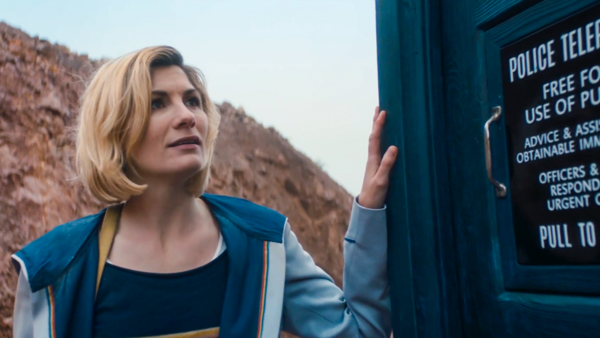
What could possibly top The Doctor being granted a new lifecycle, allowing them to continue on for at least another 12 regenerations? How about the idea that the lives of the Time Lord known as 'The Doctor' aren't the only lives that the character may have lived? Regardless of its controversial take on the backstories of The Doctor and Gallifreyan history, it’d be impossible to talk about moments that have changed Doctor Who as we knew it without delving into The Timeless Child revelation in the Series 12's aptly named ‘The Timeless Children’.
Upon journeying to a destroyed Gallifrey and being harnessed into the Time Lord database known as the Matrix, The Master proceeds to show The Doctor as much knowledge as there is about their ambiguous past. We discover that, not only was their first incarnation not the William Hartnell First Doctor as was previously believed, we have no real estimate of how many lives they may have lived - besides a few mysteriously teased faces from previous episodes and the existence of The Ruth Doctor.
To top this all off, The Doctor may not even strictly be a Time Lord themselves, having been believed to have been vomited through a rift from another universe and having their unique regenerative powers extrapolated and implanted into the DNA of early Gallifreyans. Although they are, in essence, the foundations of Time Lord society and eventually become 'The Doctor' that we recognise, there is now a gap in their character history the size of a Star Whale that is left to be explored.