10 Major Unanswered Questions From Classic Doctor Who

26 seasons, yet they still didn't answer everything.

There's absolutely nothing unusual about a television show presenting more questions than it gets around to answering. Genre television is particularly prone to it (just ask the Lost viewership...) and the longer a show runs for, the more unanswered questions it's going to leave in its wake. That's just the way the cookie crumbles. As such, it's safe to say that if a show runs for 26 seasons, it's going to leave the occasional plot thread hanging. Sometimes these questions only come to light many years later when new information about the Doctor, the TARDIS or the universe in general was revealed and made some of his earlier decisions seem a bit dodgy. Sometimes they're the result of production staff wanting to make a quick change as expediently as they can and damn the consequences. Sometimes they're simply the result of sloppy writing/producing and there's nothing you, they or anyone can do to deny that formidable fact. And sometimes, they're a zesty blend of all three. That said, these are the questions that... well, probably aren't keeping you up at night, but it would still be nice to get a couple answers now, wouldn't it? Expect some spoilers for the original series circa 1963-1989, if you haven't gotten around to watching all of it yet, in our countdown of 10 unanswered questions from the Classic Series. Answers, my dear, and it seems not a moment too soon...


10. What Did Susan Do With All That Free Time?

In a sense, this isn't an entirely fair question. Back in 1964, the Doctor was a mysterious alien about whom anyone knew precisely both jack and squat about. There was absolutely no reason for any of us to suspect that he came from a species that could live for thousands of years and changed appearance every couple hundred odd. That goes for the life expectancy of his granddaughter, Susan, too. Then, a few years later, the Doctor falls down in the TARDIS and gets a new face and personality, only to casually mention a year later that that he's already 245 years old. No biggie. So, let's look at the implications. In Marco Polo, it's stated pretty definitively that Susan is 16 years old. To be somewhat generous about the amount of time that passes before she leaves the Doctor, let's reasonably assume that she's 18 when she marries David. Surely it's only going to be a matter of decades before she and David have to have a serious conversation about why she still has the body of an 18 year old? After all, what would happen if she were to to trip over a rock and suddenly become a saucy redhead, for example? The different spin off works have tried to explain this away a number of ways. Legacy of the Daleks, for example, amusingly claims that Susan develops an elaborate movie make up skill set to make herself seem older. Others say she wasn't really the Doctor's granddaughter after all, so none of it even matters. So there you go.

9. So, Did Vicki And Troilus Just Never Speak Again?

Again, this isn't an entirely fair question since it's applying to information that has been revealed since 1965, but it's really something that people should've noticed at the time. Basically, if you're visiting alien races and times, no one there is going to speak English (or Alzarian, or Trakenese or whatever). It's a common problem that any TV show featuring travel in time and space runs into, so before you even begin telling an exciting adventure, you have to provide some sort of justification for why the entire story isn't just two groups of people looking politely at each other and shouting "I'm sorry, I don't understand what you're saying"' in their own language respective language. Goes without saying, really, doesn't it? Star Trek adopted the concept of the 'Universal Translator' to cover over this problem (essentially saying, "Oh, we have a machine for that".) As far as sci-fi goes, this is perfectly acceptable. At least it shows you've thought about the problem. Doctor Who, in its earliest days, adopted a far more English response to the problem. They politely ignored it and pretended it didn't exist. This is also fine, unless decades later your show makes the fact that the TARDIS translates local language for you into a major plot point on several occasions. So, our Vicki has met a nice young Trojan bloke and leaves to marry him. The TARDIS dematerialises, she turns to him and softly says, "I love you"... and he turns to her and gently responds, "I'm sorry. I don't understand what you're saying". In Ancient Greek. That's a mighty hurdle for a young marriage to overcome

8. Whatever DID Happen to Ace?

Brace yourself for a shock, but in 1989, the BBC stopped making Doctor Who altogether (don't worry, because they eventually started making it again, and it's worked out pretty well thus far!). At the end of the initial series run, the Doctor and his then current companion, Ace, literally walk off into the sunset (or at least, into a lovely grove of trees under a sunset, but still...). If, God forbid, the series had never come back, this would never have been a question. Fans would all have happily assumed that they went on to have a bunch of exciting adventures until she eventually left him for one reason or other. John Nathan Turner's plan was that the Doctor would eventually reveal that he'd been training her to go off to Time Lord School (Timewarts?) and she would leave to go do that. So, that's one reason to be glad the show was cancelled, then. But in 1996, the ill-fated TV movie opened with the Seventh Doctor travelling all alone and there was absolutely no mention of Ace. Again, this was fine. They went on to have a bunch of exciting adventures, etc, etc. No problem. The problem, dear friends, is that at some point in the intervening years, the editor of the Doctor Who comics had chosen to use Ace to make a larger point about not being required to care what the New Adventures line of books was doing. In fact, There was quite a public dust up over the issue which led to the DWM comic strip killing her off brutally (while Susan and Peri watched, oddly enough), whereas the New Adventures left her as a kind of Captain Jack/Joan of Arc/time travelling/French maiden/commando figure who now went by the name Dorothee. Seriously. Ultimately, of course, it doesn't really matter. Pick whichever one you prefer and move on with life, but it's still a rare point of uncertainty in the Doctor Who continuity, for better or for worse. Speaking of which...

7. Did Ben And Polly Ditch Dodo Somewhere?
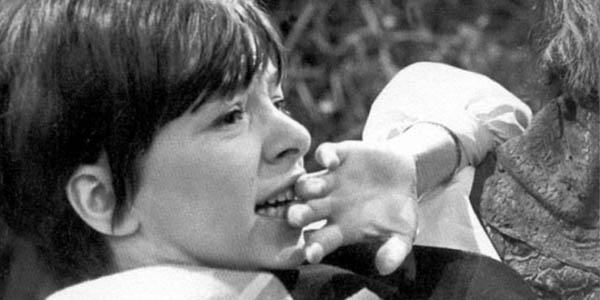
Once upon a time there was a companion named Dodo, as played by Jackie Lane, and nobody liked her. (Dodo, that is. One assumes that Jackie herself was pleasant enough, but who can say?). The character suffers from a number of issues. The first appears to be that the production team decided on having a girl companion from either the distant past or far future, but then chickened out, killed both of those off and just phoned one of the girls who'd originally auditioned to play Susan and asked her to play a girl from present day Manchester. Then they were told not to use Manchester out of a fear of regional accents, but not until some filming had already taken place, resulting in a Mancunian accent that comes and goes like the wind. Additionally, she doesn't have a beginning or an end. The character is shoehorned in at the end of an almost completely unrelated story (to show that a different, more interesting character might have lived through The Massacre) and just vanishes halfway through her final story (because Innes Lloyd hated both the character and the actress, and wasn't a particularly good producer in any case). So, what were fans left with? Halfway through The War Machines, Dodo has been revealed to be under the control of the computers and working against the Doctor. She's sent to "the country" to recover and two episodes later Ben and Polly bring the Doctor a message that she's "all better and staying there, see you later". It's much, much more gratifying that Ben and Polly just clubbed her with a lead pipe, threw her body in a ditch and headed back to the TARDIS to take her place. But that's how rumours start and lives get ruined...

6. Why Would Benton Become A Used Car Dealer?

For most of the 70s, the Doctor worked with an organisation called UNIT which stood for United Nations at the time, but apparently that's a little too brand conscious these days so they're not allowed to say it anymore. The French version translated it to NUIT, which was pleasing on a many number of levels. Anyway, this led to the muddying of the waters as far as who was technically considered a companion. To illustrate, John Levene appeared in nearly twice as many episodes in his role as Sergeant Benton than Peter Purves did as Steven Taylor. However, he technically never went off in the TARDIS to have adventures, so does he count as a companion? The same problem exists with the Brigadier. Clearly he's important, but does that make him a Companion with a capital C? Well, in the 20th anniversary year they came up with a story set in a school that was to feature the return of Ian Chesterton, played by William Russell, one of the show's very first companions. It would have been a nice little nod to the Doctor's inception, however Mr Russell was unfortunately unable to take the part due to other commitments and they'd already plotted out the entire story. The solution? Replace Ian Chesterton with a different - equally significant - former companion. Enter the Brigadier. Now, the Brigadier retiring and deciding for apparently no justifiable reason to become a maths teacher was just about believable. However, the Brigadier was one of many recurring characters from the days of UNIT and it would have been strange (to say the very least) if the Doctor had met the Brigadier again and didn't ask how the rest of them were doing. Harry Sullivan, he was told, is doing something hush hush for NATO these days. That's great (and fits in with the book Harry Sullivan's War - one of the earliest spin offs), so good for him. Then he's told that Benton is now a used car salesman. No. Wait a minute. What!? Sergeant Benton? He of no first name and impeccable honesty and integrity!? Worst. Used Car Salesman. Ever. To this day it still doesn't make a whole lot of sense.

5. If They Had A Weapon Like Kamelion, Why Did They Fail To Invade Xeriphas?

The 80s were an exciting time for Doctor Who. John Nathan Turner was constantly on the look out for ways to increase the show's public profile by attracting publicity through its fabulous guest stars and bringing the Master back over and over again after definitively killing him off every single time. One thing that falls under at least two of those categories was Kamelion, the robot companion who almost was. At the end of Time-Flight, the Master is dragged off by the Xeraphin to their home planet for some manner of non specified punishment (the Xeraphin equivalent of water boarding, one assumes). When fans meet him again, he has a shiny new shape shifting robot friend that he says was "an instrument of a previous invader of that planet who was instrumental in (his) escape". This begs the question, who invades a planet, then leaves and forgets to bring their shape shifting robot with them when they go? Honestly, there's poor invasion skills and then there's just sloppiness. And speaking of questionable invasion strategies...

4. How Does Lurking In A Church Wall Looking Evil Help Plan An Invasion?
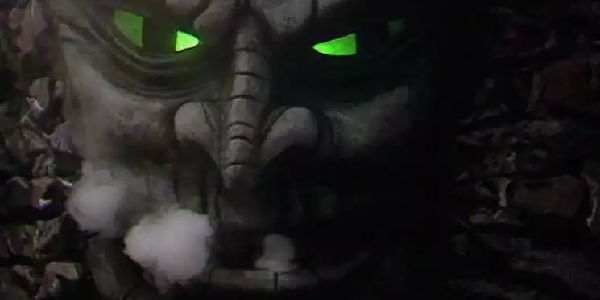
In The Awakening, the Doctor and the gang encounter the Malus. Outside of lurking around looking sinister, it's described as a part living/part machine psychic probe that was sent to Earth long ago as the first step of an invasion from the planet Hakol... which appears to have never happened. Which is just as well, really, because it's hard to imagine anything less useful to your invasion plans than the Malus. First off, it immediately goes dormant and allows helpful masons to apparently build the rest of the church around it, which doesn't seem entirely helpful if one is planning on arriving in a war fleet in the near future. Then, once it wakes up, it begins stirring things up so that it can feed on negative emotions like fear, rage and anger. Which means that you are actively making the people you're about to invade more aggressive and dangerous, probably killing off the weak ones and leaving just the meanest and toughest alive to deal with your invasion forces on the off chance that they ever even show up. Seriously. There's a reason that the phrase "Great Hakol Empire" has never been used. Just quit while you're ahead, yeah?

3. Did Everybody In E-Space Die?

Towards the tail end of Tom Baker's tenure, fans were treated to an epic three story arc in which the Doctor gets trapped in a separate pocket universe where he meets a variety of different races, leaves behind Romana and K-9 and picks up Adric (not the world's greatest trade by any stretch of the imagination, but there you go). Then, a few weeks later, fans found out that the pocket universes had been lovingly hand crafted as a stopgap measure to prevent the complete disintegration of.. well.. everything, but unfortunately the Master made a few poor choices and most of those pocket universes "closed". But what does "closed" mean, exactly? Is it just that the doors to them are gone, or did fans really just watch Romana, K-9, the Marshmen, et al get squished into non existence? Furthermore, at the end of The Big Bang, the Doctor rebooted the universe. Since the base cells of the universe trapped in the Pandorica came from A.D. 1 (Before E-Space was closed/destroyed), does that mean that fans just saw the complete resurrection of Romana, K-9, the Marshmen, et al? And what about Traken? Does Traken exist again now, too!? Enquiring minds...

2. What Became Of Mel And Glitz?

Poor Melanie Bush. Unloved by fandom in her time, history has... not changed that opinion very much. Which is a bit unfair. Hindsight has made it clear that Bonnie Langford came to play a character, while John Nathan Turner just wanted her to play Bonnie Langford. It's important to remember the backstory to her character's creation. One of the more frequent complaints about Doctor Who during the great hiatus of 1986 was that there was far too much time in each episode spent just watching the Doctor and Peri bitch at each other. This in itself was a result of the show transitioning from 25 minute episodes to 54 minute episodes. More specifically, the show made the transition but the script editor didn't quite come with it, which led to a larger amount of padding than usual. Pointless arguing scenes are quick to script and can work wonders to fill a few missing minutes. That is, in small doses. After the hiatus, though, the production team's solution to the problem was to replace Peri with a happier, chirpier pep-squad of a companion. Enter Mel. And, after a year, fandom was relieved to see her go. The production staff appeared to feel the same since they simply wrote her out as quickly and expediently as possible. To whit, she decided completely out of the blue to leave with Sabalom Glitz, intergalactic mercenary, at some nebulous time in the future, in some unspecified galaxy, to do "much more crazy things". Whatever that means. It was a bit like watching Gidget suddenly hook up with Locutus of Borg and take off for that prison planet in Alien 3... except this made absolutely no sense.

1. Why Did The Time Lords Exile The Doctor In His TARDIS?

Translate the entire situation into terrestrial terms and it immediately becomes obvious how strange it is. Imagine for a moment that you've stolen a car of some kind. Let's say a Chevy Nova, to pick a random example. Then imagine that, after a period of time, the law catches up with you and your stolen Chevy Nova, you're arrested, and they put you on trial. What are the odds that the judge, upon handing down a sentence of exile to some sort of prison colony, is going to finish with the words, "And take that Chevy Nova with you!"? Was it some sort of oblique mental punishment, having a possible source of escape right there with him but not being able to use it? Did they genuinely believe that there was no chance of him fixing the thing and escaping? Did the TARDIS' actual owner at least get some form of compensation, or were they just left waiting outside the Gallifreyan impound yard holding a claim check number that is never going to be called? It's a curious legal system that says, "Sure, you're guilty of stealing that. But just go ahead and keep it. Whatever." That's the Time Lords, for you. What did you think of this list? Are there any other unanswered questions from the Classic Series of Doctor Who that should've been included? Perhaps you've got some answers? Join the conversation in the comments section below.

In this post: 
Doctor Who
 
Posted On: 
Contributor
Contributor

Mikey is, in no particular order, a freelance writer, improvisational comedian, volunteer firefighter, playwright, Bon Vivant, and Jane Espenson enthusiast. Born in the small mining town of Eden Prairie, MN, he has some 40 years later successfully moved about 20 miles north of there to the City of Brooklyn Center, MN where he lives with an unreasonable number of dogs. If you'd like to hear him discuss something other than Doctor Who while pretending to be a dog, check out www.the42ndvizsla.blogspot.com or follow him on twitter at @the42ndVizlsa