10 Most Depressingly Realistic Lessons From Doctor Who

Sometimes the Doctor inspires, amazes, or astounds us. Other times he just bums us out.

For a show that's essentially about escapism and wonder, it shouldn't go unnoticed that Doctor Who is capable of laying down some pretty heavy lessons. In amongst the stuff about appreciating the wonder of the universe, rejecting cynicism, and embracing joy there is the occasional acknowledgement that sometimes things just suck and there's nothing we can do about it. For a long time (in the classic iteration of the show) it was fashionable amongst the fanbase to not be overly bothered by this sort of thing. The real tragedies were mostly reserved for the guest cast, and even when the harsh light of truth fell on one of the main characters we just sort of rolled with it and moved on. Sarah Jane's leaving arguably broke the hearts of a generation, but it wasn't until she came back in the new series that we had all the discussion of how she might have been emotionally affected by it. In direct opposition to the still ongoing Rose v. Everyone That Isn't Rose debate currently raging in some dark corner of the internet, there is not (to my knowledge) a hardcore argument going on about who the Doctor really loved more, Nyssa or Tegan. (Although this is the internet we're talking about, so who really knows. The correct answer is Nyssa, BTW.) Of course, the show (and The Doctor) both already addressed this issue via a very nice speech about how the bad things don't make the good things unimportant, so now we can be open about it: sometimes Doctor Who says things that are depressing, but true.

10. Sooner Or Later Everybody Leaves You

This is the only one that has been flatly, directly stated by the show (and by the main character). In the episode School Reunion, The Doctor unambiguously says to Rose what we'd all more or less assumed for a very long time. He lives his life knowing that every single one of the people he knows is going to eventually leave him. Partially (as he points out to Rose) this is just simple math. He's going to live for thousands of years. Rose will probably live to around 80 (less, more likely, as she has a thrill seeking personality and a tendency to not consider the consequences of her actions). What's interesting about this lesson is that we can witness the exact moment he learns it; It happens about 20 minutes into the final episode of The Chase. When Ian and Barbara tell him they want to use the Dalek timeship to go home he flies into a rage. The reason for this outpouring of anger is immediately obvious - it genuinely never occurred to him that Ian and Barbara would choose to leave him given the opportunity. Every single companion leaving scene from that point was met by him with varying degrees of resignation. Only once did he even attempt to stop them from leaving (Tegan) and even that was more about not wanting her to leave hating him than it was stopping her from going. No one in your life is there permanently. That's why having them here now is important. The Doctor learned that in 1965. He's been trying to explain it to us ever since.

9. Sometimes, Winning Just Means Losing Least

One of the more overlooked scenes in the history of NuWho comes toward the end of The Parting of the Ways. Christopher Eccleston, having spent the last several scenes frantically assembling a convenient MacGuffin, stands face to face with the Dalek Emperor and... decides not to use it. People for whom Drama meant big explosions and shiny guns immediately took to the web criticizing this as terrible scripting, a complete waste of time in the episode, Russell T. Davies is the antichrist, etc., etc., etc. What they were really showing was that they'd entirely missed the point of the scene. What was really happening was this: the Doctor was put in a position where he had the clear and direct choice to either be killed by the Daleks and doom humanity to unspeakable slavery, or defeat the Daleks by committing an absolute atrocity. And he chose to not become a monster. After killing his own people and spending a season careening toward becoming the very monster that he had fought against, he chose instead to die, better a coward than a monster, any day. And THAT is a victory.

8. It's Possible For Someone To Love You And Betray You
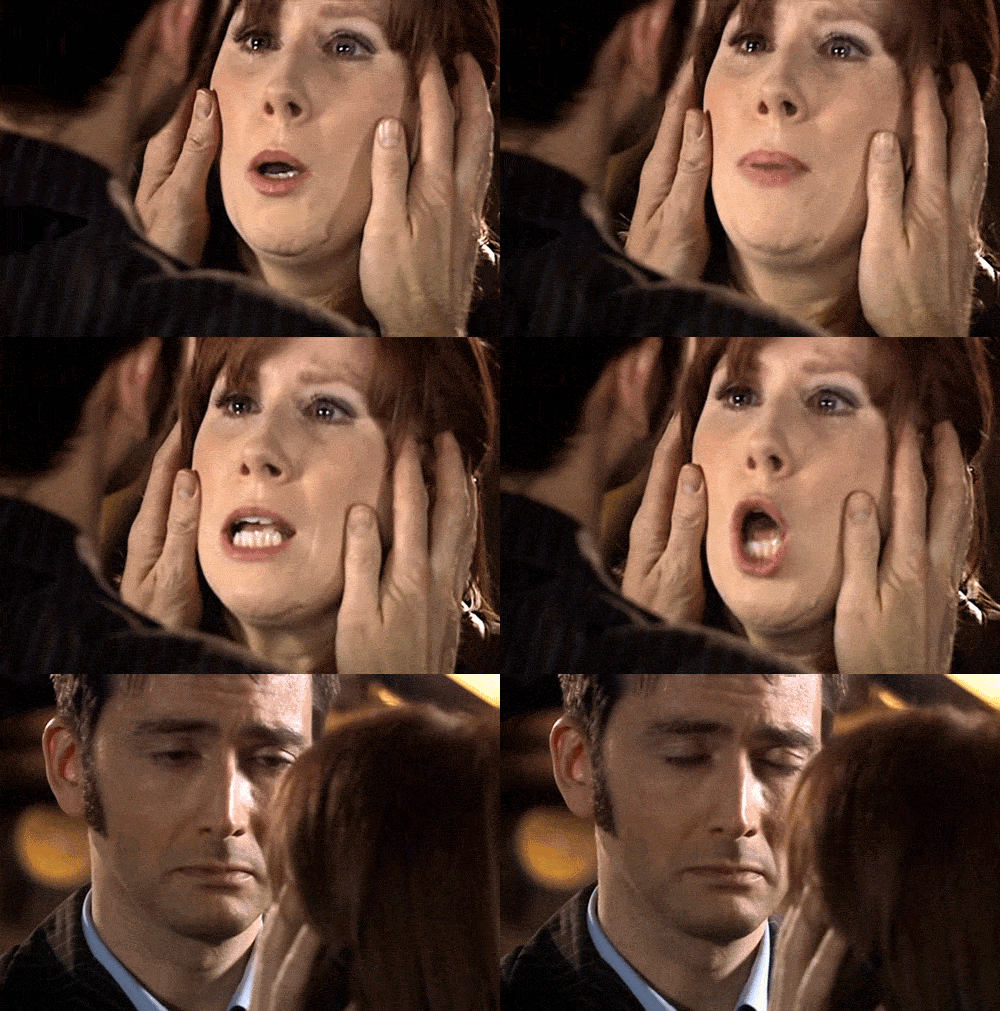
Two things need to be unequivocally stated here. 1. The Doctor loved Donna. 2. What the Doctor did to Donna at the end of Journey's End was Wrong. It's understandable, what he did. She was dying. He had the power to stop her dying, but at a terrible cost. Donna understood the situation and made her decision about what her future was going to be. And the Doctor ignored that and destroyed everything she loved about her life in order to save it. The really notable thing here is that the program itself seems to condone the Doctor's actions. He gives her Mum a stern word about not being so horrible to Donna in the future as if that's supposed to make him the hero again, but at the end of the day he's the guy that took away Donna's ability to make her own choices about her own life. Justified? Maybe. Maybe not. Betrayal? Definitely.

7. Actions Have Consequences

This is a lesson that the show has been teaching us since very nearly the beginning (give in to your curiosity and you might accidentally get kidnapped by a mysterious alien time traveler!), but there's a much more recent and painful example. (Spoilers for Season 9, on the off chance you haven't watched it yet) Earlier in the season the Doctor used a young Viking girl to help ward off an alien invasion and because he made that choice she died. Out of guilt he used the available alien tech to bring her back to life, but this unfortunately made her immortal. Centuries later she inadvertently caused Clara's death. So, whose fault is Clara's death? Ashildr (Mayor Me)'s for luring them there? The Doctor's for making Ashildr immortal in the first place? Clara's for the choices she made that brought the curse on herself? All of the above? Ripples and Tidal waves, the Doctor said - ironically at the beginning of The Girl Who Died. Try to avoid the one and minimize to other, but there are always going to be consequences for the choices you make.

6. Don't Miss Your Chance To Say Goodbye

One of the more depressing things in Timeflight (other than the script and the effects of course) was the fake-out ending in which we were led to believe that Tegan had been left behind at Heathrow. It was a natural enough assumption on the Doctor's part; she'd been going on pretty much non-stop since the moment she set foot on the TARDIS about wanting to get back to Heathrow and her job. When the TARDIS ended up there on an unrelated matter (for those who haven't seen the story in question - the Master summoned them there for Vaguely Racist Hi-jinx in Pre-History) it was only logical that he'd think she wanted to stay there. It is a little odd, however, that he just took off without confirming that (or even letting her that know he was leaving for that matter) but it's not as if the Doctor leaving without saying goodbye was unheard of. Perhaps he'd just had a peek at the time scanner and knew that he'd see her again in Amsterdam just as soon as she'd finally changed clothes and gotten a decent haircut.

5. Deserving A Happy Ending Is Not The Same Thing As Getting A Happy Ending

It's not going out on a limb to say that when the character of Danny Pink was first announced most of us assumed that he was going to be a new companion, either joining or replacing Clara (or that he was going to be the Master.) As Series 8 continued it became clear that he was instead a counterpoint to the Doctor, giving both aspects of Clara's life a physical representation for her to bounce off of - which if nothing else is just good drama. For most of the series Danny was the stalwart, almost too good to be true man waiting for Clara at home. To be honest, he was so reasonable, considerate and altogether 'good guy' that it genuinely did feel for a while there like he was seconds away from tearing off a face mask and revealing Roger Delgado. But no, Danny ultimately turned out to be exactly what he seemed to be; a really good guy. True, he was haunted by what he had done during the war (and we never did actually get to see the entire story of what happened, so it's difficult to really say how culpable he was), but he clearly was the sort of character that the audience expects to receive a well deserved happy ending eventually. Then, in a twist that Joss Whedon would have given a respectful nod to, he was instead randomly run down in the street, turned into a Cyberman and blown into a million pieces.

4. Know When To Leave

Back in 1986, a good chunk of Fandom was less than kind to Bonnie Langford. To be fair, these days we know that Bonnie is gracious, amusingly self deprecating, and an all around good egg. At the time however she was a former child star who played a new companion with a cutesy-squeaky voice, toxically saccharine chipper attitude and a depth of characterization that rarely surpassed one dimension. It should be acknowledged that the person fandom was really upset with was John Nathan Turner. The character that Bonnie was given to play was merely an unfortunate amalgamation of all of the things that we'd been politely trying to pretend we didn't like. The outfits beggared description. The dialogue given to her by the good people at Pip and Jane enterprises would have been unsalvageable even if Glenn Close had been cast as the new companion. The cards were very much stacked against fandom ever embracing Melanie Bush. And so it seemed sort of logical when, after the end of her first full year, her character basically said, 'Well, I'm clearly not working out as your companion. No worries, here's Sophie Aldred. You kids have a good time." The scene itself is actually one of the most likeable moments Mel ever had, and her deciding suddenly to leave with Sabalom Glitz cements her position as firm number two in the annals of 'Companions who apparently were just travelling with the Doctor until they found an opportunity to leave and have a lot of rough sex.' Number one of course was Nyssa, in case you were wondering.

3. Maybe We're All Good People Who've Done Some Bad Things

It's startling, when you stop to think about it, how few regular characters in Doctor Who aren't completely morally compromised. For example, just about the first thing that we learn about the Doctor is that he's a kidnapper. The first time we ever get any concrete information about him it's that he's a wanted fugitive for grand theft TARDIS. And that's all before we get to the new series 'may have committed double genocide' business. And it doesn't stop with him, the companions have a trail of crimes behind them. Nyssa was astoundingly quick to shoot others in the pursuit of her aims. Adric was initially introduced as an accomplished thief. Leela murdered how many people before our eyes. Even Jamie, one of the most fondly remembered companions, was fleeing the battle of Culloden with sword in hand when we met him. Do we really think he didn't have blood on his hands?

2. Eventually You Have To Choose

There continues to be a surly dialogue going on about the exact mechanics about how Amy and Rory left the series. (More accurately, a dialogue about how Amy left the series. People don't seem terribly bothered about Rory, which is odd when you consider that Rory was an infinitely better person than Amy was. That probably says something unfortunate about us as a species...) Most of the surly dialogue dwells on questions like, if the Doctor knows that he can't go back to Amy and Rory trapped in 1930s New York, why doesn't he just take the TARDIS to 1930s New Jersey and catch a train? Or go to 1940s New York and pick up a slightly older Amy and Rory? Which entirely misses the point (dramatically, if not pedantically). The point is that for two-and-a-half series Amy had both the Doctor and Rory, enjoying the best of both worlds. Worlds which, as the show occasionally pointed out, did not entirely mesh. She put it off, but eventually she was always going to have to be put in the position of having to make a definite, final choice between the two of them. Rory, or the Doctor. Pick one and lose the other. It was always going to come down to that, that was the fundamental point of her character. Eventually, you have to choose. Amy finally chose. That's why he can't just go pick them up again.

1. You Don't Always Know When You've Hurt Someone
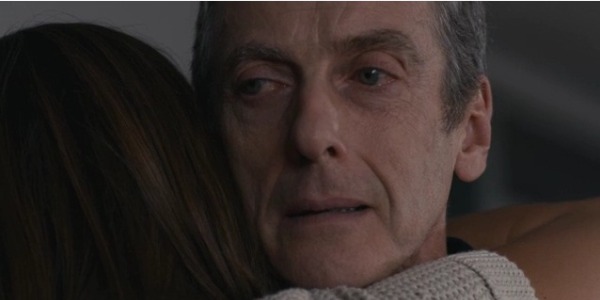
Before Clara's final goodbye in Series 9, she had been given an embarrassment of riches in not one, but two goodbye scenes that any companion would have been proud of. Consider poor Dodo, and how absolutely thrilled she would have had either of those goodbyes. While the goodbye scene at the end of Last Christmas would have easily made it onto the top five departures ever list (so perfectly pitched that it's a genuine tragedy that Nick Frost came in and gave them a get out of jail loophole), it's the café scene at the end of Death in Heaven that really breaks new ground. Clara, believing that the only thing preventing the Doctor from going home to be happy with his own people is his sense of obligation to her, lets him believe that Danny is still alive so that he'll leave her behind. The Doctor, believing that the only thing keeping Clara from staying with Danny and being happy is a sense of obligation to him, lets her believe that he has a people to go back to so that she won't feel badly about leaving him. Then they hug (just a way to hide your face) and we see that they are both utterly, completely heartbroken, and desperately trying not to let the other one see it. That's a reason for a companion departure that we've never seen before and probably never will again. They both hurt each other trying to be kind. That's not something every show can achieve.

Contributor
Contributor

Mikey is, in no particular order, a freelance writer, improvisational comedian, volunteer firefighter, playwright, Bon Vivant, and Jane Espenson enthusiast. Born in the small mining town of Eden Prairie, MN, he has some 40 years later successfully moved about 20 miles north of there to the City of Brooklyn Center, MN where he lives with an unreasonable number of dogs. If you'd like to hear him discuss something other than Doctor Who while pretending to be a dog, check out www.the42ndvizsla.blogspot.com or follow him on twitter at @the42ndVizlsa