10 Real-Life Events Which Need To Become TV Shows
It's not just the British Royal Family who deserve an HBO or Netflix series.

With the recent release of season four of Netflix's hit show The Crown, it has become clear that some historical happenings make for truly addictive television viewing.
The series focuses on pivotal moments in both the lives of the Royal Family and modern British history, depicting events such as Queen Elizabeth II's coronation, The Great Smog of London, and The Aberfan Disaster.
Spanning much of the twenty-first century, the wildly popular series has, much like HBO's spectacularly haunting Chernobyl (2019), captured the attention of audiences and critics alike with its high-production values, stellar cast, and arresting takes on the recent past.
However, there are some interesting, gruesome, and downright scandalous real-life events which have yet to make it to our small screens. Whether it be bloody battles, murderously maniacal leaders, or perilous plagues, here are ten historical events which would have us glued to our screens.
10. The Highland Clearances

While the growing tensions between England and Scotland during the eighteenth century are referenced in the popular show Outlander (2014-), this grisly period of conflict and subjugation is largely overshadowed by the central romantic plot and fantasy elements of the show.
A series which charts the events of the Highland Clearances could begin with the ill-fated Jacobite rising of 1745, which saw Bonnie Prince Charlie attempt to reclaim the British throne. The uprising culminated in the bloody Battle of Culloden, which claimed the lives of hundreds of Scottish fighters. The battle scenes would be both brutal and devastating.
After the tragedy of the failed rebellion, Scottish Highlanders were subjected to further misery as the century continued: many were forced from their land during the clearances, suffered through famine, and saw the destruction of their traditional livelihoods.
A TV show which depicts this oft-overlooked period of political disputes, military conflict, and heartbreaking loss would be an engaging and emotional watch. And, given the popularity of shows such as Outlander, would likely be an instant hit.
9. The Reign Of Ivan The Terrible, First Tsar Of Russia

Ivan IV Vasilyevich, most often referred to as Ivan the Terrible, was the first Tsar of Russia, as well as a notoriously bloodthirsty ruler famous for the cruel and callous treatment of his subjects, courtiers, and family.
While many television shows and films which examine Russian history tend to focus on the tragedy of the Romanovs or the brutal Stalinist regime, the reign of Ivan the Terrible remains neglected within popular culture.
However, Ivan's stint as ruler in the sixteenth century bore witness to several gory, tantalising, and scandalous events and incidents, many of which would make for an engrossing watch.
Although, in economic terms, Russia was irrevocably transformed during this time, the country suffered greatly throughout Ivan's reign, which included events such as the Massacre of Novgorod. Ivan's treatment of his family would be particularly well-suited for a TV series: the paranoid and unstable leader is alleged to have murdered his own son and heir.
8. The Hundred Years' War

This decades-long conflict amongst the powers of Western Europe spanned much of the fourteenth century, lasting until 1453. Consisting of several smaller conflicts fought between the English House of Plantagenet (alongside the House of Lancaster) and the French House of Valois, the Hundred Years' War would be well-suited to an episodic narrative structure.
Striking visual effects would elevate the gruesome (and presumably numerous) battle scenes, while an all-star cast would bring life to the political disputes and negotiations at the heart of these conflicts. As the success of Game of Thrones has shown, a series inspired by the aesthetics of the Medieval Period could be very popular.
The later phase of the conflict, the so-called Lancastrian War (1415 - 1453), would make for particularly interesting television. It is this period which saw the appearance of Joan of Arc, a French peasant girl who claimed to have been guided by God to assist the French forces, the eventual victors of the war.
While modern audiences are used to depictions of more recent wars, a TV series charting this relatively neglected conflict would help illuminate a much lesser studied conflict.
7. The Story of the Mary Celeste

Discovered empty and adrift in the Atlantic Ocean in 1872, the Mary Celeste has inspired many documentaries, YouTube videos, and blog posts. However, audiences are yet to be treated to a TV series which examines the unknown fate of this mysterious vessel.
Most likely due to the various unknowns which haunt the fate of this brigantine, there appears to have been little interest in bringing this mystery to the small screen.
However, it is precisely these tantalising questions which would make a Mary Celeste-themed miniseries such addictive viewing. The series could start with what we do know, and chart the events which led to her crew and passengers boarding the vessel on that fateful day.
Perhaps, a show could examine all the hypotheticals (pirates? giant squid attack? a paranormal occurrence?), or settle on a likely theory and focus on the tragedy at hand: regardless of how it occurred, several passengers (including the Captain's young child) lost their lives onboard this doomed ship.
6. The Tesla - Edison Rivalry

Two recent films, The Current War (2017) and Tesla (2020), have examined the lives and rivalries of famed inventors Nikola Tesla and Thomas Edison. However, neither account was a commercial or critical success, receiving lukewarm reviews.
Perhaps a film is too limited in its scope and runtime to accurately and engagingly portray the infamous competition which brewed between Tesla and Edison, and a television series would be more successful in illuminating this electric period in human history.
Of course, Edison and Tesla were just one piece of this puzzle: the so-called war of the currents comprised multiple events and involved other inventors and engineers.
And, as the world hurtled towards modernity in the late-nineteenth century, the debates surrounding electricity reflected wider anxieties and issues regarding attitudes towards modern technology. An extended series would be able to illuminate these wider contexts, as well as elaborate on the men at the heart of the 'war'.
5. The Irish Famine
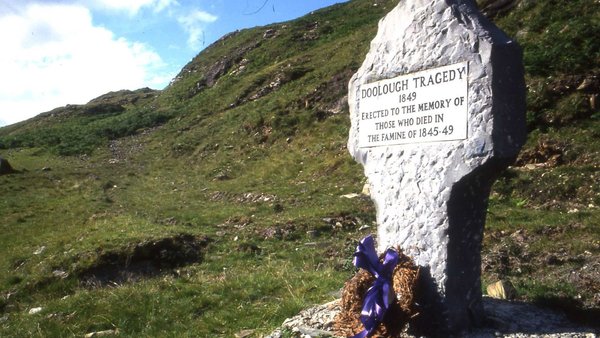
While the limited television serial The Hanging Gale (1995) did chart the effects of the Irish Famine on one family, the series consisted of just four episodes, providing only a limited insight into the many lives affected by this tragically turbulent period of history.
A more expansive series, which could examine the multi-faceted causes and consequences of the Great Famine, would be equally fascinating and heart-wrenching. While a film might be able to portray the impacts of the Famine on a central protagonist, a TV series would be able to provide an engrossing, in-depth look at the effects the potato blight had on various strata of society.
A series could also trace the multi-generational consequences of the famine, investigating the immigration of Irish families to Britain and America, and the tragedies and hostilities many faced on their journeys and upon arrival.
4. Norman Invasion of England
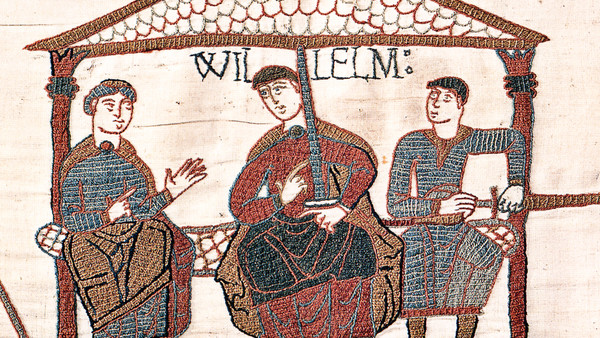
A miniseries would allow for a broad look at the events which led to the Norman occupation of England in 1066, and gory special effects would be able to bring the gruesome battle scenes to life.
While commonly taught to British schoolchildren, the Norman invasion of England led by William the Conqueror remains relatively overlooked within popular culture. However, with bloody battles, political intrigue, and royal rivals, a modern, narrative account of the conquest would be an arresting watch.
Such early history rarely makes it to our screens, but audiences would surely love a look into how eleventh century wars and battles worked, what weapons were used, and how victors were decided.
The battle scenes would be particularly gruesome: the English monarch, Harold II, was allegedly killed via an arrow to the eye during the Battle of Hastings.
3. The 1904 Olympics - Marathon Event

The 1904 Summer Olympics, which were hosted in Missouri at the height of the Russo-Japanese War, has retained a place in history as one of the greatest sporting mishaps of recent times. Due to the ongoing conflict, few non-US elite athletes competed at the games - but this lopsided 'global' representation is not what makes the 1904 Olympics so notorious.
The Marathon Event remains infamous for its dangerous conditions and bizarre results. While thirty-two men entered the race, fewer than half of the contestants managed to cross the finish line. The original winner, Fred Lorz, had his medal revoked after organizers discovered that he had actually completed most of the race in a car.
The eventual victor, Thomas Hicks, was helped along the way by multiple measures of alcohol mixed with rat poison (strychnine, to be exact), a practice which would now be considered as illegal as it was dangerous. One contestant, William Garcia, nearly died due to the harsh conditions of the race, and he was found by the roadside coughing up blood.
A limited mini-series with a stellar cast would work best in bringing this sporting disaster to life.
2. Lead up to/ The Events of the Jonestown Massacre
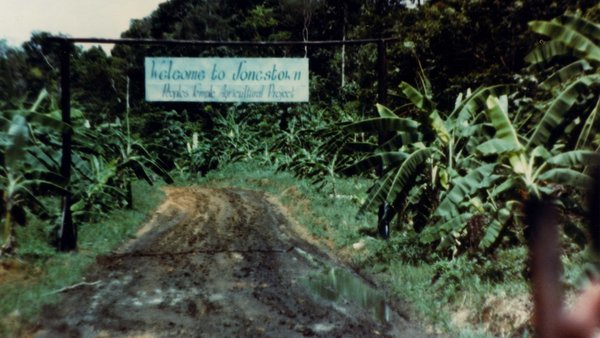
It is surprising that a series charting the actions of maniacal cult leader Jim Jones has yet to make it to our small screens. Although the Jonestown cult and Massacre have been the subjects of many documentaries, an up-to-date, multi-episode narrative account of Jones' ultimately tragic descent into madness would be an engrossing and heartbreaking watch.
In 2016, Vince Gilligan, the writer and producer best known for his work creating Breaking Bad, was touted to produce and direct an HBO series on Jones. However, there has since been little indication that the show is set to air anytime soon.
Of course, crafting a series featuring Jones and depicting the events of the mass suicide-cum-murder would be no easy task. The most important, and ultimately difficult, endeavor would be casting Jones himself. After all, this is a man who, some forty years ago, convinced over nine hundred people to take their own lives as an act of so-called 'revolutionary suicide'.
A series might shed light on Jones' early life, the beginnings of his cult, and the eventual demise which befell many of his followers.
1. The Reign of the Ptolemy Family in Egypt

Cleopatra VII remains one of the most famous rulers of Ancient Egypt, and her story (or, at least, parts of it) has been told and retold countless times. The notorious beauty has been portrayed by the likes of Elizabeth Taylor, and her romances with Julius Caesar and Mark Anthony have captured the attention of readers and audiences throughout history.
However, Cleopatra was not the only interesting ruler of the Ptolemy dynasty, and her early life is just as juicy as the salacious scandals which afflicted her later years.
A common practice amongst the Ptolemy dynasty was marriage between siblings, and many historians agree that Cleopatra likely married her brother, Ptolemy XIII, who later became an adversary.
Not content with just one sibling marriage, Cleopatra later married another brother, Ptolemy XIV, whose murder she later arranged. Such intrafamilial disputes and conflict were typical amongst the family, and this drama would provide nail-bitingly good TV.