10 Recurring Complaints About Doctor Who Right Now
Not the 'Not the Daleks AGAIN' complaint!
For a show that, on paper at least, has limited potential, the criticisms of Doctor Who are often incredibly repetitive.
Many of the complaints in 2021 are eerily similar to those in 1963, 1976, 1985 ad infinitum. What's different now is that these complaints are no longer resigned to scathing reviews or letters in Doctor Who Weekly, unofficial fanzines and The Radio Times.
In an age of social media, fans can vent their frustrations publicly whilst the episodes are airing, then complain afterwards that they couldn't follow the plot. There are common threads that emerge, and this is by no means an exhaustive list. It does serve to remind us that we've been here time and time again and no one complains more about Doctor Who than Doctor Who fans.
To quote Dan in Eve of the Daleks, "Anyone else got a proper deja vu?"
10. There's Not Enough Of It

Chris Chibnall's fabled five-year plan for Doctor Who amounted to three series - one reduced due to COVID - and a handful of specials. During the Steven Moffat era, we had mid-series breaks and 18-month gaps. Episode numbers were reduced from 13 to 12 to 10 to 6. But honestly, none of this should've been a surprise.
Doctor Who isn't like any other show. The only standing set is the TARDIS console room, with two or three regulars. Everything else begins from scratch with each new episode.
If big prestige dramas have to work around actor availability, budgets, and locations, then of course Doctor Who needs to do the same. It's not like the 1960s: you can't churn the show out once a week for a whole year while matching the quality of other genre shows like Star Trek and Stranger Things.
One of the benefits of Flux's six-part structure was a core cast of actors and locations, and this may be the answer for the future, allowing for those dazzling production values to continue. With RTD promising that there'll be no more gap years, it'll be interesting to see how the show adapts going forward.
Anyway, Big Finish releases about six different Doctor Who stories a month, so there's plenty of content!
9. It Needs A Rest

A small corner of the fandom would rather Doctor Who not be on our screens, as if the 16-year hiatus was all for nothing. Such a rest would potentially reinvigorate public interest, rather than see the show fade into obscurity.
The BBC even mooted resting Doctor Who when David Tennant and Russell T Davies decided to leave, so as not to ruin all the good work that went into rehabilitating this quote-unquote embarrassing old sci-fi show.
However, does taking a show off the air really do it any good?
Say Doctor Who goes for a long nap, to be reinvigorated with a new showrunner and Doctor further down the line. All it would take would be for the BBC to put someone in charge who hates the show, and we'd be staring down the barrel of another 16 years of copyright-skirting audios and Children in Need sketches. Shudders.
8. It's Too Complicated

The "too complicated" criticism became increasingly noisy during the early days of Steven Moffat's tenure as showrunner. The complaints around what the Flux happened at the climax of The Vanquishers recalled a lot of the bafflement viewers experienced at the end of The Big Bang back in 2010.
It's a strange one, because Doctor Who certainly doesn't feel that complicated most of the time. In a way, this complaint only serves to patronise the show's viewers, when Moffat (and other writers) never have.
Douglas Adams once said that the challenge of Doctor Who "was to make it simple enough for adults and complicated enough for children". At a time where social media and smartphones have fundamentally damaged our attention spans and ability to focus on key plot points because we're too busy tweeting about how little we understand what we're seeing, this has never been more accurate.
Another Doctor Who writer, Toby Whithouse, provided a compelling counter-point to the "too complicated" criticism while Series 6 was airing in 2011:
"The fact is, most people like the show the way it is. They can follow the stories, and week after week they are spooked and thrilled and delighted. The only problem with content majorities is they tend to be silent."
NuWho is no more complicated than some of the themes and plots in the classic series, so it's unlikely this will change going forward either!
7. It Relies Too Much On Old Villains

One of the multitude of criticisms of Flux was the focus on old favourites like the Sontarans, Ood, and Weeping Angels, distracting from the new villains Swarm and Azure.
It's a criticism that misses the point, as what makes Swarm and Azure so compelling is the hidden history they have with the Doctor. They're up there with the old enemies we met over the course of Flux and previous series, it's just that the Doctor didn't remember them!
Anyway, what's wrong with old villains every now and again? The Cybermen, the Master, and the Daleks are always attention-grabbers, and as long as they're written in an original and interesting way, then everything's gravy.
O's reveal as a new incarnation of the Master in Spyfall was one of the greatest Doctor Who cliffhangers in recent memory, so perfectly was it kept hidden in plain sight. Reveals like that get people talking, creating buzz around the show that might attract new viewers. And who knows, maybe they'll even stick around for one of the new creations like Swarm and Azure.
6. The Ratings Are In Decline

Ever since the show returned in 2005, Doctor Who fans have been stressing over the ratings. Each little drop in the numbers means imminent cancellation, and Ian Levine prepping another charity single. Except, Doctor Who has been back on our screens for almost 20 years now. We have specials guaranteed through 2023, and "series beyond".
In some circles, poor ratings are cited as a reason for a change of leadership by critics of the latest regime. It's the equivalent of poor performance by your football team. In the late '80s, poor ratings were always mentioned as proof that either John Nathan-Turner wasn't fit to run the show anymore or that the BBC was trying to kill it, depending on your standpoint.
Nowadays, UK ratings were used to argue that the Whittaker/Chibnall era was a disaster, even though their numbers were on par with Capaldi's. It's a criticism that misses out the impact of streaming, and the global viewership in Australia, New Zealand, America, and beyond.
As evidenced by the Disney+ deal, the BBC is well aware of the global IP they have on their hands, something they didn't appreciate back in the '80s.
5. It's Obsessed With Its Own Mythology
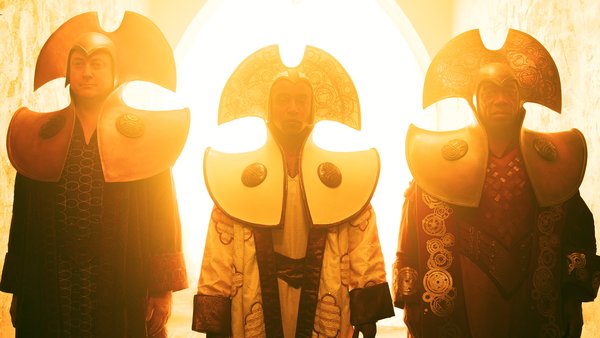
While the world embraces never-ending fan service in the Marvel Cinematic Universe, some Doctor Who fans flinch whenever the show dabbles with its own mythology.
For good or ill, a rich fictional universe is a massive boon these days. Billion dollar companies are founded on them, and in a world where B-List Marvel heroes like Iron Man and Ant-Man have become multi-million-dollar movie franchises, it makes sense for Doctor Who to play around in its 60-year-old sandbox too.
Even if blowing up Gallifrey again perhaps wasn't the most inspired move.
Russell T Davies understands this landscape well, and it's been all-but confirmed that he'll be building up some sort of Doctor Who Cinematic Universe. A Whoniverse, if you will. Some fans worry that this will dilute the appeal of the main show, or confuse the casual viewer - and yet we have no trouble gobbling up endless Big Finish boxsets.
The rich, contradictory world that Doctor Who has created is ripe for exploration, and it's possible to do this in an accessible and successful way.
4. It's Too Childish

Doctor Who can be too complicated, but also too childish. Some point to the Chibnall era's more on-the-nose moralising, while others point to a more simplistic approach to heavy subject matter, like civil rights.
Others just point to the silly monster costumes, which is... y'know, fair.
And yet, Doctor Who is never going to be another grim adult sci-fi show with a fear of jokes. Who didn't see those fleets of Dalek, Cybermen, and Sontaran ships massing together in The Vanquishers and not feel sheer child-like glee? What's the point in being grown up if you can't be childish sometimes?
Hilariously, this criticism goes all the way back to the show's early days. One boy wrote into Junior Points of View to claim that The Web Planet, with it's chirruping insect people, was treating him and other kids as if they were babies. A few years later, another child complained about the scientific inaccuracies in the Troughton era.
Everything changes... but everything stays the same.
3. The Magic Has Gone

Following the broadcast of 1976's The Deadly Assassin, the Doctor Who Appreciation Society published a furious opinion piece which chastised writer Robert Holmes for contradicting existing Time Lord mythology. It's gone down in fan legend, and is an entertaining enough read.
But in the years since, The Deadly Assassin has been cited as a favourite by the likes of Steven Moffat and David Tennant.
2020's The Timeless Children saw Chris Chibnall receive a similar response on social media. Many fans were furious at the prospect of pre-Hartnell Doctors, and that certain plot points about regeneration no longer made sense.
There are loads of great criticisms of the idea and execution of the Timeless Child reveal, but they all boil down to one big no-no - attempting to define that indefinable magic, attempting to explain away that mystery at the heart of the show. Doctor Who?
Hilariously though, The Timeless Children left us with more questions than answers - questions that can be explored across future decades, or, more likely, quietly set aside. It's what the show has been doing since 1963!
2. It's Not As Good As It Used To Be

We’re all different people. With that in mind, has Doctor Who got worse? Or have we all got old? When fans harp on about "returning the show to its roots" they forget that those roots are in dull caveman stories and burping wheelie bins.
Doctor Who's unlike any other show, in the sense that it has more in common with an anthology series than a massive over-arching narrative that all has to fit together. It can be literally anything from week to week, shaped by the concerns of each writer, and the setting of the story. It's never as good as it was the week before, or as good as it will be the week after.
Hilariously, following the airing of the second-ever episode, a viewer wrote to The Radio Times to complain that the eerie mystery of the previous week had been replaced by a bunch of boring, grunting cavemen, thus setting the tone for the decades to come.
1. The Daleks AGAIN?

The Daleks have returned pretty much every year since 2005, which has led to frequent complaints that we see far too much of them.
Terry Nation's creations are, to some corners of Doctor Who fandom, as Creep is to Radiohead fans. Populist, lacking in innovation, not as complex as some of the show's other creations. But the simple truth is that Daleks sell. More than the Doctor and the TARDIS, it's the Daleks that adorned BBC offices during the wilderness years of the 1990s, and they're arguably the defining cultural success of the show since 1963.
This same argument about the proliferation of the pepper pots has been raging from the cooling of Dalekmania following 1965's The Daleks' Master Plan, to the recent Eve of the Daleks and The Power of the Doctor.
Former producer Barry Letts famously criticised creator Terry Nation for submitting the same story every year. NuWho godfather Russell T Davies' era saw a Master finale and three Dalek finales, the exact same hit rate as Chris Chibnall's New Year episodes. Is this a mark of a winning formula, or an indicator of creative bankruptcy? You decide!