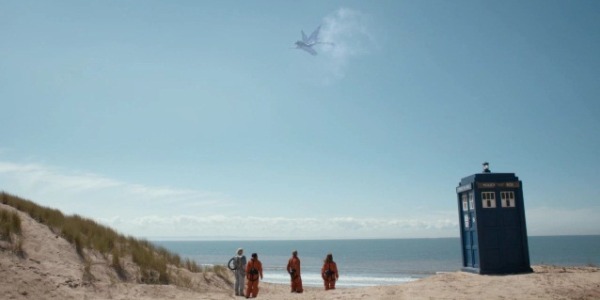
It's no exaggeration to say that there is nothing on TV quite like Doctor Who. For over half a century it's been enthralling audiences around the world and its international viewership currently stands at over 70 million. But just what is it about the ongoing adventures of everybody's favourite Time Lord that continues to make the show such unmissable telly? Not even the leading man himself would know the answer to that one. If anyone knew the truth behind Doctor Who's ongoing success then they'd be bottling it up and using it to make their own universally acclaimed shows but until the auspicious secret is revealed, the reason behind the show's longevity remains open to speculation. Of all of the far reaching factors that contribute to the show's winning formula, the fact that it continues to break the mould and set new trends within the televisual market is probably one of the defining ones. Doctor Who has been leaving its mark on TV history since its inception in 1963 and that's largely down to the fact that it never conforms to what is expected from the genre to which it is confined. It's a drama at heart but over the last 51 years it has become so much more. Over the next 10 pages you'll see 10 examples of things that only Doctor Who could ever get away with, all of which have helped to affirm it as one of the most successful franchises in TV history. And it's only just the beginning...
10. Familiar Foes
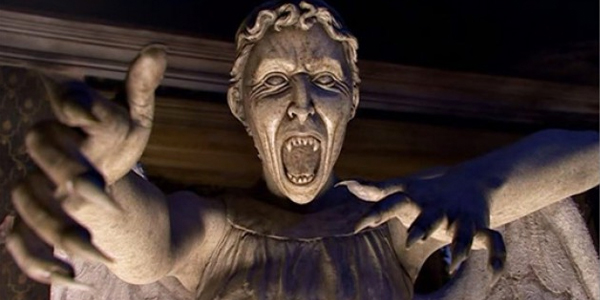
Doctor Who has introduced a menagerie of new monsters to its ever growing universe since its reinvention back in 2005 - the Weeping Angels and the Silence are two prime examples - but it's fair to say that the titular Time Lord's 21st century adventures have thus far been dominated by his familiar adversaries from the past. Forget "out with the old and in with the new", it's the complete opposite for Doctor Who where the mantra is seemingly more about doing new things with the old. Most of the time it's new things, anyway. Take the Daleks, for instance. They're now as iconic as the show itself and, having first crossed the Doctor's path back in 1963, they're also just as old, too. It's no surprise, then, that they were at the top of Russell T Davies' list to make a return with a vengeance (licensing issues aside) during NuWho's debut series and they've pretty much appeared - in some form or another - in every series since. They're nothing if not persistent. It's a testament to the writers that they're still finding original ways of making these exterminating pepperpots worth our while. It got a little shaky for a minute but as of Series 8's Into the Dalek - during which the Doctor went where no Time Lord has gone before by actually venturing into one - they have safely been restored to their former glory. Not many shows could get away with reusing so many of its past creations, though, but Doctor Who is all about the nostalgia.
9. Death Is Not An Option
There aren't many shows on the mainstream televisual market which can kill of its central characters and have them live to tell the tale. EastEnders is an example of when it just doesn't work - who could forget the return of Dirty Den over a decade after he was quite evidently shot dead into a canal and subsequently buried? That was taking it all a bit too far, even by Albert Square's outlandish standards. In the Whoniverse, though, where quite literally anything goes, Rory Williams is probably the first person who springs to mind in this department - and rightly so. He died so many times during his TARDIS tenure that it was ultimately more surprising when he actually did make it through an entire episode unscathed. Even he started to joke about it. This is just another weird and wonderful aspect of Doctor Who's unique formula, though. It certainly adds another level of drama to the proceedings because nothing quite compares to the heartbreak of watching one of your favourite characters pop their clogs (repeatedly, as was the case of Rory the Roman) and then being resurrected before your very eyes as the result of some timey-wimey spacey-wacey means. It's an emotional rollercoaster to say the least. Captain Jack Harkness is also another example of Doctor Who's ability to cheat death, though for him the results have been somewhat long lasting. No sooner than he had been exterminated by the Daleks in The Parting of the Ways, he was brought back to life by Rose Tyler who had a new found power of the universe in her hands after staring into the heart of the TARDIS and absorbing the energies of the time vortex. How's that for a get out clause? It all makes perfect sense, too Relatively speaking, of course. Speaking of people for whom death just isn't an option...
8. The Master Race
The End of Time was exactly that in more ways than one. David Tennant's acclaimed tenure in the TARDIS had pushed the series to new levels of scale and success so his final adventure certainly had a lot to live up to. The Tenth Doctor was always going to go out with an almighty bang and thankfully the Time Lords were just around the corner to ensure that his swansong was as spectacular as it deserved to be. The long awaited sort-of-return of Gallifrey wasn't going to be the only blast from the past for our beloved hero in his final adventure. John Simm was also back with a vengeance as the malevolent Master who was waiting in the shadows for the opportune moment to unleash his latest tyranny of terror unto the unsuspecting human race. Last seen - dying, no less - in the Series 3 finale, the renegade Time Lord was just as bananas as he had been during his last attempt at world domination, though this time he was much blonder and it wasn't just a hungry appetite for power he was harbouring. The fact he had managed to survive his own cremation wasn't really the issue here, though. The Master has cheated death before (and since) so it's never really that much of a shock when it's revealed that he's come up with yet another devilish way of prolonging his existence. It was what he did next that many found difficult to handle. The Master has always got a trick or two up his sleeve but this one took it to a whole new level. Driven by a psychotic desire to be the king of his own world, it was only a matter of time until he found a way of making an entire species look like him. He achieved just that in this two-parter when Earth became home to his new 'Master' race which basically meant that every person on the planet suddenly looked like that bloke off Life on Mars. Suffice to say, not many shows could get away with something like that but Doctor Who has never been one to play by the rules. For that, it's fans are eternally grateful.
7. Making The Moon An Egg
OK, so it didn't really get away with this one. The recent revelation that planet Earth is actually being orbited by the embryonic form of a gigantic, draconian creature was a controversial one to say the least. It's worth pointing out that everything mentioned so far on this list, and everything that's still to come, makes perfect sense - relatively speaking - within the confines of the universe that Doctor Who has itself created. This, however, did not. The sad thing is that Series 8's Kill the Moon had a lot going for it before it dropped this almighty bomb/eggshell. It was penned by award-winning, and new to Who, writer Peter Harness, featured some brilliant guest stars and the crew even travelled to Lanzarote in order to recreate the landscape of the lunar surface (evidentially the BBC budget doesn't stretch far enough for filming to take place on the Moon itself - one day!). But then they went and spoiled it all by doing something stupid like making the Moon a bloody egg. Doctor Who fans are more than capable of suspending their disbelief but this time it was taking it a little bit too far. Everybody knows that the Moon isn't an egg and trying to suggest otherwise - even in a show as outlandishly ridiculous as Doctor Who - is just plain silly. So yes, in a list outlining things that only Doctor Who can get away with, this one sticks out as badly as the narrative development in question. The episode's dramatic final scene between the Twelfth Doctor and Clara is more than enough to make up for it, though, so every cloud has a silver lining. And the Earth has a moon that's a dragon and hatches into an exact replica of itself... apparently.
6. The Stuff Of Nightmares
Not many other shows - if any - would be celebrated for the mere fact that it's just so damned terrifying. It's an area which Doctor Who has been excelling in since its inception over half a century ago and the series is now universally notorious for sending its viewers behind their sofas in an outburst of unequivocal fear. It was a phrase initially adopted to coincide with the introduction of the Daleks back in 1963 and it's one that the Doctor's adventures have managed to live up to - and then some - ever since. One of Doctor Who's true powers, of course, lies in its unique ability to find the fear factor in the everyday. Whether it's a statue you pass on your way to work, a harmless child's drawing or that seemingly innocent crack in your bedroom wall, throughout his travels the Doctor has no doubt encountered at least one thing which has managed to change how you view the most ordinary aspects of life. You'll never look at a gas mask in the same way again.
5. Deux Ex Machina
"He woke up and it had all been a dream" is one of the most ill-fated plot devices in narrative history and Doctor Who has tiptoed dangerously close to fulfilling it - or something similar - throughout its many years in operation, excluding the most recent episode, Last Christmas, in which the events actually were all a dream. For one the most notable examples of this it's worth revisiting the Series 3 finale, Last of the Time Lords, during which the Master (not the first time he's been mentioned on this list, and it certainly won't be the last...) reigned supreme over the human race as the ever faithful Martha Jones single-handedly walked the entire Earth as part of her mission to restore an aged Tenth Doctor to his former youthful glory. To cut a very long story short. All of this ensuing drama - which involved the Doctor, Captain Jack and Martha's family being imprisoned and tortured in equal measure - took place over the course of a whole year but all of it, including the Master's initial rise to power as his Prime Minister alias Harold Saxon, eventually came to nothing when time was ultimately reversed so none of it had even happened. Not officially, anyway. The Doctor went from being a worldwide sensation to a stranger in the street and nobody on Earth - save the handful of people aboard the Valiant and, of course, the millions of viewers watching at home - will ever know what truly happened during the fateful 'Year That Never Was'. It all did still happen, though, which is probably why Doctor Who has been able to recover from this blatant use of deus ex machina more successfully than most. Martha's family were still tortured, Martha still travelled the Earth and the Doctor still lost his friend/foe (depending on how you look at it) at the end of it all, so none of the crucial character developments were distinguished. It's a shame the show can't adopt the technique more often, though. It would get the Doctor out of a lot of sticky situations.
4. Rebooting The Universe
Whether you've loved or loathed his tenure as Doctor Who's head writer (and it ain't over yet!), Steven Moffat has taken no chances as far as affirming his presence within the show's mythology goes. He wasted no time in leaving his stamp on the Whoniverse during his first year at its helm which ended with the untimely destruction - and subsequent reboot - of the entire universe itself back in 2010. That's one way to end a series! Explaining, or at least trying to explain, the entire story arc which led to the universe's demise is probably a discussion for a different day entirely so let's just cut a very long story short by saying that the explosion of the TARDIS resulted in the detonation of every point in history which led to reality frazzling and everything being erased from existence as a result. It all escalated rather quickly after that. As always, the Doctor managed to save the day by flying the Pandorica, which conveniently contained billions of the universe's original atoms, into the heart of the explosion sparking 'Big Bang Two' which promptly restored reality to its former glory. The titular Time Lord did unfortunately sacrifice himself in the process, however, but then Amy Pond somehow brought him back - and just in time for her wedding - using her memory or something. A pretty daring development indeed and not many shows would be up for the challenge of destroying the entire universe. All of this does also mean that everything that's happened in the show since has actually been taking place in a completely different reality altogether, but if Doctor Who cared about technicalities it would've finished a long time ago.
3. Man! She Feels Like A Woman!
This countdown has already established that Doctor Who has never refrained from reusing its foray of familiar foes and the list has also affirmed that the Master just doesn't know when to quit. This entry combines both of these factors as it examines the most recent return of the renegade Time Lord during last year's series finale and it's one that has proven to be particularly game-changing indeed. As previously mentioned, bringing back deceased characters is pretty much out of the question for the majority of other shows out there and the idea that they could be resurrected as a completely different gender is a concept that wouldn't even be explored in their most outlandish of accompanying fan fictions. For Doctor Who, though, even the sky isn't the limit and in Series 8 the stratosphere of the fandom was split into two when the Doctor's arch nemesis returned as a woman. You didn't see that one coming, did you? Oh, OK. You probably did. The consequences of this have practically dominated Whovian discussions ever since so you'll have already heard all the arguments for and against this latest development. When all is said and done though (but in this case it will never all be said and done), it has proven that Doctor Who still possesses the power to shock its audience to its very core which is no mean feat for a show which has just celebrated its 51st anniversary. Giving the Master a sex change is another aspect of the show's unique and far reaching format and once again it has been set aside from everything else the current televisual market has to offer. Say what you like about Missy but the mere fact you're even talking about her shows that it's struck a chord. Steven Moffat is laughing all the way to the bank.
2. Doctor Who The Hell?
Just when the Doctor Who fandom thought they were finally getting a grasp on the show's ever evolving legacy, Steven Moffat decided to throw an almighty spanner into the works by reminding them that they really don't know as much as they think they do after all. The ramifications of this particular development would impact the future of the show itself and Doctor Who is probably the only programme out there which would attempt such an Earth-shattering twist. Speculation around the series was at an all time high during the build up to its momentous 50th anniversary back in 2013 and nobody - apart, perhaps, from the 0.1% of its audience who trawl the internet for the latest filming pictures and spoilers - could have predicted what was about to come. In the climactic moments of the Series 7 finale, The Name of the Doctor, viewers came face to face to a version of the titular Time Lord who had, up until that point, remained hidden in the darkest depths of the Doctor's time stream. This guilt-ridden incarnation was played with gusto by stage and screen veteran Sir John Hurt and his ominous glare into the camera catapulted the show off into an exciting new direction on the eve of its landmark festivities. Unfortunately fans would be forced to wait half a year to witness the fall out of this mysterious new Doctor, in the feature-length special The Day of the Doctor, but there would be plenty of surprises to help them pass the time along the way. What's more, the introduction of John Hurt into the show's mythology also paved the way for the shock - and not to mention long overdue - return of Paul McGann as the Eighth Doctor so it was pretty much a good time all round. It gave a show that was about to turn half a century old a new lease of life in a way that only Doctor Who ever could. On the subject of regeneration...
1. Changing The Lead Actor
Last but by no means not least, and arguably the biggest factor about the show's format that only Doctor Who could ever get away with, is the fact that it has the ability to change its leading actor. The premise of regeneration was introduced back in the 1960s as a way for the series to carry on following the untimely departure of William Hartnell and it's one that has been directly responsible in ensuring its ongoing success and longevity ever since. 13 actors have (officially) taken on the role of the titular Time Lord to date and it's this process of being able to shake things up that means the show is never in danger of becoming stale or predictable. In narrative terms, the character can repair his cells when he's injured or dying and for the audience this means they're introduced to a brand new actor who serves to help them fall in love with the Doctor all over again. It's a winning concept, to say the least. Nobody can quite say for sure why Doctor Who continues to enthral audiences around the world but regeneration is no doubt one of the defining contributing factors. Each new Doctor is like a breath of fresh air and their respective tenures at the helm of the TARDIS help to rejuvenate the show whilst keeping its fundamental conventions intact. As of The Time of the Doctor, the Doctor has been given a new cycle of regenerations which means it's only just the beginning as far as his lifetime is concerned. Unless he gets pointblank killed, that is, which is pretty unlikely unless the BBC want an uprising on their hands. Suffice to say, the future of our beloved Time Lord looks very bright and that's all thanks to his ever evolving face. And chin. And eyebrows. Let's just hope that Capaldi's eyebrows stick around for a while longer yet. What do you think of this list? Is there anything else about Doctor Who that only it could get away with? Let us know in the comments section below.
Dan Butler is the Doctor Who Editor at WhatCulture.com. When he isn't writing his own articles or editing other people's, he can be found trawling the internet for gifs of Steven Moffat laughing. Contact him via dan.butler@whatculture.co.uk.