10 TV Episodes That Should Have Jumped the Shark (But Didn't)
Every TV show has its bend or break moment, and these episodes bounce back like rubber bands.
Fittingly, the idiom 'jump the shark' began on a TV show, when The Fonz (Henry Winkler) jumped over a shark on water skis, signalling the point at which Happy Days had reached the end of its original creative tether and had descended into absurdity. Thereafter, the phrase entered the popular vernacular, and since then, we have been collectively declaring not just TV shows, but films, bands, and trends to have jumped the shark when they have gone overboard and are past their prime.
For TV in particular, any show that lasts beyond four or five seasons usually faces an artistic breaking point, when the writers have exhausted their capabilities and the networks are keeping them going for profit rather than art. After all, there are only so many times Gibbs can take down an international terrorist cell, a new manager can take charge of The Office, or Dexter can get away with murder.
But not all shows jump the shark, with many merely either fading into obscurity or becoming a formulaic, unwatchable slog. And sometimes, just sometimes, the shows that do have their jump-the-shark moments manage to use them to their advantage. The following ten episodes sucker punched the formula, re-energised the fanbase, and surprised everyone involved.
10. ER - Ambush

The show that popularised George Clooney, ER made general hospital emergency room life exciting and sexy, rendering a vivid cast of characters in three dimensions across 15 seasons. Bringing doctors’ personal lives into play with romance, heartbreak, conflict, and tragedy made the decisions in their professional lives, fighting to save patients and sometimes losing them, all the more compelling. But at season four, it almost pushed the envelope too far.
Season four premiere “Ambush” was positioned to give an already well-received show that extra boost by filming and broadcasting it live. Shot on handheld cameras in documentary style, from the perspective of a PBS film crew, it provides an unrefined, guerrilla look at what was usually an aesthetically polished show, forcing the cast to work in real time and think on their feet. And rather than just coast by with a rote episode, the writers had head of the ER David Morgenstern (William H. Macy) suffer a heart attack, introduced new surgeon Elizabeth Corday (Alex Kingston), and go in hard on Dr. Greene’s (Anthony Edwards) assault from the previous season.
And, somehow, it all came together. The live format was plenty excuse for an all-out disaster, but the use of roving, handheld cameras added to the uncertainty, making it feel like a whole different show. Critics weren’t convinced, but audiences loved it, and the episode became the most-watched season premiere for a drama series.
9. Smallville - Noir
Long before James Gunn's Superman, the Snyderverse, or Brian Singer's lacklustre run at the Man of Tomorrow, Smallville had cornered the Superman market. With Tom Welling as a young Clark Kent, the show ran for ten seasons and perfectly encapsulated noughties culture while giving us more reasons than usual to care about a flawed hero we thought we knew. Along the way, the show dabbled with formats and setups, drawing from the vast source of comics behind it, as well as the parts of 20th-century culture it was paying homage to while simultaneously leaving behind.
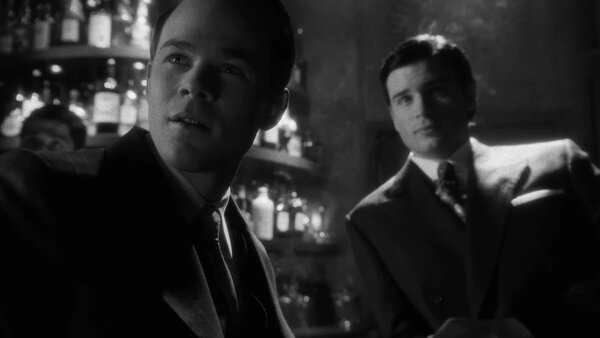
Season six’s 20th episode, “Noir”, offered just this, with a Jimmy Olsen-centric (Aaron Ashmore) adventure set in a black and white, 1940s gumshoe world. Here, Jimmy is The Daily Planet's star reporter and he goes on the case of a woman who wants him to help solve her own murder. Alternative versions of all the regular cast turn up, and Jimmy even shoots Lex Luthor (Michael Rosenbaum) dead.
Like Wizard of Oz, however, it is all a dream; a DC What If…?, if you will. Never mind the outlandish setup and story, the fact of none of it being of consequence was enough to send viewers packing - except it didn’t. And Smallville managed to quickly course correct, hesitant to take this kind of risk again but maintaining a steady quality nonetheless.
8. The X-Files - The Post-Modern Prometheus
From the beginning, The X-Files had absurdity on its side. Dealing with extra-terrestrials, monsters and mysteries meant showrunners and writers could take it in interesting and discordant directions, anchored by the monster-of-the-week format.
Come season five, David Duchovny and Gillian Anderson were very comfortable in their roles as FBI Special Agents Fox Mulder and Dana Scully, and audiences were used to the show pushing boundaries and challenging preconceptions. But nobody expected it to go where episode five, "The Post-Modern Prometheus", went.
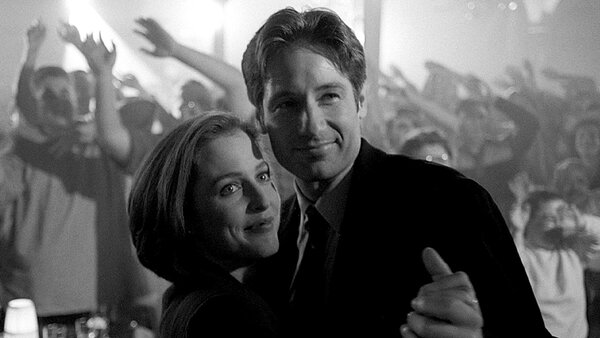
The episode begins in the style of a comic book, shot in all black and white, and proceeds with a wackadoo storyline about a mysterious creature named The Great Mutato that has impregnated a middle-aged woman. Amongst its many oddities, it features a special episode of Jerry Springer, and at the episode's end, Mulder breaks the fourth wall, demanding to see the writer. Thereafter, Mulder and Scully take Mutato and the townspeople to a Cher concert…
Not only does the episode depart from the series' style and tone, but it seemingly totally divorced from the established mythology and chronology of the show. While this ought to have spelled disaster, it instead gave the somewhat formulaic series a new lease of life, starting a trend of these kinds of humorous, low-stakes episodes that kept it on air for another four seasons in its original run.
7. Angel, Smile Time

Vampire detective show Angel benefitted greatly from its parent series Buffy the Vampire Slayer, as Joss Whedon was able to transfer many of their existing characters across - including the big man himself (David Boreanaz), ex-Plastic Cordelia Chase (Charisma Carpenter) and failed Watcher Wesley Wyndam-Pryce (Alexis Denisof) - and integrate seamlessly into the same universe and lore, but with a darker tone and bigger city. This familiarity meant the show could take a bolder approach from early on, including switching out main supporting cast, sharing storylines and cameos with Buffy, and throwing the action over to the hellish upside-down world of Pylea in season two.
By the fifth season, Angel was a known element, outliving Buffy and continuing on with a revamped format that balanced the monster-of-the-week with an impending apocalypse. But just because the stakes were bigger didn’t mean it couldn’t have fun.
Episode 14, “Smile Time”, arrived over halfway through the season, at a sensitive time for the show if it was going to stick its landing. And yet, rather than take it easy and pitch a few softballs, Whedon and co. had Angel turned into a puppet by a singing, murdering band of felt-form demons. There are musical numbers, puppet fights and a lighter approach throughout. Rather than tanking what was left of the show, Smile Time became a fan favourite and proved that it was still innovative this far in.
Yep: turns out everyone liked looking at the wee little puppet man.
6. Supernatural - Scoobynatural

When Supernatural first hit screens, it was cut from the same cloth as Buffy and The X-Files, and shared many of both shows' minor cast, with enough references to satisfy fans of either property, and a new fantasy-led story that prioritised angels and biblical battles over gothic monsters or aliens. The story of Sam and Dean Winchester (Jared Padalecki and Jensen Ackles), hunters of everything dark and evil - especially demons - felt familiar yet inventive enough to keep us watching over the following years, rooted in the strength of the brothers' relationship.
In season 13's 16th episode, "Scoobynatural", Sam and Dean are pulled into a Scooby-Doo mystery, fully animated. The whole Scooby gang is there, and the already cartoonish approach of late-season Supernatural is kicked into high gear, stretching reality, amplifying character traits (Dean hitting on Daphne, anyone?), and merging the best parts of both shows to give us an adventure that would have seemed not only implausible but highly inadvisable in the first half of Supernatural's run.
While it may seem like just one in a long track record of fun, playful episodes that managed to keep the show going long after the original arc, "Scoobynatural" came along at a point when viewers thought they had experienced all the weird and unusual things Supernatural had to offer and were about ready to wind things up. And it surprised everyone, keeping even reluctant viewers tuning in for more.
5. Community - Remedial Chaos Theory

Long before Rick and Morty, Dan Harmon channelled his offbeat humour through Community, the community college campus-set sitcom, where a study group of oddballs come together to try and survive a sub-standard academic journey. With an ensemble cast including Joel McHale, Danny Pudi, Alison Brie, Ken Jeong, and Chevy Chase, it was an instant hit and managed to strike a fine balance of weird and watchable.
But the already out-there show went several steps further in a single episode by establishing a chaotic multiverse. Season three’s fourth episode, “Remedial Chaos Theory”, takes place at a housewarming for two of the younger study group members, Troy (Donald Glover) and Abed (Pudi), and things get dicey when Jeff (McHale) rolls a die to decide who will answer the door to the pizza delivery guy. Seven timelines unfold, in which the scene is replayed, each member of the group answers the door, and something different happens every time.
Going far beyond the bounds of the show’s usually imagination-based strangeness, this episode establishes the diverging timelines as canon, including the so-called Darkest Timeline, in which Shirley (Yvette Nicole Brown) becomes an alcoholic, Pierce (Chase) dies, Annie (Brie) is institutionalised, Jeff loses an arm, Troy loses his larynx, and Britta (Gillian Jacobs) dyes her hair.
Rather than destroying the show’s tenuous grip on reality and plunging it into obscurity, the episode was wildly successful, boosting the flagging season, and Harmon and co. brought the characters of the Darkest Timeline back in future episodes.
4. Atlanta - The Goof Who Sat By the Door
Community may have been Donald Glover’s big break, but Atlanta was where he proved he had the chops to write, run and act in something much bigger, blending comedy and drama in narratives and roles that are weighty and considerably more three-dimensional. The show follows Earn (Glover) and Paper Boi (Brian Tyree Henry), a music manager and rapper, who face trials and tribulations traversing the Atlanta (Georgia) hip-hop scene.
The show’s brilliance has always been its use of somewhat episodic, standalone stories that are less monster-of-the-week and more short dramatic works in their own right. And while season four episode eight, “The Goof Who Sat by the Door” is very much that, it was also a major risk to take with a big show at such a critical time.
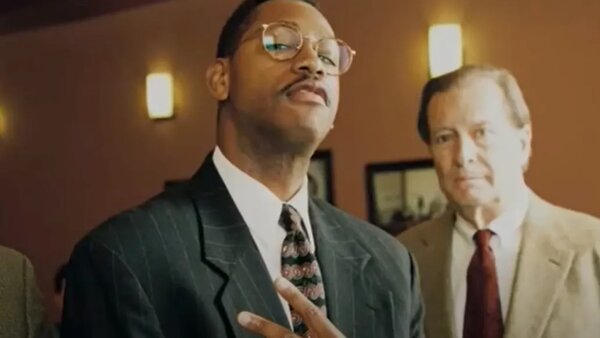
Goof sidesteps Atlanta’s main narrative concerns, totally disregarding the series' plotline for a documentary-style episode starring none of the show's usual characters, about the fictional Tom Washington (Eric Berryman), a Black man appointed CEO of Disney who wants to make "the Blackest movie of all time".
Arriving just two episodes from the end of the show, this was a very late move into uncharted territory, and could have bombed the whole thing, leaving the series on a sour note. But the element of surprise was its greatest weapon, capitalising on an already committed audience to serve up something challenging and unusual, and it won nigh-endless praise for doing so.
3. It's Always Sunny in Philadelphia - Dee Reynolds: Shaping America's Youth
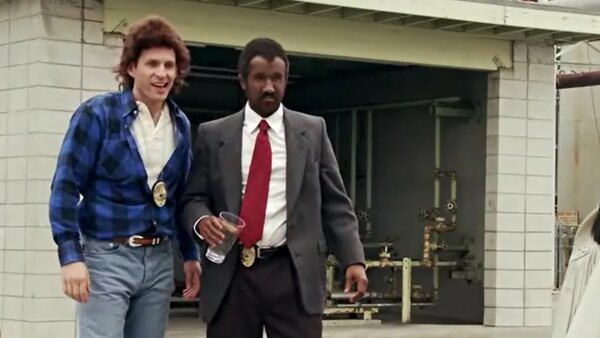
By season six, It’s Always Sunny in Philadelphia had well and truly found its groove. The exploits of Dee, Dennis, Charlie, Mac and Frank (Kaitlin Olson, Glen Howerton, Charlie Day, Rob McElhenney and Danny DeVito), heavy-drinkers and narcissists all, were well publicised, and had amassed a sizeable and reliable mainstream audience. But the gang’s ability to go where no other sitcom would go was well and truly put to the test in episode in the ninth episode.
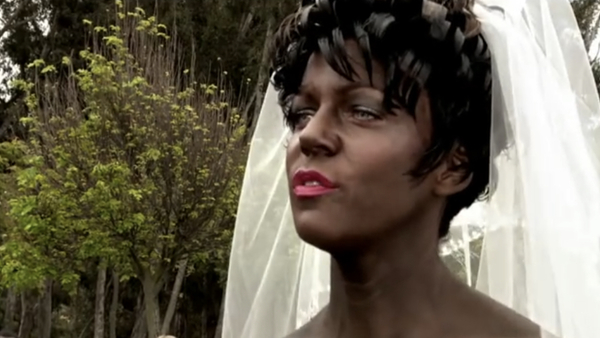
“Dee Reynolds: Shaping America’s Youth” sees Dee take a job as a substitute teacher, wherein she introduces her class to the gang’s attempt to make Lethal Weapon 5. The “film” starts out simple enough, with Mac playing Mel Gibson’s Riggs character, and Dennis as Danny Glover’s Murtaugh (using just a moustache and a deep voice). But, a few scenes in, they switch roles and Mac goes in blackface for his new part.
Now, while blackface usually takes a kicking from the general viewing public - and, by all accounts, it ought to have brought Always Sunny beyond the point of no return - fans of the show loved the episode, because it was so beyond the pale and yet fit its degenerate characters to a tee. The season, and the show, maintained its strong viewing figures, and Howerton, Day and McElhenney (who write the show) returned to the Lethal Weapon premise several times in subsequent seasons. Just don’t expect to see it on Netflix anytime soon.
2. Breaking Bad - Fly

Breaking Bad's third season far surpassed the show's original premise of a science teacher (Bryan Cranston's Walter White) 'breaking bad' and teaming up with his former student Jesse Pinkman (Aaron Paul) to cook drugs and make some quick cash. While the core of the show - Walter and Jesse - was still going strong, mafiosos, crooked lawyers, and assassins entered the picture and things got complicated, keeping us on the edge of our seats throughout.
But as danger closed in on all sides, the season's tenth episode, "Fly", took a major detour from the driven serial format, just three episodes before the season finale. And how did it manage this? By having Walter and Jesse spend the entire episode in the meth lab trying to catch a fly. The show had built up such a head of steam, and the overarching narrative had grown almost unbearably tense, that to suddenly make a sharp left turn into a comedic bottle episode seemed unthinkable, and yet...
Fly manages to crack open the heart and soul of its characters while nothing much of note happens, using the time spent to move from tension to comedy, to an on-off conversation that reveals parts of Walt's interior that the rest of the season couldn't reach. And while viewing figures weren't great at the time, the episode has made its mark as a fan and critic favourite.
1. Buffy the Vampire Slayer - Once More With Feeling
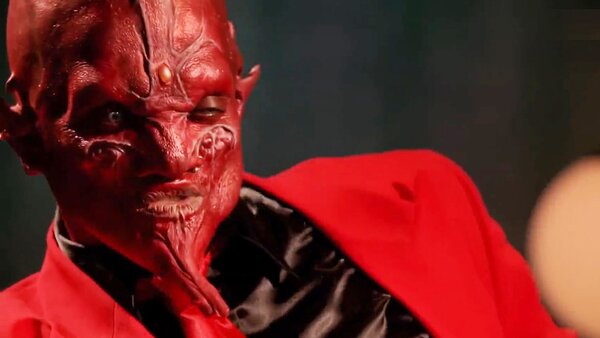
Buffy the Vampire Slayer's famous musical episode arrived late in the game, during the show's penultimate season. And while Buffy had always had time for humour, levity, and experimentation, this took the supernatural show to unexpected places.
Season six's seventh episode, "Once More With Feeling" arrives during the darkest season - in which Willow (Alyson Hannigan) becomes a dark magic junkie, Spike (James Marsters) tries to r*pe Buffy, and Tara (Amber Benson) gets shot dead in her home - and finds Buffy (Sarah Michelle Gellar) isolated from the Scooby Gang, unable to tell them that by bringing her back from the dead they pulled her out of heaven. So, of course, she breaks into spontaneous song, and everyone else follows. Amongst the whopping 17 musical numbers, we get a ballad from her Watcher Giles (Anthony Head), a rock number from vampire bad boy Spike, and a showtune from Anya and Xander (Emma Caulfield and Nicholas Brendon). Somehow, it all works.
The writing is second-to-none, with each song better than the previous, outshining most Broadway musicals. And, of course, the performances are great, showcasing most of the cast's pitch-perfect pipes, which is something we had only previously seen of Anthony Head. The episode successfully blends comedy and drama, dancing and fighting, working as a standalone spectacle but also gently advancing the overarching narrative concerns of all the main cast.
Once More With Feeling is legendary, it’s iconic, and yet it ought to have jumped clean over that shark.