20 Cancelled Doctor Who Episodes You Need To Know About
Judi Dench as a companion and Peter Capaldi as a vampire? We were robbed!

As of Wish World/The Reality War, there have been over 300 Doctor Who stories (or almost 900 individual episodes). But there are many others that never got made.
The reasons for this are endless. Sometimes a script is too similar to others in development. Sometimes the writer has to drop out due to other developments. In many cases, the budget simply doesn’t stretch far enough. And quite often, in spite of everything, things just don’t work out.
The writers in question range from seasoned Who scribes who were denied the chance for more episodes, to “celebrity” names who looked to make their mark on the show.
Although lots of these unmade stories were simply just abandoned, some morphed into other, almost unrecognisable adventures. Some have since been adapted into other mediums, such as audio dramas and novels. And some could even still reach the screen one day!
From sequels and prequels to an anniversary special, a crossover, a surprising character study and radical reimaginings, here are the craziest Doctor Who stories we never saw...
20. Death To The Doctor

Having worked on three Tenth Doctor stories and multiple instalments of The Sarah Jane Adventures, Gareth Roberts was one of the first writers Steven Moffat approached when he took over as showrunner in 2010.
Roberts would end up writing Series 5’s eleventh episode, The Lodger – a loose adaptation of a 2006 Doctor Who Magazine comic strip, which saw the Tenth Doctor briefly move in with Mickey. And carnage ensued, as you would imagine.
But at one stage he was set to contribute an entirely different episode.
Titled Death to the Doctor, this would've been set on a Vegas-style planet obsessed with law enforcement, with the Doctor arrested for a minor offence and forced to fight a massive Cyclops (hence the title). Another key element was a disgraced Sontaran called Skorm.
It’s a story that was just too costly too produce (unsurprisingly, The Lodger was much more wallet-friendly), though its impact would be felt elsewhere.
Most notably, Skorm would inspire the character of Strax, debuting in the following year’s A Good Man Goes to War. In the interim, the title would be used, in modified form, for Matt Smith’s Sarah Jane Adventures story, Death of the Doctor.
See, it all worked out in the end!
19. The Nightmare Fair

The classic Who season that changed the most from conception to broadcast was Season 23 – which, before becoming the serialised Trial of a Time Lord, comprised six standalone stories.
The original opening story The Nightmare Fair would've brought back the Toymaker, twenty years on from his first appearance.
Though played by original actor Michael Gough, the character would've been updated for modern audiences, operating in a world of arcade machines rather than playing cards and toy soldiers.
Accordingly, his rematch with the Doctor would've taken place among the glitz and glamour of Blackpool. Yes, Blackpool. For those unaware, that's a seaside town on the west coast of England.
The scripts were written and filming dates booked. The story was even set to be teased in Season 22 finale Revelation of the Daleks, which, as filmed, ended with the Doctor telling Peri "I'll take you to Blackpool." When the plan changed the word Blackpool was removed, creating a very different kind of cliffhanger. Namely, a very jarring and weird one.
Like most other unmade Season 23 stories, The Nightmare Fair has subsequently been adapted for prose and audio, and the Toymaker would of course eventually return to television in The Giggle. Insert ominous laugh here.
18. Gawain And The Green Knight

The eleventh episode of Series 2 was originally assigned to national treasure Stephen Fry (who had first crossed paths with Doctor Who in 2002, starring in the webcast Death Comes to Time).
Fry was given free rein to develop a story for the revived series. This was provisionally titled, and set in, The 1920s – a setting he had previously used for his 2003 film Bright Young Things.
The script Fry ultimately ended up writing was reportedly a reworking of the Arthurian myth Gawain and the Green Knight (which, in true Doctor Who style, was revealed to have alien origins) and featured a scene of the TARDIS landing on a “strange planet”. Truly revolutionary stuff there Stephen.
Whether or not it was still set in the 1920s by this point is unclear. Either way, it was deemed too ambitious for a slot so late in production – and in what is surely one of the biggest downgrades in the show’s history, was swiftly replaced by Fear Her.
Initially pushed back to 2007, it was shelved for good when Fry proved unavailable for rewrites. He would later appear in Doctor Who as MI6 boss C in Spyfall, but is yet to write for the show.
17. The Prison In Space
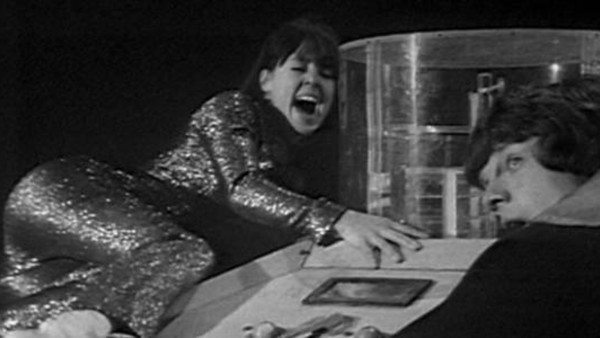
In classic Who it was common practice for multiple scripts to be commissioned for a single slot, in case a particular story fell through.
Various stories were prepped for the Second Doctor’s final season, including Dick Sharples’ The Prison in Space.
Less serious than other contemporary stories, it would've been set on a world where women rule and men are subordinate, and was full of highly questionable moments such as a brainwashed Zoe being broken out of her trance by Jamie smacking her on the bottom.
This story was soon replaced by The Krotons – the first Doctor Who contribution from Robert Holmes, who would go on to become a prolific writer and script editor throughout the classic series.
Some beef remained with Sharples, who felt he’d been betrayed by the production team. But all things considered, it’s probably a good job this one didn’t get made.
For those nevertheless intrigued to experience The Prison in Space, a slightly less egregious audio version was released in 2010.
16. Ptings

Little is known about the cancelled stories of the most recent eras.
We know that Orphan 55 originally started life as a Series 11 episode, set on an outer space safari park, and that Legend of the Sea Devils emerged out of a desire to include a pirate story in Flux. And then... there's this one.
Ptings would've brought back one of the era’s most iconic creations: the Pting. Yes, they were going to do a sequel to The Tsuranga Conundrum. God have mercy on our souls.
The idea was to pull an Alien/Aliens style stunt, with this second story featuring the endlessly-hungry creatures en masse.
It’s not clear why the story was abandoned, with Chris Chibnall merely saying “we had it all worked out, and we couldn’t do it for one reason or another”. Which probably means another case of the budget not quite stretching far enough. And considering the fairly impressive CGI of the Pting itself, you can see why.
Is The Tsuranga Conundrum the most obvious story for a sequel? No, but the Pting was undeniably Series 11’s most merchandisable monster, perfectly straddling the line between cute and scary.
And hey, given how big Labubus are now, they were probably onto something here.
15. The Perfect Companion

The version of Series 1 that RTD originally pitched to the BBC is fairly close to the one that ended up on screen – the one exception being Episode 11, which was always something of a blank slate.
At a very early stage it was going to be a historical, depicting the eruption of Vesuvius in Pompeii. This idea was deemed too expensive for 2005, though it would eventually reach screens in 2008.
The slot was then offered to RTD’s friend and former colleague Paul Abbott. He submitted a bold storyline, which would've revealed that Rose wasn’t just an ordinary human, but the result of an experiment conducted by the Doctor in order to devise the perfect companion.
Understandably RTD had concerns about how this would fit into the Doctor and Rose’s wider characterisation. There were also shades of the Seventh Doctor’s manipulation of Ace, which he felt to be repetitive and unoriginal.
As it transpired Abbott was too busy to write for Doctor Who anyway due to the success of his new drama Shameless, and Episode 11 became the more thematically-appropriate Boom Town.
Still, the notion of a “perfect” companion would be great to see one day, providing it’s part of a series arc and not a one-off storyline.
14. The Vampire Doctor

After writing two universally-acclaimed stories for RTD1 (Father’s Day and Human Nature/The Family of Blood) Paul Cornell never returned to Doctor Who. Talk about a mic drop. But he did pitch various stories for the Moffat era.
One such story, proposed for the Twelfth Doctor, centred around a community of vampires living in contemporary London, riffing on Cornell’s own Wilderness Years novel Goth Opera.
In a dramatic twist, one of the TARDIS team would've succumbed to the bloodsuckers partway through. Initially this was Clara, but Moffat suggested instead having the transformation occur to the Doctor.
There are shades of this idea in some Twelfth Doctor stories that were produced, with Series 9 featuring two communities of aliens living in London (the Zygons and the residents of Trap Street) and evil duplicates of both the Doctor and Clara. So it’s not surprising that it never got made.
Also, vampires, or vampire-like creatures, have featured in Doctor Who before – State of Decay, Smith and Jones and The Vampires of Venice, among others. So perhaps there was a fear of retreading old ground. And let's be honest, Twilight had sort of killed the scare factor of vampires by 2014.
Still, it’s a pity. Jenna Coleman would've put in an impressive turn as vampire Clara, but Peter Capaldi as a vampire Doctor would've been something to behold. We were robbed! Robbed!
13. The Krikkitmen

For Doctor Who, Hitchhiker’s Guide to the Galaxy author Douglas Adams wrote The Pirate Planet and Shada, co-wrote City of Death and script edited Season 17.
He also pitched a story to the show a couple of years earlier, in 1976.
In typically outlandish Adams style, this centred around androids called Krikkitmen, who are trying to free their home planet, Krikkit, from a Time Lord prison… by constructing a key from items associated with the Earth game cricket. A sentence that only a show like Doctor Who could churn out, quite frankly.
The Doctor and his companion become aware of this scheme during a test match at Lord’s, when the Krikkitmen steal the Ashes trophy.
Though it didn’t result in a television commission, Adams didn’t let The Krikkitmen go, later attempting to get it made as a feature film. When this came to nothing, he used the story as the basis for his third Hitchhiker’s book, Life, The Universe And Everything (by which time the Krikkit-opening device had become the Wikkit Gate).
Meanwhile, he’d revisit the idea of a Time Lord prison in Shada – which, in a cruel twist of fate, would also never reach screens.
The Krikkitmen finally saw the light of day as a novel in 2018, with James Goss working from Adams’ original notes.
12. The Suicide Exhibition

Mark Gatiss is NuWho’s most prolific guest writer, penning episodes for all of the first ten series save for Series 3 and 4.
His absence during this time wasn’t for lack of trying. Gatiss actually developed another Tenth Doctor story that never made it to screens.
Inspired by a real-world phenomenon from the two World Wars, whereby prized museum exhibits were substituted for items that could afford to be destroyed, this story comprised a treasure hunt in a London museum besieged by German soldiers and Bog Men zombies.
Following an initial draft set in World War One, Gatiss was asked to give the story more of an Indiana Jones feel, with the action moved to World War Two and the soldiers becoming Nazis.
The resulting script, The Suicide Exhibition, was set to be produced as part of Series 4, constituting Donna’s first trip back in time. However, it was ultimately replaced by The Fires of Pompeii.
It was also briefly considered to become one of the 2009 specials, but this wasn’t to be.
Gatiss has recently expressed interest in doing some sort of adaptation. And given his long history with Big Finish (he was one of their first ever writers), it’s surely just a matter of time till Doctor Who’s own “Lost Ark” gets an audio version.
11. Sleep No More: The Sequel
Like the stories directly before it, Sleep No More was originally conceived as a two-parter, featuring businessmen trying to “colonise” sleep to increase productivity.
One interaction involved two opposing factions, one who used sleep-eliminating technology and one who didn’t. Another saw the Doctor discover this technology in part one, before going back in time to discover its origins in part two.
When the story became a single-parter, writer Mark Gatiss (him again) put some of his original ideas aside with the intention of developing a sequel – something he pitched for Series 10.
This saw the Doctor arrive on present day Earth, where bankers were using a new technology to work longer hours, and thus make more money. Although the technology would've been different from that used by Rassmussen, its side effect (the creation of carnivorous Sandmen) would have been the same.
Upon realising that Series 10 could be his last chance to write for Doctor Who, Gatiss changed course, instead opting to do the story he’d always dreamed of: Ice Warriors on Mars.
It’s a shame, because Sleep No More isn’t the most popular episode ever. But a sequel might have helped fix that.
10. The Leekley Bible

If you thought The TV Movie pushed the envelope for Doctor Who think again. Because it could have been a whole lot crazier.
During the early days of the project, American writer John Leekley was tasked with creating a writers’ bible for a prospective season.
Essentially a complete reboot, it reimagined the show as a sort of Greek myth, with the Doctor’s former tutor, Borusa, now his grandfather, and the Master now his half-brother.
Most of the episodes would've been remakes of memorable classic Who serials. But the pilot was slightly more original, opening with the Master becoming president of the Time Lords, the dying Borusa merging with the TARDIS, and the Doctor embarking on a quest to find his long-lost father Ulysses.
In the pilot alone, viewers would've been transported to war-torn London and ancient Egypt, before a showdown on Skaro with Davros and the redesigned, “Spider” Daleks.
Leekley’s ideas were met with a lukewarm response, which is probably for the best given that they would have taken a sledgehammer to 30 years of continuity.
He was removed from the project and had nothing to do with the TV Movie that did end up on screens.
9. A Midwinter’s Tale

Before arriving at The Next Doctor, RTD considered various storylines for the 2008 Christmas special, including one set in a deserted London.
This was inspired by the night he spent in the capital following the premiere for Torchwood Series 2. Walking around his hotel in the early hours, Davies was struck by how empty it felt, leading him to ponder: what if I was a dad who returned to his room to find his family gone?
This idea was revisited in 2009, by which time the dad character had evolved into a gran who’s gone away for Christmas with her family. Helen Mirren and Judi Dench were considered for the role, having (remarkably) both expressed interest in appearing in the show.
Meanwhile, the creatures responsible for the disappearance were set to be eight-legged, centaur-like aliens who have frozen Earth in a single second in order to stage a carnival.
The storyline was abandoned but elements of it ended up elsewhere – the notion of the Doctor teaming up with an older woman inspired Adelaide in The Waters of Mars, and the premise became the basis for The Sarah Jane Adventures story The Empty Planet.
8. The Chimes Of Midnight

A few Doctor Who audio dramas have inspired television episodes – namely, Rob Shearman’s Jubilee, which became Dalek, and Marc Platt’s Spare Parts, which became Rise of the Cybermen/The Age of Steel.
At one point, Shearman’s spooky Christmas tale The Chimes of Midnight (arguably the most acclaimed Big Finish release ever) was also in the running to be adapted.
Released in 2002, the original starred the Eighth Doctor and his audio-only companion Charley Pollard, and was set in an Edwardian country house where people are killed on the chime of every hour.
The television version would instead have featured the Eleventh Doctor, Amy and Rory, with the action moved to a modern-day setting and the Christmas element dropped.
Shearman attended read-throughs for Series 5 but felt he could never quite get the story to work (which is perhaps not surprising, given the dark twists of the source material). As such, it was abandoned.
Nice as it would have been for Chimes to reach a larger audience, a screen version would've potentially lessened its impact. So it’s probably for the best that it never happened.
7. The Mutants Of Planet 6-7-6-7
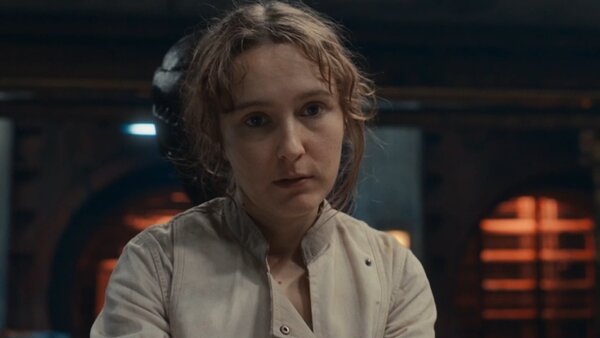
The current production team is equally as tight-lipped about unmade episodes as the last one. But one thing we have learnt is that The Well wasn’t always going to be a Midnight sequel.
Prior to co-writing the episode with RTD, Sharma Angel-Walfall wrote a whole other script of her own. It was still set on a colony in the far future, but had an entirely different central idea: how might humans mutate under another world’s sun?
This version of the story would've been much more grounded in real science, harking back to the educational purpose of Doctor Who as laid out by its co-creator Syndney Newman.
It would also have required extensive CGI and prosthetics work, but with The Interstellar Song Contest already eating up much of the season’s effects budget, this was deemed a step too far.
Another key component was a love story, which jarred with the darker tone RTD was after.
As things turned out, pretty much every Season 2 story featured some tie to the past. So it’s a shame this story wasn’t produced – it would've been a breath of fresh air! Although the episode we did get was pretty good too, so swings and roundabouts.
6. Genesis Of The Cybermen
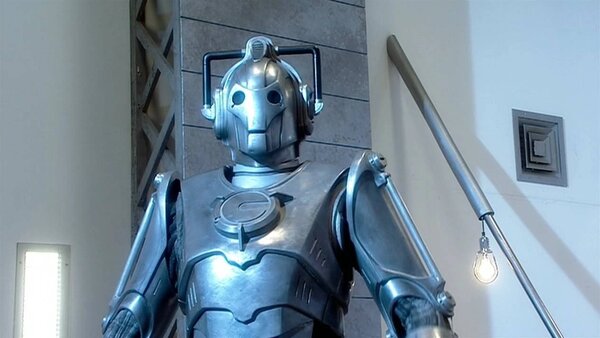
Unlike the Daleks, the Cyber-origins have only been explored relatively recently – notably in the excellent (and horrifying) Series 10 finale World Enough And Time/The Doctor Falls.
However the notion of a Cyberman origin story was first floated by their co-creator Gerry Davis in the early 1980s.
Set on Mondas before the events of The Tenth Planet, Davis’ storyline revealed the Doctor to have unwittingly played a part in the Cybermens' creation, leaving a powerful component behind when the TARDIS is accidentally sent forwards in time.
Upon arriving in the future, he discovers that Mondas' king has used this device to turn his subjects into Cybermen.
In a final twist we would've seen the moment Mondas was forced out of our solar system – the direct result of rebel spaceships fleeing to Earth.
At the time Genesis of the Cybermen was deleted pretty much immediately, on the grounds that it was out of step with the show’s current style of storytelling. Although an audio version was finally released in 2025!
5. Century House

Like Mark Gatiss, Tom MacRae (writer of Rise of the Cybermen/The Age of Steel for Series 2) was commissioned to write a story for Series 3 that was pushed back to Series 4 and then abandoned.
It would've been a Doctor Who spin on Most Haunted-style shows, following a television crew as they attempt to track down the ghost of the Red Widow in a spooky clifftop house.
It was specifically conceived as a companion-lite episode, with the Doctor joining the broadcast and the companion watching events unfold from the comfort of their sofa, allowing these scenes to be shot in a single day.
Despite its dark setting, Century House was apparently quite light in tone. It was pencilled in as the eighth episode of Series 4, directly after The Unicorn and the Wasp. However, as production drew nearer RTD realised that he didn’t want to run two comedic episodes back-to-back, and he opted to write a last-minute replacement.
And that last-minute replacement was? Only a certain stone-cold classic known as Midnight. So yeah, probably a good job that Century House never got made!
4. Strax On Trial

Just as the Pertwee era “UNIT Family” appeared at the start of Tom Baker's era but pretty much disappeared straight after, the Twelfth Doctor’s debut story Deep Breath would turn out to be the Paternoster Gang’s last.
But at one point things might have been different, with one of the gang getting their very own episode.
As he revealed on his blog back in 2018, Green Wing writer James Henry was invited to pitch an episode for the Twelfth Doctor’s first series.
After suggesting various ideas that had already been taken, he was offered another premise: what if the Sontarans found out that Strax had been helping humanity (and the Doctor) and put him on trial, effectively sentencing him to death?
Despite believing it to be “the worst pitch” he’d ever done, Henry was asked to develop Strax on Trial into a full script. In the end it just missed out, which is a pity, as it would've made Strax a more three-dimensional character and given Dan Starkey a chance to do more than just shout about acid and grenades.
Henry also recalled a mortifying email where he wrote the story’s title with a P instead of an X, but insists that this had nothing to do with him not getting the gig.
3. Doctor Who Meets JK Rowling

One of RTD’s hopes for the 2008 Christmas special was to secure another big-name guest star, someone on the level of a Catherine Tate or Kylie Minogue.
Having just finished reading the final Harry Potter book and enjoying it immensely, an idea suddenly occurred to him: what if the 2008 Christmas companion was JK Rowling?
Davies had actually asked Rowling to write for the show back in 2004, but having her actually appear in the show was a different prospect entirely.
He was also keen to continue the trend of having the Doctor meet famous authors, having previously featured Dickens, Shakespeare and Agatha Christie.
Had this story gone ahead, it would've involved a space bug leaping onto Rowling’s back and bringing the world of her imagination to life, enabling wizards, witches and magic to feature in the Doctor Who universe.
However it was quickly kiboshed by David Tennant, who felt it sounded too much like a spoof, and Rowling herself wasn't too keen.
2. Lost In The Dark Dimension

A short while into the Wilderness Years of the 1990s, it became clear that Doctor Who was going to be off air for its 30th anniversary.
To plug the gap, the BBC commissioned a feature-length, direct-to-video special titled Lost in the Dark Dimension.
Set in a world where the Fourth Doctor survived his fatal fall in Logopolis and thus never regenerated into his successors, it would've starred Tom Baker as an older Doctor, alongside the Brigadier, “Dorothy” (an alternate version of Ace) and the Brigadier’s son/Ace’s boyfriend, Alex.
The other surviving Doctors would've featured in minor roles, with the Daleks, Cybermen, Ice Warriors and Yeti also returning. Rik Mayall was being eyed up for the ultimate big bad, Hawkspur (a professor/politician possessed by a deadly alien entity).
The special was formally announced in June 1993, but by July it had been canned, owing to an insufficient budget, complaints from the Doctor actors about not having bigger roles, and the ongoing negotiations that led to the 1996 TV Movie.
The BBC instead celebrated Doctor Who’s 30th birthday with the Children in Need special Dimensions in Time, which was certainly... an episode.
1. How The Monk Got His Habit

The three stories Peter Harness wrote for Doctor Who all ended up being part of ongoing series narratives. But he did also pitch some standalone adventures.
Shortly after writing the Zygon two-parter, he proposed a story which incorporated both the “Meddling” Monk and the “Mad Monk”, Rasputin.
It would've opened with the Monk playing Boney M’s Ra-Ra-Rasputin to the man himself and inadvertently sending him mad, thus averting the Russian Revolution and changing the course of human history.
With no one else to turn to he calls the Doctor, only to find himself speaking to Peter Capaldi’s twelfth incarnation rather than William Hartnell’s first.
The pair would then have tried to find a solution, with the Monk ultimately forced to regenerate into Rasputin’s form and take his place – thus explaining how he adopted his monk persona.
Besides the fact that it’s an utterly crazy pitch (something Harness has freely admitted), it’s possible Steven Moffat steered clear of this story to avoid taking the limelight away from Missy, who had a big part to play in Series 10.
It’s a good job he did too, as the Master would end up becoming Rasputin in their very next incarnation, and there's no way in hell we'd want to be deprived of that Rasputin dance scene would we?