10 TV Shows Probably Made Out Of Spite
David Lynch trolled everybody with Twin Peaks' third season.

Putting together a TV series that finds an audience and keeps them satisfied for years and years is extremely difficult, often far more so than producing a single movie.
And as such great TV is generally only born from genuine commitment and belief in the project, rather than trying to stick it to somebody out of spite.
And yet, Hollywood can be a mightily childish, infantile place, whereby creatives and executives alike attempt to settle grudges, get their own back, and basically flip the bird at anyone they feel slighted by.
Perhaps a showrunner felt mistreated in the past, an author believed their source material was ruined by a previous adaptation, or a network wanted to milk their beloved IP for another go-around despite the star's lack of interest.
The reasons are myriad, but in each of these 10 TV shows, it's clear that there was an intense desire to get one over on somebody.
In some cases that ire clearly fed the show's creativity and the results were miraculous, while in others it simply indicated a series that came to market for all the wrong reasons...
10. Buffy The Vampire Slayer

The Buffy the Vampire Slayer TV series may have premiered in 1997, but the IP had its origins much earlier, when Joss Whedon sold a feature film script based on the concept in 1991.
Though Whedon was involved in the film's production as an advisor, he left after growing frustrated with changes to his vision.
Fox executives removed many of his jokes, he bristled with director Fran Rubel Kuzui, who was re-shaping the film into a broader comedy project, and Whedon also fought with actor Donald Sutherland, who deviated from Whedon's script with heavy improv.
Despite being poorly reviewed, Buffy was a modest commercial success, albeit not enough for Fox to press on with any further films.
But a few years later, Whedon was approached to adapt his vision into a TV series, which he successfully packaged and sold to the WB Network.
With his original tone kept in tact and original star Kristy Swanson swapped out for Sarah Michelle Gellar, Whedon was finally able to bring his distinct vision of supernatural high-school drama to the masses.
Whatever you make of Whedon today, he absolutely got the last laugh on those Fox executives who so thoroughly compromised his vision back in the early '90s.
9. 24: Legacy

Belated spin-off series don't come much more perfunctory or begrudging than 2017's 24: Legacy, which attempted to recycle the action-thriller series' real-time formula with a new actor.
This was due to lead Kiefer Sutherland deciding not to return after 2015's mini-series event 24: Live Another Day, where he tried to convince the writers to kill him off, suggesting that Jack could detonate a grenade after surrendering himself to the Russians.
But Fox executives flat-out refused to kill Jack, and so stuck with a hugely recognisable IP and unwilling star, decided to press on with a new protagonist, former Army Ranger Eric Carter (Corey Hawkins).
24: Legacy was born out of Sutherland's refusal to come back, and while he was attached in the ceremonial position of executive producer, he had no creative involvement with the new series.
But amid disappointing ratings and mediocre reviews, Legacy was cancelled after just a single season, the consensus being that 24 without Sutherland simply didn't work, and Fox was daft for even trying.
Fox is reportedly looking into rebooting 24 yet again in the near-future, however, but without resolving Jack Bauer's still-unknown fate, it's most likely doomed.
8. His Dark Materials

You can sense the spite dripping off the BBC and HBO's co-produced His Dark Materials series, based on Philip Pullman's fantasy novel franchise of the same name.
This is because it followed Hollywood's attempt to translate the novels into a mega-budget movie property, with 2007's star-studded, $180 million tentpole The Golden Compass.
But between mixed reviews, an underwhelming commercial performance, and a consensus from fans that the film had sanitised the book's religion-critical themes, all planned sequels were promptly nixed.
Philip Pullman was then forced to wait until the rights to the books reverted back to him, after which he swiftly began shopping a new take on His Dark Materials around.
Eventually it landed as a series with the BBC and HBO, where Pullman ensured it would offer up a far more faithful take on his material, as it absolutely has so far.
It's quite a victory for the author, and proof that some properties are just so, so much better suited for TV than film.
In the latter case, larger budgets can result in a greater pressure to appeal to as wide a market as inoffensively as possible, as clashes with His Dark Materials' core ethos.
7. The Conners

Legendary U.S. sitcom Roseanne was revived for a belated 10th season in 2018, more than 20 years after its original run controversially wrapped up with the revelation that the events of the last season never actually happened.
Oh, and Roseanne's (Roseanne Barr) husband Dan (John Goodman) was suddenly killed off, to make matters worse.
It's a finale that left fans sharply divided, and season 10's premiere sought to rectify this by basically retconning Dan's death and deeming it just another part of Roseanne's fictional book she was writing during season nine.
But the spite truly came when Roseanne's revival was swiftly cancelled after a single season due to racist remarks made by Barr on social media.
Yet given the critical acclaim and strong ratings that season 10 received, ABC decided to pivot by kicking Roseanne out and creating a new series without her, The Conners.
This new show brought basically everybody else back and, in an act that ensured Barr could basically never return, killed Roseanne off via an opioid overdose.
It was a definitive flipping of the bird at Barr, and considering that The Conners' fourth season just recently debuted, it's abundantly clear that the story can continue without her.
6. Scrubs Med

Now, if you want to get technical about this, Scrubs Med is actually Scrubs' ninth season, but series creator Bill Lawrence himself doesn't see it as part of the original run, and even asked network ABC to name it Scrubs Med, to ensure audiences knew it was a tangential spin-off.
ABC ultimately refused to change the title, preferring to cash-in on the Scrubs name for season nine despite the fact that it was largely focused on a new group of interns and featured only periodic appearances from some of the original cast.
The issue between Lawrence and ABC stemmed from the fact that Lawrence was led to believe that Scrubs' eighth season would be its last, allowing him to provide an affecting farewell to both Sacred Heart and the show's central characters.
But ABC later approached Lawrence about producing a spin-off, which for "legal reasons" - or more likely, a desire to milk the Scrubs brand for every drop it was worth - had to be considered Scrubs' ninth season.
Despite his frustrations with how the spin-off was branded, Lawrence pushed ahead, though had the production team add a "Med School" caption in the show's opening titles, despite the series still officially being called Scrubs.
Season nine's ratings fast declined, however, and it wasn't renewed for a tenth. Today, most fans consider season eight's terrific finale the show's true ending and season nine a mere curio.
5. CSI: Cyber

For around a decade, CSI was an absolutely unstoppable ratings juggernaut, and between its original Las Vegas series and Miami and New York spin-offs seemed totally bulletproof.
But by 2013 the spin-offs had closed up shop and the original series' ratings were fast dwindling amid numerous divisive personnel changes, resulting in the inaugural iteration of CSI finally wrapping up in 2015.
But because the CSI brand is so immediately recognisable, CBS made the decision to try and soft-reboot the series with CSI: Cyber, a spin-off focused on cybercrime, starring recent Oscar winner Patricia Arquette and Ted Danson.
You can practically sense the desperation to keep the CSI name alive in every pore of Cyber, an unintentionally hilarious attempt to make CSI "cool" again, but one which ultimately overindulged in trashy tech-thriller cliches.
Due to risible reviews and mediocre ratings, CSI: Cyber was cancelled after two seasons, effectively bringing CSI's 15-year reign as the king of procedural crime TV to an end.
Unsurprisingly CBS didn't wait too long to try again, as a revival of the Las Vegas series - CSI: Vegas - is imminently due to premiere, starring original cast members William Petersen and Jorja Fox.
4. And Just Like That...

Ever since the second Sex and the City film was released in 2010, fans have been speculating when a third would come to pass.
In 2016 rumours began to circulate that a script for a third film had been written, though in late 2017 it was confirmed to have been cancelled, allegedly due to Kim Cattrall not wanting to return.
Much has been written of Cattrall, who plays fan favourite character Samantha Jones, bristling with her co-stars and especially Sarah Jessica Parker, over the course of the show.
And so, when HBO began assembling a new revival series to premiere on HBO Max, the bold decision was made to simply forge ahead without her for a spin-off series.
The new show, And Just Like That..., will focus on the other three leads, and given that fans spotted the cast shooting what appears to be a funeral scene, it's entirely possible that Samantha has also been killed off, just to rub salt in the wound.
Considering that Samantha is arguably Sex and the City's MVP, making a new series without her is one level of spite, while killing her off would be a truly vindictive, cynical move.
3. Snowpiercer

Bong Joon-ho's terrific 2013 sci-fi thriller film Snowpiercer was a moderate commercial success at best despite receiving strong reviews from critics, and in the years that followed failed to break out of its cult niche despite the talented cast and crew involved.
The decision was soon enough made, then, to reboot the IP as a TV series, and after years in development, Snowpiercer finally debuted in 2020 to mixed-positive reviews, before enjoying greater acclaim in its recent second season.
One suspects the feeling among Snowpiercer's rights holders was that the branding was rich and interesting, but because of the "one-inch tall subtitles barrier" that Bong talked about while accepting an Oscar for Parasite, the South Korean thriller begged to be reimagined in the English language.
And given its episodic potential, a TV series made more commercial sense than a mere Hollywood movie remake.
This isn't to say that the Snowpiercer series feels like a particularly lazy or cynical exercise overall, but simply that it speaks to a wider frustration that non-English language films still struggle to score the mass audiences they deserve.
2. Twin Peaks: The Return
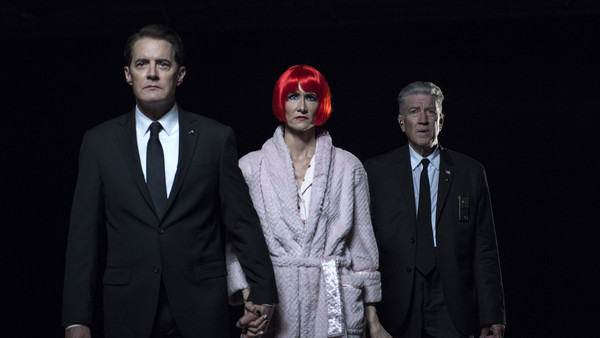
When it was announced that David Lynch would finally be producing a third series of his hit mystery series Twin Peaks, the general assumption was that it would both rectify 1991's intensely divisive second season finale and finally tie off all the overarching mysteries.
But Lynch being Lynch, he delivered anything but a conventional follow-up, and seemingly went about testing how far he could push the bounds of episodic TV.
For starters, fans were expecting the possessed protagonist, FBI agent Dale Cooper (Kyle MacLachlan), to return to his normal self within a couple of episodes at most, but Lynch made fans wait for sixteen of the show's eighteen episodes - more than three months after the series premiered.
Beyond that, this season ended on yet another, albeit far less divisive, cliffhanger, and throughout its episodes offered up enough intentionally stilted drama, wonky VFX, and surreal asides to make many believe it was all just an elaborate, expensive troll on Lynch's part.
That isn't to say that The Return isn't brilliant, because it frequently is, but that it also felt like Lynch sticking his fingers up at conventionally episodic, cliffhanger-dependent, "water cooler" TV shows and challenging everyone to consider the medium's true experimental potential.
1. Helstrom

In May 2019, Hulu commissioned a series based on the Marvel Comics characters Daimon and Satana Hellstrom, but in the middle of filming Helstrom, Marvel Television was absorbed into Marvel Studios, resulting in showrunner Paul Zbyszewski's contract with Marvel being terminated.
Though Zbyszewski continued to work on the series' post-production, by July 2020 Disney had removed the Marvel moniker and renamed the show simply "Helstrom," in order to distance its horrific tone from the more family-friendly Marvel Cinematic Universe vibe.
While originally intended to be a tentative part of the MCU - in much the same way that Netflix's Marvel shows were - Disney and Marvel Studios made every effort possible to downplay this, and beyond a few MCU Easter eggs, it's largely standalone.
In what felt like nothing more than a perfunctory obligation by Disney, Helstrom was released last October, and promptly cancelled by Hulu two months later. Predominantly negative reviews from critics likely didn't help its case for survival.
This marked the end of Marvel Television's live-action Marvel series, with Marvel Studios now overseeing production themselves.
While there's no doubt that Zbyszewski wanted to make a quality show, those at the top of Disney clearly just wanted to pull the plug, but per contractual commitments to Marvel Television, begrudgingly pushed ahead with the completion of Helstrom's production and low-key release.