10 TV Shows That Were Gone Too Soon
Angel? The OA? Agent Carter? All taken too soon.

We've seen it time and time again. Just when a show starts to get interesting, it's unceremoniously kicked to the curb, thus throwing our world into chaos.
In a way, it's a tale as old as time.
Of course, some networks have brought programs back to tie up loose ends with a film (such as Firefly and Sense8) or a final season (like Young Justice and Heroes), but many weren't so lucky.
Until that fateful day comes for the following shows, all we can do is outline the injustice of it all, and shine a light on these once-great stories that never got a chance to answer the ultimate question of: what happens next?
10. The Tomorrow People

The 2013 remake show The Tomorrow People had a lot of potential. It explored human evolution and followed a group of runaways called, you guessed it, the Tomorrow People. These individuals exhibited abilities such as teleportation, telekinesis, and telepathy. However, their powers were considered to be dangerous, and they were hunted down by a secret agency called Ultra.
The story begins with Stephen (Robbie Amell), just a normal kid before his powers started to break out. Once he was thrown into this world he slowly began to unravel questions that surrounded his father's mysterious past. Stephen learned that not only was his father alive, but he was also a founder of Ultra before creating the Tomorrow people and going into hiding.
Sadly, this only lasted 1 season before getting the axe by the CW, which was unfortunate because The show was introducing compelling plot elements. For instance, audiences just discovered that Stephen's mother was harboring secret powers all along. The reveal also hinted that her dynamic with Stephen, the Tomorrow People, and Ultra would reveal more answers in the next season.
Season 1 also introduced super soldiers under government control, ready and willing to hunt the cast down. Unfortunately, the series left us with many questions about the status of each character. Stephen had just developed new powers that seemed to be a game-changer, but guess what? The Tomorrow People got cancelled and we never got answers!
9. Agent Carter

Sadly, Marvel's Agent Carter was only given 2 seasons before it was banished to the TV graveyard. Banished, but never forgotten.
Starring Hayley Atwell as Peggy Carter, the series began with Peggy picking up the pieces of her broken heart, after Steve Rogers (you know, the first Captain America) was presumed dead. We got to watch as she started her journey by working for Howard Stark (Iron Man's father), knowing that this would be the building blocks that would eventually lead to S.H.I.E.L.D.
Agent Carter was a wonderful tale about a woman carving a place for herself in a world that wasn't ready for women to do just that. She was a superhero in her own right, and it's a shame that the network didn't value what the show was building.
Avengers: Endgame saw Peggy as the director of S.H.I.E.L.D, and while that should come as no surprise, it would have been nice for the show to explore just how she got there. Because last we saw, she was making waves in the field but was far off from being the woman in charge.
This one honestly just hurts.
8. The OA
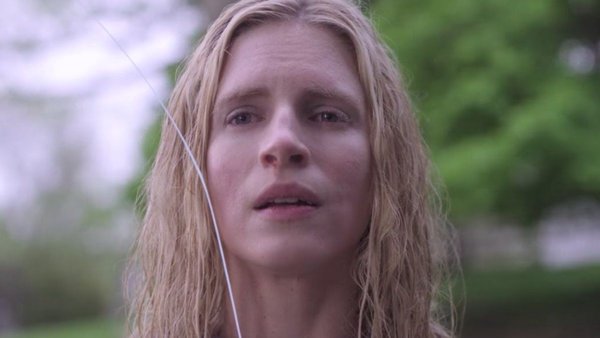
In 2016, this little show called The OA aired on Netflix to the delight of a small fandom. And then, just as quickly and quietly as it came, it was abruptly cancelled after its second season, The OA: Part 2. Due to the show's initial 5-season plan, its cancellation caused an uproar among fans who petitioned to save this sci-fi adventure.
The OA starred Brit Marling as Prairie Johnson, a blind woman who reappears seven years after her mysterious disappearance. With her sight miraculously returned to her and scars on her back, Prairie calls herself the OA, for the original angel. As the season unravels, we see her and a group of trusted allies attempt to rescue her fellow captives by opening a portal to another dimension.
In Part 2 Prairie successfully crosses dimensions and is hunting down her former captor Hap. This season brought in telepathic powers, robots, and, in all honesty, more questions. It ended with a third portal being introduced in a very clever and super meta way. This new dimension had the OA portrayed by an actress named Brit Marling in what appeared to be a TV show that follows the same plot.
I see what you did there.
As The OA was framed entirely around a slowly building mystery, it was clear that there was a much larger narrative the writers were intending to explore. Too bad it never came to fruition.
7. Angel

Angel was the spinoff to Joss Whedon's hit show Buffy The Vampire Slayer. Set in the realistic town of Los Angeles rather than the fictional Sunnydale, Angel (David Boreanaz) was a character who lived in the shadows and was desperately trying to find his humanity again.
Season 5 introduced an entirely new setup for the team of demon hunters though, with Spike joining the cast after Buffy finished up.
This year also brought back the Shanshu prophecy, which audiences thought was always about Angel. The prophecy foresaw that a vampire with a soul would play a crucial role in the apocalypse. As a reward, he would then be restored into a mortal human being.
However, with Angel's darker descent and Spike alive and well again, audiences questioned if the saviour we were meant to route for was truly Angel, or was it Spike, the other vampire with a soul who'd already sacrificed himself once for an apocalypse?
Just as suddenly as the question was brought up again though, it was quickly answered that yes, Angel was the one. Everything was so rushed near the end that you could feel the writers scrambling to try and answer all of the questions.
And then there was the actual ending, which left things on a brutal cliff-hanger as the wounded heroes began their final stand against the forces of darkness.
All the network had to do was to keep the show alive. We wanted to see the answers play out on our screens. Not cool guys, not cool.
6. Terminator: The Sarah Connor Chronicles

The Terminator franchise has gone through, shall we say, a few ups and downs in its time. And with flops like 2015's Terminator Genisys, and 2019's Terminator: Dark Fate, it's no wonder audiences are looking back at Terminator: The Sarah Connor Chronicles fondly.
Set during John Connor's formative teenage years, the series takes place after the events of T2: Judgment Day, and chose to cast the awesome Lena Headey as Sarah Connor.
The Sarah Connor Chronicles introduced a new type of terminator with Cameron (Summer Glau) who was similar in age to John. Cameron could mimic human mannerisms better than previous models making her a more complex character.
The relationship between Cameron and John was one of the driving forces in the show, second only to his relationship with his mother. Cameron and John explored a more romantic connection that helped shape his feelings on machines as a whole. The series did a wonderful job in questioning if these machines are really so different from the rest of us.
Unfortunately, the show was cancelled after 2 seasons, leaving John in the future trying to save Cameron by getting her chip back. However, instead of finding it, he came face to face with Allison Young, Cameron's human template.
What happens next? Your guess is as good as ours.
5. Dollhouse

Yet another Joss Whedon show gone too soon, Dollhouse centered around the secretive Rossum Corporation that programmed dolls (or actives) to do any kind of work required - for the right price of course. Once the dolls work was done, their memories were erased and they reverted to a childlike state waiting for their next assignment.
Dollhouse starred Eliza Dushku as our main "doll" going from assignment to assignment each week. The story often provided twists and turns at every corner, to build on the secrets the Rossum Corporation was keeping. The big question was what would happen when the dolls discovered the truth about their lives?
With endless network interruptions and confusion on how to market a show whose main protagonist changed personalities each episode, Dollhouse was admittedly a tough sell. But audiences believed in the world Whedon was creating, and if the network had a little bit more faith, he would have unraveled the mystery that surrounded the Rossum Corporation.
Dollhouse would have thrived in today's streaming landscape for TV as it's perfect binge-watching content. Alas, the network shut it all down and we'll never really know what was planned.
4. Almost Human

Starring Karl Urban and Michael Ealy, Almost Human was set in the year 2048 where the overwhelmed police force implemented lifelike android partners for every cop. John Kennex (Karl Urban) has an I, Robot relationship with androids, as their logic-based deduction was the cause for his previous partners' death. Due to the androids' choice to leave Kennex and his partner for dead, Kennex ended up in a coma with gaps in his memory.
As the narrative progressed, it became clear that there was more to the story than meets the eye as Kennex received flashes of his lost memory returning to him. Those flashes outlined a much bigger threat and mystery that fans never got to unravel.
The heart and soul of this show was the unlikely friendship between Kennex and his new android partner, Dorian, an almost humanlike (see what we did there?) synthetic who struggles with his overwhelming emotional capabilities.
The only upside to Almost Human being cancelled is that it allowed us to see Karl Urban's portrayal as Butcher in The Boys. We had to find a positive in here somewhere because cancelling this show was a crime.
3. Star Trek: Enterprise

Look, I'll be the first to admit that when Star Trek: Enterprise first aired, I hated it. This was not the Star Trek we'd all come to love. Why were the Vulcans treated as the bad guys? Why did they have brown hair? And what was with that theme song? This was not Star Trek.
That being said, fans quickly changed their tune, as Enterprise actually deserved more credit. We got to watch humanity come into their own, as the Enterprise crew realized that space wasn't what they thought it would be. They learned that having rules and regulations put in place was probably a good thing. A directive if you will.
We were given some of the best Trek arcs with the augments (bringing back the spectacular Brent Spiner as Doctor Arik Soong), an explanation on why the Klingons looked so different in the original series, and the promise of seeing the Federation being created. We all knew that Captain Archer would play a crucial role in founding it, so we couldn't wait to see it. And did we get that chance? No, because it got cancelled.
The series finale was a rushed mess that felt more like an episode of Star Trek: The Next Generation (TNG) than it did Enterprise. The episode brought back TNG characters Riker and Diana to play out the events of Enterprise on their holodeck, reducing the main cast to be nothing more than exposition.
The episode also jumped several years ahead, forcing audiences to just assume that whatever Archer did during those lost years lay the groundwork for building the Federation.
And don't get us started on the unnecessary death of Trip. Killing a main character off like that just for shock value is a slap in the face. Bring Enterprise back please and thank you.
2. Marvel Netflix Shows

This is slightly cheating, but Marvel cancelling Daredevil, Jessica Jones, Luke Cage, and Iron Fist felt like a personal attack. First of all, Daredevil was a critically celebrated show, bringing in a more realistic and grittier reality to the MCU's world of magic, bright colours, and sarcasm. These were real characters, going through real problems, who just experienced the Hulk tear through the city after the events of The Avengers.
It's a shame that we'll likely never get to see these actors portray their perspective roles as they were all perfectly suited to the part, and could have easily taken their place in Marvel's Phase 4 film universe. Even Finn Jones' Iron Fist who, granted, had a pretty rough start, was going in an interesting direction of having his powers change, with Colleen (Jessica Henwick) taking on the new iron first mantel.
The first season of Jessica Jones was nothing short of perfection as it was a tale about a woman sorting out her trauma from her abuser. The fact that she happened to be superpowered was just a bonus. Kilgrave (or the Purple Man) was played to perfection by David Tennant, and the show did an excellent job of showing how terrifying it is to lose control of your own actions.
Unfortunately, in the third and final season, we see that Jessica essentially has no one and decides to leave. It's a sad ending as the show began with her not trusting anyone and ended with her in the exact same place.
Luke Cage (Mike Colter) ended his story on a darker path, with the implication that he will rise to power as a new crime boss. This is also a disappointing place to end the character as it's so far removed from who he was in the first season. It would have been interesting to watch his descent into a villain, as he fought so hard against them in the past.
Sadly, with Disney bringing their Marvel shows in-house for their own Disney+ service, all these Netflix spin-offs were canned.
1. Batman Beyond

In 2001 Batman Beyond was rudely cancelled just after three seasons. The show followed an aging and grumpy Bruce Wayne (Kevin Conroy) who has retired from his superhero duties as Batman. He finds his successor in Terry McGinnis (Will Friedle) and trains him to take up his mantle in the new city of Gotham.
The show was well-received and heavily praised, winning two Daytime Emmy's. Yet that wasn't enough to stop the network from pulling the plug.
Batman Beyond introduced some crucial plot elements that we never got to see fully explained. For example, it came to light that Terry was actually Bruce's son. Does that mean that Terry's younger brother Max could also be a Wayne? Could Max have potentially become the new Robin to Terry's Batman? There was also the question of Nightwing, what happened to him in this bleak future world? Why was Bruce ageing alone and forgotten?
Then there was also the issue of Terry's best friend, and arguably best character, Max. She was his ride or die confidant, so what happened to her? And let's be serious here, the endgame should have been her and Terry and not Terry and Dana.
Luckily, we got to see Terry McGinnis again in a few episodes of Justice League: Unlimited and while we're all thankful for that, it really wasn't enough was it?
Watch Next
QUIZ: Can You Remember All These TV Show Firsts?
