10 Weirdest High Concepts On Television

Vampires, time travel, righteous serial killers. They are all here...

High concept. It's a term that gets thrown around a fair bit these days. Everyone uses it - but few seem to understand it. So before we talk about ten of the weirdest high concept shows on television, lets look at what "high concept" actually means. One of the more common explanations is that high concept is anything you can pitch in a single sentence - in other words, you can explain the premise of the show or movie in a simple statement, and therefore you've got a work that can be considered high concept. Anyone can understand the premise of the production from that one sentence, and therefore it should have fairly wide appeal (in contract to a concept that needs a fair amount of explanation, and is more difficult to sell). The problem with this definition, however, is that it is overly simplistic. You can, if you try, sell almost any concept with a single sentence - your sales pitch might not be the best, but in most cases it can be done. A better definition would be that "high concept" represents an idea or premise that captures the audience's imagination. It should propose a "what if?" sort of situation, but still be something that can be explained in a simple pitch. The combination of these two factors - capturing the imagination with a "what if" scenario, and being able to explain the concept in few words - is what makes something high concept. There have been arguments made that go beyond this definition, and add in all sorts of caveats, but for our purposes, this is what we'll go with. As an example: low concept television shows (since TV is what we're focusing on here) would be likely many sitcoms. News Radio, for example, the Dave Foley sitcom that featured the late Phil Hartman. There's not much of a "what if" there. It's a show that focuses on the wacky antics of the staff at a radio station, is concerned with characters, one-liners, situational comedy, etc. You could try selling it in a simple pitch - "A bunch of crazy people work at a radio station" - but that pitch doesn't really tell you much about the concept (plus, are they literally crazy? Just wacky? Where's the what if?). Compare that to a high concept show like Quantum Leap: A scientist winds up stuck travelling through time as the result of an experiment gone wrong. The "what if" is there - what if time travel was possible, and what if someone could get stuck travelling through time? The simple pitch is there too. You know exactly what the show is about, where as you don't with the low concept. Quantum Leap could have easily made our list of ten weird high concept shows, but since we've used it as an example, lets take a look at ten other weird high concept television shows.

10. My Name Is Earl

The pitch: A loveable lowlife believes that karma is really to blame for his spot in life, and decides to make a list of all his misdeeds, making up for each and every one to balance the scales. There aren't many sitcoms that successfully pull off high concept TV. Sitcoms are usually just a bunch of stuff that happens to generic happy families and tend to contain random plot-lines and interchangeable characters. That has changed a little over the years, but really, high concept sitcoms are few and far between. An exception is My Name Is Earl. It stands out for a few reasons. One, its pitch is pretty simple - but the appeal was lost on a number of television networks, who all passed on the project. FOX passed on the pitch. NBC initially passed as well, though a chance in management in the mid-2000s meant that open minds at the network were willing to consider fresh ideas. And so My Name Is Earl got a pilot order - contingent on a big name singing up for the show. After a bit of back and forth creator Greg Garcia landed Jason Lee (you know him from most of the early Kevin Smith movies), and the pilot was filmed. Even that took several test screenings for NBC to be convinced. However, Earl started off strong, and ran for four seasons. It was a cult hit. More of a throwback in tone to Married with Children or Titus (it was closer to the trailer park than the upscale apartments of the Friends cast), its high concept premise was unique, weird, and had the what if hook: what if a lowlife, petty criminal decided that karma was the real reason behind all his bad luck - and came up with a list of all his misdeeds, then attempted to atone for each and every one of them? It's a weird concept - but it worked. However, by the fourth season the show's ratings in the competitive Thursday night at 8PM EST slot had declined, and it was cancelled before Earl could finish his list.

9. Dexter

The pitch: A serial killer targets only other murderers as victims. Dexter aired on Showtime for eight seasons until its conclusion in 2013, and was based on Darkly Dreaming Dexter by Jeff Lindsay, the first in a series of novels featuring the character. While the show strayed from the novel, there's no question that it was high concept: what if a serial killer acted as a sort of vigilante, killing only other killers as a way of balancing the scales? The finishing touch was that Dexter worked in a law enforcement related field, as a blood splatter analyst. This wasn't entirely an original concept - the killing part anyway. If you go back to Anne Rice's first few novels in the Vampire Chronicles series, once you're into The Vampire Lestat (the second), you find that Lestat feeds off the scum of society. That said, Dexter was an original pitch based on a hot new novel and was revolutionary when it hit the air. It had an anti-hero you could root for, sort of. It was nominated for Best Dramatic Series at the Emmy's four times in its first four seasons, and was a huge hit for Showtime. While it may have flagged a little towards the end, it's the perfect example of a successful high concept show.

8. Mystery Science Theatre 3000

The pitch: A man is exiled into space and forced to watch bad sci-fi movies along with his companion robots as part of a mad scientist's scheme to take over the world. You want weird? We'll give you weird. Mystery Science Theatre 3000 was a high concept show that became a cult hit, spawned a movie, ran for years, and still never really broke into the public consciousness. The what if? Well, what if someone was forced to watch an endless supply of B-movies in a psychological experiment with the goal of determining the best (worst) B-Movie to use in a world domination scheme. Sound weird yet? Well, the man in question, originally Joel Robinson (played by creator Joel Hodgson), has robot companions, and together they basically act as a peanut gallery while the movies air, providing a running commentary that is more entertaining than the films themselves. MST3K ran for eleven seasons, proving that weird high concept shows can be successful.

7. Carnivale

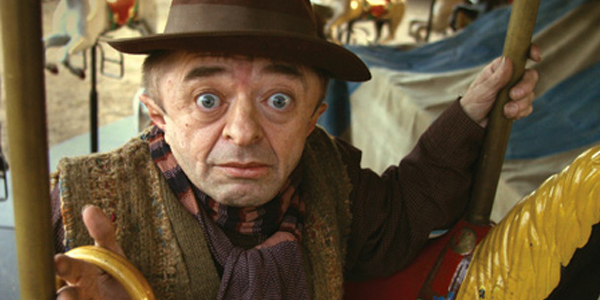
The pitch: In the dust-bowl 20s, a messianic figure takes up with a travelling carnival as he awaits a showdown with an anti-Christ. It's a shame that Carnivale never made it to a third season. A big budget production for HBO, it simply didn't have the ratings to justify the cost - but it was a fantastic concept, with a fantastic cast backing it. The premise: Good and evil have avatars on Earth, a messiah and Anti-christ figure who are destined to clash; neither knows what he (or she) is, at least at first, and in the 1920s, the avatar for good winds up riding along with a travelling carnival. It's not the the most succinct high concept pitch, but the appeal is clear: a good vs. evil battle set (at least partially) in a carnival. The show had a fantastic cast including Twin Peaks alum Michael J. Anderson, Nick Stahl, Clea Duvall, and Clancy Brown. It moved, however, at a snail's pace, which had fans rather upset. If you could handle the pacing, however, it was an extremely rewarding show and well worth the watch.

6. Lost

The pitch: A jetliner crashes leaving survivors stranded on a mysterious island. Lost won't be the only J.J. Abrams show on the list. However, Lost is really the show that made his name into a household one, and was the start of how he came to be someone entrusted with not one but two major sci-fi franchises, Star Trek and Star Wars. Sure, he co-created Felicity and was the creator of Alias, but Lost was the show that really caught on as a cultural phenomenon. It had a premise that was simple (a plane crash leaves survivors stranded on a mysterious island), but what about the what if? Well, that part came later. What if the the island survivors of a plane crash were stranded on had some supernatural goings-on? While the show was a character drama, it was still high concept as a result of the what if (and really, what ifs). And at first, the show did a great job of setting up the weird stuff with polar bears, a smoke monster, and other inhabitants on the island all popping up at one time or another. Lost averaged over ten million viewers for its entire run between 2004 and 2010, and while many feel the ending was a cheat, it was a hugely influential show, and another one of the more successful high concept series to grace the airwaves.

5. Buffy The Vampire Slayer

The pitch: A cheerleader happens to have the power to destroy vampires. Perhaps the biggest high concept cult series to date. After a failed movie, Buffy the Vampire Slayer returned to the hands of creator Joss Whedon, and he took the property to television, where it took off after the first season, really blossoming in the second and becoming a cult hit that would have a huge impact on genre television shows, pop culture, and generate a spin-off to boot. Buffy wound up being lectured about in universities around the world, and frankly, there have been few shows like it ever since. The high concept pitch is simple, a high school cheerleader, otherwise your typical valley girl, learns that she is a slayer, the latest in an ancient line of vampire hunters, complete with super strength and rapid healing. She must hide this from her friends and family (while that doesn't last long). and somehow juggle a love life and school work along with slaughtering demons.

4. Fringe

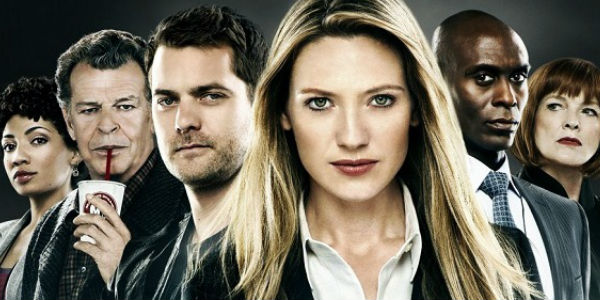
The pitch: All the unexplained horror in the world can be traced back to the experiments of a eccentric scientist. Another J.J. Abrams creation, Fringe has the distinction of having the satisfying ending that Lost did not, after five seasons of high concept, high drama television. The character of Walter, the mad scientist in question, really carried the show, but a balanced cast all around made the Fringe team the move compelling paranormal investigation unit since Mulder and Scully. The what if started out as "what if all the unexplained phenomenons in the world could be traced back to a central point" - and the character of Walter Bishop was that point. The fact that he was mentally unstable, capable of both greatness and great horror, and a sympathetic character, kept our interest through five seasons despite the setting of the show changing multiple times throughout the seasons. The show also expanded on the what if scenario by asking "what if there were alternate worlds?" and "what if Walter had already crossed over to one?" Fringe was one of the most high concept shows on during its run, and one of the best sci-fi/paranormal shows on at the time as well. It had a hard time finding stability in the ratings however, and ended its five season run in 2013.

3. American Horror Story

The pitch: A haunted house traps the souls of all those who die there (season one) American Horror Story is something of an exception to our list, because as far as the pitch goes, well, it's different every season. The show introduces a completely new setting and story each season - but that doesn't exclude it from being high concept, and here's why: for starters, each season itself can be considered high concept, with a simple, appealing pitch and a very well defined "what if" statement. "What if everyone who died in this house was trapped there" "What if there was a war between factions of witches" and so on. While American Horror Story can be considered to have a "pitch" for each season, there was obviously an initial pitch as well, and that as a horror anthology series that was self-contained each season, with returning actors playing different characters. That's one hell of a pitch, and it must have been a heck of sales job to get it picked up, but FX ordered a pilot for the series in 2011. In 2014, the show will return with its fourth season, this time set in a Freak Show in the 1950s.

2. Firefly

The pitch: A sci-fi western; humanity has colonized space but undergone another civil war, with a small group from the losing side forming up the crew up the renegade spaceship Serenity. The second Joss Whedon show to appear on this list, Firefly was mishandled from the beginning by FOX, with episodes aired out of order, making it hard for audiences to follow. It was quickly cancelled, but fan interest was still enough to have it resurrected as a feature film, Serenity. Was it weird? Sure, considering it was a space western that had no aliens and thus lacked the allure of, say, a Star Trek clone - but the fact that it was Whendon doing it got people interested. It's often Buffy and Dollhouse that get mentioned as high concept when it comes to Whedon's shows. but Firefly fits right in there as well. "Space Western" is a very pitch-able premise (Cowboys and Aliens sold it as well, after all) when you really think about it, and the what ifs created by the civil war in space storyline put it solidly in the high concept column as well. It's a shame that the show was never allowed to fully develop. The movie felt a little rushed story-wise, but that's hard to avoid when you need to wrap up a television series that might have lasted for years in just a couple of hours.

1. The Prisoner

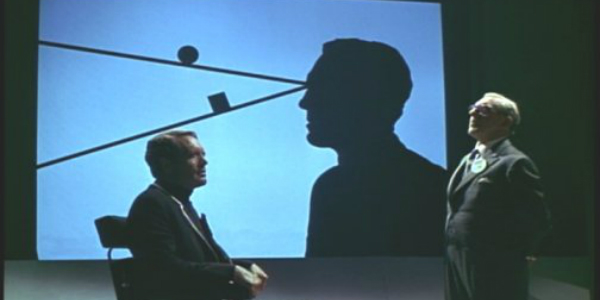
The pitch: Important and dangerous people are kidnapped and trapped on an island where they are known only by numbers, and unaware of why they are kept there or who their captors are. The grand daddy of high concept shows, The Prisoner had a relatively large impact on popular culture for a show that wasn't actually on the air very long. Just sixteen episodes in length, airing first in 1967, The Prisoner told the story of a British secret agent held prisoner on a mysterious secret island by parties unknown, who want to know why he suddenly resigned from his post. On the island, "The Prisoner" (played by Patrick McGoohan) is assigned the number six as his identity, and is heavily monitored by Number Two (Number One, the supposed head of the island, is an absentee landlord of sorts). It's got the pitch, the what if, but never caught on at the time - yet has outlived many more popular shows of its era. The SImpsons even spoofed it back in 2000. McGoohan even appeared in the episode. Any more you'd like the add? Comment below.

In this post: 
Dexter
 
Posted On: 
Contributor
Contributor

Primarily covering the sport of MMA from Ontario, Canada, Jay Anderson has been writing for various publications covering sports, technology, and pop culture since 2001. Jay holds an Honours Bachelor of Arts degree in English from the University of Guelph, and a Certificate in Leadership Skills from Humber College.