20 Greatest Spock Moments

A fascinating look back at the finest moments of the sci-fi icon.

Spock. That single name is enough to bring an image to the mind of any Star Trek fan, science fiction aficionado, or even casual TV viewer. A true cultural icon as portrayed by Leonard Nimoy, Spock is the only character to appear in every episode of the original Star Trek series. He was also in every animated episode, all six movies featuring the original cast, and a two-part episode of Star Trek: The Next Generation. In the rebooted Star Trek movie series, Spock is played by both Zachary Quinto as that universe€™s Spock, and Nimoy, who returns as the original Spock to provide a sort of bridge between incarnations of the franchise. Certainly one of the most influential and beloved characters in 20th century fiction, Spock is a fascinating blend of human and alien, a consummate scientist, a loyal first officer, and a brave explorer of the vast reaches of space When Leonard Nimoy died on February 27th, 2015, the world mourned. His face appeared on the front pages of major newspapers, radio stations featured his passing as a lead story, and tributes to Nimoy filled Facebook, Twitter, and other social media sites for days. His loss was felt not only by hardcore Star Trek fans, but by anyone who grew up on Star Trek, either in its original run or through repeats; by the many scientists who were inspired to go into their fields by watching Star Trek; and by all those whose lives were in any way affected by the work of this great actor, particularly in the guise of his logical, pointy-eared, green-blooded signature character. In recognition of a wonderful character, and in tribute to the actor who brought him to life, here are 20 great Spock moments chosen from the amazing half-century-long history of Star Trek.


20. In the Beginning€

Star Trek€™s original pilot, The Cage, was filmed in 1964 but never aired at the time. It was not until decades later that it was made available to the public. In this episode, the very first Star Trek story opens with Spock speaking the first line of dialogue, €œCheck the circuit,€ as we see the bridge of the U.S.S. Enterprise for the first time. The Cage shows us a Spock who had not yet been fully formed by the writers of the show into the version we would come to know for most of Star Trek€™s history. This Spock is still a sharp, efficient officer, full of scientific curiosity, but he displays emotion much more easily than in later appearances. He smiles sincerely when examining some plant life on a planet€™s surface, his face aglow with childlike wonder and the joy of discovery. Later, when the Enterprise€™s captain, Christopher Pike (played by Jeffrey Hunter) is in danger, Spock displays genuine concern for the safety of his commanding officer.

19. A Loyal First Officer

Throughout Star Trek€™s history, Spock has often demonstrated his willingness to place himself in danger to protect his captain and shipmates. This is clearly shown in The Apple, when the landing party beams down to a planet that seems to be a paradise, but soon proves deadly as the crew discover that the landscape is filled with exploding rocks and flowers that shoot poisonous darts. When one of the killer plants fires its sharp projectiles, Spock shoves Kirk aside and takes the poison for his captain. It turns out to be the right choice, as Spock€™s half-Vulcan chemistry is what saves him from a substance that would probably have killed an ordinary human.

18. Puppets

Because Spock is known as a character who rarely displays emotion, those occasions on which he does become emotional are especially memorable. In Plato€™s Stepchildren, which is also notable for its kiss between Kirk and Uhura, Spock is telekinetically manipulated to laugh and cry, as well as sing and dance like a court jester. Spock also shares a kiss in this episode, with Nurse Chapel, though the kiss is not at all voluntary, but the result of more manipulations by the landing party€™s captors, the Platonians. This scene is especially bittersweet, as it has been shown before that Chapel has feelings for the usually cold, emotionless science officer.

17. A Mission Gone Wrong

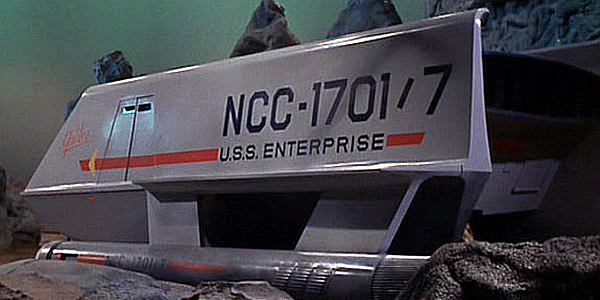
The Galileo Seven, from the first season of Star Trek, is interesting to Spock fans for two reasons. One, it shows Spock in command as he leads a landing party, which includes McCoy, Scotty, and four other crewmen, via shuttle craft, to the surface of an unexplored planet. Second, it shows the stranded crew members€™ reactions to Spock's seemingly cold demeanour and style of command as they are picked off one by one by the planet€™s hostile natives. In the end, of course, Spock succeeds under pressure and devises the solution that gets the survivors back to the Enterprise.

16. A Tale Of Two Spocks

Star Trek: The Animated Series, which ran for 22 episodes from 1973 to 1974 is the often-forgotten child of the Star Trek family, but was actually quite good. The animation was limited and the stories short, but the show captured the essence of Star Trek and featured the voices of most of the original cast. In the series€™ most Spock-centric episode, Yesteryear, the adult Spock travels back in time and assumes the guise of his older cousin, Selek, to save the life of his childhood self. When young Spock€™s pet, a sehlat called I'Chaya, is badly injured, the child-Spock must make the logical choice to let the animal die rather than live a prolonged but painful life.

15. Maybe Father Doesn't Always Know Best

The relationship between Spock and his father, Ambassador Sarek, had long been a tense one. In one of the last scenes of Star Trek IV: The Voyage Home, Sarek finally admits that it is possible he may have been incorrect in opposing his son€™s enlistment in Starfleet and that Spock€™s €œassociates€ are people of good character. Spock replies with, €œThey are my friends,€ and asks Sarek to tell his mother, €œI feel fine.€ The two part ways, an understanding finally reached after so many years, with the traditional Vulcan farewell of €œLive long, and prosper.€

14. Spock On Trial

If Spock€™s loyalty toward Captain Kirk was unquestionable, so was the strength of his feelings of friendship for his previous commanding officer, Captain Pike. In The Menagerie, a two-part episode from Star Trek€™s first season, footage from the original pilot, €œThe Cage,€ is used alongside new footage to tell the story of Spock€™s abducting the now-crippled Christopher Pike, setting the Enterprise on course for the forbidden planet of Talos IV, and facing court-martial for his actions. Spock€™s reason for doing this is to allow Pike to live out his remaining years under the illusion of health the Talosians cast over him. Spock is eventually cleared of all charges and allowed to resume his duties as Kirk€™s first officer. He has risked his career and his life for the sake of Pike€™s happiness, and won.

13. Best Destiny

One of the marks of a good officer is the ability to recognise the particular talents of each member of his crew, whether of inferior, equal, or superior rank. In an early scene in the second Star Trek feature film, The Wrath of Khan, when the Enterprise is detoured from a training mission to investigate what might be a real situation, Admiral Kirk insists that Captain Spock retain the command chair. Spock counters with the statement that €œCommanding a starship is your first, best destiny; anything else is a waste of material€. This is a sign not only of Spock€™s understanding of his friend€™s best qualities, but also of the fact that Spock values the good of the Enterprise and the success of her mission above personal status or achievement.

12. In Space, Someone Can Hear You Scream
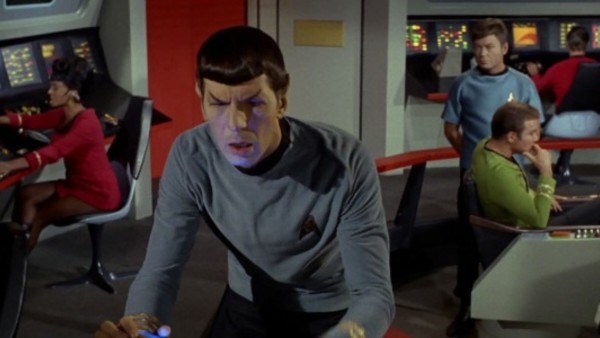
One of the most memorable examples of the Vulcan species€™ semi-telepathic abilities occurs in The Immunity Syndrome, in which the USS Intrepid, a starship manned entirely by Vulcans, is destroyed and Spock feels the horror and shock of the 400 dying crew members from a vast distance away. The scene might remind some viewers of the moment in Star Wars, filmed almost a decade later, where Obi-Wan Kenobi feels a great disturbance in the force and €œa millions souls crying out in terror,€ as Alderaan is destroyed. The episode€™s climax, which involves Spock piloting a shuttle craft into an enormous space amoeba and risking his life for the sake of a mission, is yet another example of Spock€™s heroism and bravery.

Contributor
Contributor

Aaron Smith is a writer who can't stick to one genre. He's written horror, mystery, fantasy, and espionage novels and short stories, including new tales of Sherlock Holmes. A lifelong fan of movies, comics, good books, obscure trivia, and the New York Yankees, he lives in northern New Jersey.