20 Mind-Blowing Doctor Who Facts You Never Knew

Ever wondered how the Sontarans got their name? Well now you know.
Inevitably given Doctor Who's massive global reach, fans of the show are obsessive (in a good way) and are desperate to know everything possible about the show which they love. A show rich in mythology, there is much that is known about Doctor Who. The majority of the show's obsessive fans do know much and more about the programme, yet there is so much trivia about the show swirling across the internet which many (probably) haven't come across before. Following is a list compiled of 20 facts which you may not know, detailing the very first episode, the very first Doctor and how the Sontarans came to be so named. Some of these factoids come from interviews, autobiographies and designs, and some of them are common sense really. If you think about it, that is. Admittedly they can take a while to get your head around. If you€™re a dedicated fan of the show you€™ll probably have heard of most of these anyway, but hopefully some of these will surprise you. Both the classic and the new series are covered so there should be a nugget of newness amongst the following facts.

20. Peter Davison Didn't Enjoy The Classic Series Of Doctor Who

More favourable of the newer revival, the Fifth Doctor€™s portrayer Peter Davison isn't such a great fan of the original run. He has stated that there were some suspect scripts during his time as the Doctor, written by writers who weren€™t fans of science fiction. Davison is a fan of the romantic elements of the newer series, and he stated that the show never really managed to write a good companion until Rose Tyler. Interviewed for the 50th anniversary, Davison cited The Caves of Androzani, The Visitation and Earthshock as his favourite starring serials, with Time-Flight being his worst. Do you agree with him?

19. The Lead Actors Follow The Troughton Rule (Inadvertently)

Patrick Troughton starred as the Second Doctor between 1966 and 1969, but left at the end of the War Games. He found the workload gruelling, and also feared being typecast. Although this so-called Troughton Rule is in the air, it appears as though many of his fellow actors followed it. Jon Pertwee and Christopher Eccleston both cited being typecast as reasons for their departure, and Troughton himself reportedly told Peter Davison during the filming of The Two Doctors in 1985 to limit his time on the show to avoid being typecast. Alas, Davison took heed, and departed after three seasons.

18. The Twelfth Doctor Could Have Been The Eighth Doctor
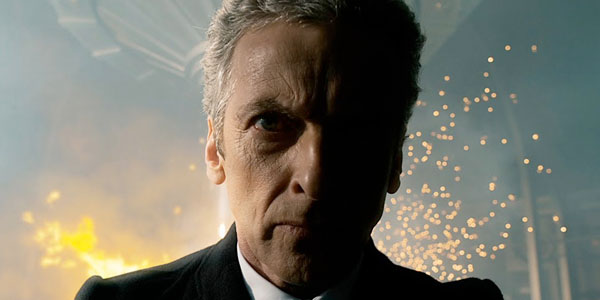
Peter Capaldi was invited to audition for the role of the Eighth Doctor in 1995, which ultimately went to Paul McGann. Capaldi ducked out of the audition because he didn't think he would get it. Capaldi has, of course, played three distinct and different characters within the Doctor Who universe, but had he been cast as the Eighth Doctor this wouldn€™t have mattered. A new series could have been commissioned, following a new continuity, and the rest, as they say, would have been history. Capaldi€™s Eighth Doctor likely would have only starred in a movie, like McGann. McGann is generally regarded as one of the best incarnations of the Doctor, so his portrayal isn€™t the problem. It€™s the movie itself which failed to capture the public's hearts.

17. Doctor Who Could Have Ended After David Tennant's Departure

Had Matt Smith not smashed pre-series expectations, Doctor Who very much could have ended in 2010. It was feared that the show would not be able to succeed without David Tennant€™s Tenth Doctor, who was a fan favourite. To help combat stresses, Steven Moffat, whom took over the executive producer and show runner position following Russell T Davies€™ departure, reportedly asked Davies to write an episode or two a series similarly to how Moffat wrote during Davies tenure. Despite pleas from fans, Davies has thus far failed to return to the show.

16. The Tenth Doctor And Rose Are Responsible For The Separation Of The Tenth Doctor And Rose

Now this one isn€™t necessarily a fact, but fiction which may have passed over many peoples' heads. The Tenth Doctor and Rose€™s arrogance in 2006€™s Tooth and Claw resulted in the creation of the Torchwood Institute to combat alien threats. A century later, the very same Institution helps break down the void barrier which results in the separation of the Doctor from Rose. It€™s indirect and not meant to happen, but happen it does, all because of the Doctor€™s enjoyment of discovering a real werewolf. Had he been more sombre and acted more in accordance with Queen Elizabeth€™s wishes, the Torchwood Institute may not have risen.

15. William Hartnell Chose Patrick Troughton As His Ideal Replacement
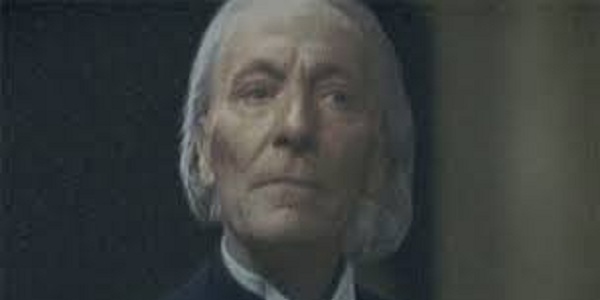
It is well known that William Hartnell was written out of Doctor Who due to a combination of ailing health and poor relations with a newer production team. Hartnell however reportedly suggested Patrick Troughton to be his replacement, stating that Troughton was the only man in England whom could take over from him. Hartnell wasn€™t happy to be written out of the show, but he did return six years later to star in season 10€™s The Three Doctors.

14. William Hartnell Received Only £315 Per Episode

The First Doctor received pittance for his performance, at the grand total of £315 a week. This is equivalent to roughly £4,050 nowadays, which doesn't even total £200,000 a year (the show had 48 of 52 production weeks a year). Compared with recent actors, this is very little. David Tennant reportedly earned almost £1million a year for his role as the Tenth Doctor, whilst his successor Matt Smith took a pay cut totalling almost £600,000 a year. And all of this doesn€™t take into account the huge amounts of money generated from merchandise. This is obviously due to the popularity that Doctor Who had garnered over the years, but it does put the original actors into perspective. Hartnell€™s 1966 co-stars Anneke Wills (Polly) and Michael Craze (Ben Jackson) respectively earned only £68 and £52 per episode.

13. The Daleks Were Originally Designed Differently
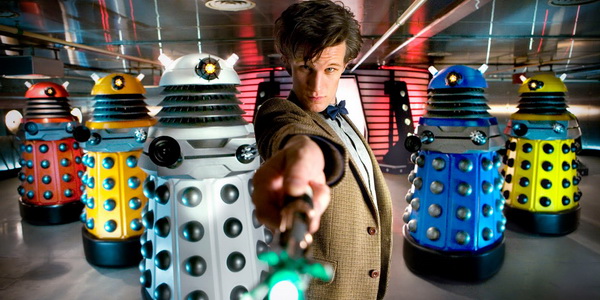
The original Dalek design gave them a more cylindrical appearance and a claw-like appendage. Their infamous eyestalks were missing, though the flashing lights were included in the first designs. The first four Daleks cost £250 to make, for 1963 standards. Unlike every other race to appear both in the classic and the new series, the Daleks design hasn't changed since their first onscreen appearance. Their pepper-pot stature has remained unscathed for 51 years, even if 2010€™s Teletubbie design gave them a bit more€ weight.

12. The Very First Serial Has Three First Episodes, And Five Names

Doctor Who received its first transmission on 23 November 1963, but it was planned to launch eight days earlier on 16 November 1963. The delay was due to technical issues and errors made during the initial recording, including a persistent door randomly opening of its own accord onboard the TARDIS, a more gruff-talking Doctor, a more weird Susan and lines pertaining to the Doctor€™s home world. Originally he was meant to hail from the 49th century, not Gallifrey as we know it. As such, two first episodes were filmed: the first of which is colloquially known as the Pilot of Doctor Who, whilst the second adopted the overarching serial title of An Unearthly Child. The original remained hidden until it was finally broadcast in 1991, nearly 32 years after it was recorded. A third first episode does exist however; that of an edited version of the original Pilot which removed studio noise, and added in digital adjustments. As a result, three versions of the very first episode exist in varying forms. Furthermore, whilst An Unearthly Child is the official name of the first serial, four other names have been used. These include The Tribe of Gum, 100,000 BC, The Palaeolithic Age and The Stone Age. Many argue that 100,000 BC is the true name of the serial since it was used by production staff at the time, but the BBC markets the serial as An Unearthly Child.

Contributor
Contributor

English Language and Literature graduate. Creative Writing student. Aspiring creative and professional writer.