20 Mind-Blowing Doctor Who Facts You Never Knew

11. Susan Was Originally Telepathic, Then She Wasn't, Then She Was Again, Then She Wasn't Once More
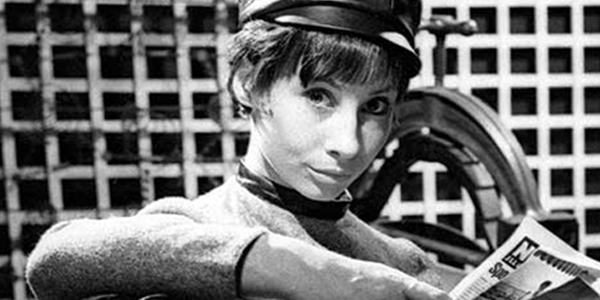
Susan, the original companion, was reportedly billed to Carole Ann Ford as €œan Avengers-type girl€ with telepathic powers. This was later changed to give Susan a more normal demeanour so as to allow younger viewers an identification figure. A year later this was changed again, and Susan€™s telepathic capabilities manifested during a visit to the Sense-Sphere. This was changed for a fourth time as her capabilities lasted for only this narrative. Later episodes of Doctor Who would establish the Time Lords as a telepathic race with the ability to share thoughts with others, such as the Tenth Doctor accessing Madame De Pompadours mind. As such, Susan€™s telepathic capacity does make sense nowadays. Kind of.

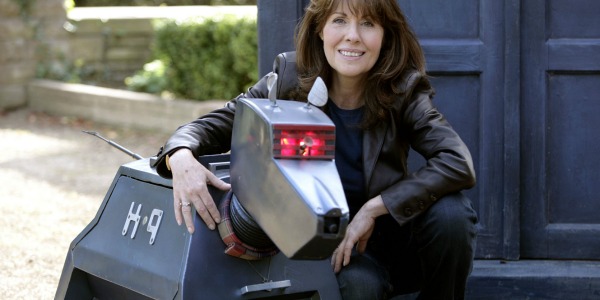
10. K-9 Was Originally Named FIDO

Though K-9 later came to be a staple of Doctor Who culture, his original name was FIDO, standing for Phenomenal Indication Date Observation. The initial idea for the robot companion was to use a small actor inside a costume of a Doberman. Five versions of the robotic pooch have existed: four versions in Doctor Who, which are altered in accordance with technical problems affecting the prop (two were regenerated, essentially, whilst a third returned to Gallifrey with Romana); and a fifth version for the K-9 spinoff, which isn€™t a part of the BBC. Funnily enough, despite it only airing in 2009, a reboot is reportedly being planned already.

9. The Great Intelligence Could Have Returned Much Earlier
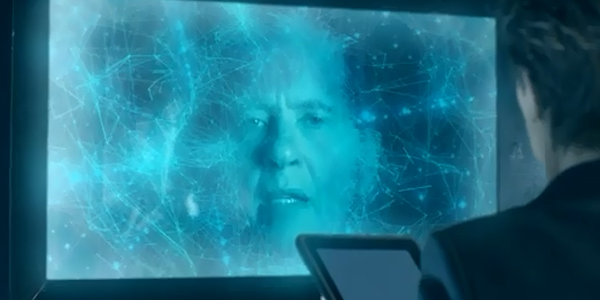
The Great Intelligence and it's Yeti beasts were created by writers Henry Lincoln and Mervyn Haisman for the 1967 serial The Abominable Snowman. They both returned a year later in 1968, and then the Great Intelligence returned once more 44 years later in The Snowmen, this time without the aid of the Yetis. 1968 also saw the introduction of the Quarks, a monster created to try and reach the same marketing potential as the Daleks. Ultimately this failed. However Lincoln and Haisman were unhappy with the BBC for creating a new monster and promoting it as the new Daleks, and departed the series, taking their creations with them. The Yetis did return in flashback and cameo forms, but never as the antagonist. Had the Yetis been promoted likewise, the Great Intelligence probably would have recurred much more throughout the classic run.

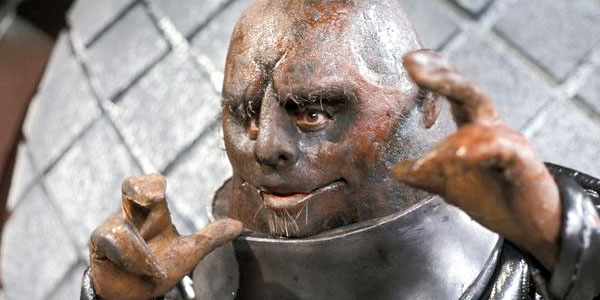
8. It's Son-TAR-an, Not Son-tar-an

Elisabeth Sladen€™s posthumous autobiography gives a humorous anecdote about the pronunciation of the Sontaran race. She stated that the actor portraying Linx, the original Sontaran from The Time Warrior, pronounced the race as Son-TAR-an, rather than Son-tar-an. The story goes on to detail that Alan Bromley, the director of the classic tale, tried to correct Kevin Lindsay, who retorted €œWell, I think it€™s Son-TAR-an, and since I€™m from the f*cking place, I should know.€ Know he did, because his pronunciation of the Sontaran remains to this day.

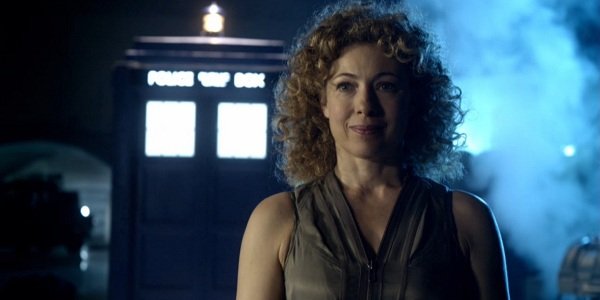
7. River Song Was Planned All Along

Steven Moffat always intended River Song to be a recurring character during his turn as show runner, and he had planned that she would be the Doctor€™s future companion's child for a long time prior to its ultimate reveal. Amy was only given the surname Pond to create a link between the two characters. Alex Kingston always knew more of River than any other actor. Filming the sixth series, Kingston knew of River€™s relationship with Amy and Rory, whilst Karen Gillan and Arthur Darvill only found out upon reading the script for the mid-series finale. Interestingly, many theories swirled about the internet pertaining to River€™s identity. Many thought she was the Doctor€™s wife, whilst many others believed her to be his killer. A few, though not many, did guess that she was Amy and Rory€™s daughter. Ultimately she became all three.

6. Christopher Eccleston Originally Wasn't The Ninth Doctor

Canonically speaking, Richard E Grant (who later took on the role of the Great Intelligence) was originally promoted as the Ninth Doctor for his animated role as the (now known) Shalka Doctor during 2003€™s Scream of the Shalka. But Doctor Who€™s return to television was announced prior to the original broadcast of Scream of the Shalka, which made airing it rather pointless. Richard E Grant was demoted to a non-canon Doctor, and Christopher Eccleston took on the mantle. Had Russell T Davies not revived Doctor Who for 2005, several sequels to Scream of the Shalka reportedly would have been produced, and Doctor Who would be a very different programme nowadays.

5. The Eighth Doctor Was "Half Human", Somehow, And Then Later Wasn't
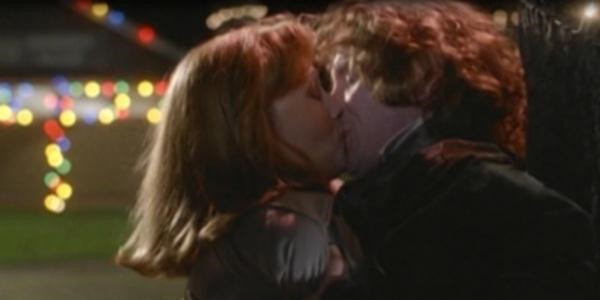
The 1996 Doctor Who Movie bafflingly described the Eighth Doctor as €œhalf human€ on his mother's side, something which has largely been dismissed within the fan community. Quite what writer Matthew Jacobs intended by this controversial change will never be known, as the television movie didn't generate a series, thankfully. Expanded media have tried to explain this notion, though most are unsuccessful. It appears as though this revelation disgruntled Steven Moffat too. 2014€™s Listen showed glimpses of a young First Doctor and his parents on Gallifrey which, whilst not confirming, do indicate that the Doctor€™s parents both hail from Gallifrey. Either that, or the Doctor€™s father stole a TARDIS and set off for Earth, but that tale has been told before. Whilst Paul McGann was brilliant in his brief appearances as the Eighth Doctor, his movie should probably be disregarded.

4. The Cybermen Have Received Substantial Costume Changes, And Three Versions Of Them Exist Today

It is common knowledge that the Cybermen have been designed and redesigned countless times throughout the show's run. Their introduction in 1966 gave them a simplistic design - the handle bars were evident, along with a hefty chest unit - but the suits were made of fabric, and they included human elements to the design, most notably human hands and human flesh on their faces. To date, 24 variations of the Cyberman design exist, along with four Cybermat designs and one design for 2013€™s Cybermite. These variations include the metal faces of 1967 along with the Cyber Controller€™s dome-shaped brain cage (which incidentally is one of only two designs not to incorporate the iconic handle bars), the likewise iconic tear drops of 1968, and their gaunt, chubby appearance in 1982. Their return in 2006 gave them another substantial costume design. They were completely metallic cyborgs hailing from a parallel Earth. Whilst beautiful, they were on the stocky side. And finally 2013 gave the Cybermen a more streamlined appearance, and amped up their power considerably. In 2006 they also received a feminine design in Torchwood, although that one is quite hard to explain. All of these redesigns have resulted in three versions of the Cyberman race existing: the original, Mondasian menaces of 1966, the parallel Cybus machines of 2006, and an (unconfirmed) amalgamation of both races in 2013.

3. 20 Actors Have Starred As 18 Doctors (On Television, Anyway)
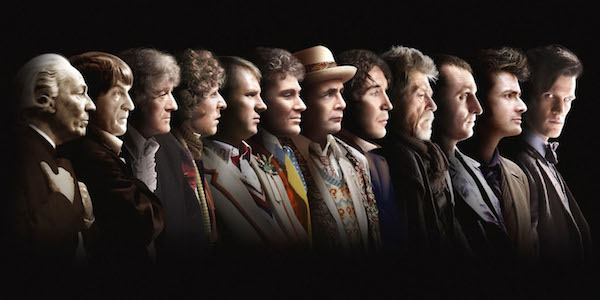
20 actors have been billed as the Doctor over its 51 year history, though some of them were never credited. 12 of these actors obviously come in the form of William Hartnell, Patrick Troughton, Jon Pertwee, Tom Baker, Peter Davison, Colin Baker, Sylvester McCoy, Paul McGann, Christopher Eccleston, David Tennant, Matt Smith and Peter Capaldi. Last year's 50th anniversary introduced John Hurt as the War Doctor, so this brings the total to 13 actors. So where do the other eight come from? The Day of the Doctor also introduced viewers to another new Doctor, in the form of the Curator. Canonically speaking, Tom Baker€™s Curator cannot be the Fourth Doctor; he is much older than his official departure in 1981. The Curator was implied to be a future incarnation of the Doctor, one which we will likely never see onscreen again. Likewise, David Tennant portrayed a second Tenth Doctor in 2008. Further to this, Adrian Gibbs took on the role of the Watcher in 1981€™s Logopolis, a manifestation of the future fifth Doctor. and Richard Hurndall took over the role of the First Doctor in the 20th anniversary of the show, after the death of William Hartnell. This brings the total to 16, though Tom Baker and David Tennant have officially portrayed two Doctors. Michael Jayston played the Valeyard in 1986, with Geoffrey Hughes adopting a disguise the Valeyard took. The Valeyard is believed to be a Doctor sometime after his Twelfth incarnation. Toby Jones took on the role of the Dream Lord, a psychic manifestation of the Doctor€™s darkness in 2010, and John Guilor provided a vocal cameo for the First Doctor in The Day of the Doctor. A twentieth, currently unknown actor, took on the role of the First Doctor in 2014€™s Listen. All of this of course doesn€™t include non-canonical appearances in parodies, audio, film or theatre.

2. Two Unmade Series Were Planned

Seven stories were planned for the unmade season 27 of the classic series, though none of these were made following the cancellation of Doctor Who in 1989. These episodes were as follows: Earth Aid - a space opera featuring samurai-like insects named the Metatraxi. Thin Ice - featuring the Ice Warriors in 1968 London, this would have led to the departure of Ace and the introduction of a new recurring character similar to the Brigadier. Crime of the Century - this story would have introduced a cat burglar companion, an idea likely reused in Planet of the Dead. Animal - nothing is known of this proposed story. Hostage - a thriller set sometime in the future featuring two shape-changing criminals. Night Thoughts - a horror story set in an isolated house and featuring a murderer. A School for Glory - set sometime during the First World War. This however isn't the only time a series was planned and later canned. The 1996 US reboot of Doctor Who reportedly would have established a new continuity and saw remakes of several classics, including: The Talons of Weng-Chaing - set in New York. Earthshock - introducing the Cybs, rather than the Cybermen. The Celestial Toymaker - who would have been under the control of the Master. Tomb of the Cybs - this story would have seen the Cybs awakened by the Master. The Sea Devils - set on a Louisiana oil rig, a reboot of the classic of the same name. The Outcasts - this would have featured a group of outcast Time Lords attacked by Cybs. More controversially, the Doctor€™s father, named Ulysses, would have been introduced.

Contributor
Contributor

English Language and Literature graduate. Creative Writing student. Aspiring creative and professional writer.