6 Reasons You Should Be Watching Orphan Black

The second season premiered this weekend.

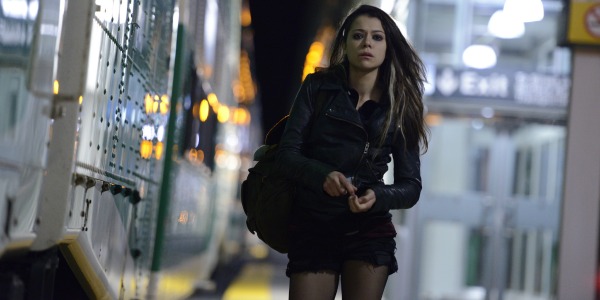
Most TV shows can be boiled down to an elevator pitch: a brief summation of the show's premise that could fit into an elevator ride with a high-powered executive type. For Breaking Bad it's "dying chemistry teacher becomes meth dealer". The Sopranos it had "mafia boss goes to therapy". For Game of Thrones it was probably just "dead successful books, with boobs". BBC America's Orphan Black, meanwhile, has maybe a half-dozen elevator pitches, and they'll all totally hook you. You could describe the opening scene: "Woman sees somebody who is identical to her jump in front of a train". You could go for what happens next: "Woman steals identity of her dead doppelganger." Or how about we just jump in with the premise the show: "Woman discovers she is just one of many clones, and that somebody's after them." See? That's three great hooks right there, and we've not even got past the first episode. So how come you're not already watching the story of Sarah Manning and her clones, huh? The first season of Orphan Black took those hooks and managed to twist them even further, with a fast-paced story, an amazing cast and believable characters in an unbelievable situation. The second season, which premiered last night, is showing no signs of slowing down. Still not convinced? Well, I've got six pretty good reasons you should catch up.

6. The Second Season Just Started

And it picks up immediately after the first season, which is good, because it ended on one heck of a cliffhanger. A lot happened in Orphan Black's debut series, but the "previously on..." will catch you up on most of the important stuff, and there's enough set up in "Nature Under Constraint And Vexed" (yeah, all the episodes have titles like that) to get you on board for this next run through the capricious conundrums of the Canadian clones. Without spoiling too much of the first season - because, well, it would be good if you watched it - the newest episode of Orphan Black includes a shootout in a diner involving a couple of religious nutters, an S&M club, an ongoing homicide investigation, a kidnapping, a seeming return from the dead and a rehearsal of the musical Cats. That's all crammed into 45 action-packed minutes, and it doesn't really let up. It's all very exciting, and there's another ten episodes of this to go! It's also as good a place as any to start watching the show. The first season started a lot of the plot threads that get picked up here, but it's relatively easy to catch up with what's going on with titular orphan Sarah Manning, who exactly her "sisters" are, and which people you need to be booing. Not only that but it gets you up to speed whilst travelling along at a decent rate itself, all without ever feeling like it's going to collapse under the weight of so much going on.

5. It's Smart

We live in a world where pigs are cloned on an "industrial scale", where the director of engineering at Google believes human beings will be able to live forever with the help of technology and tampering with our DNA, and where the US Supreme Court recently had to make a law to stop people patenting genetic material (unless it's synthetic). We live in a world that actually isn't too far from that of Orphan Black, and its creators have been canny in their cherry-picking of trends in science, technology and society in order to build a convincing, engaging world. One of the clones the show centres on, Cosima, is a graduate student who's studying evolutionary developmental biology (basically how different organisms evolve, and what we can learn from them). From there she's dragged into a world of body modification and transhumanism which isn't too dissimilar from people implanting headphones in their ears or those chasing the William Gibson ideal. None of this is required knowledge to enjoy Orphan Black, it's just a clever way of grounding its more fantastical elements - ie a shadowy organisation that's secretly producing multiple clones of one woman - in reality. It's also clever because it's not necessary to "get it" or realise that all this stuff isn't too far off, but all the technobabble is convincing enough that you don't question it either way, and can instead get wrapped up in the crazy story.

4. It's Funny

Sometimes it can all get a little overwhelming for the Clone Club. If it isn't their "creators" trying to get control of their lives, it's religious zealots who see their unique genetic predicament as more of an immaculate conception-type deal. You can't blame them for wanting to blow off a little steam, and you can't blame us for wanting to join them. A problem with a lot of shows with a sci-fi or genre bent is they forget the funny. They're either entirely po-faced, because the post-apocalypse is a serious business (I'm looking at you, Revolution), or the "jokes" are as hacky, contrived and uninspired as the romantic subplots (yes, Almost Human, we've seen buddy cop movies before). To be fair, it can be a difficult to balance a relatively straight dramatic narrative, only to pierce the pomposity with a couple of one-liners. But Orphan Black pulls it off with such aplomb, you wish all shows could be like it. There's the ongoing storyline of Alison, the soccer mom clone who's going through an American Beauty-esque suburban breakdown that culminated in an amazingly farcical neighbourhood party that required Sarah, our principal clone, standing in for her; there's the straight-up hilarious weirdness of bad guy Olivier Duval and his, er, unique genetic augmentation; best of all, though, there's Felix. Sarah's foster brother is the heart and wit of Orphan Black, gleefully camp without being a caricature, biting without being stereotypically "bitchy". He's the light amongst the darkness of the show's murky overarching story.

3. It's Awesome

Was that not already clear? Besides being a near-as-dammit accurate portrayal of various underground science and technology cultures, managing to balance levity and drama, and being progressive in its characters, it's also really, really exciting. And horrible. And nasty. And fun. And cool. And is the next episode on yet? I need to see it! The series starts off by settling into the familiar structure of a police procedural, as Sarah steals the identity of her suicidal clone who, it turns out, was a cop. So she masks her Cockney accent, dresses up and tries to blag her way through police investigations, the threat of being caught at any moment ever-present. That's tense, right? And that's before we really even know anything about clones and the scientists/zealots who love them. And before Sarah's daughter is in peril, and before one of the clones turns out to be less friendly than the others... There's a lot going on, basically. Luckily, the badass characters are all ready to deal with the situations the show throws them at, from Sarah's ongoing ingenuity from her Artful Dodger days (an early highlight: downing soap in a bathroom so she throws up to get out of a tribunal) to Alison's ongoing acceptance that her perfect suburban life is anything but, and that's why she needs to tie her husband up with masking tape and torture him.

2. It's Sci-Fi TV Done Right

We've already skimmed over some of the problems that sci-fi shows have: the stony-faced tone, the unbelievable situations, the focus on hard science at the expense of...everything else. Orphan Black doesn't have any of those problems. It also draws an ever-increasing cast of characters who are three-dimensional, flawed and interesting, characters you'd care about even if you weren't watching them in a futuristic thriller serial. It's grounded. It doesn't try to do big special effects that are beyond both its budget and remit. It doesn't indulge in stereotypical depictions of gender, sexuality or race (for the most part). There are jokes. This all elevates Orphan Black to the higher echelons of genre TV, up amongst the early 90s canon of The X-Files and Buffy. The show has the benefit, however, of having come out during the tail end of the television renaissance, when shows receive as much critical acclaim, viewership and - crucially - a budget tantamount to films. Fondly remembered and cult-followed as the best sci-fi shows are, they demand to be watched through rose-tinted specs. Mulder and Scully were victims as much of bad supporting actors and creature make-up as governmental conspiracies, and Buffy's wire work and action sequences couldn't quite match up with the money Fox was willing to spend on it. Orphan Black, meanwhile, sits comfortably amongst the likes of Breaking Bad and Game of Thrones with all the aforementioned qualities - would Walter White be as watchable without his comedic moments, or Westeros as engaging without it's historical inspirations? - along with strong writing, lack of filler, a cinematic look and a universally great ensemble of performances. Speaking of which...

1. It's Got The Best Female Lead(s) On Telly

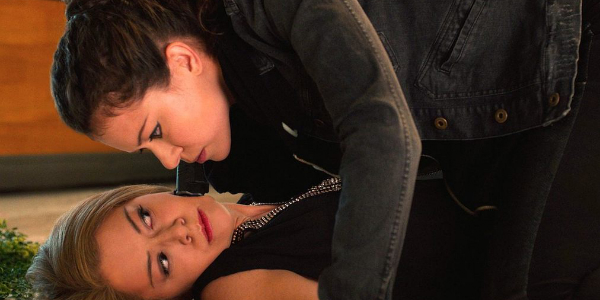
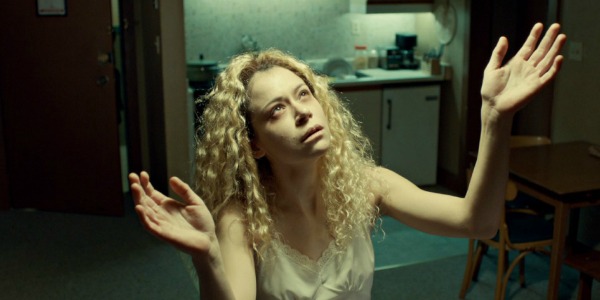
That goes twofold: one, the assorted Clone Club are probably the most engaging and well-rounded female protagonists on television today, outside of Daenerys Targaryen; two, they're all played by the same person. Of the "orphans" we've met so far, no too have been alike: there's Sarah, our gutsy protagonist and former street rat; Alison, the uptight soccer mom going through a crisis; the dreadlocked Cosima, whose much smarter when it comes to science than who to trust; the frankly terrifying and murderous Helena; and a few more that I don't want to spoil. They're all great characters in themselves, and all completely unique. Sadly Tatiana Maslany didn't win the Golden Globe for Best Actress she was nominated for, though she bloody deserved it (and has got plenty of silverware elsewhere). So far in Orphan Black she has played seven of those very different characters. All clones, but clones raised in entirely different circumstances, and even countries. Besides just nailing English, Ukrainian and German accents and some clever costume changes, Maslany makes each of her clones distinct down to their mannerisms, the way the walk and hold themselves. Her performances are as believable as the characters themselves. Just one would be impressive on its own, but the fact that she's playing multiple lead roles in each episode is as mind-boggling as it is impressive. And I for one am excited to see what she - and they - are going to do next.

In this post: 
orphan black
 
Posted On: 
Contributor
Contributor

Tom Baker is the Comics Editor at WhatCulture! He's heard all the Doctor Who jokes, but not many about Randall and Hopkirk. He also blogs at http://communibearsilostate.wordpress.com/