7 Reasons You're Getting Tired Of Steven Moffat's Doctor Who

Moffat! *shakes fists*
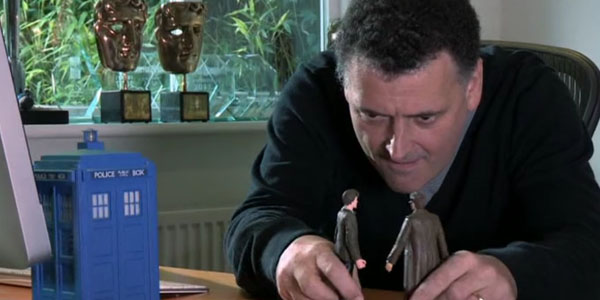
When it was announced back in May 2008 that Russell T Davies, the man who brought Doctor Who back from the farthest depths of forgotten space, was appointing Steven Moffat as his replacement, fans rejoiced. Moffat's contributions to the previous four series (The Empty Child/The Doctor Dances, The Girl in the Fireplace, Blink and Silence in the Library/Forest of the Dead) were considered instant classics, each and every one. While Russell's style was considered a little too campy by some, too sentimental by others and even downright lame by a contingent of grumps, Moffat's was seen as someone who would bring a darker edge to the show. All of his episodes had featured fearsome and iconic imagery, complex plotting and witty scripts. He seemed like the perfect man to cement Doctor Who as a show that the whole family could enjoy, rather than children who liked it when aliens farted. And for a time, he really was. Series 5, Moffat's first on the job, and the first season of Matt Smith as the Eleventh Doctor, was probably the best series of NuWho so far produced, from it's punch the air opener to its timey-wimey finale. But time, ironically, hasn't been kind to Moffat. The general consensus has been that, since Series 5, the show has declined in quality, reaching a particular nadir with Series 7. For a number of reasons, many of the hardcore fans, and some of the casual, have turned on Moffat, and the volume of viewers on Twitter calling for his resignation increases by the year. Some are even looking back on the Russell T Davies years with rhapsodic nostalgia. So, what the hell happened?

7. He Repeats The Same Tricks Over And Over
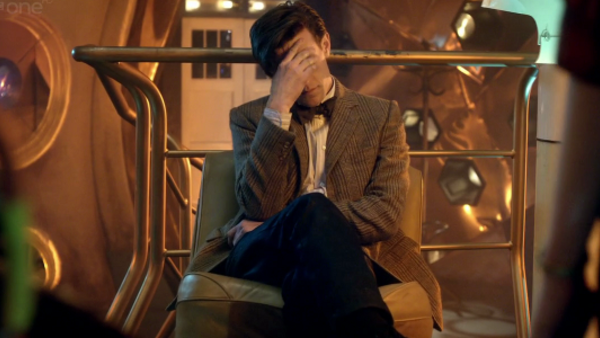
The Doctor meets a child. Because fans have never seen that one before. In fact, he and the children make friends, bond and he imparts some sort of tiny life lesson to the little sprog. Then the Doctor meets that child again, this time as an adult and they are still somehow bound to him... Moffat first used this narrative device in The Girl in the Fireplace, when the Doctor met Madame de Pompadour first as a child, then as a fully fledged adult. The juxtaposition of how much she'd changed with how much he hadn't, and the fact that he still remained important to her after all those years, was deeply affecting. It was still affecting when Moffat used it years later, during his first year showrunning, to introduce the Eleventh Doctor's first companion, Amelia Pond. She was the first person that he saw with his new face and she fed him and helped him adjust to his regeneration. Like The Girl In The Fireplace, he promised to immediately return but ended up doing so years and years later. It was still quite affecting in Moffat's first Christmas episode, A Christmas Carol, when the Doctor tried to change a grumpy old man's mind by going back in time and bonding with his younger self. It wasn't very affecting when he met his current companion, Clara, in a playground. In the most recent series, the Twelfth Doctor met Clara's boyfriend Danny Pink as a child and taught him a life lesson about fear before he met him as a fully-fledged adult. Time for something new, perhaps?

6. Complicated Overarching Plotting

A series of Doctor Who is always quite a strange beast. They're comprised of individual episodes, mostly written by a different writer, often featuring a completely new setting, cast of supporting characters and even sub-genre. It's Freak of the Week-style plotting and it requires deft control by the showrunner to ensure that each episode is allowed to grow and flourish as its own journey, while also feeling part of a wider narrative, something to give each series an identity of its own. Russell T Davies was good at this. Bad Wolf, his first arc, being a particularly strong example of a recurring narrative plot thread creating intrigue throughout a series without damaging the component episodes. Steven Moffat lifted this template pretty much verbatim for his first series in charge, simply replacing the words Bad Wolf with the image of a crack in time. There were warning signs when the crack acted as a deux ex machina during one of the mid-season eps (Flesh and Stone), but otherwise, a fine example of arc plotting. Things have gotten much worse since then. Series 6's overall narrative concerned the Pond's baby being discovered then born and stolen in the course of two episodes. Then, disastrously, the episodes were shown out of order, so the episode following Amy and Rory's baby being nicked was the one originally supposed to be shown fourth, before the baby drama even began. The Ponds total lack of concern throughout that episode for the whereabouts and welfare of their missing baby completely compromises that episode, which isn't fair on the audience or Mark Gatiss, the writer. Other episodes, like Matt Smith's final episode, were so bogged down in trying to tie off all of the remaining plots strands (who blew up the TARDIS, who are the silence, what is the Doctor's name, what's the deal with Trenzalore!?) that there was barely any time to just enjoy the episode. Stop talking to us about stuff and let us feel things! The next plot arc gets an entry all of its own.

5. Clara

The single biggest complaint about Series 7 (well, perhaps the second biggest - more on that later!) was the weakness of the Doctor's current companion, Clara Oswald. Moffat had achieved great success with River Song, a space vixen supporting character with family-friendly levels of seductive, who met the Doctor throughout time and her entire identity was a gradually-unfolding mystery. Moffat, being Moffat, thought that the idea was good enough to be reused so he decided to make the next companion's entire identity a mystery, too. Prior to Clara joining the Doctor in the TARDIS full time, he met her twice, both times she died. Mysterious. The identity of Clara was the biggest narrative thread of the seventh series. Unfortunately, this was something of a disaster because it meant that, for an entire run of episodes, fans had no idea who Clara even was as a character. Probably because she wasn't a character. She was just a puzzle for the Doctor to solve. His "impossible girl". Bad news for the talented Jenna Coleman, who was robbed of agency and made decisions that nobody quite understood. In Series 8, once the mystery was out of the way, the Doctor got to know his best friend a lot more. He found out she was bossy and a teacher. She was somewhat deceptive, hiding her relationship with the Doctor from Danny, and was even manipulative under extreme grief. Throughout Series 7, however, she was a blank slate, with no overriding characteristics other than 'glib', which is a problem because...

4. Everyone Is Glib

Doctor Who, once so eccentric and British, cheerful and earnest, grumpy and sly, has become somewhat infected with one of the worst tropes of American TV: the constant wry asides. Moffat has always been a witty writer. He has a host of sitcoms under his belt (Chalk, Joking Apart, Coupling) and knows how to write dialogue that pings. However, while a cool one liner is fine and dandy every once in a while, and the Doctor is supposed to be funny and smart, the show is also supposed to be, at its core, a show about the dangers of time and space, monsters and lasers, difficult choices and running. It's hard to create stakes if everyone's so glib all of the damn time. Your average scene in Moffat's Doctor Who Who goes something like this.
INT. SPACE STATION Clara: Where are we, Doctor? Doctor: A Bandarian Cruiser (presses buttons on a console) Excitable witty remark. Clara: Are we in danger? Doctor: Witty remark, play on words. Clara: Exasperated witty aside. Doctor: Pardon? Clara: Nothing. Witty remark under breath. Doctor: Good! Eccentric shout, undercut by witty remark.
Not only does this have the effect of making all of the characters sound the same, because everyone's the clever-clever funny one, but it also makes the show seem impossibly smug. Try introducing a friend to the show as it stands now and they won't like the characters because they're rendered so often dispassionate by their almost psychotic levels of lol-banter. Say what you want about Russell T Davies, but at least he was always earnest.

3. Moffat's Female Characters Are... Problematic

Steven Moffat has one or two issues with ladies, it appears. They're all just a bit too... flirty. This is another plague on American TV, a male character and a female character cannot share the screen without having a cosy little flirt. Doctor Who has become the same way. It all started with River Song. She was sexy, she used to say things like "Hello, sweetie!" and kiss people with hypnotic lipstick. Which is fine, great even. She was a confident, pushy female character with a sense of humour and a clearly defined character. Things got less well defined as things went on. Amy Pond appears and she's also very sparky. She's pushy and is introduced as a kissogram with lovely long legs. She tries to kiss the Doctor on the night before her wedding, despite the fact he's her childhood imaginary best friend. There's some psychosis there. Either way, she's another sexually active, pushy, flirty character, but that's fine because... well, it actually makes her seem a bit cruel towards her loving husband but women don't care about such things, right? Haha, wink wink, witty aside. Then there was Clara. She's devastatingly pretty and immediately starts flirting with the Doctor, identifying him by his sexy chin and insinuating stuff about bisexuality. Ok. Wow. The Doctor starts flirting back and utters the infamous line about how Clara's "squeezed into a skirt that's just a little bit too... tight". The Eleventh Doctor met a character called Tasha in his last episode. She was pushy and flirty. He snogged her at one point. He frequently partnered with a lesbian interspecies couple who were never too far away from making the odd kinky one liner. It got to a point that when Peter Capaldi took over as the Twelfth Doctor, one of his biggest promises to the fans was that there would be no more flirting in his TARDIS. The Master is a woman now. Guess what she's like.

2. Bigger Doesn't Equal Better

The show has never felt more cinematic than it has lately. There was a colossal shift in styles when Moffat took over from Davies. Before Russell left, the show felt a little cheap. Big in ideas but a little shabby on the presentation side. This is not necessarily a criticism. Doctor Who has historically always looked a little shabby. It's part of its British charm, after all. But Moffat is on a permanent crusade to go big. For Series 7, his edict to the writers was to 'Go Hollywood'. There would be no two parter episodes and every individual episode would get its own Hollywood-style poster with big action, high concepts and everything big big big. A cowboy episode! Yeah! A Dalek planet! Hell yeah! Dinosaurs on a spaceship, YEAH YEAH YEAH. Episodes find themselves populated with huge ideas (the Statue of Liberty is a Weeping Angel! Everyone who ever died is now a Cyberman!) but the problem the show runs into is that the storytelling of the show is not able to match the ambition. Ambition is good. Doctor Who always will be a show that's fuelled by its own ideas. The most successful episodes of Doctor Who are the ones in which those ideas are allowed to breathe and be fully explored. These episodes are often quieter affairs. Midnight was the best episode Russell T Davies ever did. It was all set in one room. Blink had a tiny intimate cast. Listen, the best episode of Series 8, was graced with a beautiful slow pace, allowing dread to bloom. The series finale, in comparison, was about a huge idea (dead people Cybermen) but the audience were never allowed to get to grips with the scale of it. Moffat is too obsessed with big set pieces, like the Doctor jumping out of an exploding plane and saying something witty... then another big thing! Bigger doesn't always equal better.

1. Everybody Knows That Doctor Who Can Be Better Than This

That's the real kicker at the end of the day. Sherlock, another Moffat-run show, is frequently fantastic. Moffat has created some of Doctor Who's finest ever episodes. He was responsible for the best overall series that the show has ever had. This is why it's so disheartening to see the downward trajectory the show is taking. Greatness is permanently within Doctor Who's grasp but, for the last few years, it's just kept fumbling it. Fans are not owed greatness. No one is ever owed anything from a TV show, but knowing that Series 5 levels of goodness are reachable if only Moffat would alter some of his habits... that's where the frustration comes from. It's just the way of things for a Doctor Who fan. Russell T Davies' era was campy, silly and cheap, but it was also moving, earnest and focused. Moffat's is glib, uncomfortable and obsessed with scale, but it can also be beautiful, terrifying and ingenious. With Moffat signed on for at least another full series, there's nothing left to say but, bring it on. Let's see how it goes. What did you think of this list? Are there any other reasons why you're getting tired of Steven Moffat's Doctor Who? Join the conversation in the comments section below!

In this post: 
Doctor Who
 
Posted On: 
Content Producer
Content Producer

Adam is a sports writer, comedian and actor, currently living in London.