Like everything else on Earth, television shows have a lifespan: be it a short two season stint like The Office or the ten season marathon of Friends, there comes a point when they have given all they can. Breaking Bad offers the perfect model for shows leaving at the top of its game, bowing out last year after a glorious five season run at the peak of it powers. All shows have an arc, characters must progress and stories move forward, and when they stop fulfilling these requirements they become stale, losing the very qualities that hooked their audience to begin with. If a show gets to that point, it's beyond saving, and there are some shows currently on TV that really need to give up: their run has come full circle and their story has been told. Conversely, other shows are at the top of their game, reigning in the viewers and ruling the TV realm, but when you're at the top the only way is down and the smartest move is to get going before the going gets tough, to ensure a legacy like Breaking Bad's. The following list looks at those TV shows which for their own sake, and the sake of their fans, need to self-cancel. Inevitable, SPOILERS FOLLOW.
Honourable Mention
Community
Dan Harmon's college comedy laden with in-jokes and pop culture references has actually already been taken off the air having been cancelled after five seasons, and frankly that should remain the end for what was one of the best written comedies on television.
Alas, with a cult following and an endless stream of quotable quips the show is looking for a new network, and it seems inevitable it will be revived in some way. But the show has become progressively weaker, losing Donald Glover (Troy) and Chevy Chase from the original cast; while the departure of Chase's character was a manageable dent, Glover's decision to quit is a severe blow to the dynamic of the show, destroying in the process TV's best bromance, Troy and Abed (Danny Pudi).
8. The Big Bang Theory
Already commissioned for another three seasons, running to 2016, The Big Bang Theory has been one of TV's most popular comedies over the last few years, and by the end of that run it will have aired for as many seasons as Friends.
Sheldon (Jim Parsons) and his band of merry C-men have had their time though; regardless of which theoretical way you view time. While sitcoms of that nature are able stretch their viability of longer than a dramatic counterpart, there still comes the stage when you should call it quits.
The simple premise of relationships dynamics across a hallway (sound familiar?) worked well, for a while, filling the slot left by Friends; but there's only so many times Penny (Kaley Cuoco) and Leonard (Johnny Galecki) can make up and break up (again, sound familier?). Sheldon doesn't do the whole human thing very well, we get it, it's done; Raj (Kunal Nayyar) can't talk to woman, unless he's had a drink - again, we get it - and the problem is that there is no further substance to the show.
The Big Bang Theory is still riding high at the moment but the jokes are running out, and it should quit while it's ahead before even the most ardently committed audience members turn away.
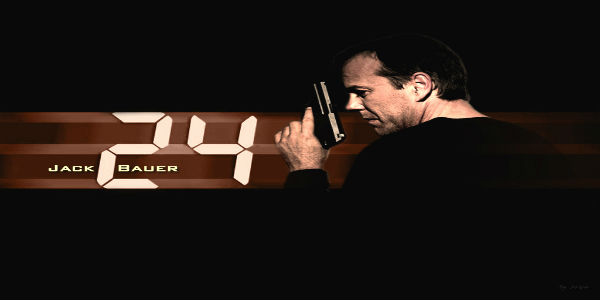
7. 24
Jack's back: the man who makes James Bond look like Forrest Gump has returned to the small screen in a new series of 24, the format of which has changed - somewhat unthinkably. Originally we followed the action by the hour; each episode represented sixty minutes on a clock counting down to disaster, and each series was twenty-four episodes long (hence the name), but now we only get to see Jack get the job done in twelve episodes. The time-frame still spans twenty-four hours, and the episodes still correlate to one hour of Jack's day, but this time around we skip twelve hours. Such a drastic change to the show means it is time to go. The original twenty-four part run ended after eight seasons in 2010 and that should have been the end of Bauer; what had started as an exciting, action packed show had already become tired by that stage. By now it's asleep on its feet, and no wonder: considering what Jack has had to deal with since he first bust onto our screens it's amazing he has the energy for anything anymore.
6. The Mentalist
Patrick Jane (Simon Baker) is the man who knows you killed the guy because you've got your trousers on backwards, more or less, because he is a mentalist - a psychic, trickster, sort of like Derren Brown working for Scotland Yard. Jane starts working for the California Bureau of Investigation (CBI) after his wife and daughter are murdered by serial killer Red John, helping to track down his family's killer and, by his own admission, kill him right back. Of course, in the interest of prolonging the show, Jane spends most of his time working on other unrelated cases and building up platonic relationships with his colleagues, mostly his boss Teresa Lisbon (Robin Tunney). After seasons of building the mythology around the illusive Red John, series six of the show should go down as one of the weakest and worst written reveals in TV history: in the eighth episode, with little climactic bluster, (it already wasted on a false reveal) Jane murders Red John and thus signals the beginning of the end for The Mentalist. The writer's have tried to breathe new life into the show, moving Jane to the FBI, along with most of his old cronies, but the show has lost its steam. In the final scene of season six Jane declares his undying love for Lisbon and the two kiss, the culmination of a sexual tension that was never really building. As the freeze-frame lingered on the pair's interlocking lips it seemed a perfect place to leave Jane and his mind games forever. Alas season seven has already been green-lit.
5. Castle
Nathan Fillion stars as Richard Castle, a novelist who comes to work for the N.Y.P.D as research for his new book. He almost instantly falls head over heels for his new partner, Detective Kate Beckett (Stana Katic), while striking up a friendship with the other two main detectives. The driving premise behind Castle in the beginning was the 'will they/won't they' scenario between Castle and Beckett. Now however we know they will, since they're getting married. There was also the underlying story line of 'who murdered Beckett's mum?', and bringing them to justice, which was also resolved in the last season (the sixth). The main charm of Castle though was in the writing: full of pop culture and film references, the show managed to toe a fine balance between comedy and drama. It was able to become serious when needed or descend into farce, if that's what the story required. All without destroying the tone of the show. The writing has gone downhill in recent seasons though, not able to reach the heights of the early series'. Giving the characters new cases will always allow the writers to keep them alive, but it will ruin what set it apart to begin with. At the end of the sixth season, on his way to his wedding, Castle is presumed dead in a car crash. For the sake of preserving the heart of the show it might be better if he was dead.
4. Californication
Nothing to do with the Red Hot Chili Peppers album of the same name, Californication follows writer, drunk and all round mess Hank Moody (David Duchovny) after his move from New York to L.Awhere he struggles to get his life together as he swans around Hollywood sleeping with beautiful actresses, driving cool cars and generally having an awesome time. Moody began as a flawed but likeable character on Showtime's comedy-drama; his ability to mess everything up as an arrogant opinionated douchebag was offset by his genuine care for his daughter and her mother. The writing was sharp and witty, Moody proving a great vehicle for spouting ludicrous profanities while also commenting on certain aspects of social culture. Now though, in the middle of its seventh season, the concept has grown old. How many times can the audience watch one guy mess up, act remorseful, and then mess up again, before they start to tune out. There is no character development for Moody, he's stuck, and therefore so is the show. Added to that, the writing which was once smart and funny has been replaced with an endless stream of pointless vulgarity, a poor attempt at appearing risqué and relevant. Californication has become a less charming rehash of all that has been seen before. In its new season the show has attempted to introduce a new dynamic, when a long lost son, complete with mum, turns up for Moody to deal with. It's the move of a show knowing it has become stale but unwilling or unable to fix the real problem - Moody.
3. The Following
Starring the tastiest man in show business, Kevin Bacon, The Following has only been on our screens for two seasons, and while not the longest run in TV history it is now time for the thriller to bow out. What has to date been an exciting and action packed show, full of character development, can only decline in its already commissioned third season.
The Following begins when serial killer Joe Carroll (James Purefoy) escapes from prison, which sets the man who put him there, former FBI agent Ryan Hardy (Bacon), back on his trail. Throw in Carroll's collective of serial killers, some Edgar Allan Poe and Hardy's fragile mind and you've got the central premise.
Season one finishes with Carroll seemingly killed in a lighthouse explosion, as witnessed by Hardy. Brought back from his faked death for the second series, Carroll is recaptured in the grand finale and sent back to prison. This must be the end of The Following, because for Carroll to escape again would be lunacy. Considering his penchant for murders, and his relative success at it, you would expect him to be locked down in some type of Magneto-esque prison, or executed.
The writers have one open avenue, a killer still on the loose with a grudge against Hardy, but it is unwarranted. The story line of The Following has been resolved. Let it rest.
2. Broadchurch
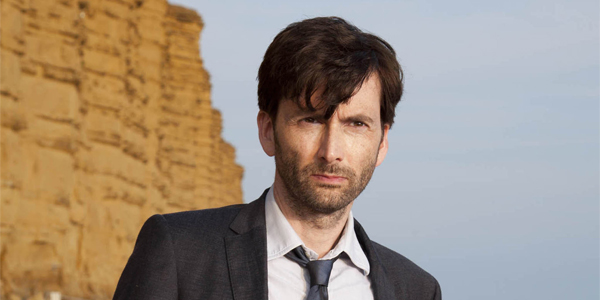
The British detective drama was a massive hit at the 2014 BAFTA's, winning three awards including Best Drama and Best Actress for Olivia Coleman. Following the investigation of a young boy in a small seaside down in Dorset, the ITV show pleased audiences and critics alike in its first season, and inevitably it will now return to the small screen sometime in the future having been green-lit for a follow up. But there is no need for a second season: Broadchurch was an intriguing whodunit, full of rich characters who had their secrets and kept the audience wondering. But now we know whodunit - iwas Coleman's husband, a very bad, very troubled man. So what more can the second season possibly offer? The chances of there being another equally fascinating murder in the quiet coastal town is near impossible: i's not like they're living in Midsomer. There is also the chance that the show will follow lead detective Alec Hardy (David Tennant) away from the village and onto another case, but considering that the town is named Broadchurch, and the show is named Broadchurch, reason would dictate that it will continue in and around that area. Once will do for Broadchurch. Those who can't abide not having another season are also in luck, with America making its own version called Gracepoint, complete with David Tennant. Why American TV feels the need to remake it at all though is anyone's guess.
1. True Detective
The HBO eight part series set in Louisiana is without doubt one of the greatest shows to hit the small screen in recent years. The relationship between the two protagonists, Rust and Marty, is the key to the show, set among murder in the Deep South. Matthew McConaughey plays Rust, a man who believes that humanity took a wrong turn when it evolved into free thinking creatures; his partner, lost and out of control (while believing himself to be the sane one of the pair) is brought to life by Woody Harrelson, and both performances are unfaltering in their pull. The arc for these two characters is over though, and they will not feature again in any other series of True Detective. The writers and creators have made that clear, and a commendable decision it is. Such was the praise lavished on the first season it would have been easy for them to milk another eight-parter. True Detective, the show, however, does seem likely to return. It would appear that True Detective will continue as standalone seasons; creating new characters every time. With rumours circulating that Jessica Chastain is set to feature in the next addition, the question is why call it True Detective at all? Allow the original Rust and Marty combo to be a unique eight part series and name the follow up something else. This would allow the new series to thrive on its own, and not be laden down with comparisons to the original. It would also see the first series remain untarnished by future follow ups. True Detective would remain TV gold, never in danger of becoming one of those shows which didn't know when to die. Which TV shows do you think need to bow out before they lose their lustre? Share your thoughts below in the comments thread below.