8 Unforgivable Mistakes Arrow Made (From Which It Never Recovered)
If you wanted to make a show about Batman... why not just make a show about Batman?

Ever since it first made its way onto our screens back in 2012, Arrow has been something of a revolutionary force in the world of superhero television.
Carrying the torch in a post-Smallville era, it ditched the prequel story and threw fans straight into a fully-blown film-like story centred on Oliver Queen's return from Lian Yu and subsequent rise to heroism. The end result was a thoroughly compelling narrative that introduced us all to a gritty reinvention of one of DC Comics' most beloved heroes.
Naturally, the success of Arrow spawned multiple spin-offs in The Flash, Legends of Tomorrow and Supergirl (with two more on the way), and, in the process, originated what is now known as the Arrowverse - a shared universe the likes of which television had never seen before, and one that looks set to stay long after Arrow concludes.
That said, while there's no doubting Arrow's contribution to superhero TV, the show hasn't exactly had the smoothest of runs. Unfortunately, it made a number of mistakes throughout its time on the air - some of which it hasn't really recovered from since...
8. The Death Of Moira Queen

If you could sum up perfection in a television season, then there's a good chance it might look something like Arrow Season 2. A season based on Slade Wilson's irrational hatred for Oliver Queen, it culminated with the utterly devastating death of the latter's mother Moira - a moment that is among the most haunting the show has ever produced.
There's no taking away how effective Moira's death was and how it ultimately drove the Emerald Archer to overcome Slade, but it was so effective that it ended up leaving the show with no room for further development of the character in the seasons to come.
It's something of a trope for shows aimed at young audiences to eventually kill off the parental characters and a lot of the time that can have a negative effect going forward, because it strips the respective show of some of its most mature storylines, and that's kind of what happened here.
Moira was one of Arrow's most well-rounded characters and one of the grounding factors of the first two seasons. But without her around, the show lost its parental figure and her ties to the Queen family, The Undertaking and even the Queen Consolidated board meetings. Worst of all, though, was that her absence paved the way for the show's evolution into a cartoonish and stereotypical superhero series.
Moira was such an illusive character and Susanna Thompson had a way of making everything interesting. It goes without saying that these are elements that the lacklustre third season (and every season that followed) could have benefited from.
7. Introduction Of The Supernatural

It's hard to admit this one because, in all honesty, this writer loves metahumans, magic and the multiverse - and the introduction of these three elements really opened the Arrowverse up to greater possibilities. So yes, in a way, the arrival of The Flash and all the madness that came with its wonderful debut season was of major benefit to the shared universe. However, as far as Arrow is concerned, it was a major issue.
Arrow worked best when it remained stripped back, gritty and grounded - that's why the first two seasons remain its best. But the moment that the writers had access to all the supernatural elements associated with comic books, they ran wild with them - which came at Arrow's decline.
Suddenly, we weren't watching compelling tales about tortured souls and instead were given offerings centred on magical potions, bloodlust and even metahumans of the week.
That kind of stuff was just too big when Arrow was a show that needed to remain small (saving the big stuff for the crossovers). As a result, Arrowbecame corny (see Oliver overcoming Damien's darkness with light magic), its villains were even cornier and its episodes just weren't as meaningful.
6. Taking The Batman Comparisons Too Far

The fact that a TV series about the notoriously light-hearted Green Arrow was inexplicably dark and moody came as a shock to the character's longtime fans - one that resulted in viewers comparing the show's titular character to Batman.
Those comparisons are rather easy to see, given that the comic book characters of Oliver Queen and Bruce Wayne were extremely similar to begin with - but the differences between them vastly outweigh any similarities. Arrow, however, didn't portray Oliver in that way.
The show drew a number of Batman comparisons in its early years as the Emerald Archer battled the likes of Deathstroke and Firefly, but none of these were worth complaining about because they ultimately benefited the overall tone. However, this all changed in Season 3 when the show took the Batman references too far.
Not only was the introduction of Ra's Al Ghul dangerous territory considering they had just adapted Deathstroke, but the writers went ahead and decided to adapt an entire Batman arc from the comics as 'The Demon's Head' took a liking to Oliver due to his skills as a vigilante and decided that he wanted the Arrow to be his successor - training him to become the next Ra's Al Ghul.
From there, it was impossible to deny the Batman comparisons, and many Bat-fans didn't take too kindly to what they believed to be the show's attempts to position Oliver Queen as superior to The Dark Knight - especially as now in hindsight we know Batman exists in the Arrowverse.
5. Inability To Maintain Strong Villains

Remember how Malcolm Merlyn spent over a decade attempting to exact revenge on the area of Starling City in which his wife was killed? What about how Slade Wilson meticulously plotted the downfall of Oliver Queen? Two exceptionally well-crafted villains that complemented the gritty tone of the show and ultimately bettered the hero's already phenomenal journey. Unfortunately they set a bar so high that the show would rarely ever reach again.
Following Slade's night of terror, the writers introduced the rather dull Ra's Al Ghul who, save for his Batman-centric comic arc, didn't have anything to offer and attempted to talk Oliver into becoming his successor - even throwing a tantrum when he wouldn't accept the honour. This was all followed by the insufferable Damien Darhk, who was effectively a walking magician that spouted corny one-liners and - oh yeah - wanted to destroy the world in a nuclear fire. (Because no evil supervillain has ever wanted to do that before, right?)
Though the writers corrected their course with the outstanding Prometheus, the standard would slip again with Cayden James. It would rise once more for sadistic street thug Ricardo Diaz before declining again for the highly-underdeveloped Emiko Adachi.
Had the show managed to maintain a strong villain in Seasons 3 and 4, perhaps the writing never would have slipped.
4. Killing Amanda Waller
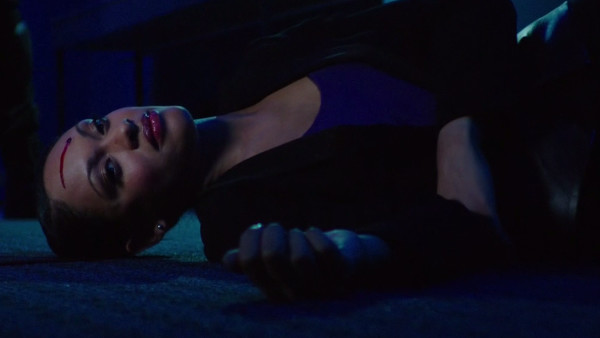
Amanda Waller turned out to be a rather enjoyable presence during her time on Arrow. One of the show's most comic-accurate characters, she was appropriately ruthless and showed no hesitance when it came to doing whatever it took in order to contain explosive situations - constantly justifying her often-troubling actions by claiming that they were 'for the greater good'.
That's why it came as a major shock when the character was abruptly killed off during a random episode in Season 4. Shot in the head, Waller fell to her death, and with her disappeared a ton of potentially great storylines for further seasons.
While A.R.G.U.S. does have its moments, specifically due to the familial drama between Lyla and Diggle, not even an attempted Suicide Squad revival has managed to make it feel relevant since Waller's death. Not only was it a baffling decision that furthered nobody's arc (and one that robbed us of Cynthia Addai-Robinson's imposing portrayal), the unnecessary departure rendered all those years of history she had with Oliver Queen completely irrelevant.
3. Team Arrow: Civil War

After the show had just about regained all of its momentum following a killer fifth season, it squandered it all in its sixth with the most pointless, drawn-out and infuriating war between three of the original members of Team Arrow and the three new ones.
Taking up half the season, the story revolved around the fact that Rene understandably was forced into snitching on Oliver because his daughter Zoe was brought into the equation by the FBI. However, Oliver decided to showcase that he had learned nothing in the six years Arrow had been on the air by spying on all three of his new teammates - something that Felicity and John agreed with because, like always, they were being the mindless tools that served whatever purpose the writers needed them to.
To make matters worse, even though the members of new Team Arrow (NTA) were absolutely right, nobody sided with them because of their loyalty to the original members. Thus, the writers decided to, kid you not, make things even more worse by having Dinah, Curtis and Rene behave radically out of character just so we'd all have a reason for hating them.
The whole thing came off as so contrived and left fans wanting to throttle all members of Team Arrow, regardless of which side they were on.
2. Olicity

The purest example of how a little bit of chemistry between actors should never override simple logic, Oliver Queen's romance with Felicity Smoak quickly evolved from something that fans had been clamoring to see into something we all wished had never even been alluded to. Originally a harmless unrequited crush on Felicity's part, the pair spent the best of their time together on-screen together as teammates, because everything else that came afterwards came at the detriment of both characters.
Though fans were initially excited to see the relationship explored, the moment that they officially acknowledged their feelings for one another, Felicity changed from a lovable ray of sunshine to a self-centred spoiled brat.
This was accentuated in Season 4 as, instead of using her talents to help Oliver find his missing son, she decided to deliver sanctimonious monologues about the validity of their relationship because he never revealed his son's existence in the first place (a decision he never took lightly because he ultimately made it for William's safety). And who could forget how when her spinal chip kicked in and returned power to her legs, she decided make a statement by storming out on Oliver instead of celebrating with him?
Life-changing events came second to Olicity. Organic storytelling came second to Olicity. The whole freakin' show came second to Olicity - and it's the way in which this relationship was handled that made Season 4 such a slog to get through and ultimately resulted in a ton of fans tuning out. It did so much damage that the writers had to force the pair apart for Season 5, before naturally pulling them back together for the sixth season - which thankfully happened off-screen.
Arrow was struggling in its third season, but it was this toxic portrayal of what could have been a genuinely lovely relationship that ultimately killed it in Season 4.
1. Killing Laurel Lance

When it comes to Arrow's biggest mistakes, there are none greater than this one.
Not only did that pointless 'Who's-in-the-grave?' narrative (which backed the writers into a corner because they hadn't a clue who they were going to kill off when they came up with it) result in the death of Arrow's primary female character in Laurel Lance, it resulted in the death of the iconic Black Canary, suggesting that this legendary comic book character was more expendable than a horde of meaningless original characters - which, as the majority of fans knew, couldn't have been further from the truth.
The point of no return for many, it suggested that we would have to endure more of the melodramatic Olicity relationship because Oliver Queen's long-time love was no longer in the picture - and that was a show that very few had the intention of watching. Ratings dropped dramatically as fans grew weary of endless Olicity storylines and ultimately saw the death of Oliver's true love interest as the final straw.
More than that, it resulted in massive blacklash as fans and multiple outlets voiced their distaste over the controversial decision, reminding us all how disrespectful it was to both the comics and Katie Cassidy who put her all into the role.
In the end, the powers-that-be were forced to pull off some major damage control, resetting the show for Season 5 by splitting Oliver and Felicity up, returning to its once-grittier tone and bringing the fan-favourite Cassidy back as Laurel's evil Earth-2 doppelganger Black Siren. Though this ultimately improved standards, the ratings never recovered, and it's only now in its admittedly brilliant final season that Arrow is finding its way back to the incredible heights of Seasons 1 and 2.
-
What do you think were Arrow's biggest mistakes? Let us know in the comment section below.
Titans Quiz: How Well Do You Know Jason Todd?
