8 Ways Test Audiences Changed TV Shows
These TV shows very nearly looked completely different before test audiences saved the day.

As you've probably already spotted if you've had the pleasure of clicking on various other articles available on this glorious website, it's not uncommon for a big screen feature to go through a certain amount of changes on the back of being initially screened in front of a test audience.
These focus groups have seen everything from abs being digitally altered, to whole endings being completely chopped and changed over the years. But it's not just movie madness that can be swiftly shifted in the wake of some negative responses from a few chosen test subjects.
As you'll discover over the course of this list, the very fabric of some of your favourite TV series was thoroughly switched up or replaced thanks to a few folks colouring in the "hated it" circle on the feedback sheet. After all, when's there's money on the line, you better believe your voice matters, folks.
From those in attendance not wanting to say goodbye to their favourite character so soon, to seemingly crap jokes unexpectedly going down a treat later down the line, these test audiences had much more of an impact than you likely ever knew.
8. Audiences Didn't Want To See Boyd Crowder Bite The Dust - Justified

As his storied career on the big and small screen has taught us time and time again, you can never have too much Walton Goggins in your life.
And the focus group chosen to initially test FX's Western crime drama Justified clearly felt that very same way as their response to the star of the likes of The Hateful Eight and Ant Man and The Wasp made a huge impact on Goggins' role within the series.
Had it not been for those select few in attendance, the producers of the show would've kept as faithful to the short story, written by Elmore Leonard, as possible when it came to adapting the tale into a series. But this would've also meant killing off the mesmerising Boyd Crowder.
With audiences feeling he was one of the best parts of the show, the ending which would've seen him killed off by Raylan was promptly reshot and Goggins would later go on to pick up an Emmy nomination for his frequently compelling work as the white supremasist-turned-born-again-Christian.
7. Katie Doesn't Cut It - The Big Bang Theory

Long before it went on to become one of the biggest sitcoms ever to grace the small screen, The Big Bang Theory found itself at something of a cross-roads on the back of a massively negative set of reactions to one of the show's original leading characters.
Fans were well on board with Johnny Galecki's Leonard and Jim Parson's Sheldon. However, the same could not be said for Katie, the mean-spirited love interest of the former in said initial pilot. Test audiences simply did not warm to her abrasiveness and mocking of the two nerdy lads, so much so that actor Amanda Walsh was quickly dropped from the series altogether and replaced by Kaley Cuoco.
As you likely already know by now, Cuoco's Penny was much better received, with her Girl Next Door-type character still dipping into a few of Katie's more sarcastic characteristics, but being a much more caring and likeable personality when all was said and done.
Had it not been for those early eyes, however, there's every chance this story of a group of genius trying to appease an unapologetic house guest would've thoroughly flopped upon entry.
6. Carol Hathaway's Overdose Isn't As Fatal As Originally Planned - E.R.

Here we have another character who was originally set to bite the dust during the pilot episode, only for a test audience to step in and save the day.
Despite going on to star in six of the show's 15-season run, Julianna Margulies was actually only supposed to stick around for the show's opening episode. Here, Nurse Carol Hathaway would tragically prove to be successful in her attempt to commit suicide via drug overdose. But, as it goes, those sat in the early screenings were more than a little intrigued by her connection with Dr. Doug Ross and generally were big fans of what Margulies brought to the character.
This intrigue eventually led to the vocal group stating that they wanted Hathaway to stay alive in the medical drama, so the decision was ultimately made to have her survive that attempt to end her own life. Hathaway would then gradually go on to become one of the show's leading heroines, proving that this particular focus group were right in knowing they were onto a good thing with Margulies.
5. Conventions And Colleges Love A Richard Simmons Joke Too Much To Lose It - The Simpsons
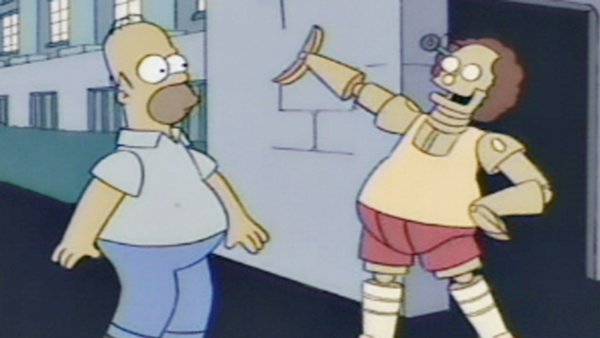
Shifting gears slightly, here we have a show that was well into its fifth season when a particular joke was scrapped due to it being seen as a bit of a dud, in all honesty.
The sequence in question came during The Simpsons episode titled "Burns' Heir", an entry that saw Bart getting adopted by Homer's boss Mr. Burns. After the Simpsons patriarch attempts to convince his son to give up his new life and return home, Homer is chased away by a robot version of American fitness personality Richard Simmons - all while the robot blasts out "Shake that Booty" by The Sunshine Band.
With this joke not consistently producing laughs at table reads, it was initially left on the scrap heap. But then something odd happened. After the episode was shown to various colleges and conventions with the scene left intact, these crowds erupted with laughter upon witnessing robo-Simmons gyrate and explode outside of Burn's mansion.
It was so well received that the minds behind the show opted to include it in the Season 5 DVD and Season 7's "138th Episode Spectacular" clip episode later down the line.
4. NBC Wanted Rid Of Murdock, But Audiences Rated Him Too High To Let Go - The A-Team
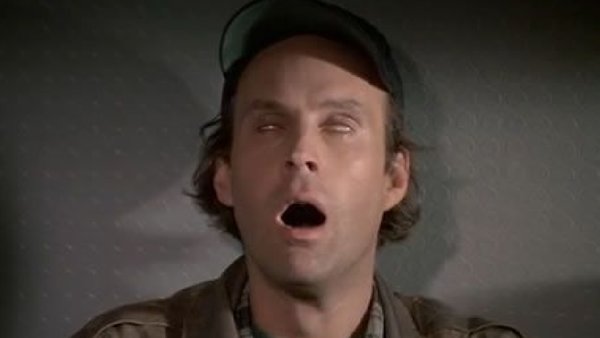
When looking back on the original faces that brought everyone's favourite A-Team to life, before the likes of Liam Neeson and Bradley Cooper decided to take a swing on the big screen in 2010, it's hard to imagine the line-up gelling and going down as well as they did if it wasn't for the unique mix of vibrant personalities thrown together.
However, in the case of Dwight Schultz's "Howling Mad" Murdock, NBC execs actually originally felt that this particular chemical equation was just too darn over-the-top and simply wouldn't work when it came time to set the series in motion.
Yet, it soon came to pass that test audiences couldn't have disagreed more, with those who piled into see the series' pilot all awarding Schultz's portrayal of Murdock the highest score out of any of the leading foursome. The response was so positive that those NBC execs had no choice but to relent and retain the mad as a hatter Murdock for the long-haul, gifting us one of the barmiest faces ever committed to the small screen in the process.
3. Enter Elaine - Seinfeld

Seinfeld didn't get off to what you'd class as the best of starts when it came to unleashing the likes of Jerry Seinfeld, George Constanza, and Cosmo Kramer onto the unsuspecting test public. In short, the pilot went down like a led balloon.
Audiences even went as far as to lump the comedy with the "honour" of being one of the lowest-testing pilots ever brought into existence, with those early viewers not holding back when claiming, "It's not funny."
Against all the odds, though, the show was still somehow picked up for a whopping four episodes. But while the core group of men who hadn't exactly endeared themselves to those initial testers were kept on, it was the later inclusion of Elaine Benes to the gang which proved to be the real game-changer.
Had it not been for those original terrible responses to the largely unlikeable trio of dudes, the showrunners likely wouldn't have been made to embrace the personality of Elaine in the way they ultimately did as Julia Louis-Dreyfus' character would go on to become an entry point of sorts when it came to understanding the various oddities on the show.
It also came to light later down the line that NBC had demanded the casting of a female lead after feeling the show was simply too male-centric after that early pilot flop. See, sometimes executive meddling can be a good thing. Honest.
2. No Laugh Track For The Bat - Batman

Around the time Adam West donned the iconic cape and cowl for the very first time in the Batman TV show, it was fairly commonplace to see a show accompanied by a laugh track; recorded laughter that accompanies the action going down on the small screen.
However, Batman was one of the few shows deprived of this staple at the time, largely due to how the version of the programme with one included went down with test crowds. Along with a version of the show with additional narration, the alternate laughing track-included showing of West's bat didn't exactly click with audiences. But saying that, even without both of these alterations, Batman received the very worst audience scores in the history of ABC at that point.
Yet, largely due to the fact so much money had been spent on bringing this comic book character to TVs everywhere, ABC ploughed on and hoped general audiences would appreciate West, Burt Ward, and the gang a little more than their chosen test subjects. Luckily, their hope was eventually rewarded with the show going on to be immortalised and cherished as the years rolled by.
1. Ra's Glowing Eye Was Added Because Audiences Didn't Think He Looked Alien Enough - Stargate SG-1

So, technically this specific piece of test audience tinkering came on the back of an early movie screening, but its lasting effects were most definitely felt on the small screen too. That more than qualifies it for this list, my friends!
We take you back to the mid-90's when Stargate first blasted onto the big screen, with the likes of Kurt Russell and James Spader introducing the world to what would later become a full blown media franchise. The film's central antagonist is brought to life by the unsettling Jaye Davidson, but audiences initially had one specific problem with the formidable character of Ra. He simply didn't look alien enough for their liking.
So, the character's signature glowing-eye effect was added in post-production to combat Ra seeming a bit too human for some. This would eventually bleed into the Stargate SG-1 series too, with each character who is taken over by the Goa'uld also coming equipped with a similar other-worldly effect as the show trickled on.
It just goes to show that a detail as subtle and seemingly minuscule as a pair of flashing eyes can add a whole new dimension to a character/race and take them from forgettable to immortalised in the blink of an... well, you know.