The Big Bang Theory: 5 Reasons Why It's Actually Good For Nerds
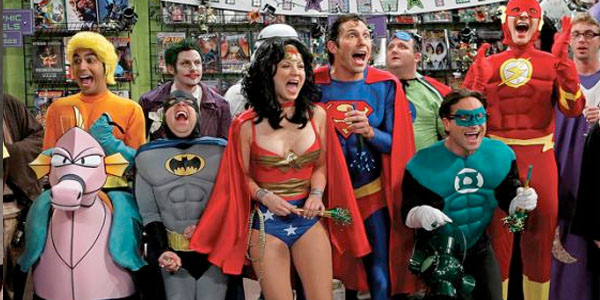 There has been a lot of love surrounding The Big Bang Theory since it premiered back in 2007 but it has also fallen under some scrutiny for the portrayal of its characters. Some argue that it pigeonholes each of them into an archetype for nerds with each having some form of social awkwardness and love of science, comic books, and Star Trek. While it's true that not all people who fit the description of a nerd harbor an obsession for Star Trek, Star Wars, and other space dramas the characters do still tend to show some diversity amongst their group. In fact, though the show did begin playing heavily on the stereotypes part of what made it so enjoyable was watching the characters develop and grow out of certain roles they found themselves trapped in. For instance, Penny's relationship with Leonard broke every conventional stigma associated with his nerd identity. What made the show so great for a general audience isn't necessarily the same as for those who can relate to the characters. And by relate we don't mean people with selective mutism but those with similar interests. The Big Bang Theory has slightly declined in quality in its current season and this can be blamed on its deviation from the very "nerdy" aspects that many have judged it for. If you're a true nerd, however, you'd find little to be offended by and instead realize that these five reasons are what made the show great for us all.
5. It Does Science Right
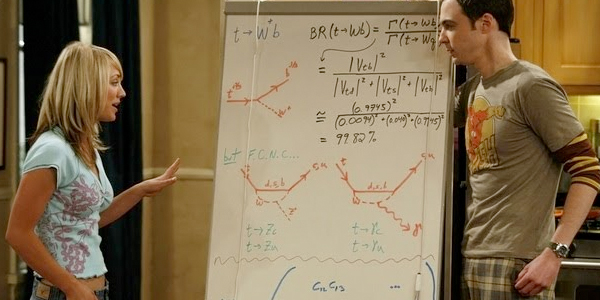 We could argue about whether those with a love of science could be considered nerds or geeks or if there's really much of a difference to those names at all. One thing that can't be argued, however, is the science behind the science on the show. Whether you're a fan of physics, neurobiology, or chemistry there's plenty of facts - and we do mean facts - for every science lover. David Saltzberg is a professor of physics and astronomy at the University of California, Los Angeles and also works with the show to make certain everything is factual. Dialogue, props, and equations are all provided by Saltzberg who helps the show maintain a sense of realism in the careers of the main characters. Mayim Bialik - who stars as Amy Farrah Fowler - has a real life PhD in neuroscience and translates her knowledge of the subject onto her character. Though it could be quite simple to fault a television show for making even the smallest of mistakes the Big Bang Theory gets everything right on the dot. The Big Bang Theory is full of interesting facts surrounding science and whether you hold a deep love for the subjects or not you'll find yourself intrigued. If you're interested in checking some of them out click here.
4. They Know Their Stuff
 The Justice League, Star Trek, Batman, World of Warcraft and more have been featured in the scripts of the Big Bang Theory. Every single one of these franchises is loved dearly by many who also just so happen to be extremely protective of them. But there's really no reason to fret for the series manages to flaunt not only its knowledge of the natural world and scientific communities but that of the Comic Con community as well. These characters are just as protective of these franchises as we are. In the season one episode The Nerdvana Annihilation Sheldon stands up to Penny on Leonard's behalf when she mocks him for his hobby of collecting memorabilia. Season two episodes show Penny becoming addicted to role-playing games - inferring that anyone can be drawn in by them - and the introduction of the already existing Rock-Paper-Scissors-Lizard-Spock into series continuity. We see Sheldon dream of Morlocks, correct strangers on the differences between Star Trek generations, and all four men display a strong obsession with a Lord of the Rings film prop. I'm not sure about you but I've found myself in a similar situation for each of these instances. Not every nerd collects countless memorabilia or dresses up as their favorite characters outside of Halloween, but some of us do. Having these things presented on a well-loved television series only makes it appear more natural regardless of it is being used for comedic effect. If you want to blame The Big Bang Theory for using such hobbies as comedy then you should have a problem with sex, dysfunctional families, and just about everything else that is played for comedic effect in a large number of other productions as well.
3. Characters Are Diverse in Their Tastes
 Many have come under the assumption that each of the characters fits a very narrowed description of a nerd which in turn makes each of them pretty much the same character. While each of the main characters share many of their tastes they're actually each diverse if you pay enough attention to notice. For instance, while Leonard enjoys Babylon 5 Sheldon absolutely hates it preferring shows such as Battlestar Galactica instead. Finding these nuances in the characters only makes it more enjoyable as we can proudly proclaim that just because one likes Star Trek they don't necessarily have to like Star Wars as well. Furthermore, while each character has some kind of quality that could be perceived as a negative stereotype the others recognize - and are often annoyed by - these flaws. Sheldon is a perfect example as each of the other characters tend to find him highly irritating. Howard is often berated for his easiness and relationship with his mother but none of the other characters fall victim to such characteristics. Raj was at one point unable to speak to women while the rest had absolutely no issue in doing so. Lastly, while the main characters have love for both science and nerdy media not all characters are. Stuart - the comic store owner - has no affinity for science while various co-workers at the university show no interest in comics, movies, or anything of the sort. Such things remind us that these aren't just nerd archetypes but characters who are each unique as every human being and that this holds true in the real world as well.
2. It Doesn't Take Itself Too Seriously
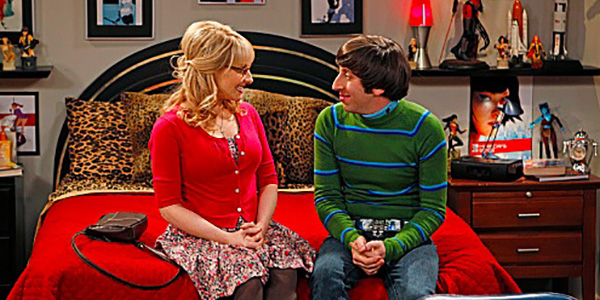 As we noted in a previous entry a lot of what makes the show easy to relate to for self-proclaimed nerds is usually played for comedic effect. However, this is far from a bad thing; instead it manages to be just one more reason why the show is so appealing. If The Big Bang Theory did indeed take itself too seriously then not only would it fail on a comedic level but would be far more insulting. We read comics, watch films, and engage in the entire nerd subculture because it's fun and enjoyable. We don't need a series that takes these things and portrays them in a solemn or severe manner. The Big Bang Theory completely dismisses any supposed harm its stereotypes may create by presenting the characters loving who they are and what they do. Even when they're put into situations they may not agree with they allow themselves to laugh at the scene and this is something that all "nerds" should know how to do. Finally, how can one truly be offended by something that isn't meant to be offensive? This isn't some show where the nerd or geek is just one character who exemplifies every stereotype. It's a show where these characters are the main focus and are seen on a human level that is far more relative.
1. Guest Stars
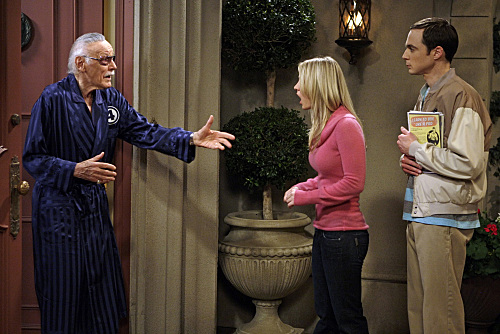 Guest stars help to give already awesome shows a special spin that ups their entertainment value. Picking the right person to star alongside well-loved characters is crucial to the success of the episode. The Big Bang Theory makes no mistakes in choosing just who has the right chemistry while giving fans many chances to rejoice. Stephen Hawking, Stan Lee, Summer Glau, Wil Wheaton, and more have been featured on the show and each is able to captivate a particular portion of the audience. While these actors, authors, and scientists entertain us on a Godly level akin to how even the main characters perceive them we're also reminded just how human they are. Others have appeared in roles playing fictional characters and some - such as Judy Greer - have little to do with sci-fi fandom. While not every nerd imagines bathing with Katee Sackhoff or creating their own Leonard Nimoy from disposed DNA their appearances on the show is about enough to give their fans a cause for joy. This also ties in to the show not taking itself too seriously as many of the appearances poke fun at the characters such as Sheldon having restraining orders from both Nimoy and Lee while also purposefully losing a game of Words with Friends so he could remain friends with Hawking. Unlike most television shows the guest stars on The Big Bang Theory fit well into the continuity and are as such carefully chosen. They not only provide entertainment for the characters within the show's universe, but for their many fans outside of the television set. What do you think of The Big Bang Theory? Do you find it has moved past its prime or are you still enjoying it? Do you believe it harms the nerd image? Check out the comment section and give us your thoughts.