Celebrating Doctor Who's 50th Anniversary: 50 Pivotal Story Arcs

50. The Five Doctors 20.23
 While the link that brings all of these characters together is loose at best, because honestly, the idea of the current Gallifreyan president needing ultimate power is a might silly, the more than dozen cameos of past companions, fun combination of villains, and host of self referential references are absolutely delightful. It more than any other story in Classic Who is Doctor Who celebrating itself. Making the case for The Five Doctors is difficult because it is the second anniversary story. However, I think anniversary spectaculars like the one we've had this year would not be possible without an effort like the Five Doctors in Doctor Who's past.
49. Doctor Who: The Movie
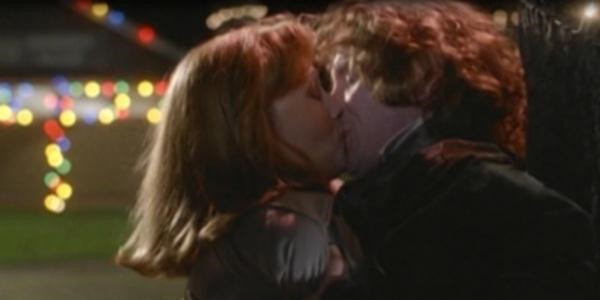 There are a lot of reasons to dislike this movie as a Doctor Who story: The cheesy homages to the legend of Excalibur and Frankenstein, the nearly awful portrayal of Eric Roberts as the Masterno offence meant to fans of Mr. Robertsand as far as canonical changes are concerned, there is this awful line of dialogue "I am half-human on my mother's side" uttered by the Doctor at one point. However, the Eighth Doctor himself is worth sitting through all of that. This Doctor is gregarious, and buoyant, so completely in love with life and all its wonders. Which in light of what we now know about the Last Great Time War makes things truly heartbreaking. The plot of this film itself offers us the brutal death and difficult regeneration of the Seventh Doctor into the Eighth. Due to circumstances surrounding the regeneration, he starts his own regeneration with a bad case of complete amnesia, and therefore lagging behind in recapturing a once-again escaped Master. Yet, even while an amnesiac, the Doctor is clearly a Doctor. It is also notable, as most now know for being the first snog between the Doctor and anyone else. While the existence of other Doctor Who mediathe Big Finish audio productions and original novelsallow us other ways of meeting the Eighth Doctor, an hour and a half is not that painful to see his inaugural appearance. Grace, the Doctor's companion, is also likeable enough. But, if nothing else, appreciate that it was bad enough to do poorly in America. Otherwise some set of Americans would have been in charge of Modern Who, and there would have been none of the amazing actors and adventures we appreciated in the last truly great eight years.
48. The God Complex 6.11
 One of a handful of stories that really explore the notes of religiousness in Doctor Who. In God Complex we have the traditional labyrinth "monster" in a very untraditional labyrinth who feeds on faith. But even the word monster is a misleading descriptor for this largely blameless alien creature. It joins a small, but illustrious group of "baddies" not bent on death, nor destruction, nor domination, but is instead merely trapped in bad circumstances. As a story for the Eleventh Doctor it gives a chance to see more of the 'tired old man' aspect of his personality. His world weariness is an aspect far less highlighted than his quirkier side, and I think this story portrays that pain and disappointment really sublimely. Other nice if less noteworthy features of this story include strong dashes of psychological horror, a prominent feature of this Doctor's run, some grand lines of quotable dialogue and an assorted array of interesting one-off characters, human and alien alike.
47. Mind Robber 6.6-6.10
 Mind Robber is a truly creepy serial which is enhanced by it being a black and white story. It relies on a now great staple of science fiction, the parallel universe, when the TARDIS lands officially nowhere. Companions Jamie and Zoe Heriot are lured out of the TARDIS by mirage like visions of their homes, when the Doctor's scanner, a part of so many early serials is used for this malicious purpose. The rest of the story serves as a monster bonanza as our trio confronts not only the cybermen, but also a group of fictional characters come to life, a web full of compelling traps and mirages, including a duplicate TARDIS, and a prison of a giant book. The solution to get them back home to the TARDIS safely requires great teamwork between Jamie and Zoe, and a battle of rewriting wits between a master brain and the Doctor.
46. Mawdryn Undead 20.9-20.12
 Most important for being the first appearance of long-time companion Vislor Turlough, who is given the unsavoury task of killing of the Doctor by the Black Guardian, the pure evil energy last seen in the previous Doctor's tenure. Separated from the Doctor are follow companions Nyssa and Tegan who have problems of their own dealing with a truly grotesque alien Mawdryn who claims to be an injured Doctor. This serial also sees another return of the Brigadier, who is able to be an integral part of saving the day one more time. It could be very well considered the Brigadier's truest time as a companion proper.
45. Castrovalva 19.1-19.4
 This first serial of the Fifth Doctor is notable even before because of events immediately proceeding the regeneration, where the Doctor has already been aiding his former self and his companions as a mysterious figure known as the Watcher. This establishes that the Doctor can exist corporeally between regenerations. It is also interesting for this Doctor's particular brand of regeneration sickness, which allowed for some really great comedic moments, even involving the Doctor parading about in a wheelchair. It allowed for some great bonding among companions Nyssa of Traken, Tegan Jovenka, and Adric. Finally it expanded Time Lord powers and sciences to new degrees, as the Master is able to manipulate the existence of an entire planet, as well as remotely affect the Doctor's TARDIS and her information banks.
44. The Gunfighters 3.34-3.37
 The Doctor and his companions Steven and Dodo Chaplet land in the 1891, Tombstone, Arizona, USA, known affectionately as visiting the Wild West. This serial contains the highest number of historical figures, paving the way for some truly great famous figure stories in the Modern Who era. It is also very nearly a musical. In addition, it strongly establishes the Doctor's moral stand against violence and guns. But perhaps the single most interesting feature of this entire serial is an obscure reference made by the Doctor when asked for an introduction. He calls himself Doctor Caligari, the title character in a 1920's German silent horror film The Cabinet of Doctor Caligari. Strangely familiar. Also perhaps proof that madman in a box is not a new development. With such an eerie reference I am glad that his future incarnations generally choose to stick to John Smith or just the Doctor. The rest of this story proceeds in a predictable, if somewhat comical, fashion as you might expect if the Doctor interrupted a classic Western, complete with a stint as a reluctant sheriff ten lifetimes before he ever visits the town of Mercy.
43. Survival 26.12-26.14
 The very last serial of Classic Who features a trip to take Ace back home to Perivale. It features the Master who must enlist the Doctor's help in escaping a race of mind altering cheetah-humanoid hybrids. It is a heartbreaking and suspenseful serial as the Doctor knowingly pushes his companion into potential eternal jeopardy, a trend most certainly picked up by Modern Who. It is also notable because Ace declares herself a TARDIS traveller forever, thereby blazing a trail that both Rose and Donna could follow. Except Rose and Donna couldn't beat up Daleks with baseball bats, which is a crying shame.
42. Silence Of The Library/Forest Of The Dead 4.8-4.9
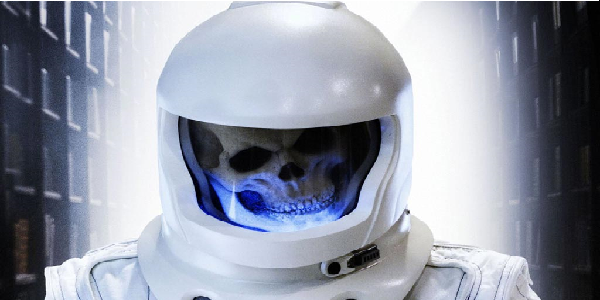 To talk about Rose as being very much a product of its own brand of Doctor Who, I felt it was equally appropriate to find a story that did the same for the current era. This story is very much that adventure. The events of the Library are the epitome of creepy and dark Doctor Who, preying on some of the most intrinsic human fears with this flesh-eating insect swarm, the Vashta Nerada, who group in shadows. It also features a manipulative interior world, and a truly terrifying combination of visceral and psychological horror. It also serves as the start of many features of the current era of Doctor Who including a penchant for complicated mystery and intrigue mainly by being the first appearance of the enigmatic River Song. It also cements a trend where death is an impermanent state, many stories in the Eleventh Doctor's era have characters who share this surviving beyond death quality.
41. Feast Of Steven (Part Of The Daleks' Master Plan) 3.16
 The one exception on this list where I recommend a single episode rather than a complete story arc. This story within a story features companions Sara Kingdom and Steven Tyler, and the Doctor getting rounded up by police and then stumbling in on an early movie set. There are multiple cases of mistaken identity, and all sorts of related chuckles. It is a highly predictable spoof of some Hollywood clichés and the amount of everyone speaking at once would be headache inducing if it went any longer, but it is delightful nonetheless. Best of all it features the Doctor wishing us all in the audience a Merry Christmas, a sweet precursor to the intense way Doctor Who celebrates Christmas today. The surrounding serial in which Feast of Steven is contained, if you like reconstructs, is incredible. It is more of the old school Daleks, and in addition to Steven and Sara also contains the literally short-lived Katarina. This serial proved companion death was possible. It also features the Meddling Monk marking the first villain return, and was the first appearance of incredibly long-time companion the Brigadier.
40. Highlanders 4.15-4.18
 In this recon serial we get a chance to see the Doctor meet new companion Jaime McCrimmon. This episode does the most work to distinguish this new Doctor from this predecessor and establish his zany side. Among his antics we see him try on some terrible accents and perform a staple of British comedy, get everyone out of trouble by dressing in drag. This story also sees another appearance of his other faithful companion, a recorder, upon which he plays tunes to lift spirts. The plot of the story itself is somewhat unsettling as the opposition faced this week are war savvy humans who wish to sell the Doctor and his friends new and old into slavery. The opposition of the serial, a man from that era with the surname Grey is a picture-perfect version of the moustache-twirling villain, and receives a very predictable end.
39. Doctor Who And The Silurians 7.5-7.11
 Fans of Madame Vastra and other Modern Who homo-reptilians would hardly recognise these earlier versions, who are darker in colour and significantly less humanoid in shape. Intriguingly, the desires of these Silurians and those in their first appearance in Modern Who are remarkably similar in scope a desire to wipe out the surface "apes" and reclaim the planet for themselves. Sadly this serial ends far less peacefully than this later encounter, as while the Doctor is hopeful to renegotiate with the Silurians at a later date, the Brigadier is less convinced of this possibly and wipes out this subset of Silurians entirely, an act much like Harriet Jones's ruthless obliteration of the Sycorax later in the Christmas Invasion. On a lighter note, the serial marks the first appearance of the Doctor's car, the bright yellow Bessie, and her famous license plate WHO1. I recommend the opening and closing part of this serial at the very least.
38. Robots Of Death 14.17-14.20
 The serial itself is in an interesting discussion of attitudes surrounding the advancement of robot technology particularly with regard to attempts to replicate humanness. It is also notable for particularly physical murders, victims are choked and some of the deaths were even bloody. It is also the only serial on this list to feature companion Leela, a huntress from a future humankind civilisation where humanity is far more integrated with natural world. However, it is most notable for the Doctor's effort to explain transdimensional engineering or why the TARDIS is bigger on the inside to Leela via a pair of boxes. It does not seem to help Leela much, but it is a clever demonstration, and nice compared to the general spouting of the phrase that has occurred so often since the start of TARDIS trips.
37. Hand Of Fear 14.5-14.8
 This particular adventure marks a truly horrible time for companion Sarah Jane who is: knocked unconscious by an explosion, possessed by an alien entity, knocked unconscious by the Doctor, hypnotised, and nearly obliterated twice in a nuclear reactor, walked through a mass grave where she nearly fell into an abyss, and half froze in the caves of an alien planet, all leading up to Sarah Jane's truly heartbreaking departure as a companion where the Doctor sort of dismissively throws her out. Other interesting notes include this story featuring a quarry as a quarry, a nod to the production of many alien worlds requiring quarries to bring them to life, and fans of Modern Who will recognise the drastic solution of the Kastrians as vaguely familiar to Last Great Time War. A truly lose-lose day all the way round for everyone.
36. Dragonfire 24.12-24.14
 I debated with this particular choice for some time before deciding that the departure of Mel and the arrival of companion-to-be Dorothy "Ace" McShane are notable for two reasons. First, Ace marks a rare occasion where the Doctor acquired a companion somewhere other than on his/her home planet. Her reason for ending up on Iceworld where she is found is most odd, as it is eventually discovered that she caused a time disturbance when her chemistry experiment blew up. From this early experience we discover Ace's intense and quirky personality, including her fondness for homemade explosive nitro-9. But I think what makes this serial truly notable is that in the end it is Mel who passes the torch to Ace, thereby directly picking out her replacement.
35. Earthshock 19.19-19.22
 Notable mainly for the devastating companion's death that concludes the story, this story's main emotional conflict stems from the Doctor being so unwilling to give up his companions that he would rather start an argument than consider their requests to leave. While latching onto his companions is a trait present strongly in each of the Doctors up until this point, and even arguably afterwards, in no Doctor is it stronger than in this incarnation. It is also a chance to catch yet another version of the Cybermen which have changed significantly since their original introduction. Gone are the headlamps, replaced with a sturdier, stockier helmet and a reinforced chestplate. Gone is the exposed skin too, though these Cybermen, unlike varieties before and after, have visible mouths. Also, the course of the plot allows companions Nyssa and Adric to display their own talents as a slow shift towards a greater focus on companions themselves continues.
34. Twin Dilemma 21.21-21.24
 The subplot of the abducted Romulus and Remus is dull as is the combination owl bug alien who pulls the strings. Embolism green rays of death are of mild interest, though things do not really pick until the last part of the four when they discover the desperate and deadly plot behind the plot. But this serial is worth watching to see just how insufferable the Doctor could possibly be. Hopelessly arrogant, cruel, and disgustingly rude or "egocentric, willful, and mad," in the words of the alien du jour, this Doctor starts off on a terrible foot. Not only does he nearly kill his companion Peri upon first waking, he vehemently denies any wrongdoing, insisting she imagined it happening. But sparks of his better nature flicker through, when Peri is in danger he comes ultimately to her defence, and during the showdown between his former teacher and the alien threat, the Doctor becomes positively emotional, which lets us know he may be alright eventually after all.
33. Angels Take Manhattan 7.5
 This story principally important for being the last to feature Amy and Rory, and being the breaking point of the Doctor's long-time battle against the Weeping Angels, terrorizing, neck-snapping, living statues, who sometimes send victims backward through time involuntarily. On a less important note damage done by the Angels and the ensuing battle bars the Doctor from returning to large chunks of time in New York, perhaps forever capping off a string of adventures in and around NYC. It is also a particularly romantic and emotional story featuring touching moments with both the Pond-Williams pair and between the Doctor and River Song.