Doctor Who: 10 Reasons The BBC Should Increase The Budget

Doctor Who brings in way more than the £1 million budget the BBC allocates per episode. Now it's time they got what they deserved to create something special.
Throughout the history of Doctor Who there has been one issue above all others that has plagued and threatened the show: Budget. Whether it be wobbly sets, unconvincing monsters, poor quality FX, time off air or just rushed scripts, the budget was at the heart of all that was wrong with Classic Who. Production staff over the years have done their level best to keep the program convincing to varying degrees of success. The Sci-Fi/Fantasy/Gothic Horror, ever reinventing program has endured despite all this thanks to a magical idea, wonderful cast and (mostly) quality writing. At the beginning there were those at the BBC who wanted Doctor Who cancelled and accusations of death by budget cuts will always haunt the early incarnation, or regeneration if you will, of the show. Figures are scarce but the generally agreed cost is between £90K and £100K an episode for the mid-80's stories. By the time Russell T Davies got the green light to bring it back the bill was a reported £800K. Despite reports of budget cuts Steven Moffat recently claimed a roughly £1M an episode allowance so there a case to be made that the BBC has got it right and hit the sweet spot. A comparable USA production would command between £1.2 and £2M per broadcast but Doctor Who is a large part of a £300M haul for the BBC so let's discuss how increasing the budget could be a money spinner for the BBC. Click "next" below to get started...

10. Steven Moffat Says So

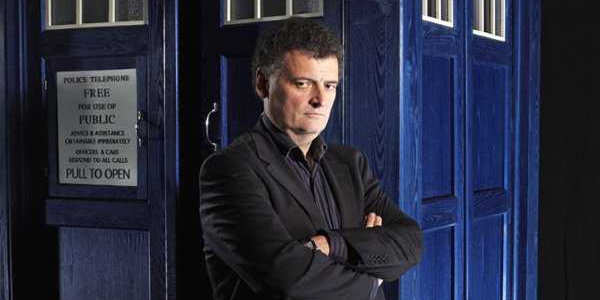
Even though he denies it. In a recent interview he is quoted as saying: "The schedule and the pressure of trying to do Doctor Who on any budget €“ including Avatar's €“ is horrific". "I am never, ever going to say I've got enough " He went on to say: "Doctor Who is incredibly well looked after by the BBC €“ they are incredibly aware of its crown jewel status, that it's not merely a show that's successful now" This means that although he has a budget he can work with and produce a good show, he would like to have more. The BBC have instigated cut backs and this was the key factor behind the splitting of the series. If they now truly appreciate both the program itself and its financial benefits then the logical thing to do is increase the budget.

9. Low Budget Equals Low Quality

Throwing money at something doesn't make it good. There are far too many examples of this throughout TV and cinema history. It is also possible to make good Sci-fi on a shoe-string but not one that involves multiple sets and locations, CGI, make-up effects and animatronics, to mention only a few key ingredients. Trying to do the kind of story telling that Doctor Who does, and is capable of doing, it is necessary to have believability of the locations and characters on screen. Audiences are more mature now, watching the old classic series' and looking at the various monsters and sets it was acceptable for them to look a little ropey. But in a world where CGI and make-up effects are in the hands of even amateur film-makers producers cannot afford to scrimp. Large budgets don't guarantee a quality product, but low budgets make them much more difficult to put together.

8. It Has A Worldwide Audience

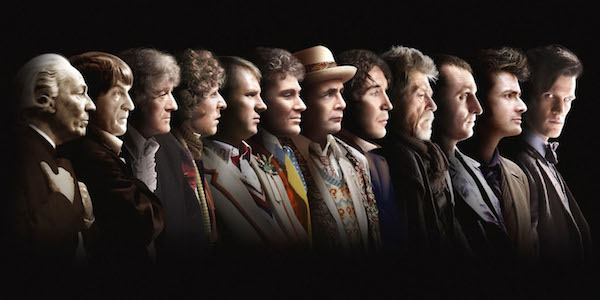
It's not just a BBC show for the UK, there are countries all over the world and millions of people who watch Doctor Who. The 50th Anniversary special was broadcast simultaneously in 94 countries and shown at cinemas in Canada, Australia, New Zealand and the USA. 12.9 million watched in the UK with a further 2.9 million on iPlayer. In the USA 2.4 million watched live whilst in Canada it was the most watched entertainment show on the day. With so many people all over the world demanding more Doctor Who it would seem sensible to give the people what they want. As the cliché says, you have to spend money to make money. Making a high quality program with all the right levels of production values only makes it more likely that sales will increase. BBC Worldwide pulled in over £350 million last year with Doctor Who representing a large part of that total. The BBC are notoriously unwilling to release exact figures, even going to far as to write to one license payer rejecting them their freedom of information request regarding Doctor Who on journalistic grounds. But even a conservative estimate of £50 million return on a £13 million investment is a pretty sweet deal. Upping the budget and selling it to more countries can only help the bottom line.

7. Look What They Can Do Already

Doctor Who The Day Of The Doctor Idents Stings And Twitter Hashtag To Be Revealed As Atlantis Airs Ironically, the 50th Anniversary special which was watched and loved by so many people, including reviewers, was made on the same budget as a normal 45 minute episode. How the production team managed to pull off that feat is a mystery but it serves to prove they can be trusted with a looser purse string. The budget of Doctor Who is by no means 'small' but whilst spending big doesn't guarantee quality, giving a higher budget to a production team who have proven their skills does. How many of the issues that fans have noticed and complained about could have been eliminated with just a bit more investment? If your aim is to do Red Dwarf and make people laugh then a shaky set or a dodgy bit of CGI isn't so bad but in a modern Sci-Fi drama the audience would switch off. Doctor Who has had varying degrees of success in this regard since it came back and it cannot be denied that the most recent series has shown a marked improvement, but it is important to keep up and increase the investment.

6. Absence Makes The Audience Drift Away

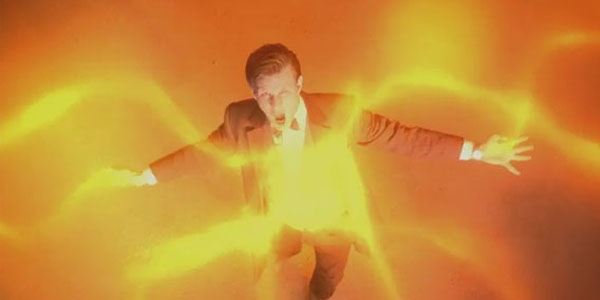
The per-episode budget may be comparable to the US shows but the series budget is the crucial element. Key to the splitting of the series recently were well publicised cut backs at the Beeb. Doing this was a cheat to fans but more than that it made no commercial sense. There is a balance to be struck between too much of a good thing and keeping them wanting more but 6 episodes a year could hardly be called satisfying demand. Whilst the core of fans will always watch, more transient viewers or those new to the show will only just be getting interested when the series ends. This means hoping that they remember they liked it and want to see it again but also that they look out for it in the schedules 6 months from now. Trying to win a new audience every time you bring out a new series is not the most efficient strategy. We have been assured that this season's episodes will be shown in sequence and without interruption but there is still an 8 month gap between Matt Smith's bow tie hitting the floor and us finding out if Peter Capaldi can find the steering wheel. For some that will just be too long.

5. We Want More

The recent 50th special only served to confirm the show's popularity with it taking the number 3 spot in the cinema charts. Now is the time to capitalise on that interest. Give Steven and the team a bit of money and let them make some Doctor free minisodes to whet the fans' appetite for what's to come. Whilst it would be nice to up the running time to 60 minutes, as a larger budget would allow, the 45 minute format works best for the American market. Some might find that unpalatable but the fact is that making the show 45 minutes long ensures it can be sold easily. What a bigger budget would allow though is better quality episodes and more of them. Viewers of the classic series were treated to stories that would span three and four episodes, sometimes up to seven. Even factoring in shorter episodes at the time that's still upwards of 2 hours of story-telling. Single episodes are great but multi-episode stories and story arcs allow the writers room to breathe, the characters get a chance to develop and we can have a little less sonic ex machina.

4. It's A Safe Bet

Doctor Who Series 1 7 Blu Ray L Viewing figures are high, the show is popular among both its old core of fans and those who know only of the latest incarnations. Hands up anyone reading this who doesn't currently own at least one Doctor Who box set, BluRay, DVD, mug, t-shirt or some other merchandise? We're suckers for it. Owning Matt Smith's era alone on BluRay will set you back nearly £100. Add to that reselling the show abroad, and in the UK to stations like Watch, and it becomes increasingly clear that making more of them can only be a good thing. If the figures drop then by all means reduce the number of episodes but is the limit of 13 episodes and a Christmas special really sensible? Is it really wrong to assume that Doctor Who couldn't handle being a 24 episode series? Would Peter Capaldi collapse in a heap or break out in a sweat just at the thought of it? All that would be required would be a bigger staff; more writers, unit directors, larger cast and a more efficient production process. That's impossible without investment but when that investment is guaranteed of success it should be a no-brainer. Having the show in a 24 episode format would allow for more depth, as Steven Moffat proved he is capable of by having 3 series' arcs. It may make it even more popular in the US and to really break in there would ensure the continued success of the program.

3. Explore The Universe

For a program about all of space and time we haven't half had a lot of Earth-centric stories since the reboot. True, Matt Smith and Steven Moffat have been less heavy on the Terran based tales but for a long time it was Earth in danger every other week. Exploring other planets is what the show should be about. If the Earth needs saved so often then think how many other planets our Time-Lord could be allowing to burn or be taken over by the Daleks? Giving the team a bit more cash could enable them to use more locations and not have to use the same ones for multiple episodes hoping we won't notice. The John Pertwee years were famously Earth bound for the reasons of reduced funding and whilst they managed to produce some of the finest episodes of the series, necessity being the mother of invention, there was still something lacking. We can see the future and past of any planet in the universe so let's spend a bit less time on the third rock from Sol and get out among the stars. It's not necessary to be making up planet names and new species every week, some amount of continuity helps keep audiences engaged. But with a bigger budget and more episodes the team would have freedom to be a little more adventurous

2. It Inspires Children

It's also good for the economy. As a showcase of the UK and its scenery, Doctor Who has a reach that can inspire people to want to visit. Even a young Mrs Hooks whilst growing up in Mexico was bewitched by the strange man in the big scarf who moved around in a blue box. It made her want to come to the UK and see for herself the beautiful landscapes. Kids, and big kids, all over the world have grown up, and are growing up, looking at this strange show that's different every week, has a new actor taking the lead role every few years and explores all of time and space. As a child I was inspired to write a full 4 part episode about the Daleks when I was I was only 11 (it was probably rubbish but that's not the point). Many of the current crop of writers, producers and staff on Doctor Who are people who grew up watching it and thought "I can do that". Whether it be to pick up a pen and paper, make their own monster or use a home camera to make their own episode, Doctor Who inspires a creativity in children that few other shows can. The kids know it's not real, but it still makes them look at the world in a more magical light.

1. It's Grown Up Sci-Fi

Doctor Who is not a kids' show. It is a family show. That means that people of all ages can watch and enjoy for different reasons. For some that reason may have been David Tennant or Billie Piper but for most it is the wonder and possibility of the program that makes it a must watch. Even as a 35 year old I am still excited by a new episode and will make sure I set aside time to watch it in peace. Then watch it again later, just in case I missed something. Some would argue that there could be a more adult version of the show but even though Torchwood was very good, and harrowing at times, it just wasn't the same. In order to keep the suspension of disbelief Doctor Who has to retain an element of the fantastical, whimsical, childlike nature of the ancient mad man with his box. But the Doctor's Wife among many other episodes have fantasy and darkness in equal measure. Making the program appeal to adults who have the money to buy the BluRays, DVDs and merchandise as well as kids who make their parents buy it for them is only common sense. As grown up Sci-Fi it deserves to be treated with a little more respect by the BBC. If Steven Moffat is right and they have now figured out how important it is then the only way to show that is to make more investment in the production and give us more episodes of higher quality. If the BBC truly understand that Doctor Who is their crown jewel, they shouldn't be afraid of spending a bit more polishing it.

Contributor
Contributor

I.T. Consultant, technophile and Doctor Who fan. I like to talk about tech, take films apart and make excuses for Doctor Who's continuity errors. No other show has the power to make me feel like a big kid.