Doctor Who: 10 Unfair Moffat Criticisms

Put down your torch and pitchforks, because Steven Moffat doesn't deserve all the hate.
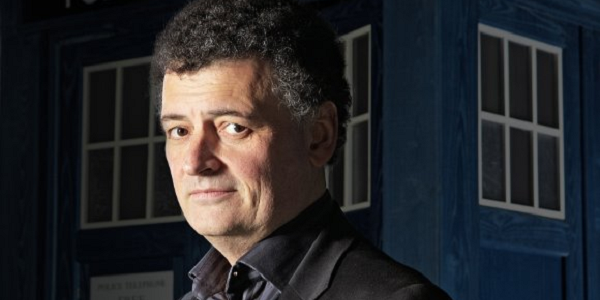
When I recently saw 'The Empty Hearse', the episode that kicked off this year's series of Sherlock, I realised that it was the episode I wanted Doctor Who's 'Let's Kill Hitler' to be. Sure, both episodes were funny, ambitious, thrilling and exciting, but 'Let's Kill Hitler' rushed everything; there wasn't nearly enough time spent on the details. I would've loved more conversation between River and the Doctor, less attempted murder, and more introspection on Amy and Rory losing Melody. Doctor Who doesn't always need to be running around fighting aliens; sometimes it can focus on the drama of human emotion. And it's okay to disagree with that. It's one of a few Steven Moffat episodes that I just don't like, but then again, I really liked 'The Rings of Akhaten', and a lot of people didn't. However, I feel a lot of the criticism levelled at Moffat to be unfair. We're all entitled to our opinions, but half of the complaints that we now see about Doctor Who weren't a big concern in Moffat's first four stories. It seems as if hate for the man is fuelling further criticism; a lot of people have stopped worrying about the feminism of the show, and are now using any hint of gender inequality as a stick to beat Moffat with. Well, here are ten criticisms that you can find on the internet about Steven Moffat, as I try my best to stick up for him. No, he's not perfect. But he's certainly not the demon of evil that some make him out to be.

10. He Can Only Write Female Characters As Flirty And Feisty

Russell T Davies was an exceptionally good character writer, but he's more similar to Moffat than some fans may care to realise. The feisty gene might run particularly strong through the Pond girls, but it also runs through Donna, and whilst Davies created sweet, kind characters like Lynda with a Y, he also created outrageous flirts like Lady Christina. But this isn't about RTD (yet). Picking two very different examples to defend Moffat, Madame Vastra is a stately, gracious and otherworldly woman who's a match for any man, but certainly not the typical Doctor Who companion. Lorna Bucket however is more companion-like; curious and empathetic, but seeing the Doctor much more as an all-powerful being, and not at all like a bloke with a snog-box. And whilst Clara and Amy might have flirted early on with the Doctor, they flirted almost as a defence mechanism, because they didn't want to get too close to people. They certainly calmed down after that, and it doesn't look like Clara will be making passes at Capaldi any time soon. The fact that River flirts with the Doctor is only indicative that they have a close relationship; this is a character that was largely asexual until 1996. Which sort of leads me onto my next point...

9. He Undermines Strong Women By Sexualising Them

One complaint - one huge complaint of 'The Day of the Doctor' - was the characterisation of Elizabeth I. She was a virgin queen, many claimed, possibly sexually abused in her youth, and for Steven Moffat to introduce her as a love interest to the Doctor was wrong. But it doesn't take away from her being a brilliant woman. It's the same with Reinette in 'The Girl in the Fireplace': why does it matter if the Doctor has a relationship with these women? It only proves that he's attracted to intelligent, strong, creative people, and whether or not these people feel love towards the Doctor, it doesn't make them any less of a role model to girls. If anything, it shows them that they can have a career, and a boyfriend at the same time, doesn't it? It's understandable not to like the historical inaccuracy, or to dislike Liz, to paraphrase the Doctor himself, drooling over any handsome man in a suit. But it certainly doesn't make them inferior characters.

8. He's Americanised The Show Too Much

It's one of Steven Moffat's greatest achievements to some: taking the show to America, and helping it become one of the most downloaded shows over there. And yet to others, they're upset that it's lost its sense of Britishness, its quirky, low-budget loveliness that they fell in love with. It's difficult to pin down what makes something "British" from "American", but a good sign that your favourite show's staying British, is casting a Glaswegian in a role, and telling the media that he'll probably keep his accent. An episode set in Yorkshire helps too €“ it's not a massive location for Hollywood films €“ and remember, these "blockbuster" episodes were simply described as the theme of Series 7; we don't know if it'll continue into 2014 or not. It's easy to bring out the "Sidney Newman was American" argument, but at its core, Doctor Who will always remain extremely British, whether that's in Clara always drinking tea, references to Earl's Court and Ultravox, or simply the casting of British actors in the main two lead roles. There's surely nothing wrong with the show getting bigger and better, as long as it keeps its heart, right?

7. River Song Is A Terrible Character

Some people love River Song, and some people despise her very name. Unfortunately though, while I can't sit back and defend every single line of dialogue she's ever had - it's completely subjective, and you're within your right mind to hate her - I can mention that the very essence of the character is written with the best of intentions. River's maybe the first character since Romana, actually written as a female friend of the Doctor, who's his equal. Not just his lover, his best friend, or his ultimate companion, but as good in every respect as the Doctor: more than his match. But actually, that's not why she's great: Alex Kingston was 50 last year. How many 50-year-olds have a huge role as a love interest in any TV show or film? Especially if the male is twenty years younger? River is a role model to younger women, and older women: she's not just any middle-aged, stay-at-home wife, she's an Indiana Jones-style time traveller, and she embraces looking good and having fun. And remember how excited she was when she regenerated into an older woman? From a non-white girl: also a first in Doctor Who. That's laid the foundations for the Doctor to not always be caucasian.

6. He's Arrogant Enough To Bring Back Gallifrey

Maybe. But wasn't it arrogant of Russell T Davies to destroy it in the first place, and seal with a time lock for all eternity? Davies didn't have any choice, actually. The BBC would only put Doctor Who back on air, reportedly, if RTD destroyed all of Gallifrey so that the audience could start again from square one. But how long exactly was the guilt going to consume the Doctor? How many more times would we wallow in the terrible decision of his genocide? Are we not past this plot, eight years into the show? I'm sure Moffat's not the only writer that would've considered bringing back Gallifrey; Davies himself did so for an episode himself. And knowing how close the two writers are, even now €“ they email each other regularly with plot details and ideas €“ it's unlikely that Davies wasn't okay with the idea, especially considering how much Moffat respects him (he once called him the greatest writer in television and claimed he keeps asking him back to write for his era). Russell T Davies wasn't the first Doctor Who writer, and he knows better than anyone that the show changes and moves with the times; if talk is true, Davies and Moffat had a big meeting together before Series 5 to discuss changes that had to be made. Gallifrey would've been brought back eventually, let's face it.

5. He Can't Take Criticism, So He Leaves Twitter

We're lucky that we live in an age where we can communicate to stars of the screen, and they can talk back. It's just a shame that some people use this privilege for the worst. Whilst I don't think I'd like it if someone used Twitter to tell me my work was poor €“ really, I'd rather not be told that sort of thing by people €“ we can all understand why some Who fans would want to tell Moffat they don't like his regime. Some users, however, used it for making death threats. This is a man that churns out two of the BBC's biggest exports; if he reads your comments in between his busy schedule, you're extremely lucky. So why use it as a tool for bullying? Moffat did the right thing by leaving. He's as much of a role model as the Doctor is, and it was right to walk away from the noxious atmosphere that some Twitter users had created.

4. He's Turned The Doctor Into A Child

Granted, the Eleventh Doctor is the most childish of all his incarnations. But actually, he's most ancient as well. The big theme of Eleven's tenure is how he's an old man in a young body. He sees the universe through his companions' eyes, and it feels brand new to him again. Because both him and Ten are afraid of being adults, after what they did in the Time War. In the end though, Eleven grows up; he accepts his responsibilities on Trenzalore, and he becomes more adult. The Eleventh Doctor is one of the darkest; he's fighting a war, he's running from his past, and his future, and he feels his age more than any other Doctor. He can connect to children, but he doesn't feel like one. He's as ancient and forever as the others, but in this incarnation, Moffat's managed to use Matt Smith's verve to bring the show closer to kids. He hasn't ruined the character of the Doctor, it's just that incarnation that's more childish than others.

3. He Makes Women The Butt Of His Jokes

The joke in 'Let's Kill Hitler' isn't actually a joke about women. It's a joke about how the Doctor thinks he can be rude because he's dying. Likewise, in 'The Bells of Saint John', the Doctor says, "It's a woman" to a monk, who crosses his chest. This is a joke about the monk's ignorance to women. Captain Latimer in 'The Snowmen' suggests that pretty women can't be wise; this is a dig at his Victorian values. These are jokes that are more often used in sitcoms like The Office, but they're used so that you can laugh at the characters, and not with them. I'll actually come back to this point on the next page. It might be out of place to use these ideas in Doctor Who, but it's certainly not victimising anybody for the audience's amusement.

2. He Doesn't Do Enough For Gay Characters

Russell T Davies did so much for non-straight characters on television that he was always going to be a tough act to follow in that department. Just look at Captain Jack, the first omnisexual character of what, any family show, ever? But whilst Jack was a great character, he certainly fitted a stereotype; he's a character who ends up mostly in homosexual relationships, but he doesn't like settling down. Moffat introduced Vastra and Jenny as a gay couple, but in actual fact, probably his finest message about non-straight characters in fiction actually came from Canton. We didn't know that Canton was gay, until he told Richard Nixon; again, the joke was on Nixon, and his narrow-mindedness. But in Canton, Moffat gave us a gay character we didn't know was gay. We didn't need to know he was gay. It simply didn't matter, and actually, that's the best message to send out in a family show. We need Jacks to show equality, but we also need Cantons.

1. His Companions Have No Life Away From The Doctor

It's a comment that's made not just about Moffat's sexism, but of his writing. We can't believe his companions, because they don't have a life of their own; look at River. Her life revolves around the Doctor. Amy Pond chose to leave the Doctor for her husband. She didn't have a family, so she ran away with her childhood hero, but as she settled down, she learned that she didn't need the Doctor as much as she thought. Clara only travels with the Doctor on her terms: when she chooses. She doesn't run on out on the people she loves. And even though River presumably became an archaeologist to find the Doctor, she loved it enough to become a professor. She declined travelling with him in 'The Angels Take Manhattan'. She had adventures of her own, and she didn't need to spend all the time with him. Rose and Donna both told the Doctor they'd travel with him forever; Martha, who left him, followed a career that he'd want her to follow. You can't imagine Clara doing that though. You can level many criticisms at Moffat, but not this.

Contributor
Contributor

Mark White hasn't written a bio just yet, but if they had... it would appear here.