Doctor Who: 20 Best Nu-Who Episodes

Celebrating the finest episodes of the past 8 years.

As the eighth season (or 34th, depending on how you're counting) of Doctor Who comes to a close, it's time to look back on the very best the rebooted show has given us. It's been a long road, with four different Doctors gracing our screens since the show was brought back in 2005. And while we've certainly had some low points over the years (sorry, Fear Her and Let's Kill Hitler, but it had to be mentioned), it's far more fun to focus on the good times we've had. Doctor Who has become more innovative and boundary-shattering than ever before, no longer just a show for society's outcasts, but a powerful force in mainstream media at last. If you went back in time and told the fans who were still hanging on to the program during its death rattles of the late 1980s that one day, the show would be BBC's most popular, well-funded flagship, they would probably need to use their inhalers from the shock. As a matter of fact, maybe that should be the focus of a particularly meta episode of Doctor Who. Regardless, it's time to celebrate the finest episodes of the past eight years. Here's to eight more!

20. Silence In The Library/Forest Of The Dead

We all know that Moffat has a tendency to create monsters who consistently repeat phrases. Yes, he overuses that particular trope. But does that mean for one second that the Vashta Nerada saying, "Hey, who turned out the lights?" over and over again wasn't terrifying? No, it does not. The idea that there's actually a good reason to be afraid of the dark is simple but brilliant, and it's another example of a really fascinating monster from Doctor Who that you never actually see. We loved Miss Evangelista's character arc, the horrifying finality of the voice communicators "ghosting", and every second of Donna's journey to motherhood. And of course, it introduces the mystery of River Song -- in our opinion, this is the only story where she's what you might call likable. There's a lot to love in this two-parter, which is armed to the teeth with really strong content. And if you weren't gutted when you realized that Donna's dream man actually did exist, you just straight up don't have a soul.

19. Smith And Jones

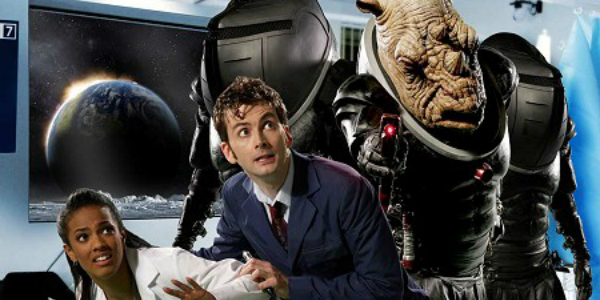
Smith and Jones is a purposefully lightweight episode, which is perhaps why it's frequently overlooked. The introduction of Martha Jones as a companion is front and center in the season 3 opener, and few recurring characters have been given such a great first appearance. There's an immediate contrast between her and Rose Tyler -- where Rose was an empathetic, salt of the earth young woman who has to travel with the Doctor to discover her true potential, Martha strikes us as clever and capable right off the bad. She's intelligent, insightful, level-headed, and calm in the face of panic. In other words, she's a perfect match for the Doctor. Even when her entire hospital is transported to Mars and there's a blood-sucking alien wandering around, she doesn't lose her head. Add in the concept of a hilariously bureaucratic intergalactic police force populated entirely by a race of alien rhinoceroses and David Tennant at the top of his game, and you've got a surprisingly solid episode that doesn't get the credit it deserves.

18. The Unquiet Dead

The Unquiet Dead is the first historical episode of the rebooted show, but to look at it you wouldn't be able to tell that they were still working out some of the kinks. It's a spooky, atmospheric Christmas story that embodies the moody spirituality that Dickens would have appreciated (fittingly, he is the historical figure of the week). The Unquiet Dead doesn't always get a lot of attention, but it's a lovely understated Victorian horror story. Gwyneth is a fantastic character, and there are a few really nice moments between her and Rose. The image of the Gelth reanimating dead bodies is genuinely creepy -- they don't look quite as gruesome as zombies, but they have the unnatural, deeply unsettling appearance of corpses who are being moved around against their own will.

17. The Girl In The Fireplace

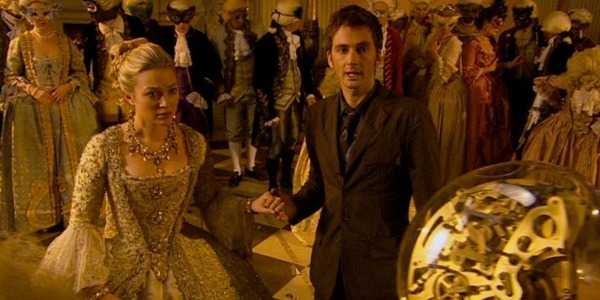
Humor, romance, clockwork men, and pre-Revolutionary France -- you could be forgiven for thinking that this doesn't exactly sound like the typical episode of Doctor Who. Although The Girl in the Fireplace technically has elements of science fiction, taking place partly on a futuristic spaceship complete with portals into the past, the greater share of the episode is centered around the relationship between the Doctor and Reinette, better known as Madame du Pompadour. Very much a model for Amy Pond's storyline in season 5, the Doctor interacts with Reinette throughout her timeline, starting from her childhood. It's a particularly effective way to explore their relationship, only helped by the tremendous amount of chemistry between the two actors (with good reason -- they dated in real life).

16. The Waters Of Mars

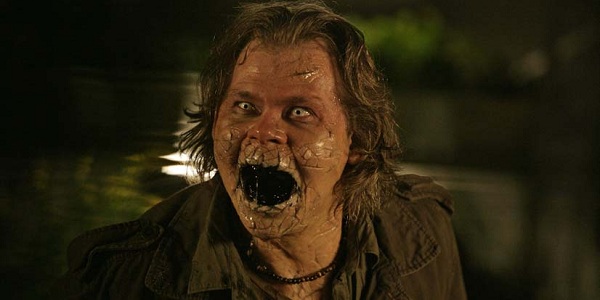
Doctor Who is a show that has given us a cultural heritage of hiding behind sofas, a shared experience of fear. So when we say that The Waters of Mars is hands down the scariest, most gruesome episode of Doctor Who, that's saying quite a lot. There's something especially terrifying about a mysterious virus infecting people at will and dooming them to death, probably because it hits a little too close to home. We know that the odds of us being attacked by a Dalek are relatively low, but death from disease is much more within our sphere of experience. The growing terror of being trapped in an enclosed space with a killer virus is remarkably compelling, and the resulting tension is palpable. But as scary as the Mars monster is, that's nothing compared to how frightening it is to see the Doctor try to play God. He's completely unhinged and out of control at the end of the episode, and his manic outburst comes totally out of nowhere.

15. Amy's Choice

Rory's ponytail. Alien pensioners. A tricksy villain played by Toby Jones. Peruvian folk band ponchos. What's not to love about Amy's Choice? The Doctor visits an alarmingly pregnant Amy and Rory in their sleepy little village, when he notices something peculiar. Then BOOM, they're back in the TARDIS, careening out of control. They switch back and forth between the two realities over and over again, desperately trying to figure out which one is the dream. This week's mind trip brought to you by the Dream Lord, a nasty little guy who really seems to have it out for the Doctor. And that's the most interesting part of the episode. We know that the Doctor doesn't trust himself, and that he's incredibly guilty about the things he has done, but it isn't until the Dream Lord manifests that we realize how self-loathing he is. Despite the fact that Matt Smith is usually seen as the zany Doctor, these are the moments where he shines, when he's allowed to be dark and subtle and much, much older than he looks.

14. Listen

Listen is Stephen Moffat returning to what he does best: taking basic, universal childhood fears and amplifying them. He takes really abstract concepts, like the idea of being jumpy when you're alone, and creates a tangible threat out of them. The premise is this: what if you're never really alone? What if every time you feel the hair on the back of your neck stand up, or you feel like someone's watching you, it's because there's actually something there, hidden in the dark? We like all the spooky moments, like the nightmarish figure hiding under the bedspread, but what we like even better are the new insights we're getting into the Doctor's past. Seeing the scene with the young Doctor and Clara was wonderful -- it gave us just enough information to be meaningful, but not so much that if feels like the episode is trying to rewrite canon.

13. Dalek

There were a lot of hit or miss episodes in the first new series back in 2005, as is only to be expected. Aside from being a generally good episode, Dalek serves as a statement of the newly rebooted program's vision, an example of the type of story we could expect from Doctor Who. It's a markedly different take on the show's most iconic villain, creating a Dalek whose isolation left it vulnerable to the influence of Rose's humanity. A Dalek whose dying wish is something to feel sunlight on its ravaged physical body. But if that was all there was to Dalek, it wouldn't be such a special episode. What we really take away from this story is Eccleston's performance as the Doctor -- a vindictive man, filled with hate and tortured by his still fresh emotional wounds from the Time War. The Doctor spends a lot of time telling us that he's not a good man, but this is one of the few episodes where we catch more than a glimpse of that person.

12. The Pandorica Opens/The Big Bang

Normally, we're reluctant to rate the season finales too highly. They're exciting, but are usually high on action and low on actual content. They might look pretty, but they're relatively shallow. We're willing to make an exception, however, for The Pandorica Opens/The Big Bang, on account of how much fun it is. Rory's character arc is a definite highlight. Throughout the series he had been developing from Amy's hen-pecked boyfriend into a brave and confident hero in his own right, before being killed off, then unceremoniously resurrected as a Roman Auton. His devotion to Amy is incredibly sweet, and we can't help but appreciate his willingness to punch the Doctor in the face, something so many before him have dearly wished to do. Extra points go to the Doctor grandstanding at Stonehenge, not because he actually thought that he could scare his enemies away, but just to buy himself a little bit of time.

Contributor
Contributor

Audrey Fox is an ex-film student, which means that she prefers to spend her days in the dark, watching movies and pondering the director's use of diegetic sound. She currently works as an entertainment writer, joyfully rambling about all things film and television related. Add her on Twitter at @audonamission and check out her film blog at 1001moviesandbeyond.com.