Doctor Who: 5 Possibilities (And Potential Pitfalls) Of The New Master

It's time to yank him out of Galifrey, dust him down and let him get on with tormenting Capaldi.

Nestled in the frantic buzz of a new confirmed companion and villain there has been a more quiet whisper of one other development regarding Doctor Who series eight €“ the return of the Master. While my colleagues here at Whatculture.com have done a fine job suggesting those up to the task of playing the villainous Time Lord, I wanted to take a look back at the past and see how whomever is chosen might take on the role. After all, with forty-three years of history behind him and an array of performances in every Doctor Who medium to choose from, his shoes are nearly as hard to fill as the Doctor's. Remarkably, through more than half dozen actors, and large hiatuses between appearances, all versions of the Master have remained highly consistent. The Master is undeniably one of the most important characters in the history of Doctor Who, and is all the more vital in a post Last Great Time War version of events. He reinforces that the Doctor is definitely unique among the lot of Time Lords and Ladies, and is responsible for reintroducing the native populous of Gallifrey back into Modern Who (both literally and figuratively). Despite the large number of prerequisites that come which a character with this much history, there is still potential for a number of choices and considerations, each one vital to making an incarnation that seems fresh, while still retaining much of the man we love to hate. Herein explores five elements of the Master's essence, and offers suggestions for how things could move forward.

5. Vitality

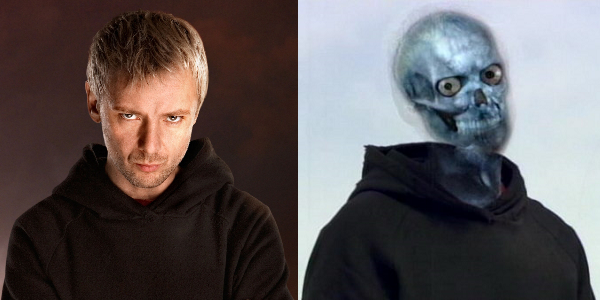
Both the version of the Master we have seen in Modern Who and most of his Classic Who predecessors have struggled with the basic need of staying alive long enough to carry out any grander evil. Past versions of the Time Lord have been at various stages of death throughout multiple points in his lifespan. For the less familiar among us, the Master has clung to life in a decayed state when his natural life cycle ran out, spent ages as a calcified statue, restored himself from only a few inches tall, burned through two different long-term possessed bodies, and managed to come back from a mere pile of goo known as a deathworm, if you include the adventure from the film. His most recent exploits were had in a body "born out of death" that emphasised the issue. His appearances in Modern Who thus far have put this issue at centre stage. It was a clear part of the Master's schemes in series three and four, and it certainly upped the dramatic tension in both deaths Simm's version suffered. It was important for a character like the Master who has been around for so long and done so much to be given that extra emotional impact, and it pays nice homage to the Master's history. Given that he was presumably dead when we last left him, and his body is once again going to change, this is still a concern. But, once that has been addressed, matters of vitality have been well exhausted for now. The Doctor just got a fresh pack of lives, why not have the Time Lords €” assuming they are still able to make fancy cracks to whisper through and what not €” make good on that promise from "The Five Doctors" and start the Master off with a fresh set too. For fans of the Master it is certainly a win.

4. Motives And Plans

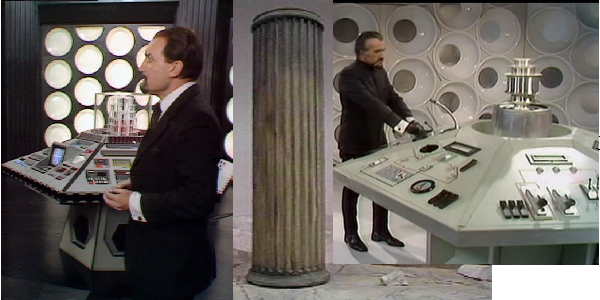
Given that there is an entire entry on this list devoted to the Master spending so much of his time just trying to live, one might imagine if you took that element away there would be little for the Time Lord to do. But with bodily considerations out of the way, he can devote more of his energies to needlessly complicated plans for universal rule and annoying the Doctor. For starters, if this Master is to stick around for a while, it is high time he got a TARDIS of his own back, preferably up and running effectively for a bit. This would allow us to see more of him attempting to muck up all of time and space, he has been far too Earth bound over the years. We all know why he does it, a combination of wanting to annoy the Doctor and stick nearby, but really the new era opens up a few interesting possibilities. To name but one, consider the Master encountering the Ood. A race built to serve, and a man who wants to lord over something €” a perfectly dastardly combination. Obviously, the Doctor cannot just abandon them to live as tools for the Master's amusement. Modern Who has more friendly aliens than Classic Who did, and thus allows for there to be something at stake that is not his own life, nor anything to do with the human race. Another possibility is a slew of plots on how to kill the Doctor €” perhaps this version of the Master may actually succeed and go through with it; after all, there are thirteen lives to go through now. I know it is far too early to start speculating on how Capaldi's Doctor will regenerate, but who knows? There is good precedent for this suggestion. Before we even meet the Master, way back in the Jon Pertwee era, we are warned by another Time Lord that "he'll certainly try to kill" the Doctor, a sentiment echoed by other Time Lords, and seemingly endorsed by the man himself. Even if they are thwarted as they have been in the past, it is always entertaining to see the Doctor working his way out of a near fatal situation.

3. Shiny Toys

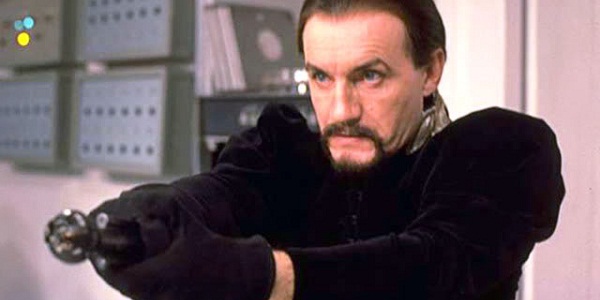
When the Master is not right in the middle of moving pawns into place for some sort of galactic takeover, or tangling with the Doctor, he tinkers. He overhauled TARDISes, made himself disguises, retooled gadgets, or collected and modified weaponry. If that was not proof enough, the sheer number of complex doomsday devices he has used, stopped, reconfigured, or co-opted prove a degree of strong mechanical aptitude. He was fond of using anything available if the situation called for it, from the basic human handgun, to an épée, to a global mobile phone network. However, he has shown clear preference for weapons of his own design, preferably ones with lethal beams. Early television appearances with the Delgado version of the Master carried around a laser gun, Ainley's Master used a lethal shrink ray known as the Tissue Compressor Eliminator, and Simm's Master had the zap charge of the laser screwdriver. As for the future, while the freeze dried corpses of the TCE Mach 1 or the human confetti of the TCE Mach 2 was undeniably pretty cool, the weapon toting Master has his day. If the laser screwdriver makes a return, or a new weapon takes its place, keeping it simple will be key to its continued success. Villains generally are a lot less interesting holding someone at weapon point. If he really cannot make it out of upcoming sticky wickets with his silver tongue, it would be nice to see him get creative and throw a bus at it, rather than all this weaponry. If he is in need of a creative outlet, a few new disguises would be great fun. Yes, they are terribly camp, but master of disguise jokes were always worth a corny chuckle or two, and the era of faux priests, shamans, and adjudicators was a fun time.

2. The Powers Within

The Master has always been a Time Lord who relieved heavily on coercion to achieve his goals. For the majority of his tenure the Master has been verbally dexterous, possessing a command of lofty, at times even flowery, language. However, unlike the Doctor, the Master is oft quick to abandon basic ingratiation, persuasion, and bribery, and resort to shouting demands, issuing threats, or exacting blackmail. The Master would not be the Master without powers of wordsmithery, but when all else fails, or when he needs to scale up his persuasion to planet wide, he relies on the ultimate form of coercion: hypnosis. While the Doctor has nearly always €” barring a naughty period in the Tom Baker era €” avoided using most of the special telepathic powers available to Time Lords, the Master has made full use of a wide array of mental powers. He possessed bodies to extend his life-force as discussed earlier, used clones and proxies to carry out portions of his plans, in addition to using various forms of hypnosis and mind control. Although his hypnotic abilities will always be a part of any Masterplan (pardon the pun) it would be better if he focused on his other people skills. Though, that being said, there is no need for a return of the bauble from his last two appearances in Classic Who, it was so much creepier when he just stared at people to put them under hypnotic trance. However, his own powers are not the only source a future version can draw upon to fit a scenario. Whether by design or sheer luck, the Master has often ended up gaining new abilities from his environment (sometimes literally). Whether it is the quick and dirty time travel that was the benefit of becoming Keeper of the planet Traken or feral cheetah powers from a virus on a dying planet or the fencing skills befitting a King's champion, there is always room to expand his ability pool. Much like the caution regarding the introduction of new weapons, discretion must be exercised in giving the Master new powers. Laser beams shooting from his eyes and lightning streaming from his fingertips got to be a bit much. In the case of the End of Time, one can see how it played into the final scene, and it is good now and then to take him a crazy direction, but this next version could benefit from being scaled back, getting back to his roots as the Doctor's equal.

1. The Influence Of The Doctor

Saving the least obvious, but most intriguing consideration for last, I wanted to highlight the potential impact the new Doctor's personality may have on the new Master. For instance, it is fair to say Delgado's Master is responding to Pertwee's Doctor. Inasmuch as Pertwee was the James Bond Doctor, Delgado is a Bond villain. His disguises are sillier than his successors, his minions are less skilled, but most importantly, they take delight in the game of their rivalry. Similarly, Simm's take on the Master is affected by Tennant's Doctor. They are both more emotional, more tragic, and more comical. At this point, it is difficult to say how Capaldi's Doctor might take the Master in a new direction, given how little we know about the new Doctor, but he should, and hopefully will. And, to be fair, the counterargument here is obvious. One could say these correlations are merely a narrative of hindsight or a reflection of the chemistry between the actors who played them. After all, for most of the Master's tenure his lives are intersecting multiple regenerations of the Doctor, and the portrayals by Ainley and Beevers were brilliant in their own right. But if one is right in suspecting that there was an effort within the writing that made them fit each other just a little bit better, then here is to hoping it continues. Press 'next' for the conclusion!

Conclusion

The Doctor has a large number of recurring enemies: the Daleks, the Cybermen, the Nestenes, the various species of Silurians, to name but a few. All of them have changed over the course of their Doctor Who timeline from a production perspective, and their narratives certainly grow and adapt. You can read extensively on how all of the Daleks appearances fit together for example €” it is truly incredible stuff. It is not as though the Master's character is the only one responding to the Doctor's. And yes, much like a Cyberman, some things about the Master will remain far more immutable than the Doctor, an effort to be a good man is far greyer than it is to be an evil one. Nor, to be clear, is the Master particularly interesting due to his powers, or weapons, or plans to kill the Doctor, despite the efforts herein to shed light on their importance. Certainly, there are plenty of other madmen setting up brilliant, near admirable schemes for world domination, which require great cruelty. What the Master brings to the world of Doctor Who is two-fold. The Master is a rare true equal, perhaps the only true equal, for the Doctor. While the Doctor can admire the brilliance of an evil mastermind like John Lumic, or grow to appreciate the steadfast loyalty of his own human companions as he did with the likes of Jo Grant, and Rose Tyler, ultimately the Master impresses him in a way no one else can. They are not only renegade Time Lords, but renegade Time Lords with lifelong grandiose ambition. This binds them, couple that together with a history that stretches back even further than the Doctor and his TARDIS and arguably the relationship between the Doctor and the Master is the most important relationship in all of Doctor Who. In thinking about this relationship between the Doctor and the Master I come back to two quotations from Terror of the Autons. When asked why the Master is not angry about the Doctor having thwarted his plans, the Master responded: "He's an interesting adversary. I admire him in many ways." If there is one guiding light to writing a new Master it is in that line. In closing, these words from the Doctor. When asked whether was worried about coming up against the Master again, he said: "I'm not...I'm rather looking forward to it." Well, me too, Doctor. Me too.

In this post: 
Doctor Who
 
Posted On: 
Contributor
Contributor

A person who thought a lot, then decided thinking with other people is more fun. If you fancy a chat, feel free to email NicoleatWhatCulture@excite.com