Doctor Who: 5 Reasons You Should Give The 1996 TV Movie A Chance

Many times the Doctor Who TV movie from 1996 has been criticized for its cheesiness and bad plot. Some have even said it was horrible, and I very nearly didn't watch it because I expected it to be a terrible parody of Doctor Who instead of the real thing. But I watched it anyway, and you know what? It wasn't horrible. Yes, it had its bad moments, but if people just gave it a chance, they might find they enjoy it after all. Despite its flaws, it's just as important a part of Whovian lore as anything else that has come before or since. Because of my forgiving nature, I try to overlook the TV movie's flaws, but I must admit that it does contain certain cringe-inducing moments, such as a brief visit to Skaro at the beginning of the film when it was already destroyed in Remembrance Of The Daleks (although, to be fair, this visit may very well be set before Skaro's destruction) or - and this is the truly unforgivable part of the movie - the discovery that the Doctor is half-human. Have you recovered from your faint yet? Brace yourselves, then. The part about the Doctor's half-human heritage was not some throwaway line, unfortunately - not like his line from The Sarah Jane Adventures about being able to regenerate 507 times - since the Master confirmed this by examining the Doctor's retinal structure. However, this was never referred to again in the 2005 reboot, so most people simply ignore it. Other complaints have included a cheesy plot line and an over-the-top Master, but I find it difficult to justify those complaints. Whether we like it or not, Doctor Who has had its fair share of cheesy episodes over the last fifty years, and the Master has always been an over-the-top sort of character. Sometimes I wonder if the complaints are due more to the fact that they cast an American actor as the Master. Why watch the movie, then? Why watch an installment that messes with continuity in the wibbly-wobbliest of timey-wimeyest ways? Read on and find out!

5. The Eighth Doctor Has An Awesome TARDIS

The revamped TARDIS interior was one of the first things that grabbed my attention with the TV movie. No more white, sterile, science-y looking console rooms for this Doctor; this room was elegantly furnished with wooden panels, soft carpeting, and cushy chairs. To make things even better, the library was just off to the side of the console room, and for a finishing touch, the Seal of Rassilon was placed prominently above the door. It was very similar to the wood-paneled control room the Fourth Doctor used to have but on a much more detailed level. For some people, this probably seemed a radical departure from the traditional design, but personally I thought it was brilliant. Not only did it just plain look cool, it gave us a better idea of the possible designs the TARDIS could display as its desktop theme. In fact, it may be safe to say that without the groundwork of the movie TARDIS console, we wouldn't have seen such creative console designs in the 2005 reboot.

4. The Regeneration Scene Has A Clever Twist

Thanks to modern CGI, the regeneration scenes can now look as explosive and awe-inspiring as they always deserved to look, but while the regeneration scene in the movie may not have been as technically advanced as the ones we're used to seeing nowadays, it had a clever twist that reminded us how, well, alien regeneration is to humans. As the lightning began to sizzle inside the morgue cell where the Doctor's body lay inert, we see one of the morgue workers watching Universal's 1931 Frankenstein film on TV. While the mad scientist strives to bring life to his creation, we cut back to similar processes happening to the Doctor's body, and by the time Frankenstein exults, "It's alive!" we see the new Doctor rise from the table. To add to the mood, a storm is raging outside. This was certainly an unorthodox way of showing regeneration--up to this point, we had never actually seen the Doctor die; he had always regenerated right at the last minute. The light would surround his features, and the new man would emerge before the old body technically died. But this time the anesthesia used for the surgery interfered with the regeneration process, and we watched the Doctor die. When he regenerated hours later, it really was like watching a man come back from the dead.

3. The Movie Has Some Good Comedic Moments
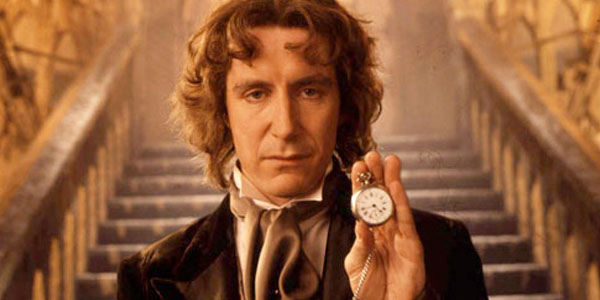
Comedy has been a staple of Doctor Who since its reboot, but the groundwork for its inclusion may very well have been laid here in the TV movie. One of the chief complaints of the movie is that the plot is cheese supreme, but it has some humorous moments that must have been intentional. The obvious ones come from the Doctor's handing out jelly babies to diffuse tense situations, a not-so-subtle nod to this classic trait of the Fourth Doctor. There were also jokes referring to the Doctor's accent and explaining that he was British; his response to that statement was, "Yes, I suppose I am." We were also treated to some fun comedic moments with Pete the morgue worker's understandably astonished reaction to the Doctor's regeneration...and his subsequent attempt to explain it to Grace Holloway, the operating surgeon. He wasn't entirely successful; Grace suggested he get "some more mind-altering drugs" from Psychiatric before heading home for the day. Grace herself was a source of comedy due to her frustration with her boyfriend Brian (whom we never get to see but whose presence is felt, nonetheless, thanks to Grace's donation of his old shoes to the Doctor). But my personal favorite moment is the Master's line to the wife of the ambulance driver whose body he has just possessed: "My name is not 'honey'." And speaking of the Master...

2. Eric Roberts Was Not A Terrible Master
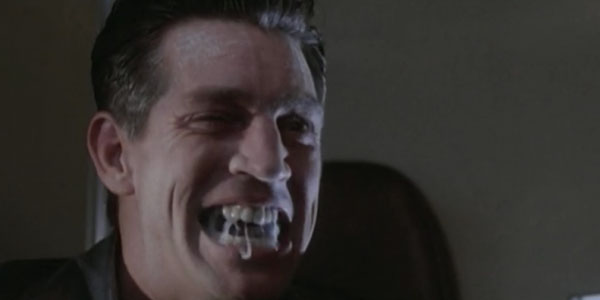
A lot of people have complained that Eric Roberts was the worst Master ever, but I really don't think this complaint is justified. The biggest criticism is that his portrayal was too over-the-top, yet the Master has always been an over-the-top character. Think about his flair for the dramatic and his tendency for formal speech, qualities that were present way back in 1971 when Roger Delgado first appeared as the Master in Terror of the Autons. The Master has always been this sort of eccentric character, so I don't see any valid reasons to criticize Eric Roberts for clearly having fun with the role. I mean, who wouldn't enjoy a chance to play a larger-than-life character like the Master? Eric Roberts certainly did. Parts of his performance did tend to border on the campy side, namely in how he delivered some of his lines, but he was enjoying himself, and that enjoyment came out in positive ways as well. Although some of his lines were delivered with cheesy intonation, others had a wry twist of cynicism and sarcasm that made the words come alive in unexpected ways. I found myself enjoying his performance simply because he was doing the same thing. If you give his Master a chance, you might find that you enjoy it as well.

1. Paul McGann Was An Awesome Doctor

The Master would not be much of a villain if he did not have a Doctor to battle, and Paul McGann fit that description perfectly. His Doctor did get off to a rocky start, though; regenerating several hours after death instead of instantaneously negatively impacted his memories, leading to amnesia. This, in turn, made him more vulnerable because he needed to rely on others, particularly Grace, to help him. Once he had his memories back, though, there was no questioning that he was in charge of the situation. He was more subdued than some of his predecessors (or successors), but his quiet, matter-of-fact attitude managed to persuade others to trust him...although that didn't stop them from wondering if he had escaped from a psych ward! The Eighth Doctor may have started out quite lost, but by the time we see him again in The Night of the Doctor, we see how far he has come. He has developed a tougher edge but is still the quiet, matter-of-fact man we came to know in the movie. And if it hadn't been for the movie, we never would have had The Night of the Doctor or all of those wonderful audio adventures. I concede that the movie is not perfect; I concede that it could have been executed with much more skill. But like it or not, the 1996 TV movie plays an important role in Whovian lore, and our beloved Whoniverse would be much poorer without it.

Contributor

Paula Luther hails from Pennsylvania and has been an avid Whovian since 2008. She enjoys writing (obviously), reading, dancing, video editing, and building websites. She has also self-published two books on Amazon, "Bart the Bard" and "Android Mae and Other Stories".