Doctor Who: 8 Shockingly Predictable Habits Of Specific Writers

Why be original when you can lean back on comfy old plots?
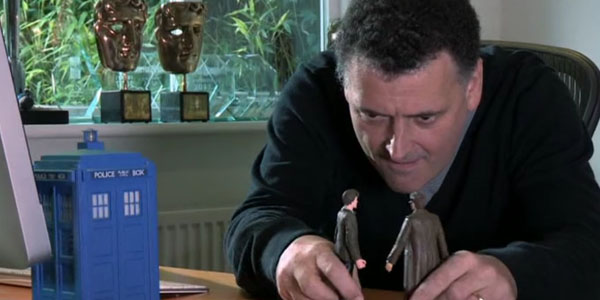
The BBC would like to think that Doctor Who is completely unpredictable; that Peter Capaldi's first series in the TARDIS is as mysterious to us as Clara was, and that the writers are magicians; plots up their sleeves, ready to make characters vanish with little more than an abracadabra. We, they think, will never see any of it coming. Doctor Who's a show that can't afford to go stale, and the team behind it pride themselves on the fact that it'll be still be on air long after they've left. But as with anything that follows a specific formula, it's really not that difficult to hazard a guess at what might happen. Writers have specific cornerstones of their work and themes that they return to like old friends. We really can cut out the torment of having to wait for the next episode of Doctor Who, just by looking at the previous ones and realising, "Yeah. It's probably going to follow the same pattern as before, isn't it?" Consider this list of the big eight Doctor Who writers since Steven Moffat took over the show. Some of them are more predictable than others of course, but they all have their tropes that they rely on in each of their episodes. Let's spill the secrets of the writing room, as we look at the things that you can always bank on the Doctor Who writers to do.

8. Neil Gaiman's Focuses On A Central Relationship (And Resolves Stories With One Of Them Channeling Power From Within)

Neil Gaiman's perhaps the most beloved Doctor Who writer of the revived series. Why? Well, it's obvious that he really is one of us, a megafan casually name-dropping subtle little references to Who's long history, whilst giving wonderfully colourful insights into how the Doctor's mind works. Gaiman uses his repeated tropes just like anyone else though. 'The Doctor's Wife' and 'Nightmare In Silver' might have had strikingly different reactions, but they both revolved around a strong relationship; the former being the Doctor and the TARDIS, the latter being two forces within the Doctor's very head. In the end of both, it was the inner strength of Idris and the Doctor respectively that saved the day; no timey-wimey, techno-babble-induced plot twist. Just the strength that the characters had all along. It's a similar story with Gaiman's fantasy epic, Stardust, which focuses on a fallen star (Claire Danes) who runs away from a group of villains trying to kill her. At a final showdown, all it takes is for the star to shine, channeling the love that she's developed for protagonist Tristan, instantly killing the witch after her heart: it's a parallel to the matrix spilling from Idris, glittering through the TARDIS to defeat House.

7. Neil Cross Will Hint At His Resolutions Through The Beautiful Dialogue
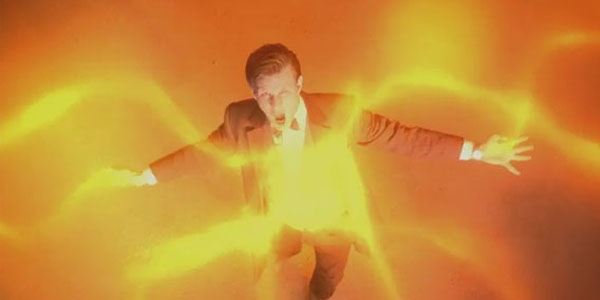
He may have only written a grand total of two stories for Doctor Who, but Neil Cross is one of the favourites to take over from Steven Moffat, when he eventually decides than enough is enough. It's easy to see why; Cross is a thoughtful, eloquent writer capable of the touchingly sad and absolutely horrifying. He's proven as a showrunner on Luther, and he's a sensible fit for Who. Like Moffat, Neil Cross tends to pull a surprising resolution out from something mentioned earlier in the episode. For example, just as the Doctor realised that he could save River after the conversation about her screwdriver, Clara realised that she could offer the leaf to the creature in 'The Rings of Akhaten'; just as the Doctor realised he could lock Gallifrey in a painting after seeing the technology, he realised that the Crooked Man in 'Hide' was just one half of a couple after contemplating how love brought Hila and Emma together. But where Moffat prefers to use sitcom-like or tragic situations that later relate in some way the resolution, Cross focusses more on the poetic, intimate scenes between a couple of characters, using his love of gorgeous language to fill out seemingly trivial conversations; the chat between Merry and Clara ('Akhaten') and the discussion in the TARDIS about everyone having a grave ('Hide') both became more important than they seemed earlier on. It's a staple of his work.

6. Chris Chibnall Concentrates On Atmosphere And Human Nature, But Won't Close A Story With Finality

Chris Chibnall is a writer perhaps less popular than the likes of Cross and Gaiman, but he's not as bad as some fans would like to make out. Though he earned new fans with last year's Broadchurch, a large chunk of viewers felt the ending of the show was a complete let down. It seems he's great at starting something, but has a little trouble on the ending. That's true of his Doctor Who work. '42' finished as expected, the brave new world of the Series 5 Silurian two-parter soon perished, to be quickly rushed to tie up all the ends, and 'Dinosaurs In A Spaceship' was fairly easy for the Doctor to solve. That's all without mentioning 'The Power of Three'. There are Who fans still seething about that sloppy ending. That's not to take away from what Chibnall actually gives to an episode though. Each of his stories are studies in human nature - or Time Lord - as he looks deeply at morals ('Cold Blood'), motivations ('Dinosaurs on a Spaceship'), and normality ('The Power of Three'). He's also a master of tension - as highlighted by his excellent work on Torchwood - it's just a pity that we can all see the resolution a mile off.

5. Gareth Roberts Always Supplies "The Sitcom Episode" (And Gives It A Happy Ending)

So far in Moffat's reign, Gareth Roberts has only actually contributed the pair of James Corden episodes, 'The Lodger' and 'Closing Time'. With his name announced as one of the writers who will be penning a story for Peter Capaldi, will we see Craig a third time? Possibly, but one thing's for sure: Roberts will be writing something fairly light-hearted. In fact, Gareth Roberts has never contributed anything too heavy to Doctor Who. 'The Shakespeare Code' was littered with Shakespearean in-jokes and flirting, with the climax revolving around channelling JK Rowling; 'The Unicorn and the Wasp' was a similarly comedic jaunt, and the co-write with Russell T Davies, 'Planet of the Dead' was a funnier ride than the other 2009 specials, and the only one to actually end with the Doctor smiling. Usually, love saves the day. It's an idea that either forces an "Awww" or a heave, depending on which Who episodes are your favourites. But it's a natural fit for Roberts. He's a comedy writer by trade, and he specialises in the more upbeat moments: when he returns this series, don't expect anything too dark.

4. Steven Moffat Preys On Primal Fears

Moffat has so many themes, tropes and recurring ideas of his work, that he could fill not just the whole of this article with just his own work, but compile an encyclopedia. As it is though, let's just pick up on the biggest theme of his stories, which runs back to his very first Doctor Who episode. Unlike most of the show's creations, Steven Moffat's monsters all rely on a fear that the audience already has. The Clockwork Droids for example hid under Madame de Pompadour's bed, and the Weeping Angels are designed to force the audience not to blink with the characters. Even into the Eleventh Doctor's era, this trait continues; 'The Bells of Saint John' makes us question technology and even 'The Name of the Doctor' plays with the audience's fear that Moffat will actually reveal the Doctor's name. Even in Sherlock, Moffat's made enemies of a taxi driver who will kill any passenger that trusts him and a man (Moriarty) who knows everything there is to know about you. He really is trying to terrify every person in the world, one episode at a time, and this looks like it won't end anytime soon: one of his episodes in the next series is said to contain the line, "When you talk to yourself... what if the person you're talking to isn't really you?"

3. Mark Gatiss Will Focus On Nerdy Details And The Power Of People
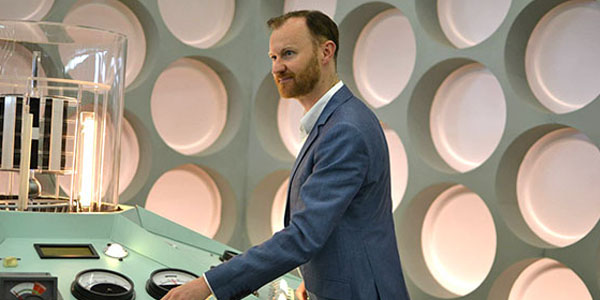
BBC's Sherlock was born from the train journeys that Moffat and his co-conspirator Mark Gatiss had on the way to Cardiff, the pair of them discussing what it would be like to pluck the Conan Doyle legend and place him in the thick of modern society. How fantastic it is, that the show was developed simply by two superfans' conversations, to and from work. It's basically fan-fiction. There's something very fan-fiction about Mark Gatiss as a writer, but there's something a lot more "historian". Gatiss sets most of his episodes in the past, and there's an unbelievable attention to detail with him; his Churchill was finely realised in real-life quotations and motives, his Victorian depiction in 'The Crimson Horror' far more believable than Moffat's in 'The Snowmen'. Regardless of whether he's actually better than the Moff or not, Gatiss is clearly a man who studies before he writes. He crafts a world before he drops the characters into it. But in the end, there's nearly always the affirmation that the characters are the strength of the piece. Bracewell defeated the Daleks by being human (well, sorta). The Paternoster Gang saved the Doctor from Mrs Gillyflower. Gwyneth sacrificed herself against the Gelth. Apparently Gatiss will be developing the Ice Warriors again this year; don't be surprised if the supporting, ordinary guy saves the day.

2. Toby Whithouse Pits The Doctor Against Other Ancient Legends To Give Him A Soul-Search

There are a lot of us out there that hope Toby Whithouse is on board for Series 8, but only if he's pitching his own work. An idea he wanted to write about in Series 5, Series 6b thriller 'The God Complex' was a quiet masterpiece; 'A Town Called Mercy' was thrust upon him though, with the executive producers getting over-excited by the idea of a wild west episode. It sadly lacked the passion steeped in his own work, though. There are basic "first thing's first" steps that Whithouse tends to take whenever he writes a Doctor Who script, whether it's his idea or Moffat's. The villain seems like a true equal to the Doctor; Kahler Jex was a war veteran who made immoral choices, the Minotaur was "An ancient creature, drenched in the blood of the innocent, drifting in space through an endless, shifting maze" and even Rosanna had a proper face-off with the Time Lord, as direct comparisons between her race and his were made. It's a simple trick that Whithouse employs; he likes to give the Doctor something to mull over, and what better way than showing him a mirror? He's also one of the funniest writers on the show. Now that he hasn't got the responsibility of writing Being Human, it would certainly be nice to see him pen a few more episodes.

1. Steve Thompson Will Always Progress Through A Story Via Plot Twists

If you know who Steve Thompson is, the chances are that you won't be looking forward to his third Doctor Who story. Since becoming the third wheel to Moffat and Gatiss's Sherlock, he's penned 'The Curse of the Black Spot' and 'Journey to the Centre of the TARDIS', both released to critical and popular disappointment. So what's actually wrong with Steve's scripts? It might have something to do with the fact that Thompson can't advance a story without a good old-fashioned plot twist; the direction of his stories tend to take so many left turns, you forget where they started out. There was one roughly every five minutes in '...Black Spot', in which the Doctor constantly altered his mind as to what was going on. 'Journey...' was equally labyrinthine: seriously, just count the twists. The Doctor never set off the timer, Tricky isn't actually a robot, those zombie creatures are them, it's not a cliff but a "snarl", the whole story never happened... and that's just focussing on the more memorable ones. It's the same with his Sherlock work, but somehow, the endless twists seem to fit a detective drama so much better. Come on Steve, give us a clear story, and then throw just one big twist out towards the end: that'll be enough. Who are your favourite Doctor Who writers? Comment below!

Contributor
Contributor

Mark White hasn't written a bio just yet, but if they had... it would appear here.