Doctor Who Season 8: 10 Ways They Could Screw It Up

Maddeningly little is really known about Peter Capaldi’s first season which kicks off in August. Should we be worried or are we in safe hands?

With its August start date fast approaching, the slow drip feed of news on Doctor Who series eight is intensifying. Yet for all the anticipation surrounding it, maddeningly little is really known about Peter Capaldi€™s first season. Those scraps that the production team have thrown us, like the Twelfth Doctor€™s costume and the announcement that Ben Wheatley (Sightseers, A Field in England) will be directing Capaldi€™s inaugural outings, have been well received. But what if that€™s not enough? What if, when it comes to our screens, series eight is a little less than stellar? Impossible, you might think! And you€™d probably be right. For the sake of argument, however, here are ten ways the production team might screw things up:

10. Can Peter Capaldi Really Live Up To Expectations?

Doctor Who The Twelth Doctor Honestly, the answer is probably yes. He€™s one of our best actors, even in complete dross like The Musketeers. What€™s more, he loves Doctor Who to an almost embarrassing extent. The chances of him fumbling his dream job are practically nil. If anything might count against him, it€™s that this is now a young man€™s show- produced at such a breakneck speed, it nearly exhausted the youthful likes of David Tennant and Matt Smith. Let€™s not forget either the backlash from the younger end of the fanbase when Capaldi was cast. The idea that a 55 year old man could make for a believable Doctor has somehow become marginally unlikely. It will be interesting to see the adjustments Moffat makes in order to sell his newly aged protagonist. On the other end of the scale, the hardcore- the types who frequent message boards and own all versions of The Five Doctors on VHS and DVD- have already begun to speculate what combination of past Doctors the Twelfth will reference. Much of the reasoning goes that because he wears a similar jacket, he€™ll be a bit like Pertwee. Or because he looks mental, he€™ll be like Tom Baker. What do these fans do if Capaldi ends up nothing like any of them? Obviously they complain. So as good as Pete may well (almost certainly) be, he€™s going to struggle to please everyone.

9. The Colin Baker Factor

Steven Moffat has described the Twelfth Doctor as a €˜fiercer€™ incarnation, a more alien one. Now, we naturally expect each Doctor to contrast with the last. That said€the last time we got a fiercer, more alien Doctor, the results were€mixed. If by mixed, you mean €˜cancelled€™. Colin Baker was hamstrung by issues outside of his control, but there are still parallels between him and Capaldi. Baker was older than his predecessor, who at the time was the youngest ever Doctor. Baker inherited a companion. And Baker, as might be the case with Capaldi, portrayed a frighteningly unpredictable Doctor. This didn€™t work particularly well in the 80s- introducing your leading man by having him strangle a helpless young woman usually doesn€™t- so what are the chances for today€™s production team? While it seems unlikely they€™ll commit a gaffe that show-killing, the contrast between Capaldi and Matt Smith will be measured by his relationship with the companion. If Moffat misjudges this, he€™ll alienate those fans for whom Clara is their €˜window€™ into the Whoniverse. And if history is any guide, it would take over a decade in the wilderness and a fully blown reboot to get them back€

8. Jenna Louise Coleman

It€™s fairly common for a Doctor to be survived by his companions- that€™s been the case with all but Troughton, McGann and Tennant. Although the companion stays the same, the new Doctor serves to recontextualise their role in the series. Take Peri, for example. With Peter Davison she was a fairly nondescript peril monkey. With Colin Baker, she was one half of probably the most unpleasantly dysfunctional couple in TV history. Moffat has already hinted that Clara€™s relationship with the Twelfth Doctor will be very different, but will it remain as effective? Or rather, can it remain as effective, now that her story has been wrapped up? She does all the required companion-y things, and Jenna Louise Coleman does them with style and charm, but she€™s not a character you can imagine existing outwith the show, as you could with Rose Tyler or even Amy Pond. That may be moreso the case in Series Eight, where her basic role will be to reassure viewers that this is still the same show they always loved, even with a strange new leading man at the helm. She€™s not the focus anymore- so it€™s easy to see any further character development being stymied. Then there€™s the question of chemistry. For all the criticisms of the €˜Impossible Girl€™ storyline, the interplay between her and Matt Smith was always enjoyable. Things will be different with Capaldi. And if they don€™t click, Series Eight might just not work.

7. Too Many Companions?

As more information trickles in about series 8, we€™ve learned that not only will Clara be returning, but she€™ll be joined in the TARDIS by Samuel Anderson as Danny Pink, and later in the series, by Ellis George as Courtney. And of course, the Paternoster Gang are going to be right there in episode one. So that€™s at least six companions. Overkill? Well€ When Moffat ascended to the hallowed heights of showrunner, his detractors dug up this controversial interview from the mid-90s, in which our man (more than a little intoxicated) proceeded to diss almost all of classic Who. The only era he claimed particular fondness for was the Davison years- which is a fascinating, and in many ways crucial insight. Now, the Davison era is far from the show€™s nadir, but it introduced several profoundly unpopular changes to the series, chief amongst them an expanded TARDIS crew. With Davison, there were always three companions at any one time- and none of them got more than a shred of development. Moffat, unconsciously or not, is copying that formula. He€™s undoubtedly a better writer than Eric Saward or anyone of that vintage, but six characters is a tall order, and giving each of them enough story may distract from the centrepiece of the season- which of course, is Capaldi.

6. Too Much Continuity?

Said Moffat, €˜for the first time since 1984, the Doctor Who production team is heading to Lanzarote. The Doctor is returning to the scene of an old adventure€™- upon which a million/fifty fans immediately piped up €˜Sarn?€™ Well, probably not. But continuity seems to be encroaching on the show in a way we haven€™t seen before. Moffat has already suggested he€™s going to tie Capaldi€™s other Whoniverse appearances into the Twelfth Doctor, even if the only people who particularly care are those fifty fans. The fact is, viewers understand that the world has a finite supply of actors, and occasionally they might turn up as different characters in the same show. It happens all the time in soap operas. It€™s even happened before in Doctor Who, with (parallel!) Colin Baker gunning down Peter Davison in Arc of Infinity. And if John Nathan Turner, of all people, didn€™t bother to explain the discrepancy, why should Moffat? Rumour has it we€™re also getting the Daleks and the Master again, plus we already know the Paternoster Gang are back. The Time Lords will probably have to be addressed as well. Oh, and River Song€™s still knocking about. Sigh. It€™s probably no coincidence that Doctor Who was at its most popular (the Tom Baker/Eccleston/Tennant eras) when it had none of this excess baggage weighing it down. Having such a rich mythology to draw on must be hugely tempting, but Moffat would be advised to keep the focus on story first, continuity nods second.

5. Mark Gatiss Is Back...

Aside from Moffat, Gatiss is the new series€™ longest serving writer, which is a bit of a mystery considering he rarely strays beyond €˜competent€™. At his best, he€™s come up with decent facsimiles of old Who- The Unquiet Dead is zombified Hinchcliffe/Holmes, Victory of the Daleks a cheeky act of theft from The Power of the Daleks- but at his worst, which he commonly is, his stories embody the mid-season lull- nobody remembers The Idiot€™s Lantern, nor do they want to remember Night Terrors. Up until last year, Gatiss had been restricted to one script per season. Perhaps because of his close association with Moffat- they co-created Sherlock together- this was upped to two for Season 7b, with Cold War and The Crimson Horror both passable adventures. That€™s fine if you have a well-established Doctor popular enough to weather middling fare, but when you€™re essentially rebooting the show, you need something bolder. So the news that Gatiss would be contributing another two scripts to Capaldi€™s inaugural season is hardly cause for celebration. Worse still is the possibility that Gatiss€™ increased involvement with the series (witness also his over-rated anniversary biopic) points to him replacing Moffat- which could be sooner rather than later. Let€™s be clear- Gatiss is a solid writer outside of Who. But his tendency towards nostalgia isn€™t right for a series that, we€™ve been promised, is going to embrace sweeping changes along with its new leading man. It may just stall any momentum Doctor 12 manages to generate.

4. The Series Length

Come August, we€™re back to a continuous run of thirteen episodes, which many fans have taken as a good thing. Admittedly, there is something just right about Doctor Who running in the autumn- the longer nights are perfect for the Gothic tinge we€™ve been promised. In other ways, however, a longer series is not such a good thing. The need to fill thirteen slots in the production schedule will almost certainly result in the return of those unloved mid-season clunkers. The first few, phenomenally successful, series of NuWho usually experienced a ratings slump mid-way through their runs. Nowadays, the popularity of iPlayer means that the number of viewers who watch a programme as live counts for less than it did even in 2005. There are still legitimate problems with a straight thirteen episode run, though. It€™s no coincidence that those slumps occurred around episodes 6 or 7. Logic dictates that you push your big crowd-pleasing episodes to the beginning and end of the series, when most people are likely to tune in. That€™s also where you stick the budget. Everything after that€well, how often do The Long Game, The Idiot€™s Lantern and The Lazarus Experiment crop up in the average Whovian€™s all-time top 10? By their very nature they€™re lacklustre. Moffat€™s split seasons were criticised, but they achieved a more thorough consistency of quality. In that format, we effectively got four mini-seasons of crowd-pleasers. To go back to the old model seems€frankly baffling.

3. Stunt Casting

Frank Skinner Doctor Who It€™s absolutely a necessity that Doctor Who attracts big name talent, especially when it€™s competing with small name talent on ITV. There are some occasions, however, when this can veer into disaster. Comedians just don€™t seem to get sci-fi- see Peter Kay in Love & Monsters, if you can stomach it- which is why the casting of Frank Skinner smacks ever so slightly of stunt casting. Now, Skinner is a fully paid up Doctor Who fan, but he€™s not known for dramatic work of any kind, so his inclusion in Series 8 can, at the moment, be considered nothing but a play for tabloid attention. Dodgier still is news that Foxes will be acting/singing in one episode. Yes, that Foxes. That Foxes that no-one has heard of. Apparently she€™s a lady pop star, but isn€™t everyone these days? Now, lest we forget, the history of singers in Who is even less distinguished than that of comedians. There€™s Leee John enunciating woodenly in Enlightenment. Much later, we got Kylie in Voyage of the Damned and Katherine Jenkins in A Christmas Carol, both of whom were€well, they were what they were. Pretty, but not overly gifted in the thesping department. The flipside is Billie Piper, a much better actress than she was a singer. But Foxes isn€™t playing the new Rose Tyler. She€™s in one episode and she€™s singing a song in it. If she had any fans, would even they want that?

2. Can The Same Production Team Reinvent Itself?
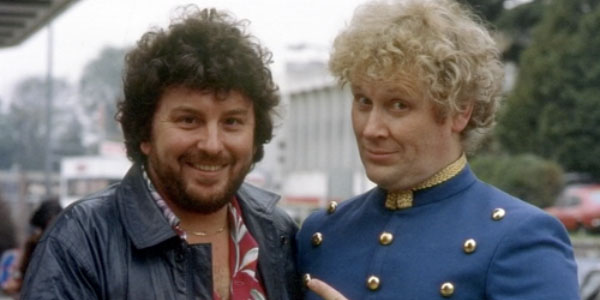
One reason the transition between Tennant and Smith worked so well was because the style and tone of their stories was markedly different. The danger that Moffat would be negatively compared to Russell T Davies was largely neutralised because Moffat wasn€™t trying to copy Davies. But now that Moffat is presiding over a change in leading man, he faces a difficult problem. If he tries to change things up, he€™ll be going against his natural instincts as a writer- which rarely leads to happy results. But if he keeps things the same, he€™ll be running up against the need for Doctor Who to periodically reboot itself. What we might end up with is something a little like the bad old days of the Colin Baker era. The major problem there was that the same creative hands- John Nathan Turner and Eric Saward- who had been responsible for the Davison years were attempting to rewrite their own blueprint. This led to some spectacularly half-formed decisions, like Baker€™s jacket, the sort of thing designed to scream €˜change€™- if only for change€™s sake. These masked a lack of fresh ideas, giving the era an essentially moribund feel. All the mistakes of the Davison year were repeated, even exacerbated. What was needed was a completely new production team who could objectively judge what worked and what didn€™t. Twenty years on, Doctor Who finds itself in a worryingly similar position.

1. Has The Show Gone On Too Long?

The new series€™ continued success is frankly remarkable, considering the average lifespan for its family drama stablemates. Consider the way it€™s been scheduled. Since Matt Smith€™s second series, we haven€™t had a proper run of Who- each season has been split into two, which has done much to increase demand for a show that, in the Tennant years, was essentially everywhere. However, just because it can go on doesn€™t mean it should go on. Consider this- the series is now very close to tying up all the threads left dangling in Series One. The Time Lords have returned (sort of), the Time War has been averted (sort of) and now Gallifrey is back. If Moffat chooses to square that one away, the show will have returned to its status quo. It will have lost the dramatic urgency that powered it all the way towards Matt Smith€™s regeneration. Instead of ploughing on, maybe it would be nice to put a cap on the new series. That way, future viewers could go back to it and watch it all as a piece- rather than the aimless mess that the classic series came to resemble in its later years. That€™s not to say the show can never return. Of course it can. At this point, Doctor Who probably can€™t die. But there would be no harm in resting it, then rejuvenating it when a new and meaningful story can be told. Better that than another slow fade into cancellation.

Contributor
Contributor

I am Scotland's 278,000th best export and a self-proclaimed expert on all things Bond-related. When I'm not expounding on the delights of A View to a Kill, I might be found under a pile of Dr Who DVDs, or reading all the answers in Star Wars Trivial Pursuit. I also prefer to play Playstation games from the years 1997-1999. These are the things I like.