Doctor Who: 10 Best Episodes Of Nu Who
 A while back I wrote an article about the ten worst episodes of Nu Who. I stand by all the criticisms I brought up in that article, but I decided that I'd also like to balance it out, karmically speaking. Why focus on the negative all the time? (Answer: Because when I joined the Doctor Who fandom, the contract I signed in blood specifically stated that I must complain as loudly and vehemently as possible. It is our way. Don't get me started on who's going to play the Twelfth Doctor. It could be my favorite actor in the world and I'd still hate him.) Anyway, I thought it would be nice to write about the things I enjoy rather than the things I hate. What a novel concept. So without further ado, here are the ten episodes I'd like to celebrate as being the very best that Nu Who has to offer.
10. The Waters Of Mars
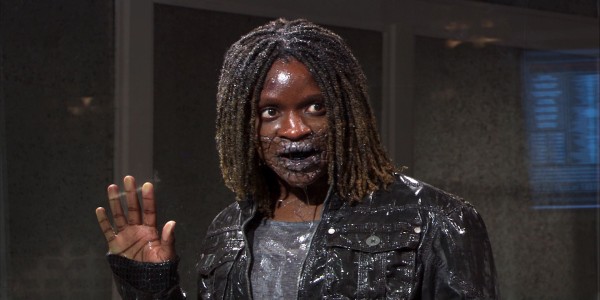 Hands down, the most frightening episode of Doctor Who. Ever. The images of the people infected on Mars will haunt me in my sleep forever. I can't imagine what it would have been like to see this as a child, I think I would be perma-hiding behind a blanket. Which is, for Doctor Who, possibly the highest form of praise. If they're not hiding behind the couch, you're doing it wrong. It's a genuinely frightening story, to be sure, but it also deals with some deeper themes. We always hear the Doctor talk about why he can't change fixed points in time, why it's so important to respect the flow of time and not alter things even if he really really wants to. But this is the episode where we see why. The Doctor gets cocky and actually a bit unlikable, which is not unheard of but definitely a risky move that could potentially alienate viewers. He decides that after all the things he's done, why shouldn't he be able to muck about and do whatever he likes? To essentially be a God? " Whoa there, cowboy. Slow down," the universe says, and brutally slaps down whatever scheme the Doctor was trying to pull off. With the suicide of a major character, by the way, which is not something that happens on Doctor Who every day. It's a dark, intense story which paves the way for the Tenth Doctor's downfall. Great television.
9. The Pandorica Opens/The Big Bang
 Alright, so this is right about when Moffat started writing rubbishy season finales where everything is solved using time travel as a crutch. But this one is so much fun it almost doesn't matter. I don't know how Rory ended up being brought back as a Roman Auton (like he said, it's very distracting), but it does wonderful things for his character. With the transformation of Rory from being the hen-pecked, downtrodden boyfriend to the Lone Centurion, he becomes an iconic companion. Although normally I'm not a huge fan of the Doctor grandstanding, it really works for me in this episode because even he knows it's a bit of a stretch. He gets done with his huge dramatic speech, and then he says, "That ought to buy us a half an hour." It's forgivable because he never legitimately thinks that him being there is going to stop the alien invasion, but it is going to make them waste some time while they discuss strategy. Finally, when they put the Doctor in the Pandorica, the image of him helplessly dragging his feet is really powerful and sticks with the viewer for quite some time. Everything in the museum is awesome, from Rory saving the day to Amy's Doctorish way of figuring out how old the little version of herself is (although really there probably should be some kind of consequence when she touches Young Amy because didn't the Doctor kind of make a huge deal about that kind of paradox with Rose in Father's Day but anyway that's not the point). It's a big, grand finale, the perfect end to what is my favorite season of Doctor Who.
8. The Empty Child/The Doctor Dances
 Doctor Who lives and breathes on the strength of their inventive, scary creatures, and this episode features one of the best. It's pretty unique for the series, because it's not even a villain -- in fact, you could argue that it's just trying to help. But it creates one of the creepiest things that has ever existed on Doctor Who: the gas mask kid. Moffat tends to overuse his catchphrases, but it's pretty fair in this case. Can you imagine a little kid with a gas mask coming up to you and asking if you're his mummy? This episode is filled with brilliant little moments. I love that they built an entire nightclub set just so they could do a "Seen anything dropping from the sky lately?" joke. I love the strength of Nancy's character, even before we get her big reveal, when she squares off against the rich man they'd been taking food from. I love the utter ridiculousness of the banter between Captain Jack and the Doctor when they're in the hospital running from the little boy. I love that at the end of the episode, one of the hospital patients regrows a leg. This is a great episode, with great one-off characters, great writing, and a fantastic backdrop of London during the Blitz. It's pretty much a perfect Doctor Who story, and I can't think of a single thing I would change about it.
7. The Eleventh Hour
 For me, this is the absolute best post-regeneration episode ever. Matt Smith had some pretty big shoes to fill, coming on the heels of one of the most popular Doctors ever to play the role. But within the first five minutes of the episode, you're totally on board with him. If you were worried about him being too young for the role, that's the furthest thing from your mind right now. He comes off as a breath of fresh air, a youthful burst of energy after a Doctor who had been so wearied by the time he regenerated. His interactions with young Amelia are priceless, and you can at once see how he's different from his predecessor. For some reason, I can't imagine Ten sitting down and having the conversation Eleven has with Amelia about the crack in her wall. There's a subtly different vibe to the situation. While the Prisoner Zero story isn't the strongest, I love how it brings Amy and Rory into the fold. Interestingly enough, although Amy is the primary companion, Rory is the one who seems to intuitively realize that something weird is going on and investigates. They're a great team, right from the beginning.
6. Blink
This has to be one of the strongest examples of a really well-done time travel story in Doctor Who. Because although the show has always revolved around a time traveller, it wasn't until Moffat came around that they really started experimenting with all of the possibilities a non-linear storyline has to offer. And as far as confusing timey-wimeyness goes, this is the gold standard. Superb lead character in Sally Sparrow, who pretty much carries the episode. Sympathetic and engaging supporting characters, especially poor Billy Shipton. The scene in the hospital where he has until the rain stops is a perfect example of how to do emotional without getting all melodramatic with soaring music brought to you by Murray Gold. There's also probably the best Nu Who monster in the Weeping Angels, who are never more terrifying than they are in this episode. It was incredibly clever to include the audience in the story -- even we never see the Angels move. I wish this had been carried over into the other episodes with the Weeping Angels, because they was far more unsettling in their original appearance. Regardless, it's hard to find much to complain about with this episode -- it's pretty much perfect.5. The Girl In The Fireplace
 The Girl in the Fireplace features some of the highest production values Doctor Who has ever seen. It combines pre-revolutionary France with a futuristic spaceship, and manages to present both in a believable manner. I think it's interesting that once again, Moffat writes an episode that doesn't really feature a villain, just technology executing the protocol it's been designed to follow. Sophia Myles takes what is on paper just another historical figure, and turns it into a three-dimensional, believable human being. Madame du Pompadour is a fascinating character, and I genuinely feel that she would have made a great companion. Not to mention the chemistry she had with David Tennant -- although that's hardly surprising, given that the two of them were an item at the time. Ultimately this is just an incredibly well crafted episode of Doctor Who. The aesthetics are gorgeous, from the sets to the costumes to the fabulous design of the clockwork men (the Doctor was right, they are a thing of beauty). There are some fantastic one-liners, as well as really poignant dialogue between the Doctor and Reinette.
4. Vincent And The Doctor
 This is to date one of two Doctor Who episodes that have made me cry. You might argue that making people cry isn't necessarily the function of Doctor Who, but I think having that much of an emotional connection shows that the actors and writers were doing something right. Tony Curran knocks it out of the park as Vincent van Gogh, and it's hard not be touched by his story. Amy is at her most likable in this episodes, as she immediately bonds with the misunderstood artist. The cinematography is gorgeous, and Doctor Who has never looked more vibrant and alive. Add in a well-placed cameo from Bill Nighy and a perfectly executed commentary on mental illness, and you've got one of the best episodes that's come out in years. It might be a bit less science fiction than most people like their Doctor Who, but for me it hits all the right notes.
3. The Doctor's Wife
 There are people who believe that the Doctor should never be in a sexual or romantic relationship. I would not go so far as to say that, but I do believe that he has more chemistry with his TARDIS in this one episode than he's had with any companion he's ever had in the entire fifty year history of the show. I ship Doctor/TARDIS. There, I said it. Thank you, Neil Gaiman and whoever decided that you should write for this show. It's everything I want out of life and more. It's to the credit of the fantastic writing that I can immediately buy Suranne Jones as the human incarnation of the TARDIS, something that until now had only been vaguely defined as quasi-sentient. But when you give her human form, they've suddenly got this immense history, this incredibly personal relationship that's just been under our noses for the past fifty years. It's genius. With the introduction of new ideas to the Time Lord mythos and the revisiting of old control rooms, this oddly feels more like a love letter to the show than any of the anniversary specials have.
2. Midnight
 I love Midnight for so many reasons. I appreciate the fact that it's written and performed more as a play than a traditional episode. For the most part, all the action takes place in one room with one established set of characters, so there's a sense of claustrophobia that pervades the episode. I love that at the end of the day, we never get to see the monster. Do we really need to? The people in the room have proven that humanity is as much of a villain as anything else, with their sudden reversion to mob mentality at the first sign of crisis and their willingness to kill an innocent man. But the thing I love most about this episode is that we get the chance to see the Doctor at his most vulnerable. The creature in Midnight attacks by repeating everything you say, then by saying things in unison, until you're finally stuck repeating what it says. This might seem like kind of a lame superpower, but we have to remember that this is the Doctor. He isn't an action hero, he's an intellectual, a negotiator. In a very real sense, all he has are his words. And to see him stripped of his ability to speak, powerless to do anything but parrot words, is terrifying for both him and the audience. Brilliant, brilliant episode, and proof that the budget-saving episodes can be just as good (if not better) than the big, expensive ones.
1. Human Nature/Family Of Blood
 Interestingly enough, this story was originally a novel written for the Seventh Doctor. It would have been cool to see it played out with Sylvester McCoy, but it's hard to deny that it's the perfect story for Tennant's interpretation of the Doctor. He's always been the one who tried so hard to be human, so it's interesting to see what happens when he gets his wish. And honestly? He's kind of a dick. A product of his adopted age, he's dismissive of Martha because of her race and position, and he sanctions the beating of one of his students. He's weak and emotional, with all of the flaws of humanity. But it works well, because this is probably the episode in which the Doctor is the most reliant on his companion. Martha rises to the challenge marvelously, proving once and for all that she's a much better character than people give her credit for. Harry Lloyd does a magnificent job as the main villain of the piece, and his speech to the headmaster about World War I is incredibly chilling. There's such a tense and foreboding atmosphere, knowing that this is 1913 and in less than a year these little boys will be off fighting in France. It terms of emotionally evocative writing, this has to be right up there with the best of Doctor Who.