Doctor Who: 10 Historical Figures That Need To Be Explored
These 10 famous historical faces are begging to get the Doctor Who treatment...

The 'celebrity' historical episode, in which the Doctor and crew mingle with famous faces from times gone by, has been a staple of Who since its inception - as early as its fourth ever serial, Marco Polo (no points for guessing who featured in that one). It's no surprise, then, that since the 2005 revival, we've seen one of these episodes in almost every season, sometimes more than one.
There's a certain excitement to the What If? scenarios the show's format is able to pull off. What if Charles Dickens really did encounter ghosts? What if Shakespeare did battled the three witches at the Globe Theatre? Or the much anticipated answer to the question we'd been asking in unison for a great many years: What if Agatha Christie faced off against an angry 8-foot megawasp?
You might think that, over its many years, Doctor Who has dropped almost every significant historical figure into the middle of an alien plot - but there are still plenty of famous faces from the past that simply need to be featured in the show.
There's so much potential that's been untapped as of yet, as well as some quite frankly obvious fits for the show that you won't believe haven't been done already. Which brings us to this list - who knows, maybe if we shout loud enough, some might even turn up (a couple of years ago, Nikola Tesla would have topped this list, so fingers crossed for more wish-fulfillment).
Some of these famous faces are included due to unsolved mysteries surrounding them, some because their period of history is too interesting to pass up, and others would simply make for some excellent chemistry and/or rivalry with the Doctor. It's also important that a story can be built around them, playing with both the characters and their historical setting, which, for fun, we've tried to do for each entry (BBC, you can have any of these for free - just give me a job).
Some of these characters may have appeared in expanded media over the years, or been referenced in TV episodes in the past, but they are yet to have a starring role on the show itself - so they will still be included. Buckle up and dust off your history books, we're going in.
10. David Bowie

This might seem like a strange choice, but it would be interesting to see the show take on a more recent historical figure, and break the mold with a musician - something a little different. Bowie often tops lists of dream castings for The Doctor, and it's not difficult to see why - he has a certain quirky, unearthly quality that would lend itself very well to the show.
In fact, Eleven once traveled with character called Jones in the Titan Comics range (Jones was essentially a royalty-free Bowie, a way to insert the famous popstar without having to directly acknowledge what they were doing), and his run as a companion in that series is evidence enough that this would work, in its own totally weird way.
This is a historical figure that would better suit being dropped into a futuristic or space-based episode as a one-time companion, rather than a historical, so that we could see him in his element, and witness the events that would go on to inspire him to write the likes of Space Oddity and particularly Starman, which feels as if it's written for a certain time-travelling hero.
You could adapt one of The Doctor and Jones' stories to the screen, here. The SERVEYOUInc story arc, in which The Doctor and company face off against a creativity-stifling galactic corporation and a demonic talent scout by playing them at their own game, is a popular choice (especially given, without spoiling too much, it could give the character of Bowie the opportunity to take over The Doctor's role, even briefly).
9. Amelia Earhart

Of all the entries on this list, this is perhaps the most surprising given most would expect this famous aviator to have appeared in the show already. Alas, for reasons unbeknownst to us, she has not - though Torchwood arguably tried something very similar with Out Of Time, which focused on a lost group of aviators from the 1950's who had slipped through the Cardiff rift and into the present day.
The disappearance of Amelia Earhart and her navigator Fred Noonan in 1937 is another of the world's most notorious unsolved mysteries - with a multitude of theories posed as to what exactly happened during their final flight over the pacific ocean, but no solid conclusion agreed on to this date, almost 100 years later.
Now, it would be easy to write a story about The Doctor trying to prevent the events of that day, or even trying to stop their companion from altering one of those narratively convenient 'fixed points in time', but what if the story took a different route entirely? After all, Earhart disappeared completely, she could be anywhere in the universe, why limit ourselves to Earth?
The Doctor could find her on some faraway planet, having flown through some kind of wormhole or rift, still exploring and surviving - something of a River Song character. This could provide a real twist on the historical format, giving us a character that has already adapted to the new, strange world they've found themselves in - maybe even to the point where they'd be more knowledgeable about the planet in question than the Doctor, and if any character would suit this, it's Earhart.
8. George Washington

The American Revolutionary War is another historical setting that fans have been asking after for some time, and with Doctor Who finally achieving some mainstream popularity overseas in the last decade, visiting what is arguably the most significant period in America's history seems a surefire hit.
It's a rich period of history that seems to often be skimmed over in the show - perhaps because Great Britain spent much of this century terrorising the rest of the world and generally being the bad guys all over the place. This might be a period the writers aren't keen on visiting, but dropping a British companion into this time period to witness what the rest of the world thought of us could be interesting.
The star of the show here would of course be George Washington, leader of the patriot forces in the war for independence and eventual first president of the United States, but there are plenty of other famous historical faces that could show up here: Benjamin Franklin, Thomas Jefferson and Alexander Hamilton to name just a few. Have the Doctor and the gang present at the signing of the declaration of independence and you'll even have the opportunity to mark down a full house on your founding fathers bingo card.
We have one particular little tidbit of historical mystery that the show could latch onto and develop too - there was a widespread abundance of body-snatching around this time, with fallen soldiers mysteriously disappearing from their graves. Whilst this has been attributed in the past to medical professionals stealing away cadavers for research and dissection purposes, this is exactly the kind of intrigue that the show could dig its teeth into and put its own spin on. You could also explore Washington's less heroic side, as the man is known to have owned slaves.
7. Minamoto Yorimoto
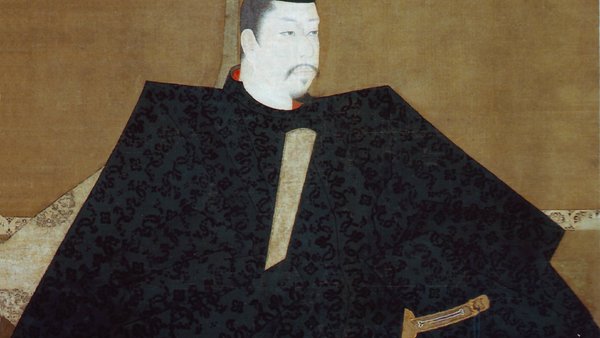
A visit to Feudal Japan is long, long overdue for the show, which has often seemed to shy away from Asian history. A shame, given the interesting nature of this period of history and the unique setting it offers, both culturally and aesthetically.
We deliberated over which figure from this period could make for an interesting plot, before finally settling on Minamoto Yorimoto, a famous shogun (military leader) who ruled Japan in the late 12th century. He was responsible for forming the first shogunate, which was a military-led system of government that would would continue in Japan for around 700 years. This was a time in which conflict was rife, with rival clans warring on a near constant basis, vying for power. Only the most skilled warriors and samurai rose to power as the ruling elite.
There are many directions in which the writers could take this plot, and many parallels that could be drawn with certain races from the Whoniverse, which is why, for this particular plot, we'd love to see the Cybermen involved. It wouldn't be hard to write in an stranded platoon of stompy metal boys, nor difficult to explain their motives for seizing power.
It's rare we see the Cybermen in an episode set in the past, especially this far back, but if any military force in human history could give the Cybermen a run for their money, it would be the Samurai. Plus, imagine the possibilities should the Cybermen attempt to fight fire with fire and convert their foes - there is not a person on this green Earth that can tell us that a Cyber-Samurai wouldn't be at least a little bit cool...
6. H.P. Lovecraft

Whilst the show does tend to overdo the 'events that inspired the author' trope, watching the imagination of this particular historical writer come to life is simply to good an opportunity to pass up. One of the best regarded authors in horror fiction history, H.P. Lovecraft was the mind behind the 'Cthulhu Mythos', a fictional universe in which ancient cosmic horrors and monstrous, beast-like deities plague humanity.
His works have inspired countless writers, directors and artists and are considered amongst the greatest horror stories of all time. His creations would not be at all out of place in the Whoniverse, and watching The Doctor take on Cthulhu would be something else.
The man himself was an interesting and tragic character, suffering from a deep depression for much of his life. His father was taken to an institution for mental illness when he was just three years old, and Lovecraft himself was sickly recluse for much of his life and would fail to achieve widespread fame or financial success during his lifetime. Lovecraft also had some strong conservative views that could make for a less positive representation of a historical figure for once.
5. Alan Turing

Turing was a master code-breaker for the Allied forces during The Second World War, and is credited with helping to win the war. His work on cracking intercepted Nazi coded messages is estimated to have shortened the war by around two years, saving the lives of millions. He is also considered to be a visionary in the fields of computer science and artificial intelligence, with his work inspiring the machines we use today.
Despite this, Turing was not highly regarded at the time due to his homosexuality, and despite his extraordinary service to his country, he was charged and punished accordingly. He would commit suicide with a cyanide-laced apple two years later, though it is debated he may have also accidentally poisoned himself with noxious fumes, or, rather more worryingly, been assassinated by the British Government.
There's certainly no shortage of story to tell here, and if done right, this man's heroism in the face of injustice, as well as his eventual fate, could make for one of the most touching episodes of the show to date. Despite having a huge roster of gay characters, the show is yet to focus in on the hardships for homosexuals through history, which is somewhat surprising.
In terms of Who-ifying the episode, this would be one of the cases where the alien threat is the secondary plot, but it should be resolved through Turing's code-breaking knowledge. We think we know the aliens for the job. The Kasaavin are a race which, firstly, are adept in the use of spycraft, and secondly, felt underused and under-explained (no surprise there) in their first appearance. Make the story a spiritual successor to Spyfall and you might just fix the holes in that episode by proxy.
4. Socrates And Hippocrates
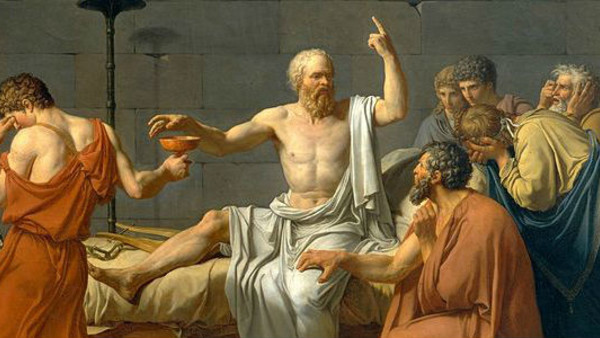
Ancient Greece. How, in a show about time travel, has one of the most interesting and significant eras of history barely been touched upon? (The answer is probably, as it is in most cases, budget. But still...). Ancient Greece was arguably responsible for the very inception of western civilization, politically, philosophically and culturally. It is, to this day, referred to as the birthplace of democracy.
The other thing Ancient Greece is most synonymous with is its deep, sprawling mythology - there's enough material for Who to work and gel with to set an entire season in this single time period: the Minotaur, Midas, the Cyclops, Icarus, Prometheus... the list goes on, though our vote goes to Medusa. An alien who turns people to stone just by looking at them almost feels like it was created for the show.
But who would you take along for the ride? After all, this is a list about historical figures. Writers and painters are overdone - it's about time the show gave us something different - a philosopher (and this period of history is the right place to look for such a person).
Socrates is the obvious choice here, a man who could really get to the core of who the Doctor is, especially if we find our protagonist in one of their many 'Who exactly am I?' phases (and, lets be honest, those do seem to happen fairly often). Socrates was a man focused on logic, results and reasoning, and could probably rival the Doctor in terms of solving the puzzle of the week.
Whilst we're on the topic of rivals for the Doctor, why not bring in the forefather of medicine, Hippocrates - arguably the most famous physician in history (a man who might take some issue with The Doctor's chosen name...). Whilst there is no evidence of these two Greek luminaries being acquainted, they were alive at the same time, so it's not too much of a stretch - and putting them side by side, whilst slightly cheating for the purposes of this list, is just far too tempting. With these two in his gang, The Doctor could probably afford to put his feet up for a week and let others do the work for once.
3. Jack The Ripper

This one may have to be handled delicately...
Jack The Ripper would perhaps be better explored in Torchwood than Doctor Who, but with some small adjustments and some toned-down brutality, the show could still make a good stab at a plot exploring this infamous serial killer. Jack The Ripper, remains, to this day, one of the most famous unsolved mysteries of all time - something that can, in typical show fashion, be explored and explained away.
Making Jack The Ripper an alien is perhaps to obvious, though you could build up to this reveal, with our protagonists assuming they are tracking down an alien, only to put a twist on the formula with a chilling reveal that this monster really was human all along.
We all know that the show loves to visit Victorian London at every opportunity, but this is an opportunity for a very different kind of historical episode - one that leans very heavily into the horror aspects of the show. It could make use of the Paternoster Gang too - after all, it makes sense that Vastra would already be on the tail of the most notorious serial killer of the time, being a detective and all (plus this would be a dark episode in dire need of a little comic relief in the form of everyone's favorite potato, Strax).
Alternatively, for a different take, we know Torchwood would have been established by this point - which could be the source of some conflict for the Doctor if he chose to work with them. Come to think of it, why not include both Torchwood and the Paternoster crew? Two rival detective agencies with different values racing to track down the killer could be very interesting, especially if the latter's methods were bordering on unethical...
2. Grigori Rasputin
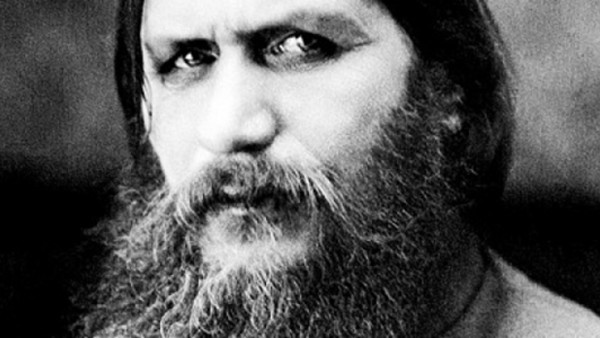
Grigori Rasputin was a Russian mystic who built considerable influence in the court of Nicholas II, the last emperor of Russia, manipulating Nicholas and forming a close bond with his wife, the Tsarina Alexandra. He was believed by many at the time to have holy powers, and Nicholas and Alexandra believed he was responsible for keeping their hemophiliac son, Alexei, alive.
He is also said to have been a master of hypnosis, building a large following of admirers despite his disheveled appearance. After the outbreak of World War I, Rasputin became the puppet master for Russian affairs - rebuilding the court with those loyal to him and extorting citizens for money.
When calls for a revolution began to gain traction, Rasputin was top of the hit list, and he was assassinated in December of 1916. He was offered cakes laced with cyanide, as well as three bottles of wine, but he refused to die despite consuming five times the amount of poison to kill a man (in fact, he barely reacted). After being shot twice, he appeared to rise from the dead, but was finally put down by a further shot to the head. His body still appeared to be twitching, so he was beaten savagely, tied up in a bag and thrown into an icy river.
When his body eventually washed up, it appeared he had made an attempt to escape the bag he was tied up in, suggesting he had initially survived a gunshot to the head. The Tsar and Tsarina would soon follow him in death, prompting the rise of the Bolsheviks, and of communism, in Eastern Europe (though that's a different story in and of itself, and one equally worthy of the Who spotlight).
Classic series fans may be familiar with The Meddling Monk, a rogue Timelord who frequently opposed the Doctor. This is the most obvious opportunity in the history of obvious opportunities. A manipulative monk, with some degree of psychic ability, who is also remarkably difficult to kill. We're still not entirely convinced Rasputin wasn't a Timelord...
1. Leonardo Da Vinci

Leonardo Da Vinci is by far the most frequently suggested historical figure for the Doctor to visit. As an acclaimed artist, sculptor, engineer, scientist, architect and some would even argue philosopher, Da Vinci is perhaps the single most remarkable mind to have ever lived.
He was years ahead of his time, designing flying machines, tanks, solar panels, parachutes and even the helicopter centuries before the engineering world had caught up enough to construct such things. Put simply, he was a man out of his time, born 500 years too early.
Perhaps the show could work a story around providing a timey-wimey explanation for this, or take the Vincent Van Gogh route of taking him to the present day, where many of his ideas and concepts have been made a reality. Either way, this is one of those episodes where the monster-of-the-week takes a back seat to the guest star.
The renaissance period of history is very under-visited in Doctor Who, considering its rich potential and intrigue, and Florence was at the epicentre of this remarkable artistic and cultural explosion. There were plenty of other historically significant individuals alive at this time - in fact, Michelangelo reportedly detested Da Vinci and the two had somewhat of a rivalry, despite only meeting eachother in passing. This could be explored in show also, playing similarly to the Tesla/Edison conflict in Nikola Tesla's Night Of Terror.
BBC, just do it already. Pretty please.
Watch Next
Doctor Who: How Well Do You Know The Time Lords?
