Doctor Who: 10 Lessons It Could Learn From Other Shows
 Doctor Who is a sci-fi staple. Almost fifty years in the making, the legacy of its long run cannot be denied. It is so hard to criticise the very show that has been here since our childhoods, that we clutch on to still. From the childish delight of Dalek toys to the ruminations of fans on Gallifrey Base and beyond, Doctor Who provides something magical. Despite this, the show has one fundamental flaw: it fluctuates and changes far too frequently. For this reason, it could learn so much from many other successful shows that could take the show to new heights. From the teen dramas that might be a little lacking technically but still provide their own lessons to the messages of the wider sci-fi genre, there are so many pathways still to be explored. In some ways the differing paths that the show has followed throughout the years adds to the excitement the show can bring a viewer, allowing it to have a certain spark that is so often missing. This article will also explore the lessons the Doctor and his show can teach us all, especially those producer types among us. So, despite all the criticism or negativity surrounding the show, it remains something special - remember that. A bad break-up and a lavish helping of Ben and Jerry's or simply a night in with the comforting glow of the silver screen: the Doctor can always be there. That man in his blue box floating through time and space, he'll never let us go. Somewhere in the back of our minds, even when the show is gone, he will live on.
10. It's Okay For A Character Not To Die
 Imagine how the show could be if those who had been left behind in the Doctor's name were remembered more often: think of the Waters of Mars. How crucial the idea of the 'Time Lord Victorious' was to the episode, how much this added and how it was used simply to show the dying days of the Doctor. Surely he could act like this even if not facing impending death? After all, we can all act in fury and in rage. It would be interesting to see the Doctor acting out more often against the injustices of the world and recognising his own errors, rather than forgetting characters like that 'tree girl' from The End of the World as they pass him by. This is a major flaw with shows such as Doctor Who, the fact that the lessons of the past are never remembered - neither, therefore, are the victims. So many great stories could be told, of the aftermath of the Doctor's travels through alien worlds. The only exceptions to this rule in 'new Who' that are easy to see are in his visits to the Game Station in Series One and in the joking mentions of disaster during the 'Donna era'. This provokes a thought: aside from the requirements of overarching plot arcs, are characters and past events just flung aside? In the show itself even Davros notices this:
For a more personal example of a similar issue - instead of characters dying simply to further the plot (and for no good reason!) - there is also the repeated death trope. Look at poor Rory, grinning away with the latest incarnation of the Doctor. We can all remember his innocent start in the show, a bumbling idiot who we all grew to love. From Amy's Choice to Angels of Manhattan it seems Rory Williams doesn't have the best of luck. Now he seems to be just another addition to the Doctor Who graveyard, a ramshackle collection of characters who've seen better days. Some we mourn and some we just forget. Does anyone ever remember Lynda with a Y? I thought not. Other shows kill off characters in a more... dignified way. Or at the least, it's justified. Take King Arthur in another BBC drama Merlin. Sure, Arthur was a main protagonist rather than simply a 'companion' and he kinda had to die.... but still. Wouldn't it be nice if we could go back to the days when killing off a character wasn't so much like a kick in the face?"The Doctor, the man who keeps running, never looking back because he dare not, out of shame."
9. A Little Bit Of Mystery Look at the picture above. For those of you who aren't familiar with hit drama Sherlock, it just shows a man jumping to his "death". I say 'just' but of course, what I mean is, the link to Doctor Who appears so tenuous, doesn't it? Think of it again. The crucial scene in a snapshot above shows one of the most shocking moments in the second series of the show and indeed the life of Sherlock Holmes more generally the events at Reichbachen Falls. Gulp. This is a scene that the show can never return from, that their response to will always be judged - fans eagerly await series three with baited breath. This of course, is similar to the elongated wait of Doctor Who fans due to the split in series. When waiting so long for a single episode, your expectations will naturally rise, it is to be expected. Sometimes it feels like anything short of perfect will be a disappointment compared to the fantastic ideas concocted in your head and spread across the Internet on discussion forums or FanFiction pages. Just consider then, the ultimate surprise. Consider the ramifications if Doctor Who did something so spectacularly brilliant as this, if they killed the Doctor. What would happen if a series ended not with a regeneration but with the cold hard knife edge of a possible end? Of course all fans would deny it but still, you might believe that something new could be coming. When a Doctor regenerates there is always another waiting in the wings. It isn't a job that is widely advertised after all, so imagine the cries if you and I could audition. What would the advert say? WANTED: A NEW DOCTOR What I mean is, while there are some things that must stay the same to preserve the show, it would be nice to see a little more spontaneity or intrigue, instead of announcements of betting odds and cold-hearted predictions
8. An Ensemble Cast?
 For this humble writer, one of the greatest things about Doctor Who are the minor characters. As the Doctor so aptly described those people, those who make the show what it is.
"Nobody important? Blimey, that's amazing. You know that in nine hundred years of time and space I've never met anybody who wasn't important before."And there is the magic of Doctor Who. The companions who follow him on his travels, the random adventurers and unlucky victims the Doctor meets on his travels: they humanise a show about an alien. Take Wilfred Mott, one of the best 'new Who' characters and you'll see that despite his importance his time on the show was understated. It's a show about the companions as much as the Doctor, as much about the ordinary people who he meets - even if they are not chosen to travel through time and space. That is a lesson that could be learnt from TV shows as contrasting as Vampire Diaries. Always remember the little people, follow up their story to the end and some of the show's mistakes could be righted. Without the little people, the ordinary men and women and children scared for their lives, this is a show about a hundreds year old alien traveling to far off planets. Far too distant from our own existences to be imaginable, without the human touch. Other shows make use of aliens who are all but human in attitudes and actions, Doctor Who relies on the companions. Perhaps better use could be made of them, is all.
7. Learn Smallville's Mistakes No More Freak Of The Week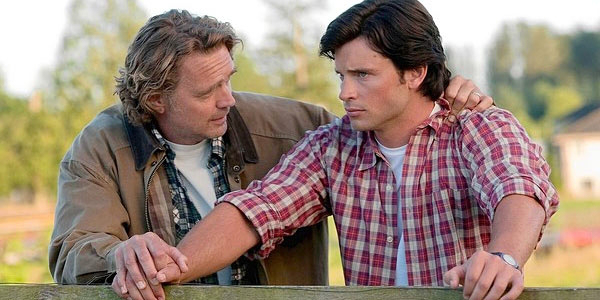 For those who aren't familiar, Smallville was a US sci-fi show which survived ten seasons - no mean feat these days. It told the story of Superman's early life, from the teenage loves, the friends made and lost and the destiny revealed. The earliest episodes also relied on a technique known by fans as "freak of the week", a format which relied on a krypton fuelled villain just in time for the theme song to play and being destroyed ready for the closing credits. The theme song 'Save Me' was especially apt. When the show diversified, it improved immensely. Great depth was added to the characters and it was a lot more interesting too! In one way, it was very similar to our own Doctor Who. The 'freak of the week' format stunted Smallville and surely it could be argued that some of the best Doctor Who episodes are those which move away from the standard monster related themes. It cannot be denied that this format grows tired sometimes with Doctor Who's often single story format not always offering enough depth. Sometimes it is the big serials of the classic season or of Tennant's specials year that pull you in; the idea of a tale bigger than 45 minutes can allow.
6. Why Change Something That Isn't Broken?
 It is often the strangest things that remain wedged in fans' minds, between the actor's answers to the most inane questions at Comic Con and half remembered quotes from episodes long past. This photograph expresses that very issue well, though at first glance it might not be clear why. Feel free to leave an answer in the comments section on what your initial thoughts are about the importance of this photograph. Have you spotted it yet? There's something strange about it. I'll give you a minute... take your time. Have you got it? Half of the colours of the rainbow represented by... Daleks. I guess that red could be seen as a threatening colour though not quite as inhuman and detached as their earlier stylish golds and silvers. Red is too passionate a colour for a Dalek, which should feel no emotion. Yellow, on the other hand, is out of place for a wholly different reason: it just makes me think of bananas. Not threatening at all, are they? See, there is just a little problem with a non-threatening Dalek. The whole fun of a classical monster revival is to 'feel the fear' once more, though to a lesser extent than as children no doubt. Some of my favourite new episodes are those which have you on the edge of your seat: Empty Child, Blink, The God Complex etc... Some of the best shows, sci-fi or otherwise, are the ones which do not compromise on their ideals. Those that do are often doomed to fail. It seems like a hyperbolic remark to make on the basis of one example but think on it. If Doctor Who evolves beyond recognition, by the smallest degree each time, will it still be the same show we have all grown to love?
5. Take Inspiration From The Show Itself
 This episode was one of the funniest in the show's history. Look at that confused face, staring up into the beady eye of a TV camera because Big Brother is always watching. This element of satire, although a tiny element alongside the larger plotline, added a new level of intrigue. Doctor Who became, for the shortest period of time, more relevant to the other forms of entertainment in our lives. Sometimes it feels like Doctor Who could be playing out on Pete's World for all the much it feels like 21st Century Britain sometimes, even when it is set in the present day. The idea of adding further relevance of the show to the day to day existences of its fans was also played out similarly in Bells of St Johns but to a lesser effect. Take a hint not from another TV show, but from a previous Doctor and utilise the world around us. Make Doctor Who current (but not too much so!) and see what happens. Tennant's Olympic episode was great but wouldn't it have been fascinating to have one to watch in 2012? Exactly. A perfect example of the craziness of life today was in the aforementioned episode, when Nine enters the house. The response of those living essentially on Death Row, even if they do have better accommodation and free food (oh... wait) was crazy. Lynda sounded so excited at the idea of another housemate which, even if it was the Doctor, seemed a little crazy. "You got chosen! You're a housemate, you're in the house. Isn't that brilliant?" Shows just how crazy life today is because in some senses it is possible that people would literally do anything for fame and - Even better, it is crazy to think how the Doctor would respond to the difficulties of daily living. As he lamented while with Rose on the forbidden planet, the Doctor is not one who has had to deal with mortgages and money before and that is just to start!
4. Take A Page From The American Book America and Britain are completely different nations, as is to be expected. Despite this, they are similar in one very important way. They are the host of the biggest numbers of fans for Doctor Who and as such an interesting comparison can be made. There is one aspect of note in the television series of America: the length of these series. Of course, this is not a positive in itself - after all, a slightly mediocre show that is 22 episodes long will be slightly more painful than one which is shorter and sweet(er). However, in the case of Doctor Who the idea of spending almost half a year being able to watch a brand new episode every week is irresistible... In the show's changing climate this could be a welcome change, the number of episodes we seem to be being given is dwindling each year - this last series was a split one beginning in September 2012 and ending in May 2013. That seems insane doesn't it, especially when taken in terms of how long that actually is? Nine months to see one journey start to finish, the same time as it takes for a baby to grow and be born. Surely there is some way we can have more episodes or at the very least have them quicker?
3. Different Doesn't Mean Bad
 So many shows out there appear as carbon copies of each other, similar characters and stories all lined up in a row. In that scenario it is very hard to decide which one to watch, which one is worthy of your time. If they add nothing to the genre or indeed to our lives it is hard to justify their existence at all. A mediocre show can only bring anger and there is no good to be found in that. In contrast, a good show can make us smile and a great show will make us cry. These are positive emotions, a good bubble at a series finale never did anyone any harm. When, as part of a review, you think deeper on what has been special about an episode often the most damning report is neither positive nor negative: you do not know what to say. That shows that the episode was dead weight, nothing was gained by seeing it. So it is important that Doctor Who continues to emulate the best qualities of those shows that are given fantastic reviews or shockingly even those given poor reviews. Anything is better than no-one knowing what they thought about something and I can just hope that Doctor Who continues to only rarely provoke that indifference in myself. As shown, Doctor Who can learn from other shows in this regard. Perhaps also they can also learn from Doctor Who. The symbiotic relationship between shows is often ignored. For all those shows out there that have utterly lost their shine, perhaps Doctor Who can show that there is something to be gained even after all of these series: there will always be stories left to tell. Making a change in Doctor Who might be risky but it could be the show's salvation one day.
2. It Doesn't Matter Where You've Been, It Matters Where You're Going
 In many cases, the past of a show can hinder it or slow it down - if a character is not liked by the audience then there is the chance that the show will be forgotten, laid to languish by the wayside. Doctor Who has survived the ultimate issue a show can face: cancellation; returning in a slightly different format years later. Perhaps other much loved shows will return one day, seeing the example left behind by one of Britain's greatest dramas. The idea of Doctor Who being cancelled again lies far from the forefronts of most fan's minds but perhaps it must be considered. What is it that has made other shows fall while the Doctor stands proud? There is a certain something about Doctor Who, that's for sure but it cannot be that alone which sustains the show. If changes were made, thought necessary for the survival of the drama, would the same great show be left behind. Perhaps as the Ood told Ten, "every song must end". Even the most loyal fanbase can fade, it is important to learn the lessons of cancelled dramas such as V and others - remember that a show is only as best as its next episode. Likewise, in some ways Doctor Who is only as good as its next Doctor. But really, I'm sure he will be great!
1. Doctor Who Is.... Doctor Who
 For all its faults and all its mistakes, for the doctors we love and those we secretly cannot abide: the show means something different to every one of us. Some of us are the most avid fans and some watch casually when they've got a spare minute. Like any other TV show the fans are just as much a part of the show as the characters themselves. They bring the show to life, preserve it and expand it. Throughout I've taken a look at some of the fundamental lessons that may be instrumental in the show's future and what has perhaps been lacking in its past. There is however, clearly one lesson that Doctor Who thankfully does not need to learn: How to create a following - and how to sustain it. Arguably, this is the most important thing for any show. To be loved means more than ratings and reviews, it is something that cannot be easily bought or taken away. Likewise, it is something that would be very hard to teach and I wonder how it could be done. Somewhere in the world, lying in some discarded box, is there a formula for a perfect television show that anyone will certainly enjoy? I think not. In the meantime we'll just have to look for those shows that suit us and those that add a little laughter to our lives. So that's what I think. What do you think? Feel free to comment!