Doctor Who: 10 Most Embarrassing Episodes For Once-Formidable Villains
 For a long-running program with fifty years of adventures such as Doctor Who, it's inevitable that some villains will make multiple appearances, either due to fan demand or lack of fresh ideas from the writers and producers. As with most serialized programs, the creators would rather reuse existing sets and monster costumes than start fresh from square one every single week, due mainly to budgetary concerns. Some of the most popular reoccurring monsters in the Doctor Who universe such as the Daleks and Cybermen at one point had such awesome powers they held whole galaxies under their command (as well as the Earth), and if you were a child when originally watching these episodes perhaps hiding behind the sofa in terror their sheer strength and force seemed unlimited. Unfortunately, with the constant reappearance of many of these foes, their impact upon the viewer and their seeming invulnerability was lessened. With that in mind, here's 10 examples of how the passing of time has made these once fearsome enemies somewhat laughable.
10. The Cybermen In "Revenge Of The Cybermen"
 The Cybermen as presented in classic episodes like "Tomb of the Cybermen"and "Earthshock" are sinister automatons, emotionless and ruthless. However, the intimidation factor of the Cybermen in this story is somewhat hindered by what becomes glaringly obvious to even the most inattentive viewer, and it's possibly the worst Achilles Heel in the history of design. The Doctor off-handedly mentions their huge weakness: contact with gold will destroy them, and then mentions that Planet Voga is wait for it mostly composed of gold. It's not hard to add up these two facts and deduce how the Cybermen are going to be killed this time. And why, oh why, are the Cybermen trying to attack a planet made of gold anyway? It's like Superman voluntarily wearing a Kryptonite suit. It doesn't make a lick of sense, like most of this forgettable disaster of a story. Why would a race so technologically advanced as the Cybermen possess such a glaring design flaw of having their chest unit, their most vulnerable spot, totally unprotected on their body? This also happens to be how the 5th Doctor defeats the Cyberleader in "Earthshock". At least the Sontara''s weak spot on the back of the neck, so is slightly harder to reach in combat.
9. The Master In "Castrovalva"
 As a fellow Time Lord, the Master has powers at least equal, if not superior, to the Doctor, and has been responsible for countless almost-successful attempts to conquer Earth. He also has a nasty habit of coldly murdering anyone who happened to stand in the way of his plan. That's why it was baffling in "Castrovalva", Peter Davison's initial outing, that the Master spends the majority of the story disguised as a silly old man in an incredibly stupid hat. What makes it worse is that his so-called evil scheme consists mainly of strapping the unfortunate Adric to a rather large bondage device (yikes!). Just a couple of episodes ago, the Master was inches away from causing the entropy death of the entire Universe. Now he's a fussy little white-bearded gnome who looks like he wandered out of a Tolkien novel, calmly chattering with the rightfully confused Doctor. You'd think the Master would take advantage of the Doctor's weakened post-regenerative state to finish him off once and for all, but he does everything short of offering him chicken noodle soup and a warm bath. Their future meetings, thankfully, would prove to be somewhat less amicable.
8. The Rani In "Time And The Rani"
 The Rani is a perfect example of a wonderful Doctor Who idea (rival female Time Lord) with boundless promise made less than great by lousy writing and dumb effects. First off, the series doesn't even bother to explain how the Rani escaped from the attacking Tyrannosaurus Rex inside her Tardis in her previous appearance. Putting that aside for the moment, the extended sequence here where the Rani pretends to be Mel to a confused, post-regeneration Sylvester McCoy is incredibly dumb and poorly executed, even for a program on the decline like Doctor Who was at the time. Kate O'Mara is a fantastic actress, but even her skills can't carry off this scene. It's at the levels of slapstick that you'd see in a Mexican soap opera. To see a supposedly brilliant scientist reduced to playing dress up is just sad. Although "Mark of the Rani" is somewhat spoiled by those ridiculous effects shots of people turning into trees, at least the Rani gets some good dialogue off at the expense of the tedious Master/Doctor rivalry. Here, her first line "Leave the girl. It's the man I want." is as camp as a row of tents and sets the stage for the awfulness to follow.
7. The Slitheen In "Boom Town"
 In their previous appearance in "Aliens of London/World War Three", the Slitheen had managed to infiltrate the British Government and advanced their sinister agenda, before being thwarted by the Doctor (of course). By the time of this adventure, just one Slitheen, Blon Fel Fotch, has managed to survive. She spends most of this episode pathetically begging to the Doctor to spare her life in a hoity-toity restaurant, which Christopher Eccleston seems very bemused by. Unfortunately for her, this Doctor no longer feels any mercy for her (or most things, really), and refuses to spare her life. He does, however, helpfully offer her breath spray. It's an interesting reversal of the usual Doctor Who formula, with the Doctor having all the power and control in the situation and refusing to help. The Doctor does come off as somewhat of a hardass here with his usual post-Time War crankiness, but the reason this episode doesn't ultimately work in a satisfying fashion is that at no time do we ever feel threatened by Fotch. The Doctor clearly holds all the cards in this battle from the outset. There's not much to speak off in the way of suspense here either, despite Fotch's attempt to hold Rose hostage. We need stakes for effective drama, and this just looks like the Doctor picking on a defenseless enemy, which is not in the spirit of Doctor Who.
6. Adolf Hitler In "Let's Kill Hitler"
 Hitler may not strictly qualify as a recurring Doctor Who character, but if he wasn't a formidable villain, I don't know who else would qualify. Anyway, Hitler's appearance in this episode is mostly restricted to the stuff of Benny Hill sketches as he spends his time locked up and fuming in a cupboard, completely reducing one of the most inhuman and evil figures in Earth's history to a throwaway gag and background scenery. This is inkeeping with the time-honored tradition of ridiculing tyrants as seen in media such as the Daffy Duck WWII cartoon which culminates in Daffy braining Hitler with a mallet, and the entirety of the post 9-11 South Park episode "Osama Bin Laden Has Farty Pants." (I laughed out loud just typing that.) Unlike those appearances though, Hitler takes a backseat to this plot-heavy outing that gives us River's origin story, several regenerations and some great acting by Matt Smith as he bravely fights against the effects of River poisoning him with the Janus Thorn. The best part of this episode, however, is the fact that no one bothers to ever let Hitler out of that cupboard. Is he still in there?
5. The Daleks In "Asylum Of The Daleks"
 The oldest, most sinister and ruthless of all the Doctor's nemeses are reduced to gibbering idiots at the end of this episode, having their memory banks wiped clean of all data concerning the Doctor, endlessly repeating "Doctor Who?" Very rarely have we ever seen the Daleks so utterly defenseless against the Doctor than here. They start the episode begging for the Doctor's assistance (for reasons that are frankly rather odd), and they end it without even knowing who their greatest enemy is. The disintegrating antique Daleks in the asylum aren't that frightening either, unless you are scared by giant dusty pepperpots that say "Eggs" (Admittedly, Rory did look a bit scared). Davros would no doubt be beside himself with apoplectic rage to see how far his creations have sunk, but then he didn't have to suffer the indignity of the so-called candy colored "Ipod Daleks" of "Victory of the Daleks" either. Lucky for him he (supposedly) died at the end of "Journey's End", so he was spared that sight. If the Daleks do eventually return to the series again, it's a safe bet that they will have read up on their oldest foe so they are a bit more equally matched.
4. The Ice Warriors In "Cold War"
 Part of the sinister appeal of the Ice Warriors in their initial appearance in the Troughton Era, along with their imposing armor and hissing speech, was that the viewer never got to see exactly what was contained within those iconic helmets, the mystery adding a level of dread to their fearsome appearance. "Cold War" however ruined that forever with the ill-advised CGI reveal that they look like, well, a ropey CGI lizard. The idea and setting (80's Russian Nuclear Sub) for this episode are unique, but once we see underneath Skaldak's helmet this is just ruined for me. This same basic concept (single monster that usually travels in packs, versus the Doctor and pals in a small, enclosed space) was executed much better in the Eccleston episode "Dalek", where the lone Dalek actually conveys a sense of menace. We can only hope the helmets stay on if Moffet decides to bring the Ice Warriors back for Series Eight.
3. The Sontarans In "The Sontaran Experiment"
 In this nondescript Tom Baker story, there's only one Sontaran instead of battlefleets of thousands in which they usually travel. We barely see him at all until the end of this oddly short two-parter, having spent most of his time off screen, torturing astronauts. The spider-like Patrol Robot is far more interesting and menacing than lumpy old Styre of the Sontaran G3 Military Assessment Survey, who gets beaten up readily by the Doctor in hand-to-hand combat certainly not something the 4th Doctor was known for. Lately in the series we've witnessed the further degradation of the once-proud Sontaran race with the Paternoster Gang and the civilized Sontaran, Strax, which has filled the show with off-handed jokes (Sontarans are really dumb! They have goofy potato heads! They like to fight!) at the expense of their dignity. Although in between these two poles, they did manage to get off a rather clever scheme to rule the Earth in "The Poison Sky", so maybe we will see them restored to their former bloodthirsty glory. Or not.
2. The Time Lords In "End Of Time"
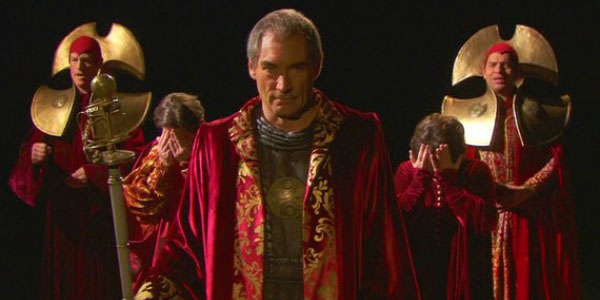 There are huge flaws with the final Tennant adventure (for one, all the buildup about Donna's brain exploding if she retained any memories of her time with the Doctor, which is quickly dropped and forgotten about), but the most egregious one for me is the way the Time Lords, one of the most legendary and powerful races in the universe, are finally reintroduced to the series. They only spend about five minutes total on screen before they are quickly shuffled away again into whatever corner of the space-time continuum they had been safely locked into. And what was with the mysterious looks that female Time Lord was giving the Doctor? And who was she, anyway? Susan? Romana? The Doctor's mother? That's apparently not a question this episode is interested in answering, as the Time Lords are quickly forgotten about. This is in order to bring about the tremendously self-indulgent twenty minute long farewell tour the Doctor embarks upon after realizing his impending demise. Why on Earth bring Rasillon and the Time Lords back at all if you're barely going to use them? When they initially appeared in the series at the end of "The War Games" they were terrifying mysterious, all-powerful beings that appeared from nowhere and forced the Doctor to regenerate. Here, they're merely some aloof looking dudes in robes who sit in chairs looking pompous. Kind of sad, really.
1. Eric Roberts As The Master In The Doctor Who Movie
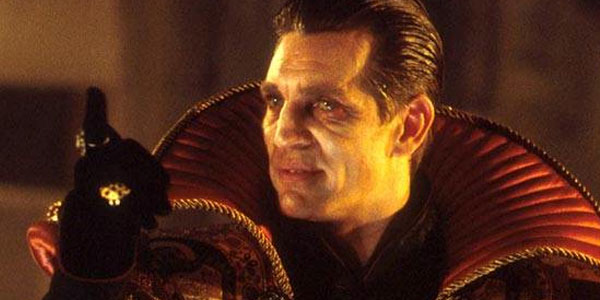 To dissect all the flaws in the Doctor Who movie would be an article in itself, and sadly out of the scope of this piece. It's not all bad, though. We do get a funny cameo from comedian Will Sasso as Pete, the mortuary attendant prone to fainting. Daphne Ashbrook's performance as Grace Hollaway is fairly solid, and after all, this is the only appearance of the Eighth Doctor in televised Doctor Who history. Because of this, I'm willing to cut it some slack. One thing just doesn't work at all, and that is Eric Robert's ham-fisted performance as The Master. Everything associated with him in this is just...off. First off, why are the Time Lords holding his trial on Skaro? Were all the convention centers on Gallifrey booked solid that weekend? That aside though, fans know the Master is a bad guy. But in his previous appearances on the show (particularly in the Pertwee era) his evil wasn't completely over the top, and he could convincingly convey menace with just his sinister demeanor and air. Roberts however, who I'm going to imagine was not perhaps, the biggest fan of the show in the world, approaches his role straight out of the Snidely Whiplash school of mustache-twirling villains. On top of that, how does The Master has become some kind of reptilian creature who can also travel around as clear ooze and infect people with poisonous bile? John Simms' new version of the Master has vastly repaired his legacy on the show (although even he was pretty over the top in the first part of "End of Time"), but if the show had never returned and this was the last time we ever saw the Master, that would have been a terrible fate for fans.