Doctor Who: 10 Things That STILL Don't Make Sense
These Doctor Who mind-bogglers range from immersion-breaking to straight up laughable.

With a show that changes hands week after week and from writer to writer, sooner or later, the cracks (in time) are bound to appear.
Writers are busy folk, and they can’t rightfully be expected to consume the entire 60-year catalogue of Doctor Who to ensure they aren’t contradicting someone else’s work. This can, on occasion, lead to the odd inconsistency. Sometimes, writers even manage to do this to their own previous works – and sometimes, they even manage to do it within a single episode.
And then there are the times they apparently didn’t care enough to bother explaining something, or seemingly didn't think it through in the first place. Writers are only human after all, and if they didn’t slip up, us fans would be out of a job, because there’d be nothing to point out. We’ll forgive them.
In this list, we won’t be talking about plot holes per say, but rather the smaller details and the "I'll explain later's" that, upon taking a step back, make you realise that some things in Doctor Who really don't make a lick of sense.
10. Pting In Prison

Revolution of the Daleks kicks off with an all-too brief prison sequence that had a lot more promise than the rest of the episode. Seriously, imagine an entire episode set in space prison, with the Doctor attempting to control a riot started by all their greatest enemies.
Like Doctor Who's version of Batman: Arkham Asylum.
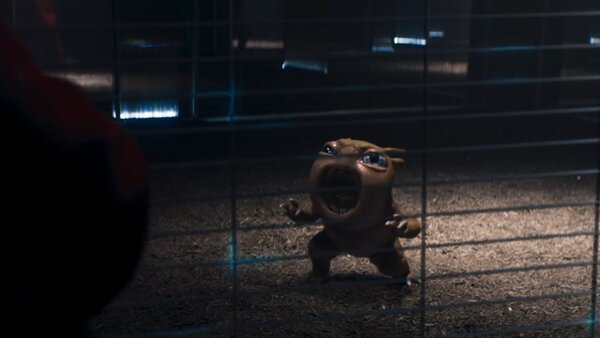
Anyway, this prison sequence features some fun monster cameos – including, but not limited to, our old friend the Pting. The Pting – which you might recall, depending on how much you’ve suppressed your memories of the Tsuranga Conundrum – is that angry little Minion that killed Roy Kent. It's also a rather unique creature, in that it can eat literally anything. Which is relatable.
In fact, while introducing the Pting, the database mentions that they are impossible to imprison: they have toxic skin so can never be touched, and can eat all non-organic matter, so would easily be able to munch their way out of confinement. It's a throwaway line, but it helps establish the Pting as a fairly unstoppable little force of nature.
So what did the writers do in its very next appearance? Stick it in jail, naturally.
It’s not like they even had to do much research to avoid this one.
9. Found Footage Fiasco

If there’s one thing the Doctor loves, it’s banging out their own highlight reel. They definitely have Googled themselves more than once. Well, to be fair, haven't we all?
Footage of prior episodes has been shown in-universe many, many times, and every single time, it prompts the same question: How on earth did they get hold of that?
How did the Cybermen get footage of the Tenth Doctor dispatching Father of Mine for their infostamp? How did Testimony swing by the Time War for some b-roll? And perhaps most puzzlingly of all, what were the Atraxi doing at Jackie Tyler’s birthday party in a parallel universe when they snagged their footage of the Cybermen?
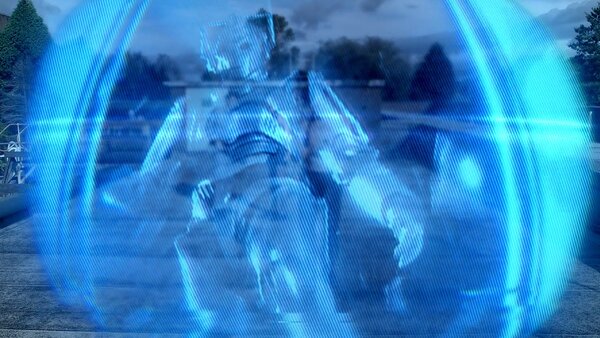
Big questions. The answer? A tiny cameraman pointing his lens directly into the Doctor’s face as he savagely drowns the Racnoss, telling him to stare into the middle distance even more wistfully because it's TV gold.
In all seriousness, the real reason is because it wouldn't be feasible to shoot new material every single time a highlight reel is required, but that doesn't stop it making zero sense from an in-universe perspective.
8. New Man Or Not?

The whole regeneration timeline was a little fuzzy when Doctor Who returned in 2005. We had a new Doctor, but we had no idea how or when he’d swapped his luscious locks and cravats for leather jackets and a buzz cut.
We weren’t the only ones who were confused either, because apparently, even he wasn’t quite sure when the changeover happened.
When the Ninth Doctor arrives in Rose’s living room, he sees his face for what seems to be the first time – he examines his reflection and comments on his ears, suggesting that this is a face he's only just acquired. To back this up, he's certainly acting like an incarnation that's still finding themselves.
There’s just one issue here: in the very same episode, Clive introduces us to the concept of the Doctor, following his path through history via newspaper clippings and photographs. Clive's Doctor has Eccleston's face, implying that Nine has been on countless adventures with his supposedly 'new' mug already.
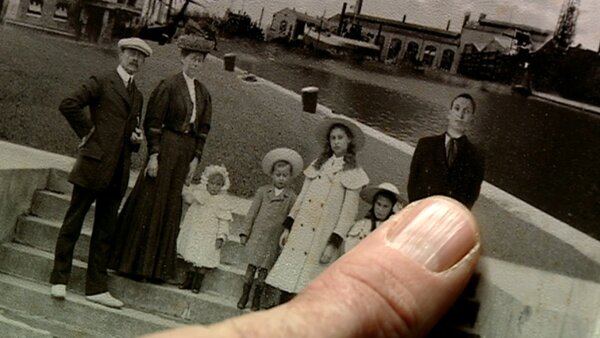
If that is the case, how did it take him so long to notice his ears? They're hard to miss!
7. A Time Machine That Needs Time

The TARDIS is the be-all-and-end-all of universal travel. Access to all of time and space, unlimited internal storage, impenetrable walls, and, of course, ketchup and mustard dispensers. It's the sports car of time machines.
One feature of the TARDIS that’s bound to appeal to literally anyone who has spent even one hour waiting for a plane to taxi to the runway is the fact that it doesn’t just open doors to all these weird and wonderful places, but that it does so in an instant.
That is, unless you need to have a heart-to-heart.
Revolution of the Daleks made an unprecedented and bold move by having Thirteen meaningfully interact with Ryan for the first time, two whole series after he joined the cast. Fortunately for them, on their short hop across the Earth to Osaka, the TARDIS decides to really stretch the journey out.
“Four minutes to Osaka”, the Doctor announces, and absolutely no-one bats an eyelid, despite having recently travelled from Gallifrey to Earth in a matter of seconds. We’re not sure what’s worse, the fact that the companions don’t clock this, or the fact that Chibnall thought the fans wouldn’t!
6. Clara’s Teaching Transformation

The Name of the Doctor left Series 7 on one hell of a cliffhanger. Clara had just jumped head first into the Doctor’s timestream, scattering herself across his personal history and becoming The Impossible Girl.
Seemingly trapped in some sort of Doctor-y purgatory and surrounded by former incarnations, she and the audience are introduced to a mysterious figure. Turns out, it's kindly old John Hurt, and somehow, by some miracle, he’s agreed to play the Doctor. Boom. Big reveal. Roll credits.
The reasoning behind ending this finale on the surprise reveal of a new Doctor is fair enough, but here’s the thing… that whole cliffhanger is never resolved by the next episode. In The Day of the Doctor, the two are off gallivanting about again having escaped the timestream without explanation, and Clara is seemingly unchanged by the whole ordeal.
In fact, the only thing that has changed is that she’s
gone from being a nanny, to a fully-qualified secondary school
teacher. This change goes completely unacknowledged, and absolutely zero
groundwork was laid beforehand. Many fans, on a first watch, would've been
forgiven for thinking they missed an episode somewhere along the way.
Yes, it was nice to bring the show full circle to Coal Hill School for the 50th, but this screams ‘last minute idea’.
Still, if it means that Angie and Artie are gone forever, we’ll take it.
5. Inconsistent Aging

Time Lord aging seems a little wibbly-wobbly at the best of times. How long can an individual incarnation actually live before they start developing wrinkles and a dodgy knee? Well, it depends who you ask.
In The Sound of Drums, we see the Tenth Doctor subjected to forced aging by the Master, who claims to age him about 100 years with his laser screwdriver. This initial blast really does a number on the Doctor, aging him to a visibly very old man that probably isn’t a million miles off what a 100-year-old human would look like.
On the second blast, one episode later, Ten is
transformed into Gollum from The Lord of the Rings, so we can only assume that this is what a
Time Lord at the end of their aging process looks like, before finally giving
up the ghost and dying.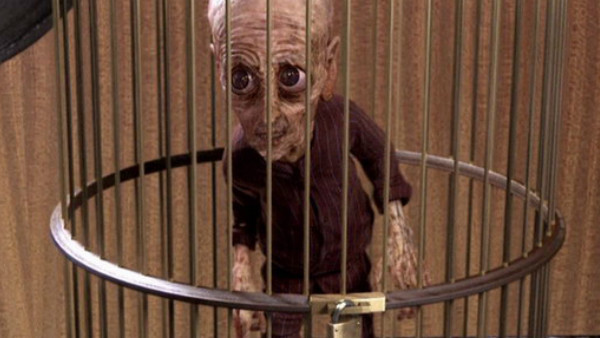
Except, when Eleven’s time came, that isn’t what happened at all.
Stranded on Trenzalore, Matt Smith’s incarnation barely ages at all in the first 100 or so years, especially compared to what 100 years did to the Tenth Doctor.
Later in the episode, we see Eleven
after he’s spent 900 years on Trenzalore and is dying of old age.
Naturally, we’re expecting the worst when we’re warned of this beforehand – surely this is going to be another Gollum situation? But instead, Eleven – who is
literally at death's door – looks younger than 100-year-old Tennant.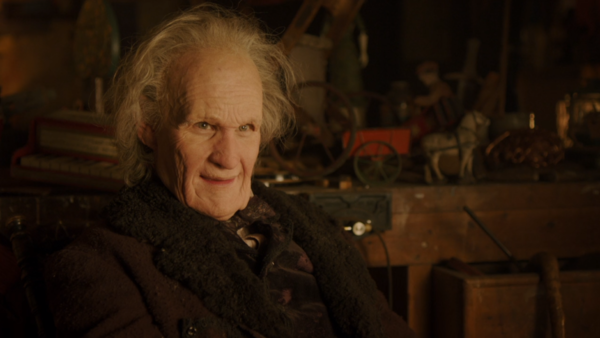
Either someone messed up behind the scenes, or Eleven has Paul Rudd genes. We'll accept either explanation.
4. Impossible TARDIS Technology
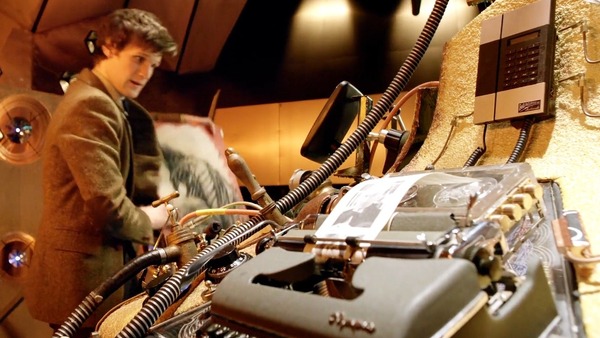
Magpie Electricals is one of Doctor Who’s most prevalent easter eggs, first appearing in absolutely nobody's favourite episode, The Idiot’s Lantern, in 2006.
This in-universe brand has popped up countless times since, from a store on Starship UK, to the Twelfth Doctor’s guitar amp. There’s never needed to be too much of an explanation for this – we can simply assume that, in spite of the whole rough start with the televisions sucking people’s faces off, the brand has managed to endure and thrive.
However, there’s one detail that suspends disbelief a little too much.
The Eleventh Doctor’s first TARDIS features multiple pieces of Magpie tech, including the monitor and keyboard. There's also a phone, easily visible in Vincent and the Doctor, with the Magpie logo on it (above). The thing is, TARDISes are grown, not built, and while the TARDIS is a conscious being, we aren’t sure she’s in the habit of taking brand sponsorship deals.
It's a bit odd to see any sort of branding in the TARDIS, and it doesn't really make sense for Magpie tech to be used inside these ancient Gallifreyan machines.
3. Not Much Of A Master Plan

It's fair to say that the Master’s diabolical schemes have always made little sense. From turning every human on Earth into himself, to gifting the Doctor an army of Cybermen which there was zero chance he would ever accept, they’ve ranged from poorly thought out, to entirely ineffectual.
But nothing in the show’s long history of Master plots comes close to the ‘Master’s Dalek Plan’ in The Power of the Doctor.
This convoluted, multi-step mess sees the Master get himself intentionally captured by UNIT, only to employ Ashad and the Cybermen to free him. This serves no clear purpose in the script, other than allowing him to take some cheap shots at Ace and Tegan.
Meanwhile, he goes back in time to either impersonate or become Rasputin (it’s
unclear), and defaces a load of paintings with his own face with the intention
of drawing the Doctor into Tsarist Russia. Why does it need to be Russia?
Because, as far as we can tell, he just wanted to do the Rasputin dance number.
The final step in the plan is the cherry on top. He wants to erase the Doctor and slander her name, so he forces her to regenerate into him. He then goes about as the Doctor and does evil things, so everyone thinks the Doctor is evil.
Essentially, he puts on the Doctor’s clothes and does naughty things while giggling to himself. We can’t help but feel that he could've saved a lot of time and effort by just raiding her wardrobe, for literally the same result.
2. Counterproductive Counting

The Silents are a hugely underrated villain, and absolutely would've been Moff’s biggest addition to the rogues gallery if he’d not dreamed up the Weeping Angels first.
The memory wiping gimmick is both genius and genuinely terrifying, and the striking visual of the Doctor and co. marking a tally on their bodies to count how many they’ve seen (and forgotten about) only adds to the menace of the monster.
Or at least it does, until you realise how laughable this system is.
It’s all fine and dandy when you’re marking your forearm. But you’ll never be able to watch the scene where Amy covers herself in dozens of markings in the same way once you’ve thought about the fact that she must've spent a good quarter of an hour drawing on herself while in mortal danger, screaming to herself the entire time. Just write a number! Or even better, ‘LOTS. RUN.' Far more succinct.
What’s even more strange is that she draws half of them on her face, which she can’t even see. So how is she meant to count them? She’s not even the only one who does this. It's a cool visual (which is the real-life reason, no doubt), but Eleven’s crew really didn’t think this system through.
Don't they look pretty with their edgy temporary tattoos though?
1. Where Did He Get The Tea?

Many of the items on this list are unintentional oversights and some are conscious contradictions, but this moment from The Witch’s Familiar is the perfect example of the show acknowledging exactly what it is – campy fun.
Upon stealing Davros’ chair and giving us one of the most ludicrously brilliant visuals in the show's history, the Twelfth Doctor escapes extermination, emerging from a storm of Dalek weapon fire entirely unscathed and holding a cup of tea.
He even questions this himself, before offering a very simple explanation: “I’m the Doctor, just accept it."
This is Steven Moffat staring down the camera lens and telling us to stop making top ten lists about inconsistencies in the show, and he has a point. Most of the time, it’s best to sit back, enjoy the ride, and not ask too many questions along the way. In our experience, it’s best to let Who do Who.
But seriously though, where did he get the tea? And does he take milk and sugar? So many questions!
Watch Next
Doctor Who Quiz: How Well Do You Know Matt Smith's 11th Doctor?
