Doctor Who: 10 Unpopular Opinions About Everybody's Favourite Episodes

You know they're a bit pants really.
Let's begin by mangling the words of Benjamin Franklin: "Griping about episodes everyone loves is the most natural state of Doctor Who fans." Of course, Benjamin was really talking about marriage being the natural state of man, and there are times when it certainly feels like fans are married to their favourite programme, for better or worse. Joking aside, it's undeniable that there are hugely esteemed episodes of the revived series that are, when you stop and think about them, deeply flawed, if not a bit rubbish. Having said that, just because certain parts suck that doesn't mean each of these episodes is entirely bad. There's always something to like in every episode of Doctor Who, and more often that not, several somethings. But what are the most widely admired stories that are, upon even cursory analysis, not as good as all that? Which adventures were not as well-written or as expertly put-together as initially thought? Here comes a list of the top 10 contenders for people's favourite episodes that are really not quite as good as is generally claimed. Get ready for a roller-coaster ride through a decade of new Doctor Who, and expect a great many passionate views in the comments section because the following opinions are not going to be popular! Be warned - for those fans who haven't seen up to Series Eight, there are spoilers ahead.

10. The Empty TARDIS Is Crass Emotional Manipulation - Father's Day

For many, Series One's Father's Day is an emotional, tear-jerker of an episode that is one of the shining lights of early NuWho. In the full knowledge that saying anything negative about this Paul Cornell-scripted story will annoy a lot of fans, is it really all that and a bag of jelly babies? Leaving aside the unbelievable stupidity of the Doctor agreeing to take Rose to such a point in time, the episode is a fine example of "boohoo Who", setting the bar high in the weepie stakes. Most, but not all, of that emotion derives naturally from the central plot of Rose Tyler visiting the moment of her father's death. Unfortunately, there's a certain point where the internal story logic of this tale breaks down and the emotion feels forced. The point comes after Rose saves her father's life. While Rose goes with her father to the wedding, an angry Doctor returns to the TARDIS, only to discover that it is now an empty shell. It has to be said, there's no good reason for the inside of the TARDIS to disappear. Time has changed before and since in Doctor Who without this bizarre effect on the Doctor's time machine. In the absence of any good reason for it happening, this moment feels contrived, existing purely to provide unnecessary drama. It's unnecessary because, seconds later, the Reapers show up and their presence is more than enough to guarantee the Doctor's involvement. Father's Day is otherwise such an effective exercise in manipulating viewer emotions, that this slip really stands out.

9. The Vashta Nerada Are As Dull As Dishwater - Silence In The Library

Following the success of previous Steven Moffat-penned stories, like The Empty Child, The Girl In The Fireplace, and most especially Blink, Series Four's Silence in the Library/Forest of the Dead was eagerly awaited. But after all those hits, it has to be said, the library-based romp isn't anywhere near as good. On the one hand, it introduced the character of River Song, who was mildly interesting in her début and was subsequently built up to be a much more important character. But on the other hand, the shadow-dwelling Vashta Nerada are far too generic to qualify as a particularly good monster. For example, they're nowhere near as inventive or creepy as clockwork robots looking for organic spare parts. Also, the story boasts yet another catchphrase from Moffat. Following on the chilling "Are you my mummy?" and the excellent "Don't Blink!", this story gave fans "Hey, who turned out the lights?" Which is, um, not as memorable. Like countless genre stories before it, this two-parter has an A-plot (the Doctor and co are menaced in the library) and a B-plot (Donna is "saved" to a virtual world). Unfortunately, the sub-plot of Donna trapped in the virtual world is much more engaging than the supposed main thread of the adventure, causing viewers to wish for more of Catherine Tate every time the Vashta Nerada are mentioned. That may not be a well-liked view, but it's nonetheless a perfectly valid one.

8. The Tenth Doctor Ends His Tenure As A Wimp - The End Of Time

"I don't want to go," whined the Tenth Doctor at the conclusion of The End Of Time on New Year's Day, 2010. After the ridiculous sight of a world full of Masters and the sentimental claptrap of the implausibly drawn-out ending, some fans were suddenly okay with him leaving. It's not a popular view, but Tennant's last outing as the Doctor effectively undermines years of the Tenth Doctor's heroism. During this story, he fritters away his time moaning about the prophecy of his death and then, having failed to come up with a good way of saving his own people, complains about having to sacrifice himself for Wilf. As Terrance Dicks said, the Doctor should never be cowardly. For those fans who still maintain this is a story without serious flaw, remember that this is the one where Skeletor - ahem, the Master - flies by shooting energy out of his palms. Now doesn't that put a neat little bow on things?

7. Neil Gaiman's Cybermen Are A Total Flop - Nightmare In Silver
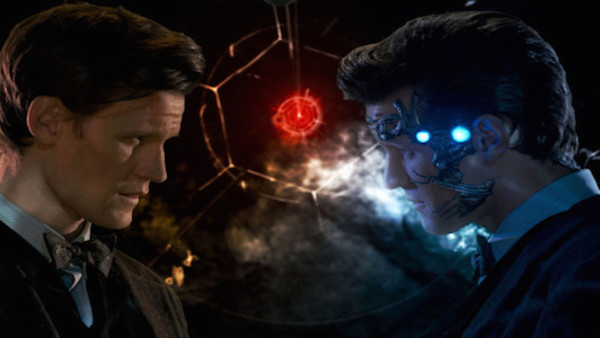
Here's another unpopular opinion about a highly rated episode - the second script from Neil Gaiman is an enormous let-down. With any big-name writer, there's going to be an expectation that the final product is going to be stupendous. But, at best, Series Seven's Nightmare In Silver is merely adequate in places. There are several reasons why this episode is such a mixed bag - some issues originate from the script and others derive from how that script is brought to life. To begin with, the worst crime committed in executing Gaiman's ideas has to lie in realising the supernaturally fast Cybermen. On paper, the conceit that the notoriously slow and stompy Cybermen should be able to zip around at high speed is a reasonable way of making them more dangerous. In earlier stories, anyone rambling along faster than a snail could outpace the cyborgs. However, in most of the scenes where this new ability is seen, the awful special effects remove any hope that the Cyber-super-speed will look convincing, completely gutting the hoped-for sense of threat. The story is also hobbled with a bad guy so hammy that he makes a considerable number of viewers want to turn off the telly and go and do something more interesting outside. The villain is, of course, the Cyber Planner that dubs himself Mr Clever. Given how he acts, "Mr Shouty" would have made for a more accurate name. In fact, that character is so flawed, he made the list of the 10 Worst Doctor Who Villains Of All Time.

6. Moffat's Most Recent Finale Overdosed On Stupid - Death In Heaven
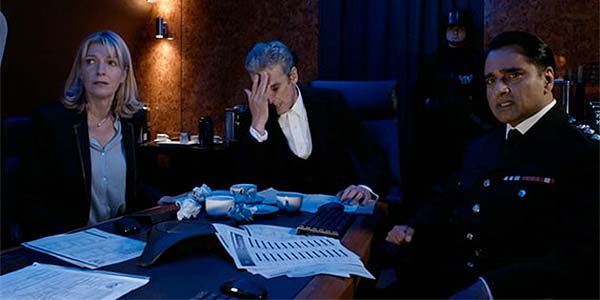
It's not a fashionable thing to say, but Death In Heaven, the finale of Series Eight, has too much in it that's plain stupid. Fans expect a certain degree of absurdity in a Doctor Who story - it comes with the territory - but this episode overdoses on the impossible. For a start, making the Doctor president of the world in the event of an alien invasion is plain dumb. He's obviously not going to want to lead an army. UNIT knows that. And when the threat of the week is as good as an army of Cybermen being raised from the remains of the dead, making the Doctor the president is an unnecessary distraction from the main story. Secondly, having Missy boast about how bonkers she is doesn't excuse a plan that's so irrational it enters previously uncharted vistas of lunacy. Making an army just to give it to the Doctor as a present is a plan so daft it defies all justification. But, the most ill-judged aspect of the entire episode has to be the "Cyber-Brig". The salute to the Brig is well intentioned but comes off as being faintly disrespectful and gratuitous. There really wasn't any need.

5. A Heist Story Should Focus On The Heist - Time Heist
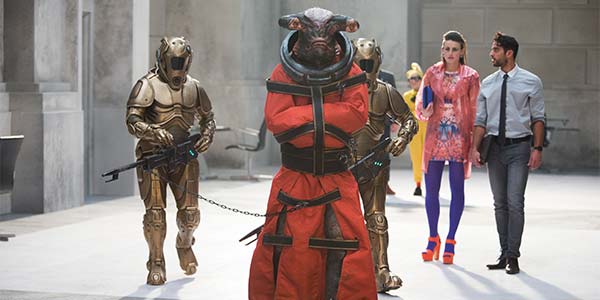
For a story centred around the idea of Ocean's Eleven in space, there's remarkably little in the way of a traditional heist story in Series Eight's Time Heist. Instead of giving viewers all the fun aspects of a heist romp, like planning and witty banter, this episode focussed on the monster of the week and the bank robbers not being able to remember who they were. Those elements make for a partially diverting sci-fi tale but leave many viewers with the suspicion that an actual adventure using heist movie tropes to the fullest could have been so much better. What viewers actually got was a tale where a group of strangers break into the most secure bank in the galaxy with remarkable ease. Because, apparently, a bank equipped with guilt-sniffing monsters, lasers, and other deadly security measures doesn't seem to have old-fashioned cameras in several important rooms. If the heist story wasn't actually going to be an out-and-out heist story, then it needed to be something else equally as entertaining. Perhaps the plot twists were crazy and unexpected enough to compensate? Well, the reveals included Psi and Saibre not really being dead and the Architect turning out to be the Doctor... but these surprises aren't actually all that surprising. Hands up, who really thought the nice supporting cast were genuinely bumped off? And, when the Architect has to be one of the main cast for his mysterious identity to have any dramatic impact whatsoever, who else could the Architect legitimately have been other than the Doctor?

4. The Last Act Blows With Chunks - The Crimson Horror

Series Seven's The Crimson Horror intriguingly featured a poison-dripping crustacean from the age of the Silurians loose in Victorian England. Okay. So how is this nugget of a story idea translated into a full episode? The prehistoric shrimp is working with a crazy lady and she's building a rocket to spread the toxin far and wide! Whoa there. A rocket? Visually exciting, granted, but more than a smidgeon unbelievable for 1893. In a milieu where venomous prehistoric arthropods seem entirely reasonable, it's a warning sign when the ending for the story is so preposterous it destroys the viewers' willing suspension of disbelief. Let's state things plainly here: Mrs Gillyflower is a religious nutjob, not a rocket scientist. And Mr Sweet is never depicted as anything other than a non-sapient prawn (sorry, "leech") with a salt fixation, so the crimson crustacean can't be supplying her with the technical details. The most uncritical of fans aren't going to agree, but all the funny turns in the world with the Paternoster Gang can't disguise the fact that this episode has a final act that makes no logical sense whatsoever. It's a story with lots of jokes along the way, but ultimately it has nowhere to go.

3. Too Many Villains Ruins The Soufflé - The Rings Of Akhaten

The Rings Of Akhaten from Series Seven is another story where there are plenty of great ingredients but, sadly, they aren't mixed together in the correct ratios. The result? Well, it's the equivalent of a flat soufflé. Ardent admirers of this story may now proceed directly to the comments section and leave angry protestations to the contrary. The story brief of a truly alien environment must have seemed irresistible for writer Neil Cross, but there's more to a good story than having a set full of wonderful creature effects. For a start, there's the need to have a compelling antagonist. The Rings of Akhaten takes the courageous approach of coming up with lots of different villains in place of one iconic foe. Viewers are just getting used to the Vigil when the mummified alarm clock ghoul wakes up, but wait - he's not the enemy - the gas giant with the smiley face is! Even the singers hunting for Merry seem sinister in the opening scenes - that's four lots of baddies in forty-five minutes! The sum of these parts is a curious sense of both overkill and of not having seen enough of each foe. But most incredibly of all, a leaf defeats a god-parasite the size of a gas giant. In a series where so many stories are spoilt by bad endings, there are no words for describing how much of a disgrace this denouement is. In fact, there are so many things about this story that fail to make any logical sense that an article could list 10 compelling reasons and still only scratch the surface. Actually, one did. Click here to read it.

2. It Doesn't Say Anything Worth Listening To - The Doctor's Wife
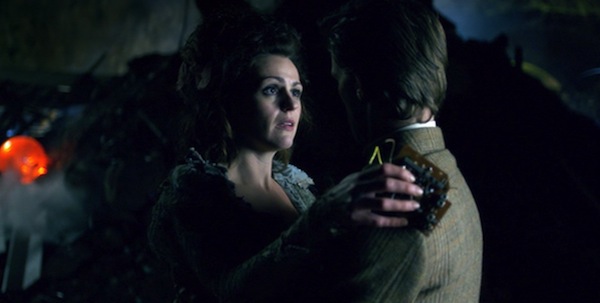
The entire premise of Series Six's The Doctor's Wife is that viewers get to meet the TARDIS on a human level and hear what she has to say. Sorry, but were fans clamouring for that? Actually, it's more likely that fans were rooting for the exact opposite. Over the decades, fans have generally hated any attempt to give the TARDIS a "voice" or a human-type personality, preferring that her consciousness be depicted as something essentially beyond human comprehension because - actually - that's far more intriguing. It's always more interesting when things aren't explained or dragged down to the level of the anthropomorphic. But The Doctor's Wife commits that cardinal sin. Yes, it commits the sin in a very skilled way, and the poetic nature of the episode almost makes it an exercise worth carrying out, but it's still doing something that's best not done in the first place. The TARDIS is a universe in a box - ultimately, what can she say that would be meaningful to a lesser scale of intelligence? Apparently, if Neil Gaiman is to be believed, the TARDIS-as-Idris can say "goodbye" and "hello" back to front because a timeship gets things like that muddled up. No, the concept of the TARDIS isn't being reduced to something silly in a scene that's just a vomit-inducing excess of sentimentality, is it?

1. Shooting Up Stuff Does Not A Time War Make! - The Day Of The Doctor

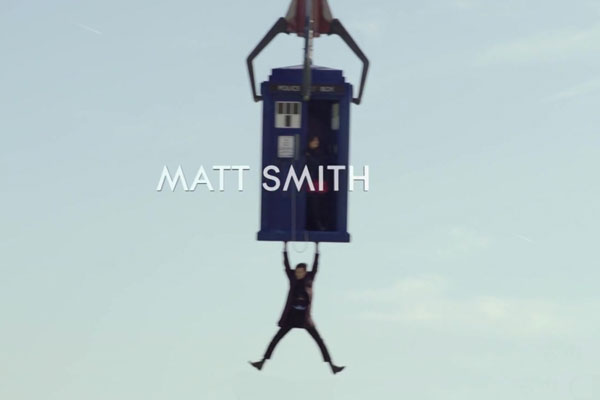
A lot of fans absolutely adore the 50th anniversary special, The Day Of The Doctor. They're right, it does contain much to admire, but - and this won't be a popular viewpoint - the anniversary special also includes many elements that are pure pants. Take the pre-credits teaser for a start. It ends with the Doctor dangling from the doorway of an airborne TARDIS, but didn't Series Five's The Eleventh Hour start just the same way? Quite why he decides to use the outside phone - which previously was stated not to be a real phone, by the way - rather than the one on the console is never made clear. And it is beyond absurd that UNIT, once they become aware that the Doctor is hanging out of the TARDIS, don't simply put it down. Following on from that inauspicious beginning, it has to be said that Queen Elizabeth the First is miscast, the Zygons are under-used (how did they get hold of the Time Lord 'painting' technology?), and the story is full of things that will frustratingly never be explained. Where does the Gallifrey Falls painting come from? How did the future Doctor get hold of it? And on and on... Most disappointing of all, the Time War is finally glimpsed on screen and, instead of using any of the intriguing details viewers learnt about during earlier stories, it's basically just a bunch of Daleks shooting up poorly equipped troops and unarmed civilians. The lasers are pretty but it's not quite the awesome War in Heaven described beforehand, is it? Where were the Nightmare Child and all those other wonderful-sounding monsters hinted at by Russell T Davies? Did these stories fail to live up to their promise for you too? Or did other adventures annoy you more? Let us know in the comments section!

Contributor
Contributor

Mike has lived in the UK, Japan and the USA. Currently, he is based in Iowa with his wife and 2 young children. After working for many years as a writer and editor for a large corporation, he is now a freelancer. He has been fortunate enough to contribute to many books on Doctor Who over the last 20 years and is now concentrating on original sci-fi & fantasy short stories, with recent sales including Flame Tree, Uffda, and The Martian Wave. Also, look for his contribution on Blake's 7 to "You and Who Else", a charity anthology to be released later this year. You can find him on Tumblr at https://www.tumblr.com/blog/culttvmike