Doctor Who: 10 Worst Master Stories Ever

When a Master story is good, it's very, very good. When it's bad...

There's nothing worse than the disappointment of a Master story that's gone wrong somewhere. Whether it's because he's been given abilities more appropriate to a mutant than to a Time Lord, or he's let his propensity for dress-up spiral a little too out of control, a bad story with the Master scarcely bears thinking about. Unless there's an article to be written about it, of course. Disclaimer time: since even the poorer Master stories have good qualities (and they also have otherwise intelligent fans that swear those stories are the best ever), the lower entries on this list may strike some readers as... well, controversial, to say the least. There are at least two fan favourites on this list, and so in addition to the usual disclaimer that your mileage may vary, you are asked to bear in mind that the first few entries on this list aren't necessarily bad stories - they're simply less good than the ones on the prior list. It was also a matter of either including them here or doing some really odd division between the two - the 15 Best Master Stories versus the Worst 7, for instance. As much as Doctor Who fans love lists, that's going a bit far... So here's a brief reminder: while the story in question may be a very good story, it may not necessarily be the best story to serve as a vehicle for the Master. Hopefully, the further you get into this list, the more you'll agree. In the meantime, let's get the more contentious ones out of the way first...

(Dis)honourable Mention: The Five Doctors (1983)
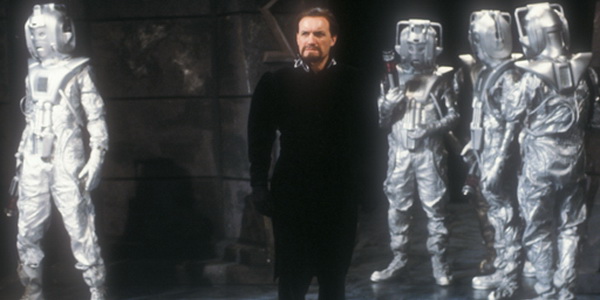
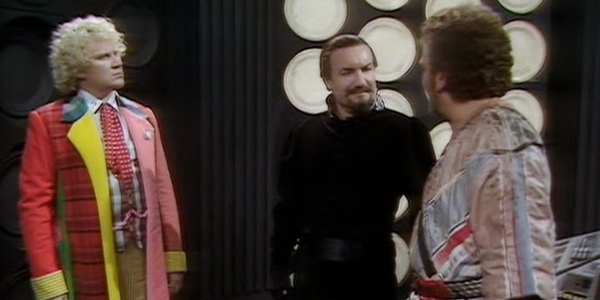
There was some debate over whether this story should even be included this on the list, given that the Master is not the central villain, nor is he particularly badly used in the story. Compared to the Daleks (um, Dalek... sorry!) and the Cybermen, he's virtually the only real threat in the thing. At the same time, he's also pitifully underused, going from having a promising opening scene in the Time Lord Citadel, in which he's promised a completely new regenerative cycle (which he apparently got at some point along the way) to being punched out by the Brig and trussed up on the floor like a turkey. It's also one of those rare instances in which the Doctor is actually wrong about the Master's motives. Fans even discovered years later that the Doctor kept the Master's Seal of Rassilon. That's one hell of a long setup, whether it was intentional or not. So, which should this one be. An honourable or dishonourable mention?

10. The Mind Of Evil (1971)

This is one of those stories that some people are on the whole positive about (though not as positive as they are about the next entry on the list), but that opinion tends to change once they've had to sit through it. Although it's only a six-parter, it feels much longer, which is probably because the plot is almost too complex for its own good. In a timey-wimey nutshell, the Master has taken (all too tenuous) control of an alien entity that feeds on evil because... oh, let's just say "reasons". At the same time, he takes mental control of a Chinese national in order to wreak havoc on the first world peace conference because this somehow gets him closer to a nuclear missile which is being transported across England. Yeah, the whole thing gets confusing very quickly. Suffice it to say, the Master has already progressed to wanting to do away with Earth simply because the Doctor likes it, or something to that effect. Mind you, there are some great bits in this overly complex and lengthy story, too. Most notable is the revelation that the Master fears the Doctor triumphantly mocking him, plus fans got to see see him hypnotising a solider using a side mirror on a moving vehicle. Hell, it's even worth it to see him listening to experimental 70's rock and smoking a cigar. But this is one of the stories that has almost too many poorer elements to include it on the other list, such as a pacing that would make molasses jealous.

9. The Daemons (1971)

Now, now, just hear us out. Believe it or not, there are some fans out there who regard The Daemons as being a woefully overrated story. It's sold mostly on the grounds of UNIT-based nostalgia since it's hard for even the most cynical fan to watch the final scene with the Brigadier and Yates and not crack a smile. And yes, the "Five rounds rapid" line is great, as silly as it may be. As a Master story, though, it's lacking something. The Master is in disguise again, though not in the sort of disguise that wouldn't get him picked up by the first competent UNIT soldier to pass by. He's also allied with yet another alien force, or rather he's trying to become allied with one, though at times he finds himself in almost as much danger as the Doctor and company. He even gets a cliffhanger, for heaven's sake, though it's hard to imagine anyone in 1971 thinking, "Oh, no, how will the Master get out of this one?" In short, the Master himself is far, far less menacing than Azal, or even Azal's annoying little chap with the wings. And then, to add insult to injury, he gets captured in the most simple and humiliating way imaginable. If you're a fan of the Master, it's hard to imagine how you could be a fan of the Daemons as well. The man really gets the short end of the stick this time.

8. Survival (1989)

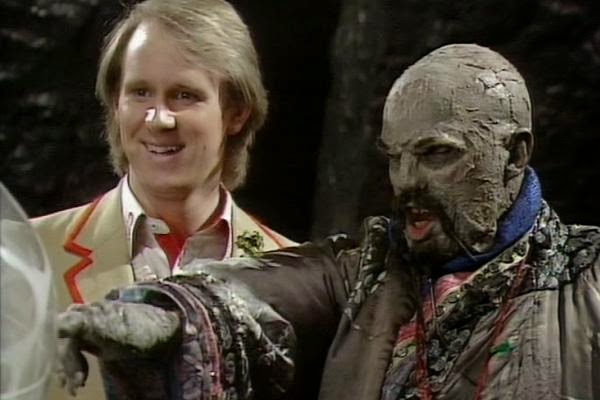
Some people say this one is a classic because of that final battle between the Doctor and the Master on the Cheetah planet, and because it's the last episode of the original series ever broadcast. But does that really make it a good Master story? Nah, not really. To give credit where credit's due, if you were to show the first five minutes of this story to a NuWho fan, they could easily mistake it for an episode of the new series. It's got the look, the pacing, the plotting... the stunt casting... just about everything that an episode of the 2005 series has. Plus, it's not a bad story to boot. But it's also a story that's more to do with the Cheetah People themselves, and survival of the fittest, than it is about the Master himself. Ainley's not bad in this one, either. Despite not quite being himself due to his...infection? possession? by the Cheetah People, he's genuinely creepy in a few scenes. Problem is, he's only ever in a few scenes - it's one of those pesky three-parters that were so popular in the McCoy era, and as such his screen time is drastically reduced. He has only one scene in which he's being properly Master-ful, when he's attempting to control Midge, but it's painfully short, as is that much-vaunted final confrontation with the Doctor. Where the hell does he go at the end, anyway? In many ways, it's no better a send-off for Ainley than Frontier In Space was for Delgado. Except that Delgado was in a far better story.

7. Castrovalva (1982)

Castrovalva is a fairly decent Peter Davison story. Heck, Castrovalva's even a pretty good Adric story, if you're into that kind of thing. But Castrovalva is not one of the better Master stories. A lot of this may be because of the sheer build-up that Logopolis gave fans. In that story, Anthony Ainley's new Master is every bit as menacing as Delgado. Here, he acts more like the moustache-twirling villain of the old movie serials that some fans believe him to be. It's hard to say where all that menace went, given that both stories were written by the same author. And yet in Logopolis, the Master is out to either rule the universe or see it burn. Here, he's more interested in stringing Adric up in his web - which, if you look at certain shots too closely, the boy seems not to be minding too much - and trying to kill the Doctor from afar. Then, when that fails, he goes with Plan B. That's something that people seem to have forgotten. Castrovalva, that miracle of block transfer whatchamacallit, is actually Plan B. The original idea was always to kill the Doctor in the hydrogen in-rush of Event One. From afar, mind you, without the Doctor ever knowing who killed him. But if that failed, then and only then would the Master use his cunning Castrovalva gambit. But what is that, precisely? Lure the Doctor into a false sense of security while dressed up in his most elaborate disguise, only to reveal himself long after he could have more effectively killed him? Great. And, t top it all off, we get that whole "My web! My web!" business at the end. Sigh. We can forgive the goofy cast listing for the Portreeve before we can forgive all of this going on.

6. The TV Movie (1996)

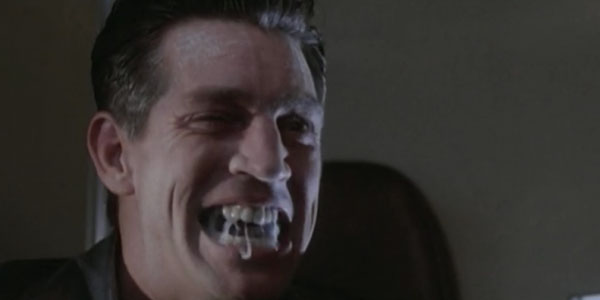
There are some fans who may have thought that this one would've been included much higher on the list. No such luck. There are far, far worse Master stories than this one, though, as it turns out, not that many. Thematically, in fact, this is one of the better ones, as it treads in the same territory as The Deadly Assassin and The Keeper of Traken in that the Master is presented as a desperate man nearing the end of his existence, fighting for survival. The Doctor even points this out to Grace. Slowly rotting corpse and weirdly processed voice aside, however, you wouldn't really know it from Eric Roberts' campy performance. And that's really what dooms this story as a Master story. The camp. Roberts rarely taps into the sheer menace that's available in the Master's character. We get an all but brief instance of it when he kills off Bruce's wife (actually, Eric Roberts' wife) in the most brutal way possible, but, apart from that, he seems content to ham it up for most of the proceedings, cranking it up to 11 with his "I always... dress for the occasion" line. He's not even responsible for the real threat in this story, which is from the Eye of Harmony itself. But that's just way too confusing to go into here. Up until then, Roberts' was arguably the most over-the-top performance that fans had seen from an actor as the Master. Little did they know what was to come...

5. The Time Monster (1972)

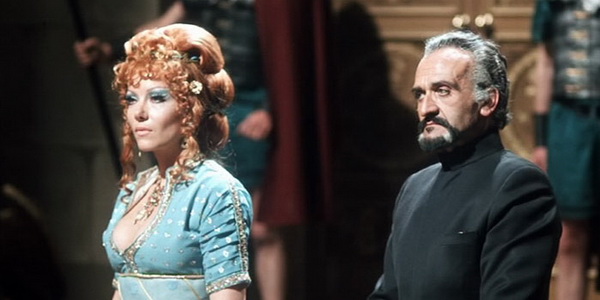
It's baffling how many people like this one. Maybe it's something to do with the Master trying to score with 70's-era Ingrid Pitt because, let's be honest, who wouldn't? Or maybe some people truly enjoy "all that Cretan jazz". In any case, The Time Monster is a six-parter, and it's one of those six-parters that you feel every single second of while watching it. The pacing is ditchwater slow, and most of it is taken up with a bunch of timey-wimey nonsense. The Master's attempt to ensnare Kronos, the most dangerous of the Chronovores, results in some of the few interesting tidbits, and that's just because of the person in a giant white chicken outfit. The Master, meanwhile, is back to his old trick of hiding in plain sight. Honestly, by this point it's like the guy wants to be caught again - even down to using a pseudonym that translates as "Master," a move that's meant to be taken as clever but it's actually just plain careless. And please, let's not start on the Atlantis stuff. Please. Ingrid Pitt is at least entertaining - far more so than in Warriors From The Deep, even with the hai karate - and her interactions with Delgado are even a bit steamy. The bits about the Doctor's background are interesting, too, as is the whole Time Ram concept. But any story that ends with the Master literally on his knees begging for mercy simply can't be considered a good Master story. It's a good thing they had Frontier In Space coming the next season to remind fans that the Master could actually still be menacing.

4. The Ultimate Foe (1986)

You may be wondering how this story gets included on the list when The Five Doctors doesn't, and it comes down to the fact that the Master is meant to play a much more significant part in the plot - such as it is. True, he initially acts only as an info dump ex machina, but then he's given slightly more to do, with "slightly" being the definitive word. There's actually very little to complain about in Ainley's performance here - but then, there's so little of it to begin with. The Master is sidelined here in ways that he simply isn't in Mark of the Rani, playing second-fiddle to the Valeyard (and even Glitz!) for most of the story. It was nice to see the interior of his swank TARDIS again, but if that's all that's on offer, then what's he actually doing here? Such a shame, too. It might even have been preferable for fans to have discovered that the Valeyard was the Master the entire time, albeit in a much better disguise than usual. As it is, viewers instead discovered that it's the Doctor himself, somewhere between his twelfth and thirteenth incarnations...
...Hey!

3. The King's Demons (1982)

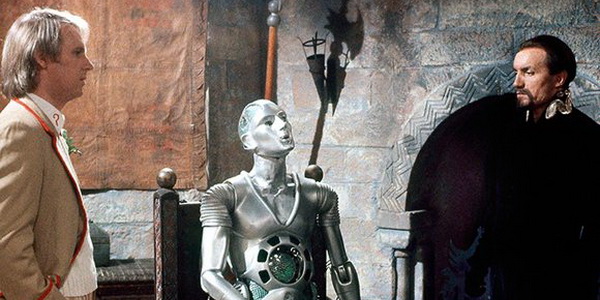
A little while back, the argument was made that Victory of the Daleks is one of the worst Dalek stories ever because it's essentially a close-to-50-minute commercial for the New Paradigm Daleks. The same exact thing can be said about The King's Demons when it comes to Kamelion, only without the jazzy new action figures to go with it. That's the biggest problem with this story, apart from it being so wafer-thin you could probably serve it to Mr. Creosote and make him vomit. Once again, it's barely even a Master story at all. Even the Doctor says that the Master's plan to mess up the signing of the Magna Carta is "small-time villainy by his standards". After all, what would that actually have achieved in the long run? That's a rhetorical question, by the way. Instead, the whole story is geared to introduce Kamelion into the series - just in time for the guy who ran his software in real life to die in a horrible accident, making it impossible for anyone to operate the damned thing for another year. At least Planet of Fire makes some good use of both the Master and Kamelion, whereas here it's just the robot sitting down most of the time with the Master being... well, wallpaper, really. If nothing else, it gave Ainley a reason to come back for The Five Doctors.

2. The End Of Time (2007)

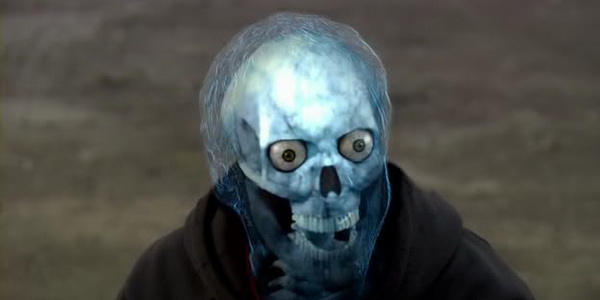
Ever wonder why fans have never been told in the classic series how the Master returns from the dead so many times? It may be because the ways he gets resurrected are downright silly and painful to watch, such as his resurrection by his loving cult(!) in this episode and subsequent transformation into one of the X-Men. Cannibulis, perhaps, or Skeleter (because "Skeletor" has already been taken). There are so many reasons why The End Of Time is a terrible send-off for any Doctor, let alone David Tennant, but having this grinning bleach-blonde baboon leaping around and throwing out lightning bolts from his fingertips makes it ten times worse. And while fans got something of an explanation for that weird drumming the Master suddenly has always had in his head, it's simply not satisfying as character motivation, nor does it adequately explain all those years of weird disguises, even weirder plots to rule the universe, and moustache twirling. To quote one of Chris Rock's routines, "Whatever happened to 'crazy'?" The only thing keeping this story from being a complete waste of time Master-wise is that it gives the character some little bits of redemption at the end, as well as paving the way for Michelle Gomez to come along later and make the part her own. Sorry, but that's still awesome.

1. Time-Flight (1982)

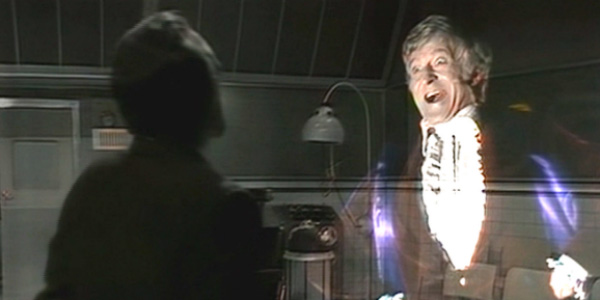
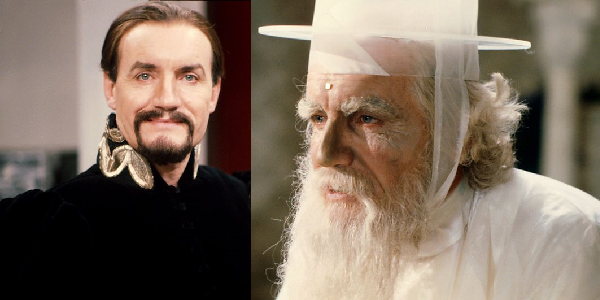
There's so little to recommend Time-Flight as a story to begin with that it regularly comes in low on most polls ranking classic Doctor Who episodes, so it should be no shock that it's by far the worst Master story ever written as well. If fans ever needed proof that those drums in his head drove the Master bat-s**t insane, this story should provide it, and it doesn't even need John Simm turning his performance up to 15 to do so. For one thing, it's never, ever explained why the Master is dressed as Khalid to begin with, nor why he's going through the whole rigamarole of using that stupid crystal ball to fool the Doctor, unless it's just as a goof. Then there's his "death," which is patently ridiculous - why pretend to die, much less writhe on the floor drowning in geysers of snot, when none of it, absolutely none of it, means a hill of beans? The rest of the plot isn't much better either, and the Master gets precious little to do once he unmasks. From that point onwards, it's all about the Xeraphim and getting Concorde (and Tegan) back to Heathrow. The Concorde at least finally gets decommissioned, but fans still had to endure Tegan for a while after this. And did they really have to bring Adric back? Let the poor kid - and us - rest in peace. Perhaps viewers should look at this as the first chapter in the unofficial Kamelion trilogy, a set of stories that only gets good (or even competent) when it ends. Maybe in that light it has some redeeming qualities. But as a Master story? No, uh-uh. N So, the next time you want to watch a Master story, it's much better to put in a disc of one of the Delgado stories, even one of the ones on this very list, to see how it's really done. What are your thoughts on our rankings? Where should we have placed The Five Doctors, if it should be placed on either list at all? Let us know in the comments below!

In this post: 
Doctor Who
 
Posted On: 
Contributor
Contributor

Tony Whitt has previously written TV, DVD, and comic reviews for CINESCAPE, NOW PLAYING, and iF MAGAZINE. His weekly COMICSCAPE columns from the early 2000s can still be found archived on Mania.com. He has also written a book of gay-themed short stories titled CRESCENT CITY CONNECTIONS, available on Amazon.com in both paperback and Kindle format. Whitt currently lives and works in Chicago, Illinois.