Doctor Who: 9 Things You Never Knew The Ninth Doctor Did

From multi-Doctor adventures to meeting Sally Sparrow.

Of all the Doctors to have ever been, it appears that the middle Doctors are often sorely overlooked or forgotten. The Sixth with his Joseph Jacket, the third with his Lord Byron outfit and the 'other' Doctor shoehorned into an episode, and most Doctor Who fans are still enthralled with the Eleventh's bow-tie, enamoured with the Tenth Doctor's sticky-uppy hair or lost somewhere in the Fourth Doctor's curls. Unfortunately, there is less rabid excitement about Ninth Doctor, which is confusing for a Doctor with such great depths to his character. The PTSD Doctor, stumbling out of his TARDIS in anguish over his assumed destruction of his people. The snarky Doctor, masking his pain by the jokes and friendly ribbing with Rose and Captain Jack, and the Doctor again, standing at the threshold of death to Daleks and humans alike, refusing to commit genocide even for the greater good and trying, in some small way, to redeem himself for his sins. Christopher Eccleston's portrayal of such a layered character was absolutely brilliant and the unfortunate circumstances of his departure from the show has indeed robbed us of more stories about the leather-jacketed Time Lord with the big ears. While the Fourth, Fifth, Sixth, Seventh and Eighth Doctor (and even the Valeyard) have had their universe expanded upon in books and Big Finish audio dramas, it does seem depressing that the Ninth Doctor's entire era was able to be released on DVD with room for bonus features. But for those who argue that "The Ninth Doctor never did anything!" as a reason to skip Nine, prepare to be amazed at some of the adventures the Ninth Doctor had outside of the main television series. To honour Christopher Eccleston, here are 9 things you never knew the Ninth Doctor did. You'll be surprised he got around so much...


9. He Had An Alien Companion

WHAT: Not since the Fifth Doctor had an alien companion travelled with him in the TARDIS in televised adventures (Adric, Nyssa and Turlough, in case you were wondering), and not since the Eighth Doctor's era had an alien been a companion as well in spin off media (Bazima, Ssard, Destrii, C'rizz). The Fourth Doctor was probably the best known for non human companions - the Time Lady Romana I and II, as well as K-9 the robot dog. In NuWho, only the Eleventh Doctor had a non-human companion (the shape-shifting robot ARC), which does raise questions about equal opportunity and implied racism in these latest day and age. Nevertheless, the Ninth Doctor, being a little more open-minded than his previous selves, took on an alien companion for a single adventure: A Karkinian named Ali. HOW: Karkinians were an arthropodal species native to the planet Karkinos. Ali was a college student there and, while having been taught that Time Lords were extinct, she was still proficient in using the TARDIS. The Ninth Doctor, after dematerialising for the first time at the end of Rose, crash landed on her planet while fighting off a Starman (think Galactus the planet-eater) and she refused to return a silver orb the Doctor dropped until he let her travel in the TARDIS, despite the fact that the orb was the only thing preventing the Starman from consuming planets. The Ninth Doctor relented and took her and the orb to ancient Babylon, defeating the Starman tahere. Unfortunately, along the way, the Doctor's life was threatened by some soldiers and Ali killed them all in a fit of rage. The Doctor decided to return her home for fear her warrior instincts harmed anyone else. SO: Charlie Higson's The Beast of Babylon is a fantastic entry in the Doctor Who 50th anniversary short story collection. It gives an insight into the Doctor's depression at being rejected by Rose and his willingness to take on a planet-eater with barely a thought for his own safety. Ali was an amazing amalgamation of the Doctor's past companions. The intelligence of Adric, the sneakiness of Thomas Brewster, the savagery of Leela, the backtalk of Tegan and the care and loyalty of Nyssa. It also speaks volumes about the Doctor's disinclination to surround himself with warriors and wanton violence after the Time War. Finally, Ali should always be honoured by fans of NuWho. She was the one who convinced the Doctor to return to Rose and invite her again to travel with him, saying "Did I mention? It also travels in time." The rest, as they say, is history.

8. He Met Sally Sparrow

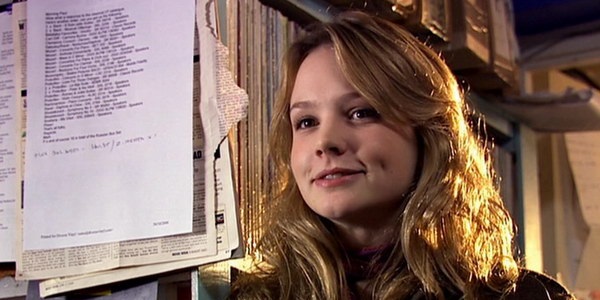
WHAT: Sally Sparrow. The name synonymous with Blink and the Weeping Angels. The main character in one of the most 'timey-wimey' episodes to date, having found messages below her wallpaper warning her not to blink. She followed the Doctor's instructions, 'communicating' with the Tenth Doctor in her future and the past, who is using the script of her current conversation to talk through the television. Wibbly-wobbly, indeed. Blink still remains one of Steven Moffat's best episodes with the horrifying enemies, the suspenseful music and storyline and the time displacement and paradoxes that have since been a staple of Moffat's writing. However, it would have been a much better episode had Moffat not stolen his own idea to write it. The Ninth Doctor had met a much younger Sally Sparrow, in a similar timey-wimey story, back in the 2006 Doctor Who Annual. HOW: Continuity errors aside, 12 year old Sally Sparrow accidentally peeled away the wallpaper in her room with a plea for help from the Ninth Doctor and proof of veracity by asking her to think of a number, of which was carved into a tree. Sally then tracked down a videotape of the Ninth Doctor who asked for her help, not to fight off Weeping Angels or any scary aliens, but because his TARDIS 'hiccupped' and left him 20 years in the past. The Doctor can communicate with Sally because he€™s reading the story she€™s going to write for her Christmas homework and asked her to hit the fast return switch on the TARDIS to send it back to him. On screen, the TARDIS materialises and her future self emerges from it, her mission successful. The story ends with Sally writing up the story and planning to go find the TARDIS, happy that, in the future, she becomes a beautiful female spy that saves the Doctor from sword-fighting Sontarans and gives him this homework. SO: While the story isn't up to Moffat's usual standards of confusing paradoxes and explosions, having clearly been written for kids, it is interesting to see the origins of Blink and the genesis of that story, and also the cojones of Moffat in thinking that no one would notice. This story is also predicated upon so many tenuous plot devices. Why did the Ninth Doctor have to prove the message's veracity by asking Sally to guess a number? Doesn't Sally's seeing herself on TV mean that she is now under no urgency to return the TARDIS? And how does one resolve the story within the Doctor Who canon? Is it the same Sally Sparrow? Does this violate the Laws of Time? How did the TARDIS 'hiccup' and jump forward 20 years? Nevertheless, the Doctor has met companions before and after their official meeting - Jamie, the Brigadier, Rose Tyler - and Charley Pollard turned that around by meeting the Doctor before he met her. If this is the same Sally Sparrow, retcon notwithstanding, this continues that trend. Despite the wibbly-wobbly quality of the story, it still makes more sense than that time Einstein turned into an Ood.

7. He Pretended To Be A FIFA Referee

WHAT: The Doctor has had a hand in many sports - cricket in his fifth incarnation, spaceship racing in his eighth and tenth and correcting Peri's English in his sixth. The Doctor has also had a penchant for visiting history and observing events unfold - from Neanderthals in his First to the Great Fire of London in his Fifth to the Star Whales in his Eleventh. While the Ninth Doctor visited many places in Earth's history during his tenure, including taking Rose to see the death of Earth and visiting the British Empire Exhibition in 1924, unlike his previous companions, there was few adventures where the Ninth Doctor travelled to an historical event for history's sake. Except, of course, the time he travelled to WW1 and pretended to be a FIFA referee. HOW: The Doctor and Rose travelled to the trenches of WW1 on Christmas Day. Talking their way into the British army's good graces, the Doctor revealed that he was here purely to wait for the German's football to come over the wire, and when it did, he challenged the Germans to a game on behalf of the British Army - and thus the Christmas Truce was born. Not only that, the Doctor decided to throw himself in the game, declaring himself a referee from the Fédération Internationale de Football Association (FIFA) with his trusty psychic paper and ensuring a safe and fair game on both sides. Afterwards, he left with Rose, leaving behind a peaceful and magical Christmas truce. SO: The IDW comic miniseries The Forgotten, and this Ninth Doctor story in it, is a tremendously fascinating read, filled with tiny little gems that fans of the old and new series would enjoy. The story alone mentions a 'Captain Jack Harkness' leading the British Forces and the Doctor also identifies himself by the psychic paper as 'Brigadier Bambera'. Psychologically speaking, the role of referee that the Doctor takes on also speaks volumes from his former incarnation and the incarnation he used to be - from a man of war back to a man who fights only to keep the peace. Sometimes, a story doesn't have to be filled with extraterrestrial invaders or some great evil or temporal paradox. Sometimes, it's cool to just let your hair down and have a bit of fun. God knows, the Ninth Doctor needed it.

6. He Saved Shakespeare

WHAT: A man who needs no introduction, the Doctor has been continuously popping up in the life of Shakespeare, from the Second Doctor interfering in the events of Macbeth to the Eleventh interfering in the events of Romeo & Juliet, to the Tenth saving Will's life against the Carrionites to inspiring Shakespeare in his first incarnation for A Midsummer Night's Dream by ruining a Sontaran re-enactment of the events of the Fourth Doctor episode Horror of Fang Rock... Seriously. They even made a character called 'Lighthouse'. Ultimately, the Doctor has been a staple in William Shakespeare's life, appearing time and time again to save him from threats magical and extraterrestrial - the Daleks, a Weeping Angel (which turned out to be a harmless statue), and even bad writing by using the 'Sally Sparrow' method of using the completed manuscript to write his parts of the completed manuscript. So, it too makes sense that the Ninth Doctor would take the opportunity to pop in and save the life of Shakespeare during his run and he did just that in the comic 'A Groatsworth of Wit'. HOW: The main supporting character, though, is not old Boney, but Robert Greene, a rival to Shakespeare who is insanely jealous of his success. Extra-dimensional entities called Shadeys begun influencing him (like the Carrionites did Shakespeare), preying upon Greene on his deathbed and transporting him to the future so as to feed off his negative emotion (read: hatred and jealousy) and break through to our dimension. After Greene saw Shakespeare's success and his obscurity in the future, he was returned to 1592 in a murderous rage and intent to kill Shakespeare. The Doctor and Rose followed him and stopped him just in time, yelling to Greene to see the error of his ways and preventing the destruction of the universe, and also promising that they will remember him and how he saved the Earth. Content in the knowledge that this feat will be bigger than Shakespeare's own, Greene channelled the collected emotions into a burst of power that cast the Shadeys back to whence they came. History and Shakespeare was saved but Greene returned to his deathbed, no longer filled with envy and hatred, but contentment. SO: While also similar to the Tenth Doctor's story of Shakespeare and the Carrionites, this story does have some redeeming qualities. Rose in Elizabethan dress, Shakespeare hitting on Rose, the Doctor reciting Richard III from memory onstage - and some quality dialogue as well. Mainly, though, it focuses upon the themes of jealously and the lengths one may go for revenge, plus the human desire not to be forgotten. Even the Doctor was struck with that same melancholy, saying (and unconsciously echoing the Eleventh Doctor's words) "Everybody gets forgotten in the end, Rose. Best to make the most of life while you're still around". It is even more striking when contrasted with his own preference to be remembered as a coward than a killer at the end of his run. In the end, Rose gave the only reply possible, saying that no one was ever going to forget him - the Doctor.

5. He Fought In Cyberspace

WHAT: Every Doctor seems to be especially good at one particular thing. The Seventh Doctor played his spoons with great dexterity and regularity, to Ace's annoyance, so well that he won an intergalactic talent competition on behalf of Earth. The Third was a master of Venusian Aikido, able to defend himself and subdue opponents with ease, and having the dubious achievement of taking down several human drones who were mind-controlled by giant spiders. The Fifth was fantastic at cricket, being able to lead a small town cricket team to victory and nearly hitting an explosive cricket ball for a six. The Ninth Doctor, on the other hand, had not had an opportunity to demonstrate particular skills with anything - at least, not until the book Winner Takes All by Jacqueline Rayner. A pretty little story, set on Earth, where the Doctor could demonstrate his expert skill... at video games. HOW: The Doctor and Rose return to Earth to find out that video games are being given away in a competition, a FPS against insect aliens called Mantodeans and involving complex mathematical puzzles. After the Doctor finishes most of the game with effortless ease, he finds out the awful truth - a porcupine-like raced called Quevvils had been kidnapping humans, fitting them with neural control discs, and transporting them to the Mantodean fortress to act as carriers for the games€™ signals. Whenever a game ends, that means an innocent human being has just been killed. Things get hairy when the Doctor is too kidnapped and forced to continue playing the game. Things get even hairier when Rose is captured and made into the Doctor's avatar. Thanks to some quick thinking, fancy footwork, and help from Mickey back on Earth, the Doctor and Rose complete the game and Team TARDIS disrupts the teleport beams so that the Quevvils are disintegrated midstream. The day is saved. SO: Jacqueline Rayner's story is an interesting one. It expands on the depth of the Doctor's skill with technology and his intelligence dwarfing our own, especially in a high-pressure situation. It harkens back to Romana II's observation in Luna Romana and the Eight Doctor's comments to the Master in Dark Eyes 3. While the Doctor may not be as book smart as Romana, Nyssa, Adric, the Master or even the Rani, his true skill lies in imagination and inspiration under pressure, and it is a good thing to see the Ninth Doctor being the same. This story also emphasises the Doctor's feelings around protection of Rose as well as his own helplessness to prevent harm from befalling her, especially when he was forced to play the game with Rose as his avatar and her life was literally in his hands. But most of all, despite all his skill, the Doctor needs his allies, and this story really shows Mickey's own independence away from the Doctor and his own technological prowess. The Ninth Doctor may have had Rose, but at times, he needed his Mickey, too.

4. He Drove Himself And Rose Crazy

WHAT: Over the course of his life, the Doctor and his companions have faced many psychic attacks and bested and been bested by them. Seriously. The Doctor has been mind-controlled countless times. The Seventh Doctor audio 'Red' is a great example, if only to hear Sylvester McCoy growl "Red" in his Scottish brogue. His companions, on the other hand, more often than not fall under mind control, psychic control, magic spells and whatever you can imagine. Take the Fifth Doctor, for example. All his companions were susceptible and were taken over by every monster under the sun - the Mara, the Master, and so on - and they all subsequently tried to kill the Doctor, too. Leela, Adric, Tegan, Ace, Charley... These are just a few of the companions who were beaten by psychic attacks. Therefore, in continuing the proud tradition, it only seems fair that the Ninth Doctor and Rose also take on an alien entity in a battle of the mind. And lose. HOW: The Doctor and Rose arrive on a cruise ship belonging to a 145 year old billionaire, which also happens to be on Mars, in the future, and also in an air bubble. Something seems to be killing those on board, including all the billionaire's ex-wives, and Team TARDIS discovers that there is an entity below the waves, something of the planet itself who seeks revenge for the billionaire terraforming the entire planet and modifying the elements for his own wealth. It takes over the Doctor and uses his body to kill the other passengers. It then absorbs the survivors' minds in reflective surfaces to therefore 'live'. Rose gets to experience the horrifying possibility of an alternate future where the Doctor returns to her much later. Mickey has left her and her baby and when the Doctor comes back, he is a much colder Doctor, so afraid of being alone that he steals her baby and raises her as his new companion. She rejects that future, breaks through to the Doctor trapped in his own mind and together, with his help and the TARDIS, exorcises the entity. SO: This comic strip, The Cruel Sea, provides a fantastic insight into the life of Rose and tells of her impact upon the Doctor - mellowing him, helping him care about the human race again, caring for him - as well as the repercussions of her life and his own if she did not. It also shows that while the Doctor may not be so psychically powerful as his earlier incarnations. He is a schemer like his seventh, able to lure the entity into the TARDIS while still giving him the usual warning. The story speaks about one's identity and how easily it might be subsumed by someone or something else. Just like the Doctor, though, it can also be saved by someone who cares for you.

3. He Fought The Clockwork Men

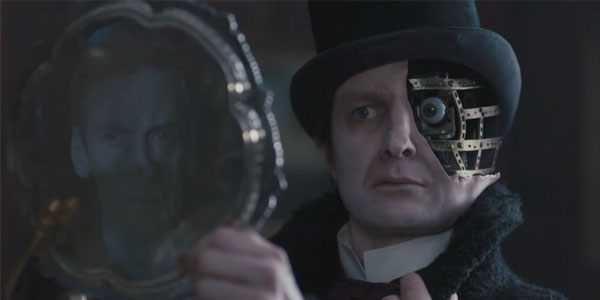
WHAT: Viewers of Deep Breath will remember these eerie, clockwork androids who operate with sharp claws and single purpose. The Tenth Doctor encountered these creatures as they hunted down Madame de Pompadour to replace their ship's parts, the Eighth Doctor fought them as they were manipulating people "between the ticks of the clock" and the Twelfth Doctor took them on, and their leader the Half-Face Man, in Victorian London as they skinned the local population. These robots are ferocious and are occasionally sentient. The Half-Face Man could hold debates with the Twelfth Doctor about morality and human decency - ironic, as neither of them were actually human. However, it was rather strange that the Twelfth Doctor could not recall facing these before. He battled Clockwork Soldiers in the Land of Fiction in his second Incarnation and, as the Ninth Doctor, he and Rose took on Clockwork Men in 1920s London. HOW: Intent on visiting the British Empire Exhibition, the Doctor and Rose are embroiled in the hunt for a strange hulking figure that ticks like a clock, and are then in turn hunted by an alien bounty hunter, named Melissa, who mistook the Doctor for an exiled tyrant. She is the one sending the Clockwork Men in knights' armour after the Doctor to kill him. While the Doctor and Melissa concurrently do their own investigations and discover the alien tyrant, he in turn is revealed to be a Clockwork man duplicate, while the tyrant had wired Big Ben to explode on the hour and generate enough energy for his ship to recharge and travel away, never mind the thousands of people who would die. The Doctor and Melissa team up to stop the tyrant and the Clockwork doppelgänger sacrifices itself to stop the explosion and save the day. SO: It doesn't really help that the Cybermen are much better android villains, but the Clockwork Men are scary in their own right. In Justin Richards' The Clockwise Man, though, the Clockwork Men are shown in another light - an android that didn't even know it wasn't human and learnt enough from its surroundings to sacrifice itself to save others. Not since Kamelion had such a sacrifice been made in this way, although, unlike Kamelion, the Clockwork Man didn't have to beg for the Doctor to kill him. Just like any old foe, the Clockwork Men have popped up here and there for their own gains, and just like any old foe, someone needs to be there to stop them. Tick tock, Doctor.

2. He Teamed Up With The Slitheen

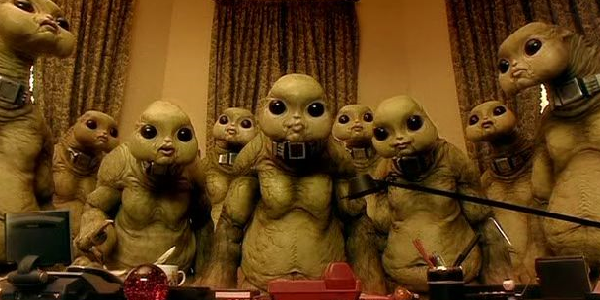
WHAT: The Slitheen, the monster that should have had everything going for it. They were able to disguise themselves as other species by fitting into their skin, they had faster-than-light travel and they were particularly callous to boot. They were like your local crime-boss, if you didn't mind them farting all the time and looking like E.T.'s older, uglier cousin with a taste for flesh. From the planet Raxacoricofallapatorius, they were exiled and decided to try to conquer Earth in other ways, from facing the Ninth Doctor in London and Cardiff, to battling Sarah Jane Smith over their plan to crush the Earth into a giant diamond, to being stopped by the Tenth Doctor in ancient Greece over their tampering with time, transporting ancient Grecians to the future, and making them fight for the pleasure of extraterrestrial tourists. They were amoral, terrifying creatures (farting notwithstanding) and, as such, it would totally make sense that the Ninth Doctor would team up with them, right? HOW: It does make sense, of course, if you consider an even worse enemy. When the Doctor and Rose arrive upon a prison planet in the year 2501, they are immediately arrested for trespassing and sent to separate prisons, on separate planets, in a solar system dedicated to prisons. You know, normal Doctor Who stuff. While the Doctor is forced to do scientific experiments with several Slitheen prisoners, Rose is stuck in a youth prison with terrifying guards. And as everything goes to heck in a handcart and suspicious deaths increase, the horrible truth comes out - the guards and government of the system has been replaced by Blathereen (another criminal family of Raxacoricofallapatorius who came to power after the Slitheen's own defeats) who intend to use the entire solar system as a weapon to incinerate planets and convert them to fuel, therefore making a profit somehow. The Doctor and Rose, after escaping and freeing the human prisoners, foiled the Blathereen's scheme and left happy, although ignorant, that the Slitheen had faked their deaths and begun to reverse-engineer the device and return the Slitheen family to the heights of crime and infamy. SO: Stephen Cole's The Monsters Inside took its opportunity to bring back the Slitheen in a way that underlined their ruthlessness, intelligence and deviousness, rather than the farting green stereotypes fans have all come to know and dislike. It also showed that the Doctor was not above making deals when lives were at stake - 'the enemy of my enemy' and all that - and while that might have occurred in his War incarnation, the Ninth Doctor was different. He actually believed the Slitheen could change, and had changed, for the better, and was disappointed that they hadn't. The Doctor had finally regained some of his hope for humanity after the Last Great Time War. Of course, feel free to check this adventure out too if you ever wanted to imagine Rose Tyler in prison orange.

1. He Had A Multi-Doctor Adventure

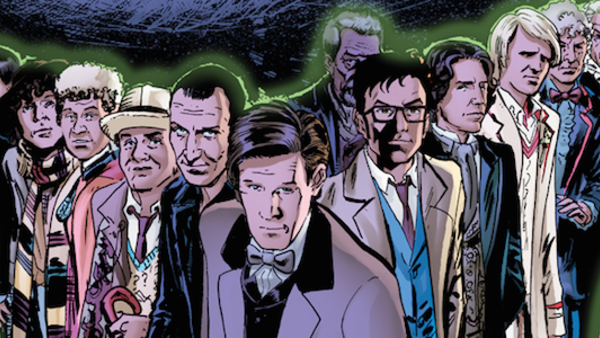
WHAT: Stories like these bring joy to every fanboy's heart. The Doctor has met his previous incarnations, usually in times of great world-changing disasters, or occasionally whenever the Doctor feels like flouting the rules of time. Stories such as The Two, Three, Four, Five, and Eight Doctors, the audio drama The Light at the End, shorts such as Time Crash and TV movies such as The Day of the Doctor, allows the interactions of multiple facets of the same man, with hilarious and amazing results. So far, every Doctor has, in one form or another, been the leading man in a multi-Doctor adventure and multiple companions from different eras. All, that is, except the poor Ninth Doctor. He has appeared as supporting character in many adventures of the Tenth and Eleventh Doctor, both in person, drawn from the TARDIS memory banks, or within the Doctor's mindscape, but he has never really been the one who takes centre stage in vanquishing the enemy with the Doctors at his side. HOW: The 50th anniversary comic, Prisoners of Time, is probably the closest one might get to the Ninth Doctor's multi-Doctor adventure. To summarise, an unknown cloaked figure had been kidnapping all the Doctor's past companions and removing them from the time stream. The finally meets him in his Ninth incarnation - he is Adam (remember the guy with the hole in his head when fingers are snapped?) and taking his revenge on the Doctor for leaving him behind without a second chance. He grew old, afraid of people finding his 'disability', and turned his intelligence, technology and resources to uncovering Henry van Statten's vault, capturing a Time Agent and using his vortex manipulator to do all this, with the help of the Master and an army of Autons. The Doctor gathers all his other incarnations and try to stop them, while the Master double-crosses Adam and announces his intention to destroy all the Doctors and time itself. Adam, finally realising how far he went, surrendered to the Doctors, and with words from the Ninth Doctor ("You said I misjudged you. Prove me wrong."), he sacrificed his life to save them all. The story ends with all the Doctors and companions standing over Adam's grave, with the knowledge that his selfless act saved the universe and that in the end, he really was a companion true. SO: By far a thrilling and tremendous story, Prisoners of Time explores a theme common to the latter seasons of NuWho - what consequences do the Doctor's actions have upon the people around him? Does he save people from harm or does he bring the evil with him and the hounds of hell on his heels? The Ninth Doctor's act of abandoning Adam led to all these events occurring but as Rose said, "He lets us make a difference". And that was the Ninth Doctor, ultimately. Troubled, violent and often suffering from PTSD, still warlike and blunt in his nature - but still, at his heart, a good man, who is willing to protect those he cares about, no matter what the cost. A man who battles against evil and yet refuses to become part of that evil himself. With him and his companions by his side, he was, in the end, fantastic. What did you think of this list? Are there any other little known adventures that the Ninth Doctor embarked on? Join the conversation in the comments section below.

Contributor
Contributor

An obsessed Doctor Who watcher, reader, listener, and occasionally writer. Consult for all your Big Finish and useless trivia needs.