Doctor Who: EVERY Doctor Ranked Worst To Best
As we wait for answers about the Sixteenth Doctor it’s time to decide: who’s the best from One to Fifteen?
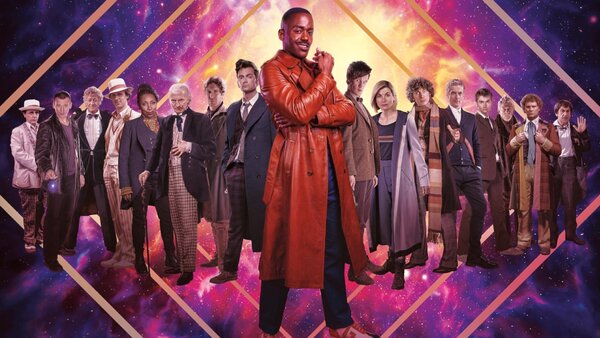
Once upon a time, life was simple and there was just one Doctor: William Hartnell.
Then, in 1965, Peter Cushing played the Doctor in the film Dr. Who and the Daleks. And then, in 1966, the Doctor was recast on television, with Hartnell replaced with Patrick Troughton.
Since then, twelve other actors have played the part full time, and fans have been endlessly debating who did it best.
And now, for the first time in Doctor Who history, we technically don’t have incumbent Doctor (due to the BBC’s refusal to confirm whether Billie Piper really is Sixteen or not). So there’s never been a better time to do a Doctor ranking.
For the purposes of this list we’ll only be counting numbered Doctors, with each incarnation, rather than actor, counted separately (so two David Tennants, but no John Hurt or Jo Martin). And we’ll specifically be assessing each Doctor’s personality rather than the quality of their episodes or era.
Of course, it’s worth saying that every Doctor is brilliant and every Doctor is someone’s favourite. So don’t take this too seriously!
With that out the way, let’s begin…
16. Honourable Mentions

It wouldn’t be fair to compare the War and Fugitive Doctors to their full-time counterparts, but it also wouldn’t be fair to leave them out entirely.
The War Doctor is the embodiment of necessity being the mother of invention. When Christopher Eccleston refused to return for the 50th anniversary special in 2013, Steven Moffat opted to introduce a whole other incarnation between Eight and Nine.
It was an audacious move – but John Hurt was so good as an older, gruffer Doctor that no one batted an eyelid! And casting an actor who could theoretically have played the part during the Wildness Years was inspired.
Fast-forward seven years and Chris Chibnall introduced another additional incarnation, whose placement has never been officially confirmed (though it’s heavily implied that she comes before Hartnell).
She might only have had a handful of appearances but Jo Martin instantly won fans over as the Fugitive Doctor, giving us a glimpse of a sterner and more serious incarnation opposite the joyful Jodie Whittaker.
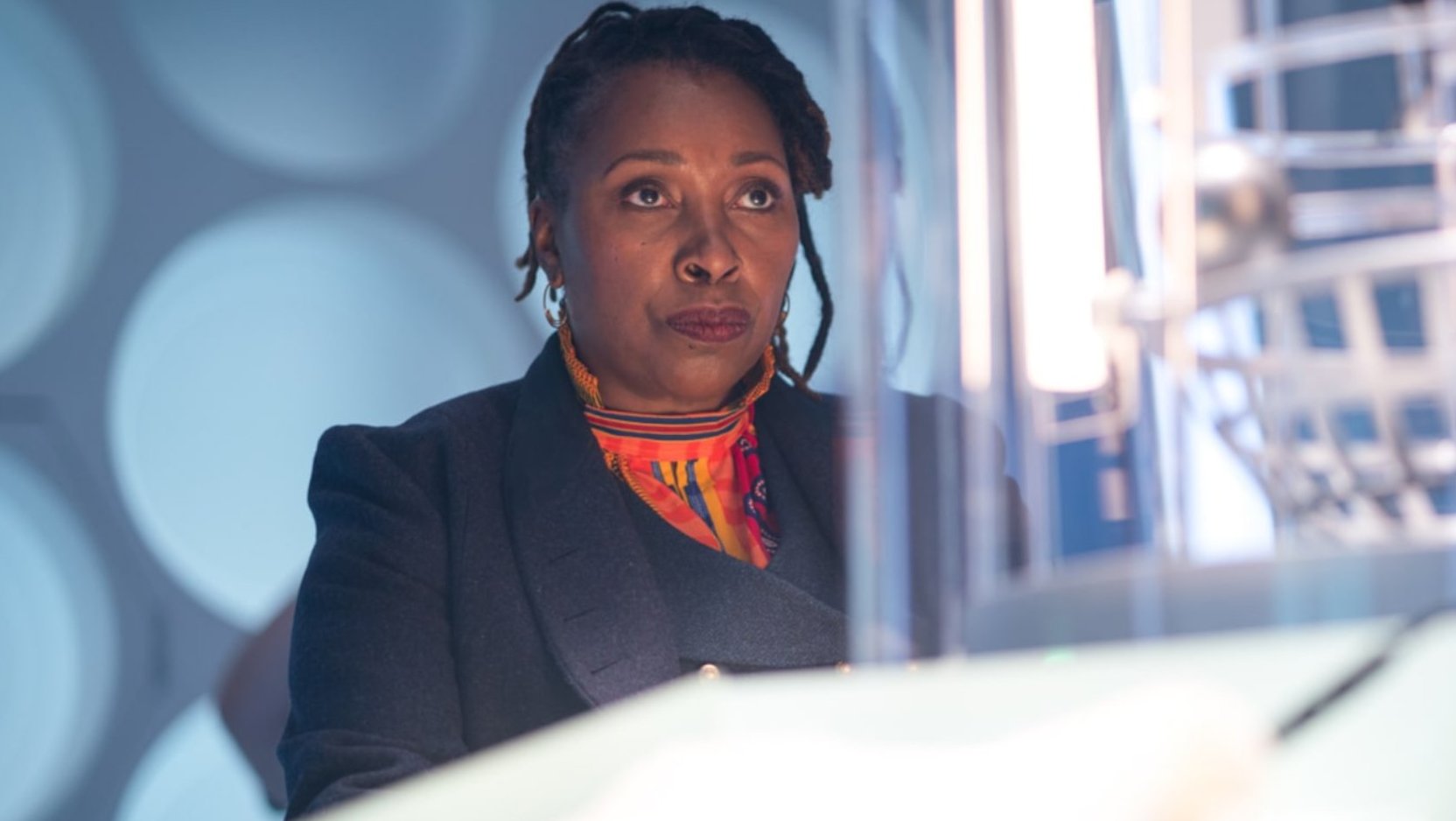
And while we're here, shoutout to the endless one-off Doctors (Morbius Doctors, the Metacrisis Doctor, the Master-Doctor), not to mention the ones that have appeared outside the main canon (Richard E. Grant, Rowan Atkinson, Joanna Lumley, and the rest!).
But that’s a rabbit hole for another time.
15. The Fifth Doctor (Peter Davison)

The Fifth Doctor was a big departure from his predecessors. Adopting a younger body and a calmer demeanour, he generally felt less in control, constantly quarrelling with his companions and struggling to make a difference in an increasingly violent, nihilistic universe.
Did it work? Sort of. Davison provided a marked contrast to the moody, sombre Doctor that Tom Baker had become by the time he departed. And there was an attempt to tie everything up thematically in his final stories – particularly The Caves of Androzani, which sees the Doctor give his life to save a woman he’s just met.
Ultimately though, and this isn't to sound too harsh... but he’s just a bit bland.
And then there’s his costume. Admittedly it’s become iconic in its own right (Doctor Who fans haven’t looked at celery in the same way since). But the combination of cricketer kit and decorative vegetable is undeniably odd, and doesn’t exactly scream "I am the Doctor and I'm going to save you all."
That said, as the youngest actor to play the role until Matt Smith came along, kudos must go to Davison for proving that the Doctor does’t have to be a man in his forties or fifties. And he was one of David Tennant’s favourites, so he must have done something right!
14. The Eighth Doctor (Paul McGann)

The Eighth Doctor has many fans and proved influential in so many ways. He was a much more human Doctor than the ones before him, plus the first to be characterised as a romantic hero and the first to kiss his companion.
However, he only actually got one full story, most of which he spends in a post-regenerative haze.
McGann’s performance is compelling, and there’s plenty to enjoy about Eight’s characterisation – from his infectious love of life to the cheeky nod that he’s half-human (on his mother’s side). He’s also a Doctor that feels particularly British, partly due to everything around him being so American!
But it’s not quite enough to rank him any higher than this. Which is a shame, as McGann had so much potential.
Thankfully, Eight has had plenty of time and space to develop off-screen in the expanded universe. This has led to returns in The Night of the Doctor and The Power of the Doctor, with the former offering us a grittier, wearier take on this incarnation, at the end of his life.
In a way then, McGann has never really stopped playing the part. And despite his lack of screen time, he feels as proper a Doctor as any.
13. The Third Doctor (Jon Pertwee)

By the end of the 1960s there was a suggestion that Doctor Who should wind down. But the show bounced back with a radical new format, involving a suave, more action-oriented Doctor who was stranded on Earth.
The Third Doctor was a reassuring presence who is fondly remembered by many – his bromances with the Master and Brigadier being particular highlights of his era.
There are other aspects though, such as his love of vehicles and Venusian aikido, which work fine in context and are a perfect fit for Pertwee, but ultimately feel more James Bond than Doctor Who. Which is unsurprising given that Bond was clearly an influence on this incarnation.
That said, there are two things we can’t fault about the Third Doctor: his love of science and gadgets (which would be a major influence on the character going forward) and his impeccable dress sense. Let’s have a Doctor who wears capes again!
12. The Sixth Doctor (Colin Baker)

The Sixth Doctor rubbed many viewers the wrong way when he burst onto screens in 1984, and there were certainly some missteps with this incarnation.
Having him try to strangle Peri probably wasn’t the best idea (even if it was just a side-effect of his regeneration). And his constant bickering with her does grow tiresome quite quickly. Ending his debut story with him telling viewers that he’s the Doctor “whether you like it or not” also wasn’t a great look.
But underneath the bold personality and even bolder multi-coloured coat is a fascinating take on the character, which brought back some of the spikiness and unpredictability of Hartnell.
The plan was to soften him over time. However, Baker was sacked before he got a chance to see it through. He’s since made up for it, enjoying a massive renaissance on audio. But the foundations were laid in his original stories, and that shouldn’t be overlooked. His debates with Davros in Revelation of the Daleks and righteous anger at being put on Trial in Trial of a Time Lord are particular highlights that demonstrate how engaging the Sixth Doctor could be.
He’s by no means perfect. No Doctor is! But Six was undeniably done dirty, and doesn’t get the praise he deserves.
11. The Fifteenth Doctor (Ncuti Gatwa)
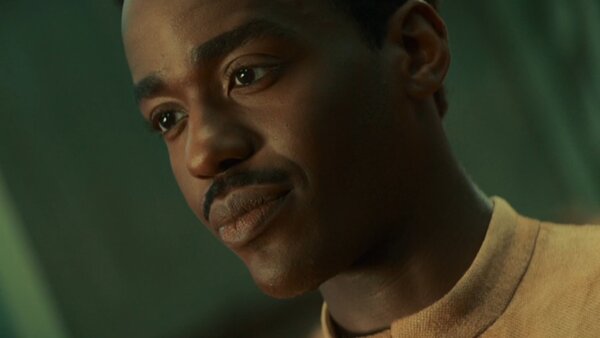
It still feels weird to say that Ncuti Gatwa is no longer the Doctor.
Though never officially acknowledged, it’s all-but confirmed that his era was cut short. And regrettably, that’s part of the reason why he’s not higher. We never got to see this Doctor’s story culminate as intended, and Gatwa clearly had so much more to give.
That’s not to downplay what we did get though. Character-wise the Fifteenth Doctor was arguably the biggest shakeup since the Ninth – carefree, cheeky and charming, with a new costume every episode (or sometimes every scene) and both hearts firmly on his sleeve.
For those who like their Doctors more consistently dressed and less emotionally available, it was a reimagining too far. But it was a distinctive take on the role and you could feel Gatwa settling more into his portrayal throughout his second season.
Fifteen wasn’t without more serious, steely moments either, with Gatwa rising to the challenge in stories like Boom and Lucky Day – though some beats, such as the Doctor’s angst in Joy to the World, felt rehashed, and at odds with the idea of a Doctor who had undergone “therapy”.
Hopefully one day he'll get a bit more development, perhaps in the expanded universe. But the fact that his era ended the way it did will never not be frustrating.
10. The First Doctor (William Hartnell)

Pitting the original Doctor alongside his successors always feels weird.
He set the template for every Doctor that has followed. And yet, he’s also not quite the version of the character that we know and love today.
Echoing Doctor Who’s own origins as a show that should both educate and entertain, the First Doctor was a traditional Victorian/Edwardian adventurer, simply out to explore the universe. Stern and stubborn, he nevertheless had a twinkle in his eye, plus a grandfatherly warmth, incorporating elements of Father Christmas and the Wizard of Oz.
This was also the Doctor at his most mysterious, unencumbered by the lore additions that would come later, and in some respects would weigh down and overcomplicate the show and the character.
Regrettably, Hartnell’s ailing health impacted his performance as time went on, resulting in regular line fluffs (which are nevertheless charming in hindsight), a reduced role in later stories, and, ultimately, his departure from the show.
In the years following, other actors and writers would develop the character of the Doctor more. But none of that would have been possible if Hartnell and co. hadn’t created such a compelling character in the first place.
9. The Fourteenth Doctor (David Tennant)

When Tennant returned for the 60th, it would've been so easy to just have him play the Tenth Doctor again, with his older appearance explained away as a temporal distortion (or whatever).
Fortunately for us RTD delivered something altogether more interesting: a second Tennant Doctor, who comes directly after Thirteen and carries the weight of everything that has happened in-between.
There are traces of Ten, but Fourteen is a very different man – more mature, more sophisticated and more relaxed with his emotions. This idea reaches its climax in The Giggle when he’s granted a more hopeful end, rather than a rehash of the Tenth Doctor’s regeneration.
His arc was, necessarily, constrained to three episodes… but you can’t help but wish he’d been given a full season, or even a full era.
The way he’s written and played – with Tennant bringing an old-school Doctor-y gravitas to the table, plus an extra thirteen years’ of experience – makes it a more satisfying performance than Ten in some respects. Also, admit it, his costume is better.
Of course, Fourteen has a better reason than any other to return to the show. So we’ve not necessarily seen the last of this incarnation yet.
8. The Second Doctor (Patrick Troughton)

Arguably no Doctor has had such a difficult job as Patrick Troughton did.
He achieved the impossible: not just taking over from Hartnell but becoming a successful Doctor in his own right, proving that Doctor Who could continue, and that its title role could be played by other actors.
This was largely due to the fact that Troughton and the writers evolved the character rather than repeating what had gone before.
The Second Doctor was scruffier and sillier than his predecessor, displaying a more rebellious streak and an impish glee. However his bumbling, clownish persona was, to an extent, a facade to mask his true intelligence and cunning.
And whereas before, the Doctor had always been something of an aimless traveller, this was the incarnation who consciously chose to rid the universe of evil.
In his own era, this eventually resulted in his time-travelling rights being revoked by the Time Lords. But beyond this, it’s informed every subsequent interpretation of the character, becoming an integral part of the Doctor’s mission statement.
As with Hartnell, if we hadn’t had so many imaginative portrayals of the Doctor since, Troughton would definitely be higher. Indeed, many of the Doctors who came after him cite him as their favourite.
7. The Tenth Doctor (David Tennant)

If you ask someone on the street who the best Doctor is, chances are they’ll say David Tennant. Although please don't just walk up to people in the street and ask them about Doctor Who.
Though not present from the start of revived Who, he’s the one who took it into the stratosphere. And given that he was a lifelong Doctor Who fan who also happened to be a charmer, it’s not hard to see why.
The Tenth Doctor benefitted from both a distinctive, trendy appearance – spiky hair, sideburns, trench-coat, pinstripe suit, Converse trainers and geek-chic glasses – and compelling characterisation. Having been affected by Rose, he’s more human and easygoing than his immediate predecessor, even enjoying the odd romance.
He could also be ignorant, arrogant and overconfident – for instance in his treatment of Martha in Series 3, his attempt to take control in Midnight, and his crusade against time in The Waters of Mars.
This less likeable behaviour is seen as grating by some, while Ten’s overall popularity means that he’s inevitably accused of being overrated by others.
But he was undeniably a great Doctor, and deservedly ranks in the upper echelons of any list like this.
6. The Ninth Doctor (Christopher Eccleston)

Doctor Who’s return to TV in 2005 was something of a crossroads moment. The show could have floundered and failed, but it didn’t.
The decision to move away from the lofty, eccentric Doctors of the classic series and make the character a Northern man with a leather jacket and a buzzcut was a huge part of this.
Nine was nothing short of groundbreaking, bringing the Doctor right down to Earth for 21st century viewers. He was still alien, but in a way that was less obvious, less conspicuous, and less distracting. The perfect Doctor at the perfect time.
Another aspect that made this Doctor relatable was his backstory. The Doctor of the classic series was always someone who lived in the present. But the Ninth Doctor had a past, and a troubled one at that – albeit one that he was eventually able to overcome, with the help of Rose.
He’s another Doctor that left under something of a cloud. However, on this occasion the production team had enough notice to accommodate his exit properly.
The silver lining is that he didn’t outstay his welcome. His tenure was short but sweet (just thirteen weeks), and he has the distinction of being the only mainline incarnation to not have played the role across multiple years... yet.
5. The Seventh Doctor (Sylvester McCoy)
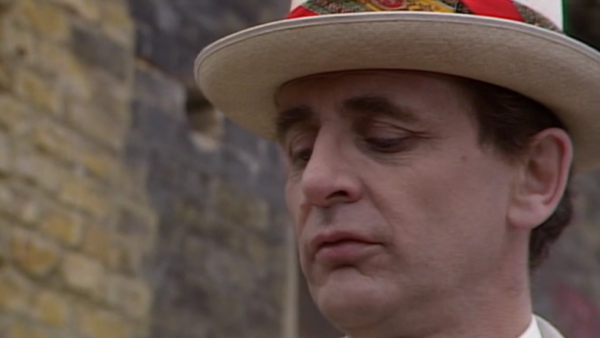
Following the sacking of Colin Baker, Doctor Who could have descended into complete chaos in the late 1980s.
But against all the odds the show managed to turn things around, with quirky comedy performer Sylvester McCoy cast as a darker and more complex Doctor.
The Seventh Doctor was essentially an extension of the Second – outwardly clownish but cool and calculating at hearts, manipulating events like pieces on a chess board for the sake of the greater good.
He starts off silly but gradually shows more of his true colours, forcing his companion Ace to confront her troubled past – then admitting that he engineered their very first meeting in order to use her as a pawn against an ancient evil.
Elsewhere there were hints towards the Doctor’s own past too – part of a concerted effort on the part of script editor Andrew Cartmel to reintroduce an element of mystery to the character (hence his question mark pullover and umbrella).
The show’s cancellation in 1989 curtailed plans to take things further, by revealing that the Doctor was, in fact, a founding figure of Time Lord society.
Even so, Seven’s arc doesn’t feel incomplete. On the contrary, this was a revolutionary take on the character that remains wonderfully enigmatic. When he flips that switch and you see his darker side emerge, there really isn't another Doctor like him.
4. The Thirteenth Doctor (Jodie Whittaker)

Jodie Whittaker was facing an uphill battle when she took on the role in 2017, but together with Chris Chibnall she gave us the most enthusiastic, optimistic Doctor yet, bringing warmth, energy and humour in spades.
Thirteen was a beacon of hope at a time when the real world was getting more and more turbulent (particularly during a certain global event that happened in 2020!). Though let down by the writing for some of her stories, Whittaker herself was a joy to watch. It felt like this was the sort of Doctor the show needed at this time, with the revival being dominated by much angstier Doctors and darker storylines (hello Time War) up to this point.
In fact, you could argue that this Twelve-into-Thirteen shift, bridged by Twelve re-discovering his purpose in Twice Upon A Time, was a much better look at a Doctor having "undergone therapy" than what we just saw with Fourteen and Fifteen!
There was also a sense that Thirteen was the beating heart of the universe, constantly racing against time in order to keep everything together (literally, in the case of Swarm and Azure).
Due to the frustratingly long space between seasons, by the time she departed in 2022 she’d had one of the longest tenures ever. It was a fitting achievement for one of the show's more groundbreaking incarnations.
3. The Fourth Doctor (Tom Baker)

The other Doctor that regularly tops “Best Doctor” lists is Tom Baker, whose portrayal won over viewers up and down the country during his record-breaking seven-year tenure.
Baker’s detached, aloof nature – as well as his unruly curls, booming voice and big grin – made him perfect for the role. Indeed, in behind the scenes interviews, it’s often difficult to work out where the Doctor ends and Tom Baker begins.
He wasn’t the same Doctor throughout though. On the contrary, his characterisation shifted under different producers/script editors – from wide-eyed and eccentric to frivolous and witty to brooding and mournful.
But generally speaking he was bohemian, somewhat intimidating and utterly alien – an incarnation who, by contrast to his Earthbound predecessor, is at his happiest when he’s venturing through time and space.
There’s also his playful streak – manifested most strongly through his tendency to offer jelly babies to everyone he meets, and his unpractically-long multicoloured scarf (which, hilariously, actually gets longer as the era goes on).
Fifty years on from his debut Baker remains as popular as ever. For many, he’s never been matched. He’s not quite topped our list – but when it comes to the best classic Doctor, there’s no competition really.
2. The Eleventh Doctor (Matt Smith)

In theory, following David Tennant was always going to be a tall order. But in practice, the show struck gold with Matt Smith.
The Eleventh Doctor is a combination of unlikely elements – a thousand-year-old Time Lord in the body of a twenty-something, with a great big quiff and the wardrobe of a university professor. Yet Smith absolutely sold it, serving up a quirky yet alluring performance, and singlehandedly making tweed jackets, bow ties, fezzes, and Stetsons cool.
As well as Smith, much of Eleven’s success was down to the way he was written. Elements of the Doctor’s personality that were present before – his intelligence, his eccentricity, his childlike wonder – were dialled up to eleven, resulting in an incarnation who’s intellectually one step ahead, yet easily distracted and utterly hopeless at reading social cues. It was an incredibly fun mix and it's no surprise Smith struck the global chord that he did.
This was also the beginning of Steven Moffat’s examination of the Doctor’s ego, with his opinion of himself, and his place in the universe, constantly questioned. It’s weighty stuff for a children’s TV show, but made for fascinating viewing across a satisfying three-series arc.
All these years later, the love for Eleven is more apparent than ever. And if Tennant can come back, surely he can too!
1. The Twelfth Doctor (Peter Capaldi)

Following Matt Smith’s own departure, Moffat went to the opposite end of the scale, casting the oldest Doctor yet: Peter Capaldi.
The result was an incarnation that embodies the character better than any other – not least because Capaldi, like Tennant, is a massive Doctor Who fan, and was able to incorporate shades of old Doctors in his performance.
He also had the best character development of any Doctor, starting off as prickly and intense but softening over time (basically the Sixth Doctor’s arc done right).
A big part of this was the continuation of the character destruction introduced in the Smith era. Underneath the often blunt, sarcastic exterior, Twelve struggles to see himself as a “good” man – both because of the harsh choices he has to make, and the high standards he holds himself to.
As a result, he’s also one of the more mature Doctors, recognising when he’s gone too far (such as when saving Clara in Hell Bent) and deciding that, ultimately, all that really matters is being kind.
It’s Moffat’s interpretation of the Doctor distilled: that they’re not a hero per se, rather a traveller passing through and doing their best.
Add to that Capaldi’s classy, sophisticated performance, and you have something truly special. Twelve really was a Doctor for the ages, and he deservedly tops our list.