Doctor Who: EVERY Steven Moffat Episode Ranked Worst To Best
23. The Zygon Inversion

Quite why Moffat only co-wrote one half of a two-part story is anyone's guess, yet here we are with The Zygon Invasion & The Zygon Inversion... three quarters of which was written by Peter Harness.
Inversion is the better of the two episodes though that's mostly down to Peter Capaldi, who acts his socks off with a poignant and sadly ever-relevant speech about the futility of war. It's delivered with unparalleled intensity and integrity by Capaldi, and stands as one of his finest moments as the Doctor.
And credit to the writers too – the commentary on warfare and the pointlessness of weapons in procuring peace is expertly woven into the story in the form of the Osgood boxes, and leaves you with a lot more to chew on than your average Doctor Who episode.
22. The Girl In The Fireplace

Many might object to this mid-table placement of The Girl in the Fireplace but while there are definitely some standout moments, the episode does have its flaws.
The clockwork droids are fabulous Doctor Who monsters with their creepy masked faces and bladed hands, and the episode looks and feels the part across the board, with some lush costumes and gorgeous sets – top marks for production design.
But the central romance doesn't quite work for me. While it makes sense for Reinette to have developed feelings for the Doctor throughout her life, for the Doctor himself, it has only been a matter of hours and so the level of emotional connection by the episode's end seems a little unusual.
To some this is the perfect Doctor Who story, but to me it doesn't quite click. Seán Ferrick loves it though. Hopefully he doesn't see this placement.
21. Last Christmas

Doctor Who meets Alien meets Inception?
What more can I say. This one's an absolute winner.
20. Asylum Of The Daleks

Opening Series 7 with the Ponds on the verge of divorce was certainly not what fans were expecting when they tuned in to Asylum of the Daleks, but that wasn't even the biggest surprise in the episode.
It had already been announced that Jenna Coleman would be the next companion following the departure of Amy and Rory, but what we didn't know was that she'd appear before that departure actually happened. It was an amazing rug-pull from Moffat – not only was the next companion introduced earlier than expected, but she was seemingly killed off before she even fulfilled that role!
Another interesting element to this episode was the choice to show a weakness in the Daleks. It's refreshing to see the pepper pots from a different perspective and explore a vulnerable side to them, in the form of the "insane" Daleks, and the fear that the other Daleks have for them.
While I'm lower on The Girl in the Fireplace than most people, I'm definitely much higher on Asylum of the Daleks. But for me, it's quite good – an entertaining and unique Dalek story!
19. Let's Kill Hitler

After the big reveal of River's identity at the end of A Good Man Goes to War, viewers were left with even more questions than answers, and so it was wonderful to open the second part of Series 6 with an episode that filled in a big piece of the Melody Pond puzzle.
With the title "Let's Kill Hitler" it was assumed that this episode wouldn't be as focused on the Melody mystery as we'd hoped, but the focus is drawn away from Hitler very early on and directed towards the greater arcs of the series.
Some view this as a flaw – that the episode doesn't deliver on the promise of its title. And sure, maybe the title did paint the wrong picture, but you can't deny it was the right move to give us immediate answers about Melody and her history.
It's wonderful to see Alex Kingston playing a younger, more naive version of River Song – a version devoid of the influence and relationship later established with the Doctor – and she's clearly having a lot of fun with the role here.
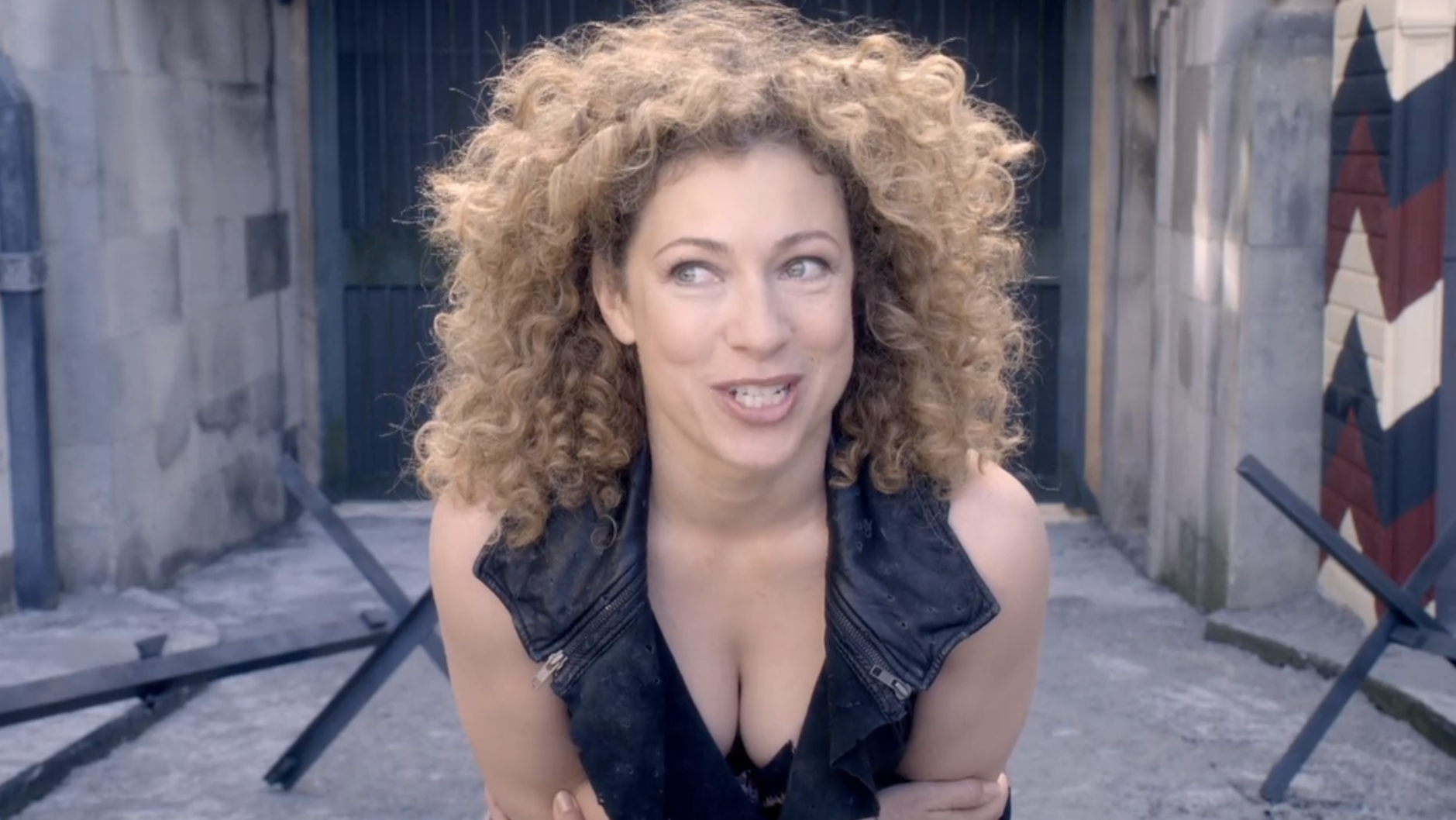
It's a very funny episode across the board too, and the comedic moments of Amy and Rory's deeper realisation of who their best friend had always been are brilliant.
Fans were probably expecting something a bit more dramatic having waited a couple of months after A Good Man Goes to War (revived Who took its first mid-series break between June and August 2011). But divorced from those expectations, Let's Kill Hitler is a much better episode than it gets credit for!
18. Boom

After seven years away, Steven Moffat's grand return to the Whoniverse is a standout episode of Ncuti Gatwa's first full season.
Boom has all the elements that make for a perfect Doctor Who episode – high stakes, dark, thematically rich, emotional, but also comedic and light-hearted at times too. The single setting could have resulted in a static, boring story, and yet this only serves to heighten the tension and the mavity of the situation.
It genuinely feels like the Doctor is in danger, like the Doctor is out of his depth – which isn't easy to pull off.
Add in some brilliantly snappy Moffat dialogue (and Ncuti Gatwa's terrific delivery of that dialogue) and you've got one of the best episodes of Season 1, and one that rests comfortably towards the upper end of the Moffat pantheon.
17. The Wedding Of River Song

For many fans, The Wedding of River Song would rank much lower on this list but I think it's a highly underrated episode.
Does it feel a little slapdash at times? Sure. Is the Teselecta escape a little predicable? Perhaps.
But put those downers aside and there's a lot to enjoy about the Series 6 finale. The concept of the past, present and future all happening at once is a beautifully bonkers Doctor Who idea, and the madness of Charles Dickens on TV and Winston Churchill as a Roman emperor with a Silurian doctor lets you know what you're in for right out the gate.
The title might be the ultimate spoiler but The Wedding of River Song also serves to answer the question of who River is to the Doctor – much to Amy and Rory's shock. That long-awaited wedding sequence is pure magic, and, like the other big emotional beats in this episode, works really well.
16. The Beast Below

After the whimsical feel of the first episode of Series 5, the second episode The Beast Below took on a much darker tone.
This episode immediately proved that Steven Moffat and Matt Smith were capable of delivering a wide range of stories for this new era of Doctor Who, with a fascinating far-future mystery set aboard a starship version of the UK – minus Scotland.
It's a terrific setting for a powerful story, affording the Eleventh Doctor yet another defining moment right at the beginning of his journey:
"Nobody human has anything to say to me today!"
And anyone who didn't cry for the Star Whale is a Cyberman!
15. The Time Of The Doctor

One of the strengths of the Moffat era is the long-term storytelling, with various arcs and loose ends sometimes not being tied up until years after the fact.
As a regular viewer it's hugely exciting to be drip-fed clues and mysteries over several series, but it's really only worth it if the payoff sticks the landing – and that's exactly what The Time of the Doctor does.
More so than any other, the Eleventh Doctor's era feels like a continuous story, and his final episode closes that journey in a really satisfying way. The explanation behind the Silence, the origins of "the question", and the significance of the cracks in time all highlight how much thought Moffat put in to all three of Matt Smith's series, culminating in a true Christmas cracker of a finale.
There's a real sense that an epic fairytale is ending as Eleven battles for centuries to defend the people of Trenzalore – and Moffat and Murray Gold don't half make the most of the opportunity to tug on the heartstrings, with musical callbacks like Four Knocks, and a surprise Karen Gillan cameo.
It's a truly rewarding final outing, and an impressive feat to cram so much into a single episode and not have it be an absolute mess!
14. The Husbands Of River Song

Speaking of satisfying finales, River Song is another character who Moffat closed off (for now) in a great way.
The dynamic between Alex Kingston and Peter Capaldi is so different to that of Kingston and Matt Smith, and yet, the chemistry and connection between the characters remains strong, and most importantly, believable. It's arguably their most natural bond, with their relationship becoming more mature than it was with previous Doctors, and yet no less fun.
To turn the tables and have River not recognise the Doctor was a great way to keep their storyline fresh, while also adhering to the established guidelines of their wobbly-wobbly timeline.
The final scene in front of the Singing Towers of Darillium is such an emotional rollercoaster, and god bless Moffat for leaving a little 24-year-sized loophole so that River Song can still make a grand return in the future. Here's hoping!