Doctor Who Season 8: 3 Ways It Could Be Improved From Last Season
 The seventh season of the BBC's popular sci-fi show was a bit of a mixed bag. The promise of a big season-long mystery about the identity of the Doctor's new companion wasn't executed as many had expected. It has been confirmed that Matt Smith and Jenna-Louise Coleman will be back for season eight as well as the 50th Anniversary Special that is set to air this November, along with series favorite David Tenant reprising his role as the Tenth Doctor and Billie Piper reprising her role as Rose Tyler. But even if this one-off episode is a resounding success, there will still be thirteen new episodes that need to be just as good if the series hopes to continue. Here are a few ideas that might help that to happen...
3. Bring Back Multi-Part Stories
 One of the better aspects of the seventh season was how "cinematic" it felt. From the western that was "A Town Called Mercy" to the almost apocalyptic "Name of the Doctor," many of the episodes felt like they could have been their own films. The second half of the season had at least three episodes that could have been told as two-part episodes, especially the finale and the episode that came before it, "Nightmare in Silver." This led to the issue that these and other episodes got off to a bit of a slower start, as might be expected with a two or even three-part episode, then had to rush in the last ten minutes or so to wrap everything up.
2. Give The Recurring Characters More Time To Develop
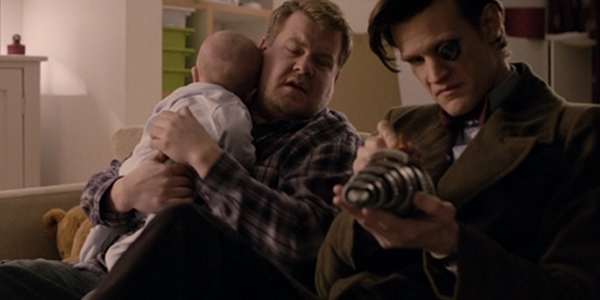 In addition to giving the narrative time to develop, multi-part stories also give the recurring characters (River Song, Madame Vastra, Jenny, and Strax to name a few) more time to develop. Even with original characters, like Warwick Davis's Porridge in "The Silver Nightmare," having more time with them will help them to stay with the viewer long after the end credits of the episode have finished rolling. Even if characters don't appear in consecutive episodes, there still ought to be a sense of growth between appearances. Take, for example, Craig Owens, who first appears in the season five episode "The Lodger." Craig doesn't have high aspirations for himself, stuck in the friendzone that his colleague and love interest Sophie had placed him in. We next see Craig in the season six episode "Closing Time," having worked hard to better himself, marrying Sophie and even having a baby with her. Contrast to Madame Vastra, Jenny, and Strax, the Doctor's Victorian era associates: although they appear in multiple episodes, there is never much developed in between appearances. Given more development, these three have the potential to rival River Song in their importance to the Doctor's life.
1. Show More of the Doctor's Emotional Spectrum
 In season seven, we saw some different sides of the Doctor. In "A Town Called Mercy," we saw the Doctor's anger and just how dangerous he can be when provoked. This was seen several times as well with the Ninth and Tenth Doctors, but one thing that was only seen once before, and only briefly with the Ten, was the Doctor crying. Not just from sadness, but pure, unadulterated fear. "The Name of the Doctor" saw him having an emotional breakdown in Clara's living room over the prospect of having to cross his own timeline in the most horrific was possible. There is no doubt about it that this is something that he must do, and yet absolutely wants no part in. The Doctor always seems willing to throw himself into the thick of things almost without thought, but seeing him truly contemplate his actions before he carries them out would be a turn for the better for the series. And, if John Hurt's participation as a previously unknown regeneration of the Doctor in the 50th Anniversary Special, we might just see more of this.