Doctor Who Series 10 Episode 9: 7 Big Questions After 'Empress Of Mars'
All the biggest talking points and questions from the latest episode of Doctor Who.

Empress of Mars may have whisked us away to the red planet, but after the reality questioning, expectations confounding Star Monks trilogy we were very much back on familiar grounds. It was an episode that played to various tried and tested Doctor Who formulas: bug eyed monsters, check; a timey wimey resolution, check; a mashup of different eras and civilisations, check; humans acting as duplicitously as the aliens, check.
Love it, or loathe it, Mark Gatiss’s story will have won a permanent place in the affections of long term fans for a completely unexpected cameo which will give hope to lovers of the Zarbi, the Monoids or even the Kandyman. But the episode itself is a routine and otherwise predictable affair, though no less fun for it.
Undemanding isn’t necessarily a bad thing and it will have provided light relief for those who might have befuddled by recent episodes, particular with the unsettling characterisations of the Doctor and Bill in The Lie of the Land. That’s not to say that Empress of Mars didn’t raise a few questions of its own. Enquiring fans will have been given plenty of morsels to chew over as we gear up for the end of the Twelfth Doctor’s run.
7. Who Is Alpha Centauri?

Doctor Who has never been shy about bringing back some of
its oldest aliens. From big hitters like the Daleks and Cybermen to the long
forgotten such as the crablike Macra, the show has been regularly mining its
own past ever since Russell T Davies brought it back to our screens. But this
year has been more of a nostalgia-fest than most. The much heralded return of
the Mondasian Cybermen is just around the corner, and we have already been
treated to Dalek and Movellan cameos.
Empress of Mars was the first episode of series 10 to give a returning foe star billing in the shape of the Ice Warriors, last seen in Mark Gatiss’ Matt Smith episode Cold War. We all expected the post-episode chat to revolve around Ice Warrior lore and the introduction of the first female of the species, the eponymous Empress, but a surprise cameo by the genderless yet effeminate Alpha Centuari, last seen in 1974’s The Monster of Peladon, has stolen the limelight from the frosty Queen.
Alpha Centauri’s squeaky voice and comical, almost phallic appearance is misleading. Although quite the hypochondriac, the alien was far from being the Jar Jar Binks of the two Pertwee Peladon stories. An Ambassador from the Galactic Federation, on Peladon the pacifistic hexapod displayed courage wisdom and guile and became a trusted friend of the Doctor.
Although The Great Intelligence beats Alpha Centauri to the title of returning character with the biggest gap between appearances (44 years), remarkably Ysanne Churchman (now 92) who played the hexapod in the seventies once again provided that distinctive voice.
6. Where Does This Story Fit In Ice Warrior History?

Empress of Mars explains how the Ice Warriors left Mars and
became members of the Galactic Federation. This insular race will soon be
sharing a table with the Alpha Centaurian delegate, who here welcomes them to
the universe. Albeit in the loosest sense of the word then, Gatiss’s story is a
prequel to The Curse of Peladon. The events trigger what the Doctor describes
as the Golden Age of the Ice Warriors.
The Curse of Peladon was an allegory on Britain’s entry into the common market with the planet Peladon a cipher for Britain. If reflected a bygone age of optimism in progressive international alliances. Originally Gatiss wanted to write a sequel with Brexit in mind. Peladon, disillusioned with the Federation would make a bid for independence. But in the end this association with topical politics was split between a parody of hopeless British Imperialism and the message that the Ice Warriors must break out their isolationist mentality in order to survive.
It’s easy to place Empress of Mars before the Peladon stories, but working out a coherent pre-history of the Ice Warriors is virtually impossible. Even excluding the varied treatments in audio and novel form their timeline is messy. It’s not helped by the repeated theme of an individual Ice Warrior waking up to a whole new reality having been frozen for long periods of time (The Ice Warriors, Cold War, Empress of Mars).
5. Who Was Controlling The TARDIS?
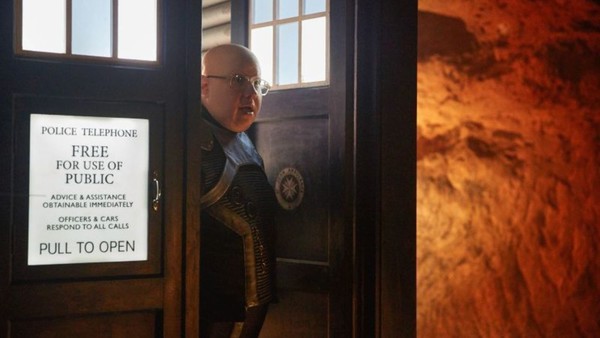
Why don’t they just use the TARDIS? It has to be Doctor Who's most cited plot failing and it clearly bothers some more than it ought to. Occasionally explanations are given as to why she can’t be used, but more often than not the TARDIS is ignored by the writers. Usually she is left standing forlornly where the Doctor landed her, but this week something quite extraordinary happened.
The last time Nardole was sent on an errand to the TARDIS he passed out from asphyxiation, and once again things don’t work out for the Doctor’s hapless companion. The TARDIS, running on automatic, sends him back to Bristol. If Gatiss wanted to get the blue box out of the picture then she could easily have been trapped on the other side of the hive with a blast of the Gigantua, so what is really going on here?
Gatiss had already been working on the Empress of Mars when, having decided to up Nardole’s role in the series, Moffat requested that the character be added. The cynic might argue that the TARDIS went on auto-pilot to shoehorn him in and out of the original script.
But there’s also the more tantalising possibility that Missy or perhaps even the John Simm Master has taken control of the TARDIS in order to manipulate Nardole into releasing Missy from the vault. It wouldn’t be the first time the ship has been taken over by an outside force, and the Time Lords are particularly known for it.
4. What's Up With The Doctor?
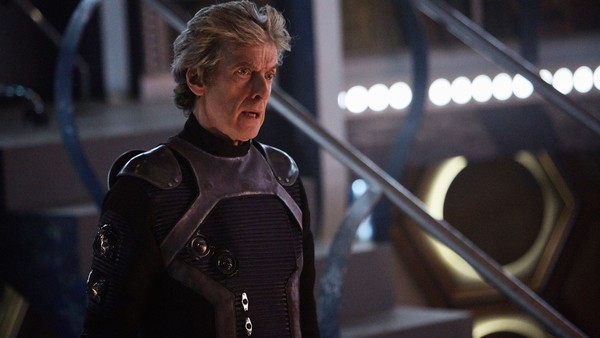
It looks like Missy is set to be a member of the TARDIS crew
for the next episode, adding a whole new dimension to the perennial ‘who counts
as a companion’ debate. We all know that it’s not going to end well, but if Missy’s show of goodness is unsettling then her ominous question to the Doctor is
positively disturbing.
When Missy asks him if he is okay, it feels like a ‘don’t you think she looks tired?” moment. Last week the Doctor was certainly not himself. Having been locked up by the Monks for six months his sense of superiority had morphed into a form of mania, as illustrated by that twisted grin and some rather questionable actions including a fake regeneration.
In this episode he was back to the more relaxed personal of Thin Ice and Knock Knock, and we might have assumed that he’d got over the trauma of recent events. But Missy sees otherwise. Either she is deliberately sowing questions of doubt in the minds of the Doctor and his friends, or she senses that something isn’t right.
Is the Doctor still suffering for the after effects of his blindness in Oxygen, or was that regeneration effect not as fake as he made out at the time? It felt extreme even for him, and it might just be that his laughter at the time was an expression of nervous relief and not the joke at Bill’s expense that he turned it into. We know that the Doctor regenerates in this year’s Christmas special, but perhaps the process has already started.
3. Is Bill Right About The Doctor's Taste In Movies?
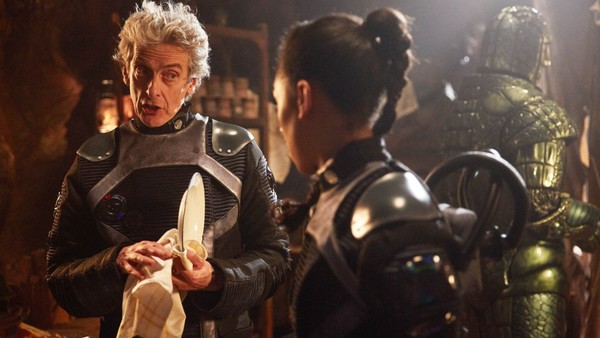
Bill is such a delightful character, and one of her most charming and realistic qualities is that she is a bit of a film buff. Mark Gatiss really goes to town on Bill’s love of the movies and it works brilliantly. She suggests the Doctor would love The Terminator because of the killer robots and he concurs, adding it to his watch list.
If we doubted that the Doctor might enjoy a bit of horror, then we only need to replay the ending to Knock Knock. He has a glint in his eye when he tells Missy that in his latest adventure people got eaten. But Bill’s next example nonetheless does seem a bit harsh. Would the Doctor really like The Thing because everybody dies?
In his brief but critically acclaimed spell as the Doctor, one of Christopher Eccleston most memorable scenes is the end of The Doctor Dances when he is absolutely ecstatic that ‘this time, everybody lives’. His smile of unbridled joy couldn’t be more different from the Twelfth Doctor’s disturbing grins in series 10 (and we saw another example with the countdown at the beginning of this episode).
The Doctor later confesses that his problem is that he thinks like a warrior, an admission that seems strange given that the Doctor had to take the poisoned chalice of the Sisterhood of Karn to become the War Doctor and that he’d regretted it ever since. He doesn’t say that he’ll add The Thing to his watch list, but the signs are that he would. Might this be a little clue as to what could be wrong with the Doctor? If not, then the fact that he knows about the Disney Movie Frozen, whilst a fun gag, doesn’t sound like him at all!
2. How Many References To Previous Episodes Can You Spot?
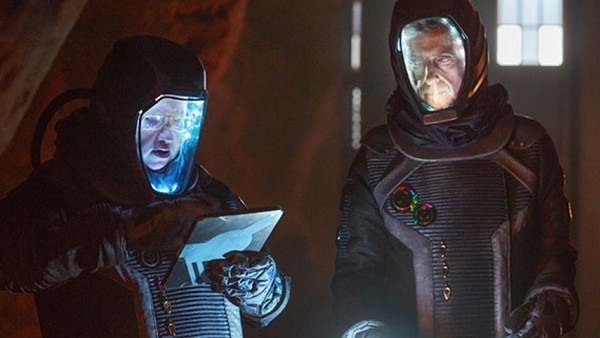
Easter Egg hunters will have a field day with this one. The episode might have been influenced by movies such as Zulu and The First Men In The Moon, but it is Mark Gatiss’ thorough knowledge of Doctor Who’s back catalogue that really shines though. We’ve already discussed the obvious links to the Peladon stories, but there are many more besides.
This episode was as old school as it gets and from the ‘rank has its privileges’ line (The Day of the Daleks) to the Doctor playing mediator between the humans and the aliens (Doctor Who and the Silurians), it is the early Seventies Jon Pertwee era that is channelled the most.
There are plenty of other references too. Plot points from the first Ice Warrior story are combined with design elements from the Tomb of the Cybermen, and in the defrosted Ice Warrior, Friday, we have another alien appearing to be a human servant (Power of the Daleks, Victory of the Daleks).
Those fans who were not amused that stock photographs of Winston Churchill had been used in The Lie of the Land rather than the Ian McNiece Doctor Who version, will have been delighted to see the portrait of Pauline Collins’ as Queen Victoria (as played in Tooth And Claw).
1. Is This Mark Gatiss' Final Doctor Who Script?
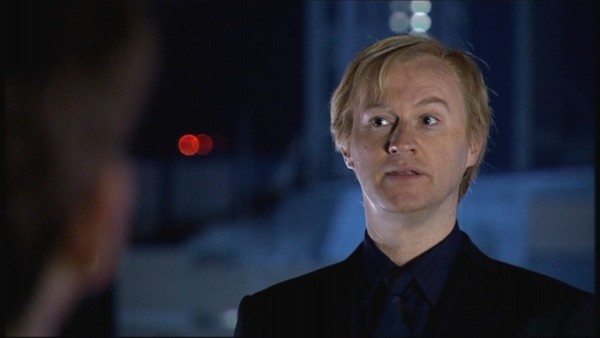
Mark Gatiss has been one of the most prolific Doctor Who
writers since the show returned in 2005. He has provided a remarkable variety
of quality scripts, from the riotous romp of Robot of Sherwood to the
unsettling horror of Sleep No More.
It’s hard to pin down exactly what a Gatiss story is likely to consist of, but he knows exactly how to write for this unique show. There aren’t many TV series’ that allow the writer to mix up different periods of history to such great effect (spitfires in space, robots in Sherwood, redcoats on Mars).
It was no surprise then that Gatiss was one of the favourites when speculation about Steven Moffat’s successor began. The BBC has been tight-lipped about the writing team that Chibnall has been assembling, but comments from Mark Gatiss earlier in the year suggest that he is out of the loop. Whether or not he will be invited to write again remains to be seen, but with the new writers’ room approach, opportunities for those outside the inner circle might become few and far between.
One of the features about series 10 is the way in which Moffat and Capaldi are fulfilling their most fanboyish of ambitions before leaving, and it might just be that Mark Gatiss is following suit with this unashamed and slightly over-indulgent tribute to his favourite Doctor, villain and era.
What questions did Empress of Mars leave you with? Let us know down in the comments.