Doctor Who: The Devil's Chord Review - 8 Ups & 2 Downs
Is The Devil's Chord music to the ears, or does it hit some bum notes?

Doctor Who goes back to 1963, the rock and roll years, for a ridiculously entertaining musical adventure.
The Devil's Chord is a camp, frothy Doctor Who adventure about how, without music, the world dies. It's telling that much of the promotion of the new season focused on this episode, with Ncuti Gatwa popping up on BBC1 and Radio One while trying to get back to the 1960s.
It's not very surprising that there was so much faith in The Devil's Chord. Where Space Babies occasionally felt like RTD on autopilot, The Devil's Chord is emblematic of his bold new vision for Doctor Who, and its wider fictional universe.
As an episode of Doctor Who, The Devil's Chord is that rare thing – an episode that contains some huge hints about the ongoing arc, but still feels like a singular story that can be enjoyed out of context.
So, with those vocal warm-ups out of the way, it's time to hit the high notes with The Devil's Chord's Ups & Downs.
10. UP - Jinkx Monsoon As Maestro

Jinkx Monsoon turns in one of Doctor Who's best-ever villain performances in The Devil's Chord. From the minute Maestro interrupts Timothy Drake's music lesson to the moment that Lennon and McCartney traps them in the Abbey Road piano, Monsoon is an utter joy to watch.
As RuPaul's Drag Race's "Queen of All Queens", we knew that Monsoon would nail the camp comedy of the Maestro character. However, her performance of Maestro's palpable rage and malice is a revelation.
The ability to turn on a dime is a vital skill for playing a Doctor Who villain, and Monsoon absolutely nails this. She's also terrific in the scene where Maestro describes the sound of a nuclear winter as "the purest music of all". It's spine-tinglingly evil.
There are so many great Maestro scenes that the rest of this Ups & Downs could be taken up by just selecting each of them. We'll avoid the temptation, but it needs to be said that Monsoon's Maestro is the strongest debut by a Doctor Who villain in years. Here's hoping that they won't be a one-shot enemy.
The glimpse of H. Arbinger at Abbey Road Studios certainly suggests that a Maestro return may already be on the cards.
9. UP - Millie Gibson As Ruby Sunday

Millie Gibson has been solid in The Church on Ruby Road and Space Babies, but she takes things up a gear in The Devil's Chord.
RTD's decision to set Episode Two six months after the end of Space Babies allows Ruby to be far more confident, meaning that she already feels like a seasoned time-traveller by the time she and the Doctor step out onto Abbey Road.
Ruby's ruse with the tea trolley is inspired, and is a refreshing reminder that you don't always need psychic paper to get where you need to go in Doctor Who.
This confidence also allows Ruby to call out the Doctor halfway through when he literally runs away and hides from Maestro. Brilliantly, Gibson doesn't play this confidence as arrogance, but balances it with vulnerability.
The scene where the Doctor asks Ruby to play the piano is beautiful, as she bashfully claims that she's no good before playing a heartbreakingly beautiful rendition of her own theme!
It's going to be fascinating to see how Ruby develops as her journey continues.
8. UP - The TARDIS Wardrobe And Wig Cupboard

We were promised that Ncuti Gatwa's Doctor would have a range of looks across the series, and The Devil's Chord reveals that Doctor Who is finally going to start using the TARDIS' wardrobe.
Generally, it's only ever been seen in post-regeneration stories as the new Doctor cycles through various looks before settling on one costume from which they will never, ever deviate.
Brilliantly, that's not the case in Gatwa's era, and there's an infectious joy in watching the Doctor and Ruby delight in the prospect of getting dressed up for their trip to 1963.
While we don't see the TARDIS wardrobe in The Devil's Chord, the Doctor's tease that he has "wigs galore" is quite tantalising, and also explains what was going on with some of those Morbius Doctors.
7. DOWN - The Beatles

Russell T Davies was wise to manage expectations when it came to the involvement of The Beatles in The Devil's Chord. This absolutely isn't a celebrity historical in which the Doctor and Ruby team up with the Fab Four to defeat a music-stealing god.
Instead, it's a story about the importance of music to our lives, and so The Beatles are a shorthand to demonstrate how bleak a world without songs actually is.
Even knowing this, it still feels like The Beatles are short-changed slightly. For example, the Doctor and Ruby couldn't care less about George Harrison or Ringo Starr, who barely even get a namecheck in the whole episode!
Worse still, when the band finally get their mojo back at the end of the episode, they sound more like Busted than The Beatles.
RTD has always seemed like a writer who prefers Cilla Black to The Beatles, so perhaps he just isn't all that interested in exploring the impact of Maestro on the band. It's a shame because it does feel like there's a lot of untapped potential in the concept of "What if The Beatles were rubbish?"
6. UP - London, 1963!

It's fascinating to see how RTD is approaching this new era of Doctor Who. Although branded as "Season 1", it doesn't seem to stop throwing in callbacks to the past 39 seasons.
Case in point – the Doctor and Ruby looking out across the London skyline, and discussing Totter's Lane, Susan Foreman, and Shoreditch. It could have come across as clunky exposition, but Ncuti Gatwa plays the lines with wistful nostalgia.
Gatwa plays the Doctor as a time-traveller returning to a period in which he used to live, feeling nostalgic as if 1963 is an old flatshare or the first bedsit you rented with your partner. It's a nice moment, and also teases out some new information about the Master's genocide.
Apparently it left a cosmic shockwave that may, or may not, have killed Susan. Does this mean we could meet a regenerated Susan at some point later in the series?
It feels unlikely, but given how things are developing in the RTD2 era, anything feels possible.
5. UP - Cameos!

The Devil's Chord features cameos from Shirley Ballas and Johannes Radebe from Strictly Come Dancing and Doctor Who composer Murray Gold, all in the climactic musical number.
However, they're not the only big cameos in the episode, as The Devil's Chord also features two actors who have some pretty big links to the history of Doctor Who.
Timothy Drake is played by Jeremy Limb, who is the son of Roger Limb. Fans of Doctor Who's classic era will know that Roger Limb composed scores for the show throughout the 1980s, with The Caves of Androzani and Revelation of the Daleks being particular highlights of his oeuvre.
Also appearing in The Devil's Chord is June Hudson, who plays the old woman who gets killed by Maestro after being inspired to play the piano. June Hudson was the costume designer who is best known for designing the Fourth Doctor's iconic burgundy outfit for Tom Baker's final season.

These links to Doctor Who's past composers and costume designers add an extra dimension to The Devil's Chord, an episode that has both great music and killer costuming.
4. UP - Return To 2024
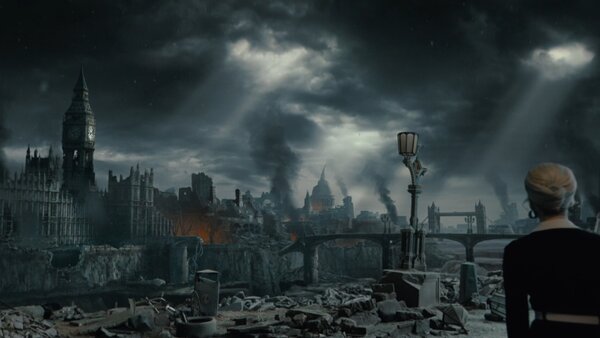
In Pyramids of Mars, the Fourth Doctor takes Sarah Jane Smith back to 1980 to witness the devastation that would be wrought if they decided not to defeat Sutekh. It's a small model shot, but it gets the point across with chilling efficiency.
Mark Gatiss and Russell T Davies wanted to do something similar in The Unquiet Dead, but didn't have the budget or the time to achieve it.
Now that Doctor Who has Mickey Mouse money, we get to see the Doctor take Ruby back to the devastated London of 2024 to prove his point. It's a powerful scene, played brilliantly by Ncuti Gatwa and Millie Gibson.
The Doctor clutching the console as Ruby steps outside is brilliant, communicating how much he didn't want to have to do this. Meanwhile, Ruby's question about her mum is utterly heartbreaking. A fantastic scene that beautifully builds on the original one from Pyramids of Mars.
This overt reference to Pyramids of Mars couldn't possibly mean that Sutekh is The One Who Waits though, could it?
3. UP - The Pantheon Of The Gods
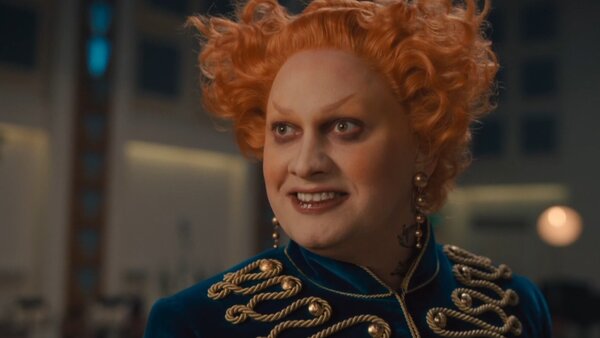
The Pantheon of the Gods is a fascinating concept that lifts Doctor Who beyond the same old cycle of alien invasion, rogue Time Lord, mad scientist. Both the Toymaker and Maestro have brought a completely new energy to modern Doctor Who, as well as a dangerous unpredictability.
Doctor Who has done gods before of course, but Jinkx Monsoon's Maestro is a lot more fun than the stony, stoic Gods of Ragnarok from The Greatest Show in the Galaxy.
The last of the Time Lords versus the Pantheon of the Gods is a hell of a big concept for the future of Doctor Who, and if all the gods are as entertaining as the Toymaker and Maestro then we're definitely in for a treat.
RTD promised CinemaBlend that "more gods are coming", and it seems that they're tied into the birth of Ruby Sunday, if Maestro's reaction to her song is anything to go by.
As an opening salvo in the Doctor's conflict with the Pantheon, The Devil's Chord thrillingly teases more high-concept battles to come later in the series.
2. UP - The Doctor Is Genuinely Terrified
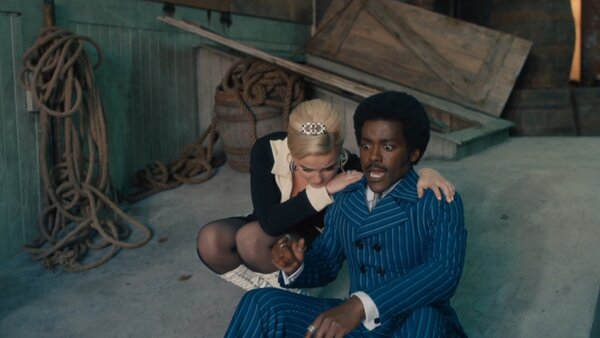
Let's be honest, RTD was guilty of writing the Doctor as an insufferable know-it-all, particularly in David Tennant's first era. That's certainly not true of the RTD2 era, which introduces a villain that genuinely terrifies the Doctor and makes him doubt himself in Episode Two of the season!
It's refreshing to see the Doctor admit that they don't know everything, and that they can't guarantee they'll be able to save the day this time. It also confirms that, while they laughed it off, the Doctor's bi-generation knocked the wind out of his sails somewhat.
The Doctor's fear of Maestro and the lasting toll of fighting their father the Toymaker adds a new dimension to the character that will be fascinating to see develop.
It also gives Ncuti Gatwa interesting material to play, as the Doctor eventually realises that he can defeat Maestro, because his experiences of loss, joy, and heartbreak make him attuned to music.
Great Doctor material, sublimely performed by Gatwa. He may turn out to be one of the best Doctors we've ever had.
1. DOWN - There's Always A Twist At The End
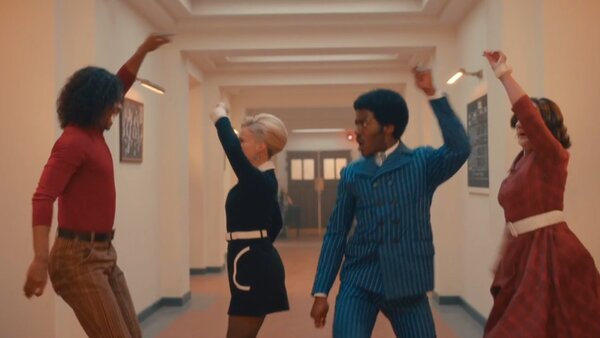
The big song and dance number at the end of The Devil's Chord is a joyous, colourful celebration of having music back in the world. Which is why it's a shame that the lyrics are so poor.
Russell T Davies may be one of the greatest screenwriters of his generation, but his skills as a lyricist leave a lot to be desired. He may have got away with rhyming "baby bones" with "scones" in The Goblin Song last Christmas, but lightning rarely strikes twice.
Russell is clearly a fan of a rhyming couplet, but there are some absolute clangers in There's Always A Twist At The End:
"My friend, depend. Press send. Let's Bend"?
"Pretend, descend. Land's End, make do and mend"?
And let's not even get started on The Beatles' lyric: "We ain't no fools from Liverpool".
If Lennon and McCartney hadn't cracked the chord sequence to banish Maestro, then RTD's lyrics would have done the job instead.