Marvel's Luke Cage Season 2 Review: 4 Ups And 5 Downs
Harlem's Hero is back, but is that a good thing?
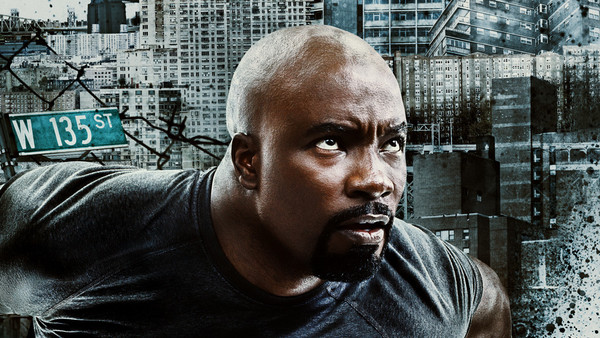
After a break of almost two years - and a part in last year's disappointing team-up event series The Defenders - Harlem's Hero is back on the streets, and back on Netflix.
The first season of Luke Cage was really one of two halves: the first was a slow-burner, sure, but still as gripping as we'd come to expect from the Netflix corner of the MCU by that point - helped in no small part by the charming yet dangerous Cottonmouth (Mahershala Ali) - and served as a fascinating story about being a black superhero.
The second, though, was more indicative of what the universe would become, stretching its story out and dropping the ball in the villain stakes by replacing Cottonmouth with Diamondback. All throughout, though, the main cast of Mike Colter, Simone Missick, Alfre Woodard et al continued to shine, even if the plot didn't.
Now Season 2 arrives to remind everyone of who Luke Cage is and bring a new challenge to the streets of Harlem, but also try and restore some of the fading glory of this universe. Does it manage it? In parts, yes, but not quite enough.
Ups...
4. The Acting Remains Excellent
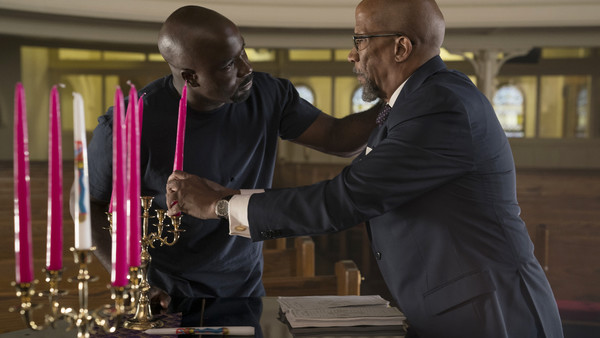
Luke Cage Season 1 had one of the best casts in the Netflix MCU, and although Mahershala Ali sadly departed halfway through that series, the rest are back for Season 2 along with a few key additions.
The late, great Reg E. Cathey brings a level of gravitas and poignancy to the role of Luke's father, and Gabrielle Dennis is the right mix of charming and vulnerable as Tilda Johnson. Best among the newbies, though, is Mustafa Shakir as John 'Bushmaster' McIver, the season's new villain and one of its most compelling players.
Most of the returning players up there game too, especially Simone Missick and Alfre Woodard. Both were excellent in the first season, but bring even more to their characters this time around; Missick steps up to almost being the co-lead of the show, and there are signs she could carry one herself, and Woodard is ferocious, wounded, and clearly having a quite time being fully unleashed, even if all the story points don't work. Even Finn Jones, whose Danny Rand pops up later in the season, is better served than he's been anywhere else in this universe.
3. And So Too Does The Music

Another standout part of the series is its music, which comes from Adrian Younge and Ali Shaheed Muhammad. More than any other Netflix Marvel show - and more so than most TV shows in general - Luke Cage's music really helps give it its own identity and sense of place.
Their score also helps give the series a sense of propulsion that's otherwise too often missing, and through Harlem's Paradise we get some extended musical sequences from the artists playing there, which not only add to the location but give it a sense of fun while fitting thematically, and feature some great talent like KRS-One, Gary Clark Jr., and Stephen Marley playing.
2. Bushmaster Is Another Strong Villain

Luke Cage Season 1 can best be summed up by its two villains: the series thrived with Cottonmouth and Luke butting heads, but fell off when they switched him out for Diamondback. It's overly simplistic to lay all the blame on that one change, but it's indicative of where things went wrong.
Season 2 doesn't try and outdo Cottonmouth, but nor is newcomer Bushmaster cut from the same cloth as Diamondback, despite possessing the same kind of powers as Luke Cage himself.
A Jamaican gangster operating out of Brooklyn but with his eyes on Harlem, the character is deeply connected to the themes of family and legacy that permeate the series, and portrayed with real charisma by Shakir, and yet with a veneer of vulnerability underneath. Most interestingly, though, is that he's not really an adversary for Luke Cage, but instead becomes locked into a battle for Harlem against Mariah, with Cage caught in the middle.
With this universe already so many seasons deep it's an interesting new wrinkle, and helps lead to some fascinating discussions over their actions, their past and legacies, and wrong, right, and the lines in between.
1. It's Thematically Rich
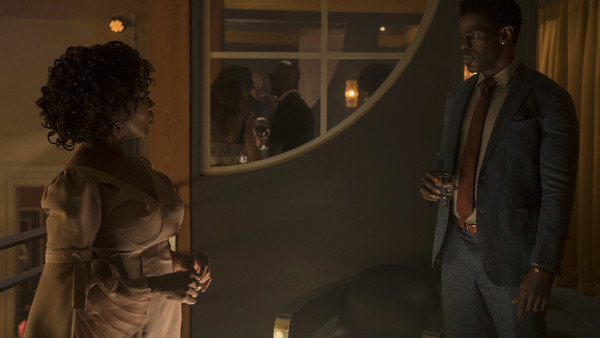
The first season gave the world a bulletproof black man at the height of the Black Lives Matter movement, and Season 2 is once again rich with real-world parallels and themes that feel both important and relevant, but are also compelling to watch.
Much of this series isn't just about being a black superhero, but delve even further into identity and background, with a rivalry brewing between the gangsters of Harlem and those from Jamaica.
It goes further, too, into its community and the impact of trauma upon it, of immigration, politics, abuse, and most importantly for this season's plot, family. Everyone is trying to run away from their past or rectify the wrongs of it - the struggle between Luke Cage and Carl Lucas, of Shades and Hernan, of Mariah Dillard and Stokes - and it opens the door to some fascinating, deep conversations (both in the show and outside of it), which help justify its existence but don't cover for all of the problems.
Downs...
5. Yet Again, It Has Pacing Issues
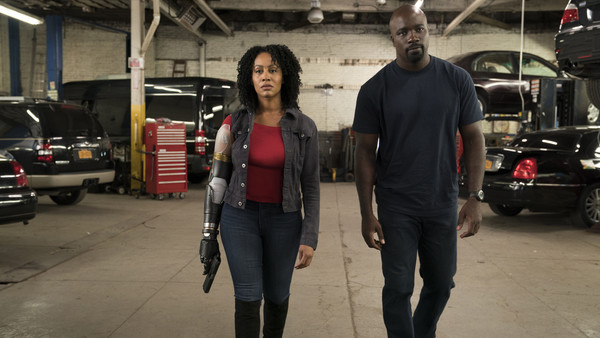
At this point it almost goes without saying, because of course, a Netflix Marvel series has pacing issues.
Yet again it's another entry into this universe that feels stretched out to a point of absurdity, where you're just wishing someone had stepped in during production and said that, actually, these shows don't all have to be 13 episodes long. And not just 13 episodes either, but where all of them are 55 minutes plus, including a couple that run over an hour.
Combined with that is the slow nature of the series itself, which was present in the first season too, and you have things moving slower than a mollusc through molasses. It wouldn't solve all the problems, but turning this into a mini-series would've served things much, much better.
4. Repeating Certain Points
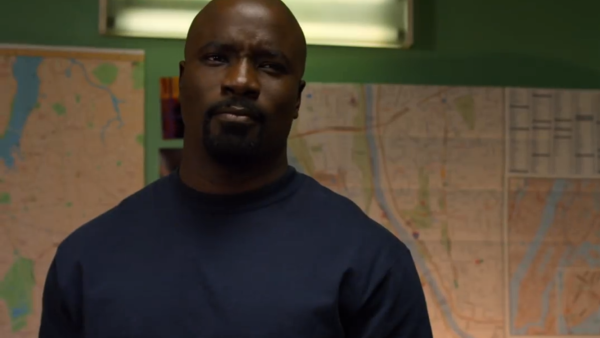
Luke Cage has some really interesting points to make and a few really intriguing developments, but unfortunately, there's also a tendency to beat the audience of the head with them like its titular hero knocking out opponents.
We hear of Bushmaster's grudge against Mariah because of their shared family history, and it's a compelling part of his character, but then every single time the name Mariah Dillard is mentioned to him - which is a lot - he corrects it to Stokes. Luke Cage can't forgive his father's adultery, which is again interesting, but we here about it so many times, and while it's important thematically the way it's presented is too repetitive.
The same, too, goes for the number of times Luke is shot at. In the first episode this is addressed by the gangsters saying 'they gotta know we tried', but when people are seeing the man lauded as the bulletproof superhero and then firing bullets at him episode after episode after episode it can get a little turgid, with no tension to any of the sequences.
3. The Lacklustre Action
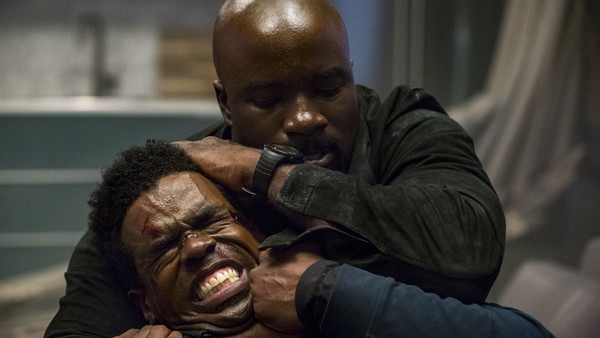
Luke Cage's action style is based around efficiency. This isn't Daredevil where he's going to be spinning and kicking his way around, but instead he wants to bludgeon his opponents in the quickest way possible. And while that is fitting with the character, it does nothing to make the action sequences memorable or particularly interesting to watch.
Bushmaster, who does adopt a more martial arts based approach, fares a little better, but his style only serves to highlight the slow, ponderous nature of Luke's own fighting, and means even their clashes lack the requisite excitement. Instead, it feels like they're in there because the fight scenes were a pre-requisite, rather than something we really need to see because of how visually interesting or narratively important they are.
The closest it comes to succeeding on this front is, ironically, when it involves characters from Iron Fist. A brief Luke Cage/Danny Rand team-up shows potential, and even more so does a bar brawl involving Misty Knight and Colleen Wing, which should at least have execs thinking about a Daughters of the Dragon series.
2. A Few Poor Character Choices
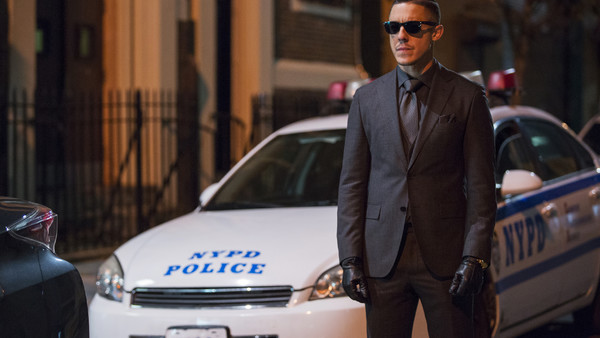
While Alfre Woodard is having a blast as Mariah, the same can't be said for watching her key relationships this season. Following on from Season 1, she and Shades (Theo Rossi) are attempting to establish themselves as the power in Harlem, but it's never a relationship that feels earned or particularly natural.
Their romantic chemistry especially is nowhere to be seen; at times there's something a little too strange about it, others it just falls flat. Shades, ultimately, is tired of being treated like one of Mariah's henchmen, another point we're reminded of time and again, and it doesn't really lead anywhere unpredictable.
That goes for a number of character decisions across the season, where they flip-flop between different allegiances or going down one path or another almost at random, simply to keep the wheels spinning.
Perhaps most annoying to long-term fans of this universe, though, is Claire Temple. While she and Luke start the season together, and Rosario Dawson is once again great, circumstances for her away from the show for the majority of the season, with a stretch of episodes where she's not even mentioned. Claire helps make Luke a more interesting character emotionally, and is great in her own right too, and that presence is keenly missed for large parts of the season, and it would've been particularly interesting to see her there for some of the choices Luke makes.
1. It's A Bit Of A Bore
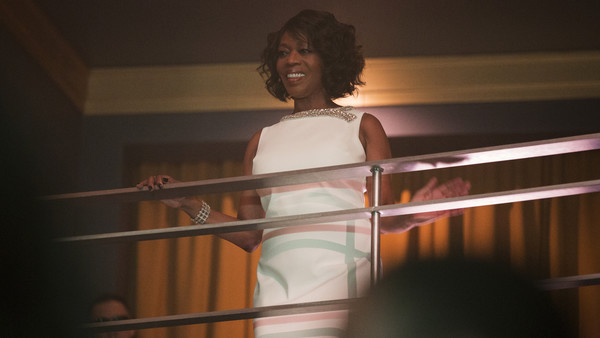
Had this show been just a few episodes, then there could've been something really compelling in here, marrying its themes of family and legacy with a battle for Harlem between Mariah and Bushmaster.
Instead, the story is dragged out to the point where it's wafer thin, having to run down blind alleyways, spin wheels, and make decisions that don't quite make sense in order to keep things going and trying to build to a finale that should've been a long time coming.
But it's not just the episode count, but the fact that they can't quite join up all the sub-plots into something as interesting narratively as it is thematically. It all becomes too repetitive, you never feel too much of a reason to be invested and, worst of all, much of it is really just quite dull. There's no obvious drop-off point like we've seen with some of the other Netflix Marvel shows, but it also never feels like it really gets going either, even though there are some excellent moments when it threatens to do just that.
What do you think of Luke Cage Season 2? Let us know down in the comments.