Russian Doll Review: 8 Ups & 2 Downs
The first great TV show of 2019.

Netflix's Russian Doll was released this past Friday to rave reviews from fans and critics alike, with the latter largely deeming it the first great new TV show of 2019.
If you're unaware, the dramedy series follows software engineer Nadia Vulvokov (Natasha Lyonne) who, on her 36th birthday, is hit by a car and killed.
Death is far from the end, though, as Nadia finds herself caught in a time loop from which she is seemingly unable to escape, with death simply flinging her back to the middle of her hipster-filled birthday party.
And while time loop stories are very much in vogue these days, this series is a positively fresh entry thanks to a cracking ensemble cast - led by an inimitable Lyonne, of course - sharp writing and great production values throughout.
It's not perfect by any means - and what is? - but as a snappy, charming slice of well-crafted black comedy, Russian Doll earmarks itself as another stonking success for the streaming giant...
Downs...
2. The Slippery Narrative Logic
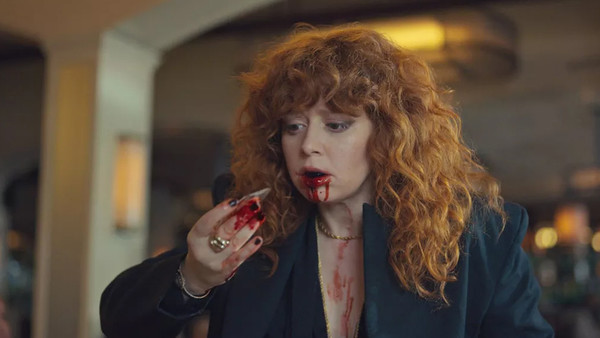
Like just about every story ever told about a time loop or time travel, Russian Doll has a pretty shaky sense of internal logic, with viewers basically being asked to just roll with its vague metaphysical machinations for the most part.
This actually serves the series pretty well for the majority of its eight episodes, though late in the day a random new mechanic is introduced totally out of nowhere, and it's never even remotely explained beyond "just because."
It's not a huge deal, but it also feels a bit like the writers couldn't figure out a way to organically ramp up the drama for the finale, and so a new, dangerous element was ass-pulled out of nowhere just for the sake of it.
The show as a whole is persuasive enough that this indulgence is forgiven fairly easily, but a little more cohesion in the final stretch would've made the show even better.
1. The Occasionally Obnoxious Dialogue
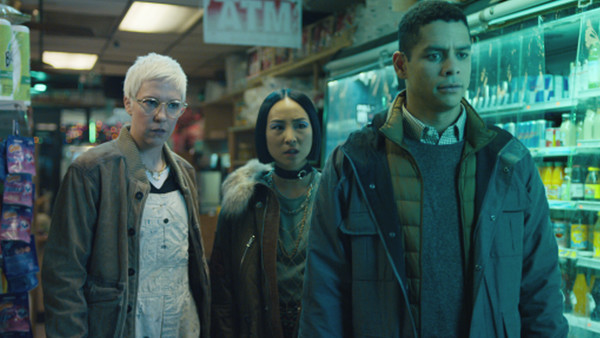
Russian Doll is a sharply-written show for the most part, though it does occasionally dial things up a little too much, to the extent that some of the dialogue comes off a tad too smug and self-satisfied for its own good.
While some of Nadia's friends - especially Greta Lee's Maxine - are intentional parodies of navel-gazing hipsters, sometimes other characters will casually spout off references to things as obscure as Jodorowsky's Dune and it just feels a bit pandering.
The show certainly knows its millennial target audience well, what with the lashings of irony-laced dialogue, but sometimes the balance just tips a little too far into puffing out its own chest.
These minor gripes aside, though, Russian Doll is certainly a show well worth watching, and here are the many, many reasons why...
Ups...
8. Natasha Lyonne & Charlie Barnett's Brilliant Performances

Natasha Lyonne's career received a welcome revival thanks to her role on Orange Is the New Black, and she's followed that up wonderfully with her fantastic lead performance here.
Lyonne has a knack for playing no-bulls*** characters with vulnerability buried deep beneath the surface, and so the role of Nadia is perfectly suited to her (just as well, as she also co-created the show, wrote several episodes and directed the finale).
She manages a perfect balance of vulgar hilarity and heart, complimented by the performance of co-star Charlie Barnett as Alan who, without spoiling anything, quickly gets caught up in Nadia's time loop escapade.
Their chemistry is remarkable and the show sensibly avoids most of the cliches you'd expect from a dynamic like this. Without their fine work, it wouldn't be anywhere near as heartfelt.
7. The Existential, Empathetic Script
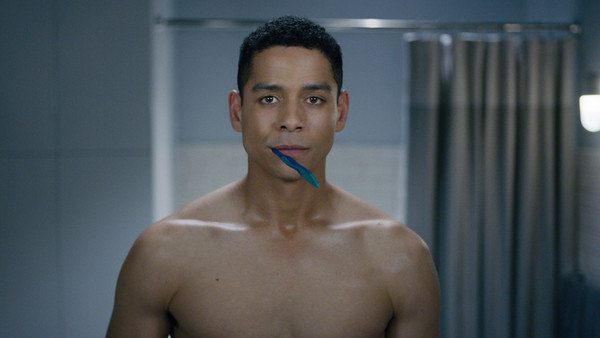
Underneath all the catty, barbed dialogue, Russian Doll is a deeply humanist tale about the joy of being alive but also the pain of existence and how, for some, even living through the most mundane day can be incredibly difficult.
In-between the thought-provoking existential musings about fate that are typical for time loop movies and TV shows, there's an endearing, even sweet pro-life message, with our heroes encouraged to fight for their survival even when the situation becomes increasingly grim.
It would've been easy for a show this ambitious to lose its tonal footing, but admirably it manages to blend its darker elements with its light and hopeful ones exceptionally well.
6. It Avoids The "Netflix Bloat" Issue

An overwhelming number of Netflix Original shows have a huge problem with bloat, where the streaming platform is so eager for new content that they forget the virtue of "less is more."
The Marvel Cinematic Universe shows are perhaps the most egregious example, with a season typically consisting of thirteen 55-minute episodes, far in excess of the maybe-eight episodes of actual quality storytelling that are on offer.
Thankfully Russian Doll makes no same mistake. For starters, there are only eight episodes and they're only 25-30 minutes each, allowing viewers to binge the entire season in less than 3.5 hours.
Basically, this couldn't be further from a slog or a chore: you can get through it in an afternoon and move on with the rest of your day.
The pacing within episodes is also terrific: the narrative is constantly moving forward to such an extent that you'll likely be surprised by how fast you arrive at the end credits each time.
Fingers crossed the show will pull strong metrics for Netflix and serve as proof perfect that a more concise, bite-sized approach to episodic stories is the way forward.
5. The Sharp Visuals
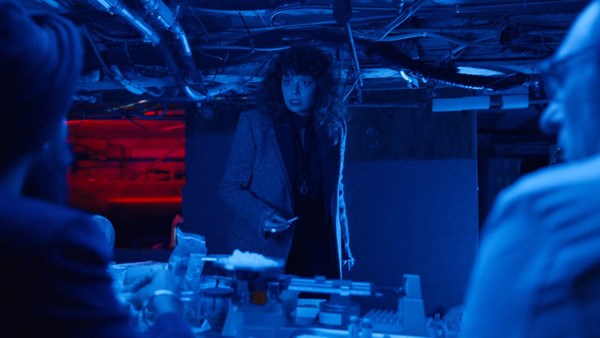
Another common complaint about so many Netflix Original films and TV shows is that they have a garishly overlit, flat look that makes their aesthetic resemble a bad cable sitcom.
Thankfully Russian Doll is no such show, and indie film cinematographer Chris Teague (Obvious Child, Appropriate Behaviour) does a remarkable job making the visuals as enticingly cinematic as possible.
Especially if viewed in Netflix's 4K HDR presentation, the exterior New York scenes in particular really pop, possessing a lived-in warmth thanks to the fantastic lighting both artificial and natural.
The framing is generally also excellent and episodes are expertly edited for maximum punchiness, making this an unexpectedly tight technical package.
4. It's Full Of Twists & Turns
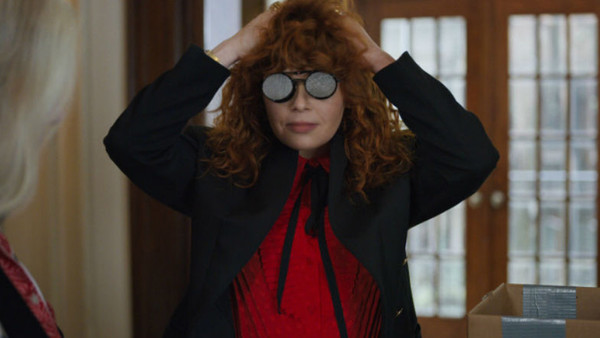
No spoilers here of course, but this is most certainly a show that will keep you guessing, as it serves up a healthy dose of twists and turns which easily sustain intrigue all the way to the finish.
This is absolutely a series that benefits from the audience knowing little about it, and if you don't remember much from the trailer, that's certainly a good thing going in.
The show constantly builds and one-ups its own premise with new dramatic wrinkles, alongside an amusing abundance of red herrings intended to throw the audience off.
Though not every new reveal is a total home-run as mentioned above, the vast majority help elevate the concept and, more importantly, further flesh out the characters.
3. The Top-Notch Supporting Cast
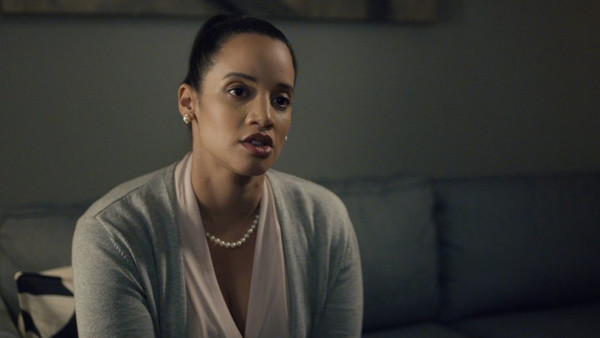
In addition to the fine two-hander between Lyonne and Barnett, the show's supporting cast is absolutely stacked with talented character actors giving it their all.
Where to begin? The easy stand-outs include Elizabeth Ashley as Nadia's therapist friend Ruth, a deliciously slimy Jeremy Lowell Bobb as her sleazebag lay Mike, Lyonne's Orange Is the New Black co-star Dascha Polanco as Alan's girlfriend Beatrice, and Chloë Sevigny who briefly appears in flashbacks as Nadia's troubled mother.
That's not to forget the brief and peculiar presence of Rocky legend Burt Young, who appears as a kindly, bereaved older man who lives in Nadia's apartment complex.
Together these fine performances lend plenty of weight and shade to Nadia and Alan's predicament, and there's not a weak or even remotely phoned-in turn among the bunch.
2. The Fantastic Music Choices

Those peppy visuals are also accompanied by some fantastically shrewd musical selections across the eight episodes.
First and foremost we have Harry Nilsson's "Gotta Get Up", which becomes the show's recurring theme whenever Nadia is killed and flung back to the start of the loop once again.
Elsewhere there are some fantastically catchy licks, such as the electronic-infused Light Asylum's "Shallow Tears" and John Maus' "Cop Killer", not to mention Anika's haunting "I Go To Sleep."
While you can't go a week without a movie or a TV show cynically cashing in on 80s nostalgia with wink-wink use of synth music, it fits here better than in most, especially with so many of the songs directly paralleling the themes of the show.
1. The (Mostly) Satisfying Ending
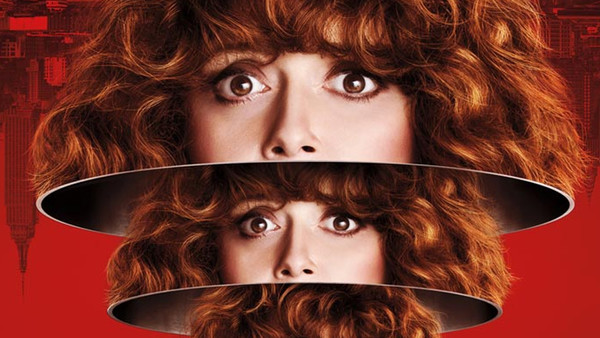
There are countless ambitious, imaginative shows that sadly can't quite maintain that level of ingenuity to the end, but despite a near-stumble in the final episode, Russian Doll largely delivers an emotionally and dramatically satisfying finale to its crazy yarn.
It's a tad disappointing that there's already been talk of two more seasons - Lyonne claims it was pitched to Netflix with three seasons in mind - because this seems like such a tight and concise one-off. If it can match the general brilliance on display here, though, it'll be tough to begrudge more episodes.
Basically, if you were worried that your time might end up wasted with an unsatisfying conclusion, fear not.
What did you think of Russian Doll? Shout it out in the comments!