10 Times Star Trek: Deep Space Nine Went Woke
If there was one Star Trek series that was a challenge to narrow down, it's this one
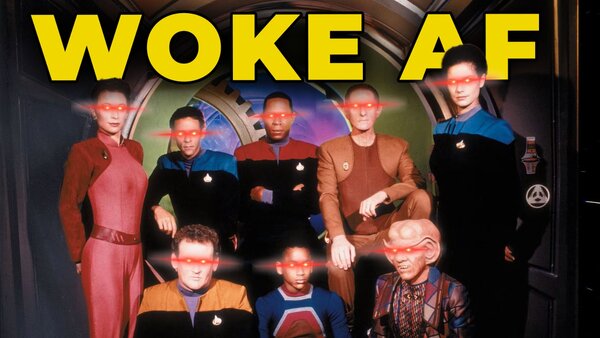
Star Trek: Deep Space Nine is often hailed as the most progressive Trek series, though with the advent of shows like Star Trek: Discovery, that title is up for debate. What is safe to say is that in 1993 there were few, if any, shows on television that sought to tackle the topics seen in DS9 from week to week.
In our previous entries in this series for Star Trek and The Next Generation, we discussed the origin of the term 'Woke'. To reiterate, according to Merriam-Webster, to be 'Woke' is to be:
aware of and actively attentive to important societal facts and issues (especially issues of racial and social justice)
DS9 was radical from the beginning in its casting of Avery Brooks as the new commander, who served as the first male actor of colour to play the lead role in a Star Trek series. Brooks was well known for his role on Spencer: For Hire and A Man Called Hawk, as well as having a long theatrical career. As an artist and performer, he was cited as 'private' and 'enigmatic' almost a decade before taking on the part - though his pride in his heritage was both on record and seeped in his performances.
With Brooks at the head of this show, Deep Space Nine would quickly establish itself in how it tackled social issues through the lens of the 24th century. There were missteps along the way, as with any Star Trek series, though this iteration of Trek has earned a legacy of being one of the most challenging and forward thinking of them all. Let's explore why.
10. Homelessness And Mental Health Class Divide

We have already penned an article breaking down the inspiration behind the Bell Riots, so it comes as no surprise that Past Tense, Parts 1 and 2, are examples of Deep Space Nine making direct statements on homelessness and the mental health crisis in the 1990s.
Two of the biggest inspirations behind the so-called Sanctuary Districts of 2024 were the Attica Prison Riot of 1971 and the Kent State Massacre in 1970. Increased restrictions on prisoners' rights primarily caused the Attica Riot, though the direct catalyst was the shooting of George Jackson, a prominent member of the Black Panthers. The Kent State Massacre saw the shooting of unarmed protestors, there to decry the ongoing US presence in the Vietnam War.
While those real-world events helped to shape the Districts themselves, the treatment of Sisko, Bashir, and Dax upon their arrival in the 21st Century was a deliberate and clear statement on race and class divide. As per our interview with writer Robert Hewitt-Wolfe, Sisko and Bashir, played by Avery Brooks and Alexander Siddig, who are both men of colour, were quickly deposited in the Districts, while Dax, played by the caucasian Terry Farrell, is found and cared for by a wealthy passerby.
Within the Districts, there are no prospects for those who are down on their luck to escape and rebuild their lives. There are literal and metaphorical walls erected to block them from view, resulting in the eventual Riots, fuelled by their need to tell their stories to the outside world.
Though the initial story pitch contained the idea of the Districts, neither Hewitt-Wolfe or showrunner Ira Steven-Behr knew that Mayor Richard Riordan's Administration was about to propose an open-air, fenced-in camp for homeless people in LA.
Past Tense contains allegories to those prior events, then-current events (however coincidentally) and also predicted the extreme wealth divide that would be so prevalent in the 21st Century. Though not exclusively depicted through a racial divide in the episodes, the class divide leaves no room for confusion.