Sherlock: 10 Stories We'd Love To See Adapted

Sherlock is back!
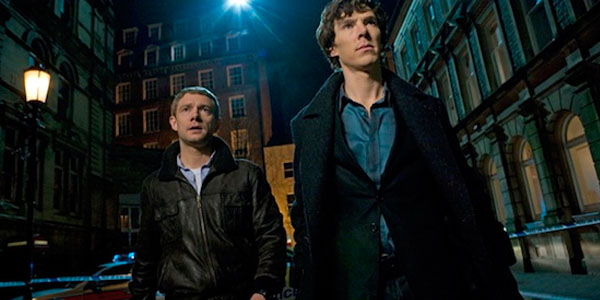
The hugely anticipated third series of the BBC's Sherlock starts this week. Fans everywhere have spent the best part of two years speculating wildly over how the eponymous genius consulting detective survived his fall at the end of Series 2 to return this New Year's Day for the start of Series 3. With their questions surrounding their hero's survival about to be answered, the Sherlock fandom is likely to turn its interest to the new narratives on offer and new cases for the detective to solve.

Readers of the stories of Sir Arthur Conan Doyle will, of course, have some advantage when it comes to thinking about how the plots of future series will develop. For those fans it is always interesting to see how the BBC series and writer-creators Mark Gatiss and Steven Moffat re-interpret Doyle's source material. In some cases - the source for The Hounds of Baskerville is obvious - it is a case of re-imagining a whole story, in others - such as the use of the Bruce-Partington Plans in Series 1's The Great Game - it is a smaller reference point in a larger story.

Doyle wrote sixty stories and novels involving Holmes and Watson so the six episodes we have seen so far and the three in Series 3 have only just scratched the surface of possible material. In this list we look at 10 classic Doyle-Holmes stories that we'd like to see adapted both in the coming series of Sherlock and any future parts.


10. The Empty House
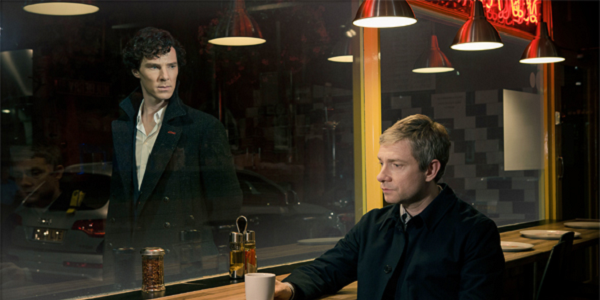
This story, in which Holmes is revealed to have survived his supposedly fatal tumble from the Reichenbach Falls, is something of a no brainer to inspire this Wednesday's episode of Sherlock to some extent. The episode's title, The Empty Hearse, references the original story and its writer, Gatiss, has referred to it as: "a loose adaptation". From both the new series' trailer and the Christmas mini-episode, Many Happy Returns, it is apparent that The Empty Hearse is likely to use quite a few elements of the original story. In Doyle's Empty House it is revealed that Holmes faked his death in order to track down Moriarty's associates with the assistance of his brother Mycroft, the only person who knows he is really alive. The trailer reveals that the TV Mycroft, also played by Gatiss, knows that Holmes is alive and the mini-episode shows him being tracked across Asia and Europe and back towards London, similar to his movements in the story. The actual mystery in The Empty House, beyond simply how Holmes has survived and returned, involves an attempt to capture Moriarty's most dangerous lieutenant: Colonel Sebastian Moran. Moran, who appeared in the Guy Ritchie version Sherlock Holmes: A Game of Shadows as a sharpshooter working with Moriarty, is often thought of as the next most significant Holmes villain and indeed the detective himself described him as "the second most dangerous man in London". Seeing him appear in this week's episode would come as little surprise, then. On the other hand, there is likely to be some significant differences from Doyle's story. In particular, Gatiss has the advantage of never having intended to kill Holmes off for real and, therefore, hopefully building in a potential method of survival rather than utilise Doyle's ass-pull of made up martial art baritsu. How well plotted Sherlock's return will be remains to be seen, but expect it to be completely different from Doyle's solution.

9. The Sign of Four

The second episode of Series 3, written by Stephen Thompson who penned the last series' finale The Reichenbach Fall, is titled The Sign of Three. This would appear to point to Doyle's novel The Sign of Four as the episode's inspiration. This shouldn't come as a surprise as The Sign of Four is the second Holmes story, with the first, A Study in Scarlet, and third, A Scandal in Bohemia, already being adapted as the opening episodes of the first two series. It is also the second of just four full-length Holmes novels along with the already adapted A Study in Scarlet and The Hound of the Baskervilles. The Sign of Four is perhaps most noteworthy in the wider Holmes canon for introducing Mary Morstan, who would become Watson's wife. It seems likely that some version of Mary will appear in this season of Sherlock so that element at least is likely to be part of the adaptation. Another of the more memorable elements of the story, Holmes' elaborate and impressive deductions based on Watson's pocket watch, have already been adapted into the show as Holmes' deductions around Watson's phone in A Study in Pink. To what extent we are likely to see the rest of The Sign of Four's plot in The Sign of Three is as yet unclear. Drawn specifically from the history of the 1857 Indian Rebellion and telling a plot involving villainous Sikhs and a midget with a blow-dart, it's unlikely that the topicality or racial elements are going to survive an adaptation. However, the concept of a pact between a group of convicts and the promise of hidden treasure that may come to Mary will probably play some part in the case.

8. His Last Bow

Co-creator Steven Moffat's new episode goes by the name His Last Vow. That title is a reference to His Last Bow, the final Holmes story in narrative continuity, if not in writing order. It is likely, however, that the vow of the title also refers to the probability that this series will see the story arc in which Watson gets married and moves out of Baker Street. Moffat has referred to a desire to confront the notion that Holmes and Watson won't always be living together and this would seem to be the next interesting way that their relationship could develop while staying true to Doyle's writing. Even if the new series does not use His Last Bow as more of a source material than its title, it would be interesting to see it adapted in the future. More of a spy story than a murder mystery, His Last Bow finds the aging Victorian detective on the eve of the First World War and posing as an American informant passing military secrets to a German spy. Coming long before the age where spy thrillers were at their most popular and successful, His Last Bow has been criticised as being a lesser quality of work than some of Doyle's murder stories by pointing to the fact that Britain would have gained more by allowing Holmes to continue passing false information to the German spy than by capturing him. However, the TV series has always been at its best when subverting some of the stories' details, while its increased use of Mycroft Holmes' role in intelligence work would bear out a story set entirely in the world of espionage. However, with Sherlock still remaining fresh and exciting and the protagonist still youthful, the key element of an older Holmes reaching retirement and only coming out of it as a patriotic duty may have to wait a few series. After retirement, Holmes takes up beekeeping. Some reference to this interest or the book, Practical Handbook of Bee Culture, that he swaps for the military secrets would be nice to see.

7. The Man With The Twisted Lip

Man With The Twisted Lip Drug addiction and begging are the order of the day in this fun little story in which no particular crime is actually committed; opium dens being entirely legal, if disreputable, at the time. While probably not sufficient to form the basis of the main narrative, it would be interesting to see this story updated to play around with the shift in attitudes and legal positions since it was written in 1891. The Man With the Twisted Lip sees Holmes undercover in an opium den, posing as an old man, looking for a missing businessman who was spotted by his wife in the window of the drug house in a rough part of town. However, on entering the room there is nobody but a disfigured beggar. After Holmes discovers the businessman's possessions amongst the beggar's, there is an immediate suggestion of murder until Holmes, the master of disguise, reveals the disfigured beggar is the respectable businessman, also in disguise. The theme of Holmes' incredible ability with disguises is one that the BBC series has not yet really touched upon, so it would be nice to see it referenced somewhere with another character being just as successful. The outwardly respectable businessman with a heavy drug habit will always remain a topical subject, but the story's reliance on being able to make enough by begging to own a large country estate seems a bit Daily Mail for the usual politics of both Doyle's stories and the BBC show. That would, though, just allow Watson to express his incredulity and Holmes to, undoubtedly, cite the few cases where beggars have made large profits.

6. The Musgrave Ritual

In this, one of Holmes' earliest cases, a quaint family heirloom, a riddle passed down from generation to generation, turns out to be the secret to finding the lost crown of King Charles I, a secret that results in the disappearance of the family butler and maid. It is partly interesting as an example of Holmes' riddle solving abilities and partly because it is one of the few stories that Holmes himself tells rather than being narrated by Watson. Watson gives a brief narration as a frame device, but the case itself pre-dates him and involves Holmes helping out an old university acquaintance: Reginald Musgrave. Within the BBC series it would be nice to have Holmes recount the details of some earlier adventure or mystery that prove pertinent or similar to their current case. It would help establish more of a sense that Holmes had an existence prior to Watson joining up with him, a world in which he had friends of a sort and began to establish himself as a reliable solver of mysteries (something touched on in the episode The Great Game). Watson would be quite ready to be somewhat disbelieving of the image of Holmes with any friends other than himself, which could be a good source of gentle tension between the two. The ritual itself is something that could be open to some quite loose adaptation while still referencing the original story, the Basil Rathbone film turned it into moves on a giant chessboard. Perhaps, given Holmes and Musgrave's student history together it could become some archaic Oxbridge student tradition that nobody questions the meaning of.

5. Silver Blaze

This much loved Holmes story features a missing racehorse, a murdered trainer and a drugged curry. It is best known, though, for what Holmes considers: "the curious incident of the dog in the night-time", that the guard dog did not react when the horse was taken, proving the criminal was someone familiar to it CBS' Sherlock-alike Elementary has already used a similar incident of a guard dog's failure to react as a vital clue in one of its episodes, so something similar in the BBC show is quite plausible. However, given the Gatiss-Moffat love of replacing the Victorian elements with modern technology (H.O.U.N.D. for the Baskerville's hound, for example), an issue with a complex, high-tech alarm system not functioning is probably more likely. As to the main details of the plot, they involve attempts to cripple the champion horse of the title by slicing into its leg with a cataract knife and to disguise it as a different horse by dying its distinctive white markings. The initial main suspect is a bookie. Given betting and sports betting in particular is bigger money than ever and, thus, open to fixing by international criminal gangs, a gambling corruption story would fit the contemporary setting. It wouldn't even have to be about horse racing: look at all the recent football gambling, match fixing stories.

4. The Blue Carbuncle

Both Series 2 and Series 3 of Sherlock have aired in the festive period, beginning on New Years' Day. If this pattern continues then it would be nice to acknowledge it as part of the seasonal schedule with an adaptation of Doyle's one Christmas-specific Holmes story: The Blue Carbuncle. In this story a man comes to Holmes with a battered hat, having picked it and a plump Christmas goose up after they were dropped in a street brawl. After taking the goose home to eat, he found a valuable gemstone in its throat. Using his deductions based on the hat, Holmes is able to track down the gem's thief who had fed it to the goose hoping to pick it up later before mixing up which goose was which. Unusually, and it being Christmas, Holmes allows the thief to go free, saying that to arrest him would only make him a hardened criminal later. While this would be a nice nod to the generous spirit of the season, it would also serve to remind the audience that Holmes operates by his own morality and sometimes outside the law. As he says in the story: "I am not retained by the police to remedy their deficiencies". The goose farming element of the plot has some modern mileage as well. It would be interesting to see how the story, in which the thief James Ryder has a sister breeding geese for Christmas and personally selects the one for him before she sends the rest to a pub for selling, would fit with modern food production and sale methods. Perhaps there is an opportunity to comment, in the wake of this year's food adulteration and horse meat scandal, about how many people don't know where their food is coming from these days. Perhaps when he thought he was getting a goose he wasn't getting one at all.

3. The Speckled Band

Speckled Band Arguably the most popular of Doyle's short stories, The Speckled Band has already been referenced in Sherlock, during the first episode of last series: A Scandal in Belgravia. As Holmes fame grows through Watson's blogging, we see some of the successful cases that they have worked on together and that Watson has blogged about, including that of "The Speckled Blonde", in which a blonde woman's corpse is found riddled with puncture wounds. While the allusion to the title is nice (and comes along with many others, like The Geek Interpreter for The Greek Interpreter), it would be a shame if one of the best Holmes stories only received this much reference. Doyle's story is not a mystery in the sense of a whodunnit, it's pretty obvious right from the start who the culprit is, but is a classic "howdunnit" in the form of a locked room mystery. The aggressive and manipulative Dr. Roylott has plenty of motive to murder his stepdaughter Julia Stoner, but how he does it while she is locked in her bedroom and leaves no trace is a greater mystery. Moffat and Gatiss could easily take the set up of the slightly unhinged doctor and his house full of exotic animals (a cheetah and a baboon roam the grounds of this country house like Michael Jackson's Bubbles the Chimp or Siegfried and Roy getting mauled by their tigers) and take it in a different direction from the story's deadly poisonous snake. Way back in A Study in Pink, Moffat took the image of the victim scratching out the word "Rache", which in the novel A Study in Scarlet Holmes reveals as German for revenge, dismissing the theory that it is the unfinished name Rachel. In Moffat's version the revenge angle is waved away as far less likely than the female name. In this way perhaps The Speckled Band could refer, as Holmes initially suspects in the story, to a band meaning a group or gang of people with some kind of speckled insignia.

2. The Valley Of Fear
Once A Study in Scarlet, The Sign of Four and The Hound of the Baskervilles have all been adapted that only leaves one novel length Doyle-Holmes story remaining: The Valley of Fear, a tale of American private eyes and masonic crime rings impacting a more typically Holmesian country house murder. Perhaps the least loved of the novel length stories, it's second (Holmes-less) half in which the back story is told is probably more enjoyable than the initial mystery. But that story of secret societies and violent crime in a mining community in the bleak middle of nowhere could provide ample material for a re-invention. However, it is the framing device that leads Holmes to be interested in the case and eventually wraps it up with a murder he could not prevent, which is perhaps of the most interest to Sherlock fans and future adapters. Holmes' interest is piqued by the arrival of a coded message, only lacking the book to break the code. He must then figure out what book his informant might have and suppose that he too owns in order to crack the code. Something similar appeared in the Sherlock episode The Blind Banker in Series 1, but in this case it leads Holmes to realise the culprit above and beyond the rest of the criminals in the story: Moriarty. Yes, The Valley of Fear is the only story apart from his death in The Final Problem in which Moriarty makes an appearance in Doyle's original canon of Holmes stories and, as such, presents an opportunity to use the TV show's main villain further. He is never seen in person in The Valley of Fear, but it is his actions that threaten the supposed victim and later result in his death. There are a number of ways this could inspire the TV series. Moriarty could make a return from the "grave" just as Sherlock will or, equally, this episode could be set, as the Doyle story written long after The Final Problem, much earlier in the continuity then when it was produced. Or the events of the story could occur as events set in motion and planned by Moriarty before his death. There are plenty of possibilities for Gatiss and Moffat to use the character further even if he remains dead and, if they do, The Valley of Fear should be their starting point.

1. The Red Headed League

Red Headed League Arguably the most enjoyable, entertaining and creative of all Doyle's Sherlock Holmes stories, The Red Headed League is ripe for adaptation to the smart and knowing BBC series. In this story, ginger haired pawnbroker Jabez Wilson is picked from hundreds of applicants after a newspaper advertises to join "The Red Headed League" and receive an impressive salary for very little work (copying out the Encyclopaedia Britannica) thanks to the legacy of a generous ginger of years gone by. It turns out that this is an elaborate scheme by a famous bankrobber, John Clay, and his redheaded accomplice to get Wilson away from the shop so that they can tunnel to the bank behind. The image of huge groups of redheaded applicants is an impressively visual and comedic one that would work very well on TV and would be fun to play with in a modern context: X-Factor style auditions, perhaps, or a gingers-only Facebook group or, best of all, a red headed flashmob. After setting up the Red Headed League as its initial mystery and the famous thief Clay as the villain, the plot could take any number of twists and turns. While a completely straight adaptation of The Red Headed League may not quite be enough to sustain an hour and a half run-time, it would definitely be the kick off point for a great whole episode with a few embellishments as we saw in Study in Pink, which started the same and then took its own course.

Contributor
Contributor

Loves ghost stories, mysteries and giant ape movies