Star Trek: 10 Dropped Plot Threads We'll Never Get The Answer To

You know what’s the secret behind Star Trek’s longevity? It’s not the actual stories themselves, but the stories that could have been.
You know what€™s the secret behind Star Trek€™s longevity? It€™s not the actual stories themselves, but the stories that could have been. With Star Trek, a writer doesn€™t have to struggle to come up with a new story because of the wealth of possibilities that every iteration of Gene Roddenberry€™s creation offered. Star Trek survives because of the fluidity and varieties €“ infinite diversity in infinite combinations, if you fancy a bit of Vulcan logic. Dropped plotlines abound endlessly, just waiting for some devoted fan of a writer to pick them up and spin them into some great tale that revisits favourite characters or exciting theme that fans really want to see again. Here are a few that might be interesting to see re-examined...

10. An Entire Premise Scrapped - €œAssignment: Earth€

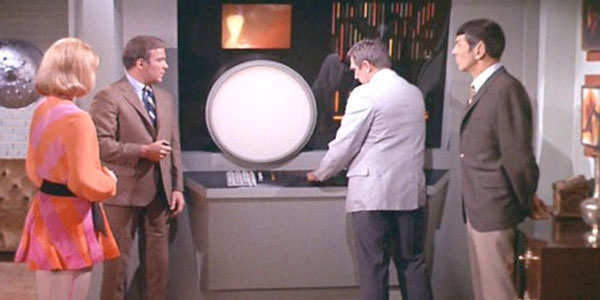
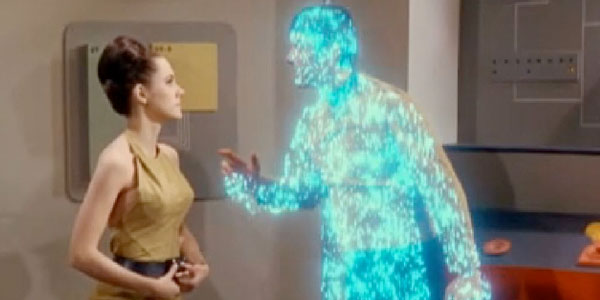
It€™s well known that this episode was actually the pilot to a prospective series that never materialized. It was about an agent working on behalf of benevolent aliens, who were interested in steering mankind€™s development in the right direction, ie: away from nuclear self-destruction. A typical 1960€™s cold-war mentality theme, but it held a lot of promise and there was definitely a lot of mystique about these unknown benefactors of humanity and how Gary Seven (played by Robert Lansing) and his lovely assistant €“ Roberta Lincoln (Terri Garr€™s very first role). The Enterprise is sent backwards in time to research the period of Earth's cold war. An orbital launch platform armed with nuclear missiles was supposed to malfunction and the Enterprise's mission is to uncover the reasons why and other important details. As they approach 20th century Earth, they intercept a transporter beam that deposits a middle-aged human and a cat on their transporter pad. He identifies himself as Agent Gary Seven and the cat as his companion, Isis. Though Seven was born on Earth, he was raised by these aliens on a distant planet in the future. He was supposed to be their liaison in order to protect Earth from its own mistakes and to provide them with a better understanding of humanity. This wasn't just a dropped plotline - this was an entire premise and ultimately a series that had a tremendous amount of back-story to it. It had potential time-travel stories and alien invasions along with endless possibilities of cold war spy tales. This was a gem of a series that sadly never saw the light of day.

9. Whatever Happened To The Talosians? - €œThe Menagerie€ (Star Trek The Original Series)

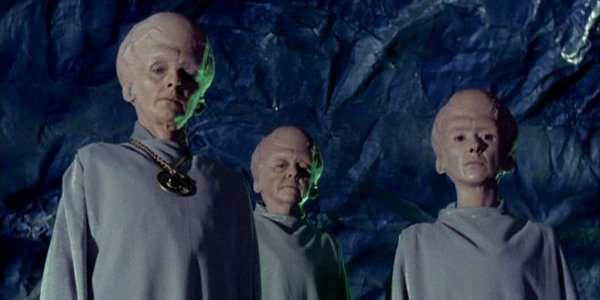
A follow-up to the pilot episode €œThe Cage€. The people of Talos IV needed to introduce hardier characteristics into their gene pool so they sought wayfarers and visitors to see if they would be compatible and worthy additions to their race. This was such a compelling idea that it was even picked up and re-examined within the series in a suspenseful two-parter. Of course, the second time around, the episode revolved around Spock's decision to improve the quality of life for his former captain, Christopher Pike, now crippled after radiation damage by having the Talosians employ their illusion-generating powers ability to mentally create realistic and believable illusions that he is whole and healthy again. But to have the idea originate from the logical and impassionate Mr. Spock gave him new depth for us to appreciate the Vulcan first officer and his apparent capacity for loyalty. The fate of an entire race was dropped from the Star Trek universe and remanded to the annals of obscurity. Whatever happened to the Talosians? Did their race ever make use of Pike and Vina€™s genetic potential? Were there any other travellers added to the breeding pool? What about any diplomatic attempts by the Federation to assist the Talosians in terraforming their harsh planet or assisting in improving the birthrate? All these story possibilities from 1966 are just sitting there, and no-one has picked them up. If you were in a creative-writing class and some English teacher offered you this as a starting premise, you€™d bless her name and hand in an A grade assignment.

8. What Ever Happened To The Children In €œMiri€? (Star Trek: The Original Series)

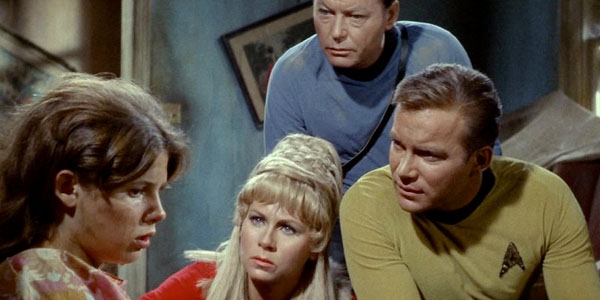
Anything with kids is a story that has the capacity for follow-up. Children grow up and change into something completely different. In this episode, the crew of the Enterprise discover a very Earth-like planet populated by children in a post-apocalyptic 20th century ruins. Moreover, the children live for an extended period of time. When they eventually reach their biological latter teens, they start to change into something more deadly. Miri herself is supposed to be about 300 to 400 years old, but to Kirk she is still a shy teen-aged girl who has just grown old enough to fall prey to the legendary Kirk charm. Kirk's crew realizes that the virus that hits the kids when they turn into adults is starting to affect them as well. They develop lesions and sores associated with the virus which frightens the children. Still, they manage to find a cure with Dr. McCoy`s talented medical abilities and they are able to stop the virus from affecting the children allowing them to develop and grow up as their unnaturally extended lives will allow them. But this is a dropped plotline goldmine! Imagine a planet populated with children who can potentially live for a thousand years? They could be the equivalent of deep space explorers who never have to worry about the negative side effects of relativity. As they have no family, they have the added bonus of not leaving anyone behind. On top of all this, can you imagine the possibilities of a kid who has the benefits of virtually eternal youth coupled with years of experience? The idea that another planet developed similarly to Earth could have been explored along with the obvious biological research of life prolongation. These are only a few of the possibilities that could have been put to pen but at the very least, curiousity could have been abated by a return visit to Miri's planet. It could all start with a crack Federation team of social workers and truant officers €

7. Balok's Future - €œThe Corbomite Maneuver€ (Star Trek The Original Series)

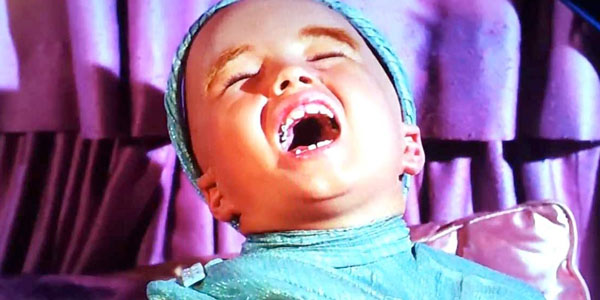
OH, COME ON! Why has nobody even thought about looking up and using the First Federation as an ally or potential Star Fleet antagonist? If there has been an attempt, then it€™s lost in some forgotten non-canonical piece somewhere, escaping the notice of mainstream Star Trek. The Enterprise is confronted by a strange device that emits deadly radiation as soon as it gets closer to the ship. Kirk orders it destroyed to protect the crew and later on, a massive starship known as the Fesarius representing the First Federation appears. Its captain - Balok - demands to know why the "Earth Ship" destroyed the boundary marker buoy it encountered. It immobilizes the Enterprise in a powerful tractor beam and Balok decides that for its intrusion, the Enterprise must be destroyed. Unable to withstand the clearly superior technology of the Fesarius, Kirk decides on a last-ditch gamble. He bluffs that the Enterprise carries a powerful explosive known as the Corbomite Device and announces that it will be detonated as a final defence against a superior enemy. Kirk gambles that his bluff will make Balok reconsider his decision. It works, but it also has the advantage of allowing Kirk to break the Enterprise free of Balok's control, allowing them the chance to meet in person. After pleasantries are exchanged, Kirk and his away party are treated to a tour of the Fesarius and an officer remains behind on board with Balok to serve as an exchange officer. This was the definitive episode that showcased and solidified Kirk€™s legendary ability to out-bluff his opponent. Then, when we discover that Balok is no more than a pudgy little child-like alien who presents about as much danger as a budgie, Kirk€™s rep as a tactical genius becomes even more apparent. What a right call to make. Balok initially presents himself as benevolent. His technology is obviously far superior, as Spock points out, to be able to pilot such an enormous vessel as the Fesarius without a crew. When they leave Lieutenant Bailey as a €œcultural liaison€, representing not the best or the worst of humanity, but as they really are, then the stage is set for at least some sorts of wacky adventures. It could have been a lot of fun. Sort of like a science-fiction version of BJ and the Bear.

6. Because More Harry Mudd Can Only Be A Good Thing - €œI, Mudd€ (Star Trek The Original Series)

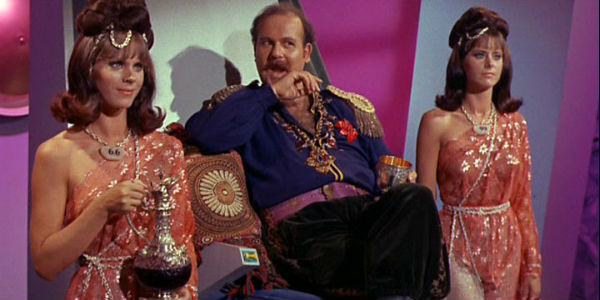
Okay, this might be a bit of a stretch, given that €œI, Mudd" was a continued exploration of €œMudd€™s Women€, but why stop there? Harcourt Fenton Mudd is such an endearing and entertaining character that more adventures with this guy wouldn€™t hurt. After all, rogues make for the best stories. Rogues are instant story generators. If the scriptwriters found themselves stuck for a plotline, here's a character who instantly makes his own. All he needs is a criminal motivation and the story writes itself. In fact, this idea was repeated in Star Trek: TNG's episode "The Outrageous Okona". Mudd is lascivious, manipulative, completely narcissistic, but also so relatable to a 20th (and 21st century) audience still pre-occupied with the pursuit of material wealth and other intrinsic things. We are a selfish society but the Earth in the time of the Federation is not. People don€™t accumulate wealth or trap themselves in nowhere careers; the people of the 23rd century live in a utopia-like existence where the pursuit of personal wealth is not the global preoccupation but rather the betterment of one€™s self. Harry Mudd is a throwback and is therefore totally relatable to the audience - and it€™s fun to see him interact with the spotless, law-abiding Star Fleet officers. He lies, thieves and presents a criminal record in a time when crime is supposed to have been eradicated. That makes him unique in the Star Trek universe and therefore, worthy of more stories. Why don't we see more of his adventures? A rich, entertaining character who is a perfect foil to the captain and crew of the Enterprise. Most importantly though, he also serves as a continued reminder of why the 23rd century is such a utopian society. If Mudd's pursuit of profit through smuggling and conniving is so wrong then we need to see more of it to remind ourselves in our primitive society what is right. We needed more of this. So what ever happened to him? Did he remain on the planet of androids? Was he brow-beaten to death by his android-replicated wife? Surely this is an inventive and cunning character who could have broke out of his prison. Given Mudd's demonstrated cleverness, getting off-planet wouldn't have been too difficult a task. This needed a re-visit, simply out of comic relief and pure fun. € And surely the Federation could make some use of a planet full of robots willing to serve humanity. Forget Riza.

5. The Kelvans - By Any Other Name€

Aliens from the Andromeda Galaxy known as the Kelvans capture the Enterprise and refit it with advanced technology for a 300 year long trip back to the galaxy of their origin. The reason? After assuming human form to exist within our galaxy and to understand it better for conquest, the Kelvans need a human craft that will sustain their lives and the lives of their descendants as they continue to complete their mission. With his crew incapacitated, Kirk manages to use the Kelvans€™ new humanity against them by irritating them or using human emotions they are unfamiliar with. His point is to show the Kelvans that they are no longer Kelvan but as human as the crew of the Enterprise. Kirk manages to convince them to settle on the planet they were discovered on. They agree to this and all ends well. But given the Kelvans€™ superior technology and celestial navigation, don€™t you think this is an episode worthy of following up on? This is a plot line that demands revisiting; even it€™s just to help them build shelters and other amenities of life necessary for colonization. After all, as in €œSpace Seed€, we don€™t see Kirk leaving the settlers with anything. In fact, this would have been a great TNG episode, with Captain Picard following up on one of the classified mission logs of the original Enterprise. Heck, they could have even been included in a cameo appearance as weapon specialists or some sort of advisory role. This is a plot line that needed further exploitation and would have certainly won nostalgia points with the die-hard Trekkies. What a waste.

4. Whatever Happened To Dr. Taylor After She Was Taken To 23rd Century? - Star Trek IV: The Voyage Home

Great movie, right? But a somewhat silly premise of rescuing humpback whales from the 20th century because they€™re the only species that can communicate with an alien that€™s causing all sorts of weather disturbances back on Earth in the 23rd century. Of course, we€™re all willing to forgive this because Spock€™s alive and they€™re travelling back in time aboard a captured Klingon bird of prey. Oh, and don€™t forget the jokes. Lots of great one-liners. Whatever happened to the 20th century marine biologist they brought back to live in the 23rd century? This has always been particularly annoying. After all, there are so many ramifications to consider: the violation of causality, the prospect that Dr. Gillian Taylor now has to contend with accommodating herself to a totally new environment 300 years beyond her understanding; and not to mention that she also winds up with a position on board a science vessel primarily devoted to the study of humpback whales. Is everybody okay with this? Oh, and the fact that it was completely glossed over because, that€™s right: NCC-1701-A shows up in the next scene. If nothing, then there needs to be some sort of follow-up to Dr. Taylor€™s situation. It just seems like poor Dr. Taylor was abandoned and left to fend for herself. That has to be worth a story or two in itself out of pure human drama.

3. Why Didn't We See More Of The Gorn? - "Arena"

Have you ever seen Kirk fight? Dropkicks, double-fist hammer-strikes and judo flips form part of this character€™s repertoire of fighting skills. In this episode, the Enterprise responds to an attack on a distant outpost on Cestus III by a mysterious alien species. The outpost is destroyed and Kirk pursues the fleeing enemy ship into an unknown region of space. However, both ships are immobilized by another advanced alien species known as the Metrons. They are displeased by the intrusion into their space by two savage, warlike and inferior species. They deposit the captains of both ships on a nearby planet to allow them to duel and thereby resolving the matter efficiently and with as little bloodshed as possible. After being instantly transported to the planet€™s surface, Kirk discovers that his opponent is a seven-foot tall reptilian humanoid known as a Gorn and is physically superior to his €œKirk-fu€. However, through careful observation, Kirk notices that the planet has an abundance of loose chemical and other elements that he gathers and uses to construct a primitive gunpowder weapon. With his new advantage in weaponry, Kirk incapacitates the Gorn captain and spares his life €“ a trait the Metrons were not expecting. They instantly teleport the Gorn back to his ship to receive medical attention and eventually, Kirk, to the Enterprise. What€™s not to be entertained by a giant reptilian with warp technology? In the 1980€™s there was a strategy game put out by a company called FASA called €œStar Fleet Battles€. The back story of the game is pure Star Trek and suggests that the Gorn are compared very closely with the Federation in spirit, if not in physicality. The Gorn Hegemony and the United Federation of Planets are close allies in this game after resolving the issues at Cestus III. However, this has been the only mention of the Gorn Hegemony since the 1968 episode. It wasn€™t until 2005 when Star Trek: Enterprise featured a Gorn in the mirror universe episode €œIn a Mirror, Darkly€ who gets killed by Captain Archer. Talk about history repeating itself. But this is a race that had so much potential plot fodder in terms of possible allies for the Federation (as suggested by the FASA strategy game). Their technology was equivalent and their hand-to-hand combat abilities offered possibilities of great fight sequences. Can you imagine the officer exchange programs the inclusion of this race could have offered? For thirty-seven years, this race has languished in insignificance, forced to sit on the sidelines when it could have been used in a time where the special effects could have created an awesome monster ally for the Federation. Again: what a waste.


2. Whatever Happened To The Romulan Commander? - €œThe Enterprise Incident€

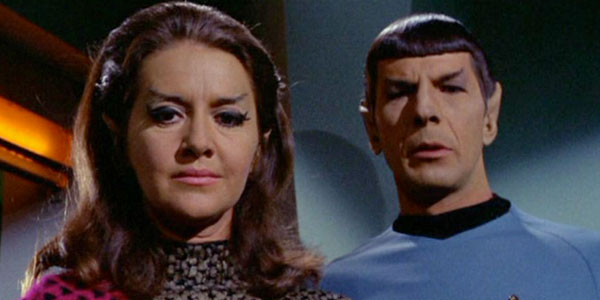
An episode written by D.C. Fontana €“ and loosely inspired on the circumstances surrounding the USS Pueblo €“ an American naval vessel captured by North Korea in 1968 on a charge of espionage after allegedly straying into North Korean waters. When the Enterprise enters the Romulan Neutral Zone, it is immediately surrounded by three Romulan battlecruisers. Their objective is to capture the Star Fleet vessel and take it back to Romulus as a major propaganda victory. Declaring Captain Kirk to be mentally incompetent, Spock takes command of the Enterprise and immediately surrenders to the Romulans. In a pique of irrational temper, Kirk attacks Spock in plain view of the Romulans and delivers an ancient Vulcan defence technique known as the €œDeath Grip€, and apparently kills him. Spock is now prepared to discuss terms with the Romulan Commander, who is revealed to be a woman. Of course, Kirk isn€™t dead and he and Spock are under secret orders to steal a Romulan cloaking device. Kirk, surgically altered by McCoy to look like a Romulan sneaks aboard the Romulan flagship, while Spock distracts the female commander with his Vulcan wiles. The device is installed aboard the Enterprise, the Romulan commander is taken prisoner and the Federation now has a cloaking device to study. What happened to the Romulan commander? As a political prisoner, there would be obvious ramifications as to her career and even her status as a citizen of the Empire. Here€™s a thought: how about we even learn her name? There have been a few attempts to include some mention of her in novels, like My Enemy, My Ally written by Diane Duane. We meet another female Romulan commander who is the aunt of the one Kirk encounters in €œThe Enterprise Incident€. However, the un-named niece isn€™t featured, only mentioned as a background element. It should be a crime to leave such a strong and compelling character to obscurity. She was a character whose fate we needed to know more of.

1. The Guardian - "The City On The Edge Of Forever"
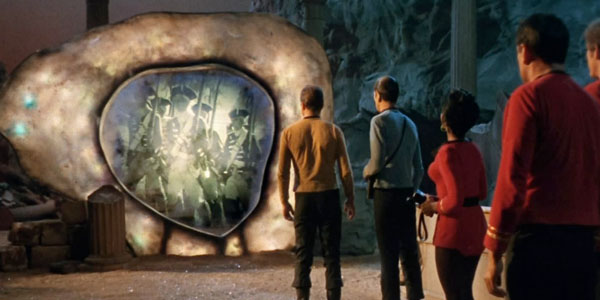
The crew of the Enterprise discovers an abandoned alien outpost that has the ability to project people backwards in time. This sentient artificial life-form can also extend its capabilities to any point in the galaxy. It is known as €œThe Guardian of Forever€. When a deranged McCoy accidentally travels back to 1930€™s, depression era America, he makes a change that forever alters the timeline, causing the Federation to never develop. It is up to Kirk and Spock to travel back to the 1930€™s to recover McCoy and repair the damage to the time stream. While Kirk is there, he meets and falls in love with Edith Keeler €“ a social worker who has a great capacity to care - and whose caring persuades the United States to remain out of World War II. In order for the time stream to return to normal, she must die. This has to be Kirk at his most poignant. Not only does he risk his life to rescue his friend but he sacrifices the newly-discovered love he has found with 20th century Edith Keeler for the sake of the future. Billions of personal timelines are preserved at the expense of Kirk€™s happiness. It€™s one of the most compelling and remembered episodes in the original series and one that shows the nature of Kirk and Spock€™s friendship. But what about the Guardian? I know there have been some non-canonical works about it €“ which highlights my point about fans€™ value on returning to favourite plotlines €“ but out of four succeeding television series and at least eleven motion pictures, not one writer has thought to include the Guardian in any of its stories. It€™s a powerful story device; imagine a separate corps of Starfleet officers responsible to the time continuum. Remember the chronal cold war from Star Trek: Enterprise? Wouldn€™t the Guardian of Forever be a perfect base of operations for a Star Fleet-sanctioned organization to defend the continuum? This was a completely wasted plot asset that could have taken advantage of in all sorts of ways. There you have it. But don€™t take my word for it €“ revisiting abandoned plotlines are incredibly successful stories and there is no reason to expect that any of these wouldn€™t sell. look at the success of Star Trek II: The Wrath of Khan; arguably one of the greatest Star Trek revisits ever. Famed comic artist John Byrne (Marvel€™s X-Men or DC€™s Superman) picked up a great number of dropped plotlines and turned them into fantastic Star Trek comic stories that looked at the repercussions of the Organian Peace Treaty, what happened after the ST:TOS episode €œBalance of Terror€ and even Leonard McCoy€™s career in between the television series and Star Trek: The Motion Picture. Just recently he released a photo montage book (remember the old photo-novels about the original series from the 1970€™s?) that uses actual photographs from the series re-arranged in an original manner to create a brand new and amazing story that is a sequel to €œMirror, Mirror€. It€™s called €œThe Mirror Crack€™d€, published by IDW Publishing. As stated earlier, Star Trek survives because fans are always hungry for a new story, but continued stories are the best ones and they€™re already there. Like some sort of buried treasure, they€™re just waiting for the right prospector to come along and unearth them for the world to see them in another light.

Watch Next


Contributor
Contributor

John Kirk is a Teacher-Librarian and currently a History/English Teacher with the Toronto District School Board. But mostly, John teaches Geek. Comics, Sci-Fi (Notably Star Trek), Fantasy and Role-Playing and table-top games all make up part of John’s repertoire, There is a whole generation of nerds-in-embryo who rely on him to make sense of it all, to teach that with great power comes great responsibility, that the force will be with us always and that a towel IS the most useful thing to have in one’s possession. When John isn’t in the classroom, he can be found in his basement writing comic reviews for www.popmythology.com and features for Roddenberry Entertainment's www.1701news.com.