Star Trek: 10 MORE Behind The Scenes Decisions We Can't Forgive
1. Taking 50 Damn Years
Whether or not Star Trek represents a truly progressive vision of the future is open to debate and all the times the franchise was (hopefully accidentally) regressive could fill a listicle unto itself. To expect a product of pop culture, created in the entertainment industry of the 20th and 21st centuries, to realistically represent the future and every possible form of human being therein is unreasonable.
However, the powers behind Star Trek in the 90s and early-2000s deliberately avoided depicting LGBTQIA+ characters except in the rare instance that a sci-fi story was used to indirectly address the existence of an enormous group of very real people.
Numerous examples of the producers' willful omission of LGBTQIA+ characters and topics have been well documented, dating back as far as David Gerrold's fight for a homosexual couple aboard the Enterprise-D in Star Trek: The Next Generation's first season up to Kate Mulgrew's losing cause to have a gay character appear on Star Trek: Voyager... and let's not even talk about the missed opportunity for representation on Enterprise.
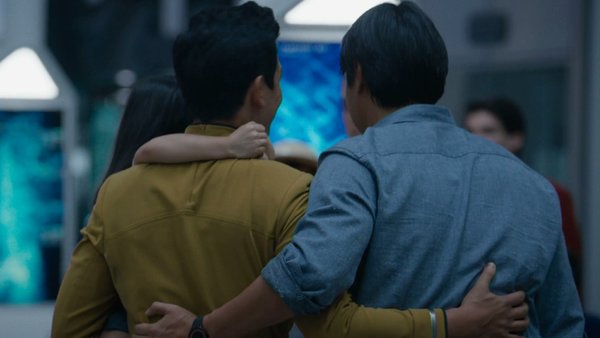
Thankfully, with the very minor inclusion of Hikaru Sulu's husband and daughter in Star Trek Beyond (a movie released 50 years after The Original Series premiered), the franchise is finally coming around. And with continued depictions of gay and nonbinary Starfleet crew members in Star Trek: Discovery, Star Trek: Picard, and Star Trek: Lower Decks, the future looks bright for true representation in the Star Trek Universe.
It took 50 years and may take some time for everyone – everyone – to look at Star Trek and see themselves. But even with a few unforced errors, Star Trek really does seem like it's trying to forge a path forward. According to Wilson "Doctor Culber" Cruz:
The universe in which we live in on the show is a place where everyone is willing and capable of loving anyone.